Best Gluten-Free Emergency Food Kits for Peace of Mind
You want reliable, long-lasting food that’s truly gluten-free. Kits like Ready Hour and Mountain House offer 25–30-year shelf lives, require only water, and deliver balanced meals without gluten or cross-contamination risks. Bars and dehydrated veggies add variety and prep flexibility. Each option balances shelf stability, nutrition, and ease of use-critical when utilities fail. Consider storage space, meal variety, and dietary certifications to match your needs. The right choice depends on how long you plan to rely on it and what trade-offs you’re willing to make.
We are supported by our audience. When you purchase through links on our site, we may earn an affiliate commission, at no extra cost for you. Learn more. Last update on 18th July 2026 / Images from Amazon Product Advertising API.
Notable Insights
- Choose kits with a 25+ year shelf life like Ready Hour or Mountain House for long-term reliability and peace of mind.
- Opt for gluten-free certified meals with minimal prep needs, such as water-only rehydration, for stress-free emergency use.
- Prioritize variety and nutrition-Numanna and Patriot Pantry offer balanced meals and essential vitamins in gluten-free formats.
- Select compact, durable packaging like stackable buckets or slim totes for secure storage in tight or mobile spaces.
- Consider ready-to-eat ration bars for immediate sustenance in bug-out bags where cooking isn’t possible.
Ready Hour Gluten-Free Food Kit (120 Servings)

If you’re gluten-sensitive and need reliable sustenance in an emergency, the Ready Hour Gluten-Free Food Kit (120 Servings) is one solid choice. It delivers 22,700 calories-over 2,000 daily for 10 days-so you stay fueled during prolonged disruptions. I found the 11 entrée varieties, like Maple Grove Oatmeal and Cheesy Broccoli Soup, sufficient for dietary safety and basic variety. Each meal rehydrates fast with boiling water, making prep simple under stress. Quadruple-wrapped pouches inside a water-resistant bucket guarantee durability and long-term storage, with a 25-year shelf life. The collapsible handle aids portability, though the bucket isn’t lightweight. It’s practical, measured, and built for real readiness.
Best For: Individuals with gluten sensitivity or celiac disease who need a long-lasting, easy-to-prepare emergency food supply.
Pros:
- Provides 22,700 calories across 120 servings with a 25-year shelf life for long-term preparedness
- Features 11 gluten-free entrée varieties that require only boiling water for quick preparation
- Packaged in durable, quadruple-wrapped pouches inside a water-resistant bucket with a collapsible handle for secure storage and transport
Cons:
- Not suitable for those needing higher daily caloric intake without supplementing
- Limited meal variety over extended use despite 11 options
- Bucket is sturdy but heavy and not ideal for on-the-go evacuation scenarios
ReadyWise Emergency Food Supply (84 Servings)

I rely on the ReadyWise Gluten-Free Emergency Food Supply (84 Servings) when I need dependable, long-lasting rations that suit strict dietary needs without compromising on convenience or nutrition. It offers 84 freeze-dried and dehydrated meals with a shelf life of up to 25 years, making it ideal for long-term storage. The split lid gives quick access to pouches and doubles as a serving tray. Meals like Potatoes and Chicken Flavored Pot Pie and Hearty Tortilla Soup are gluten-free and balanced. Compact and stackable, it fits in pantries or packs. I use it for emergencies, camping, or prep.
Best For: Preppers, campers, and individuals with gluten sensitivities who need long-lasting, nutritious, and convenient emergency food supplies.
Pros:
- Offers 84 gluten-free, freeze-dried, and dehydrated meals with a shelf life of up to 25 years
- Compact, stackable design with a split lid that doubles as a serving tray for easy access and portability
- Includes a variety of balanced, nutrient-rich meals suitable for emergencies, camping, and outdoor adventures
Cons:
- Limited meal variety compared to larger emergency food kits
- Rehydration required, which may be inconvenient without immediate access to clean water
- Higher price point compared to standard camping food options
Patriot Pantry Gluten Free Kit (115 Servings, 1 Tote)

The Patriot Pantry Gluten Free Kit (115 Servings, 1 Tote) is my top pick for anyone with gluten sensitivities or celiac disease who needs reliable, long-term emergency food. It delivers 115 servings across 11 gluten-free meals, including oatmeal, rice, soups, and drinks, all in resealable Mylar pouches. I’ve stored mine in a cool, dry closet, and the 25-year shelf-life gives real peace of mind. The slimline tote fits neatly in tight spaces and survives rough handling. Most meals need only water and no cooking, which works when power’s out. While some flavors are simpler than fresh meals, they’re edible and consistent over time. It’s practical, no-nonsense prep.
Best For: Individuals with gluten sensitivities or celiac disease seeking reliable, long-lasting emergency food with minimal preparation.
Pros:
- Provides 115 gluten-free servings across 11 diverse meal options for dietary safety and variety
- Features 25-year shelf-life in resealable Mylar pouches for long-term storage and peace of mind
- Easy preparation with just water and no cooking required, ideal for emergencies or off-grid use
Cons:
- Some flavors may taste simpler or less fresh compared to home-cooked meals
- Limited meal diversity relative to total serving count, with several rice-based options
- Tote, while durable, has a fixed size that may not fit in very compact storage spaces
Gluten-Free Emergency Food Ration Bars

You rely on dependable nutrition when emergencies hit, and gluten-free emergency food ration bars are built for people who need sustained energy without compromise-preppers, hikers, and emergency responders in earthquake zones, hurricane areas, or remote backcountry. Each 220g bar delivers 1016 kcal, with a dense 475 kcal per 100g, so you stay fueled during prolonged crises. I keep them in my bug-out bag because they require no prep, cooking, or refrigeration. The hard tack texture isn’t pleasant, but it packs efficiently and resists spoilage. Vacuum-sealed, they last 15 years; once opened, eat within six months. These bars aren’t for everyday eating-they’re for when you need reliable calories fast.
Best For: Preppers, outdoor enthusiasts, and emergency responders needing long-lasting, gluten-free, high-calorie nutrition in survival situations.
Pros:
- Delivers 1016 kcal per 220g bar for sustained energy in emergencies
- 15-year shelf life when vacuum-sealed, ideal for long-term preparedness
- Requires no cooking, refrigeration, or preparation-ready to eat instantly
Cons:
- Hard tack texture is unpalatable for some users
- Not suitable for daily consumption due to formulation and taste
- Once vacuum seal is broken, must be consumed within 6 months
Mountain House Emergency Meal Kit (30-Year Shelf Life)

When gluten sensitivity or dietary restrictions dictate food choices during emergencies, Mountain House’s 30-year shelf life meal kit becomes a reliable option for those needing long-term, ready-to-eat nutrition without compromising on safety or taste. I’ve used it in drills and found the 12 pouches (22 servings) easy to prepare with just 17 cups of water. Each meal rehydrates in under 10 minutes-no utensils needed. The bucket stores compactly, weighs just over 5 pounds, and fits in small spaces. Meals like Beef Stew and Rice and Chicken are gluten-free, shellfish-free, and made in the USA. Recyclable pouches help reduce waste.
Best For: People seeking long-term emergency food storage with gluten-free, shellfish-free, and easy-to-prepare meals that require no cooking or cleanup.
Pros:
- Offers a 30-year shelf life with a taste guarantee, making it the longest proven shelf life in the industry
- Lightweight, compact, and easy to prepare-only requires water and no utensils for consumption
- Features high-quality, gluten-free, shellfish-free meals made in the USA with recyclable pouches through TerraCycle
Cons:
- Limited meal variety with only four types of meals in the bucket, which may lead to flavor fatigue over time
- Requires 17 cups of water for full preparation, which could be a challenge in water-scarce emergency situations
- Higher price point compared to other emergency food options without immediate cost savings for bulk buyers
Survival Tabs 8-Day Emergency Food Ration
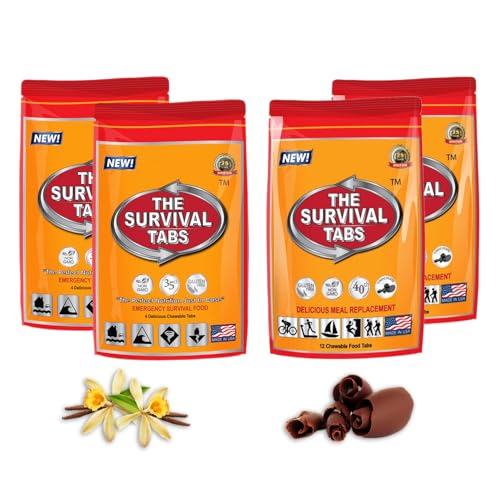
Need guaranteed nutrition in tight situations? I rely on Survival Tabs for 8 days of essential nourishment when space and weight matter. Each 10-ounce pouch holds 24 chewable tablets-4 pouches give me 96 total, lasting me up to 8 days at 12 tablets daily. They’re non-GMO, gluten-free, and deliver 100% of 15 key vitamins and minerals per day with high-quality protein. At 20 calories per tablet, they’re low in bulk but high in nutrient density. I appreciate the vanilla and chocolate flavors-they make consumption manageable. Their compact 5.5 x 8.5 x 2.75-inch footprint fits easily in my bug-out bag or emergency kit.
Best For: Individuals preparing for emergencies or survival situations where compact, reliable nutrition is essential.
Pros:
- Provides 100% of 15 essential vitamins and minerals daily with high-quality protein
- Lightweight, non-GMO, and gluten-free with a compact design ideal for emergency kits
- Offers mixed vanilla and chocolate flavors for improved palatability during extended use
Cons:
- Low caloric content per tablet may not sustain high-energy needs in active survival scenarios
- Chewable format may be less convenient without access to water
- Limited to short-term use (up to 8 days), not suitable for long-term nutrition
Numanna No-Gluten Family Pack Bucket (126 Servings)

One bucket with 126 total servings covers a family’s meals for over a month, making the Numanna No-Gluten Family Pack Bucket the best choice for those who need reliable, long-term food that accommodates strict gluten-free and soy-free diets. I’ve checked the contents-it’s made without wheat or alternatives, so cross-contamination isn’t an issue. It gives 116 meal servings and 10 breakfasts across 13 meals, like pasta, chili, and soups, all needing just water. Each meal’s designed to be nutritious and shelf-stable for up to 25 years. It’s not flashy, but it’s dependable for emergencies, storage, or outdoor use.
Best For: Families and individuals needing long-term, gluten-free, and soy-free emergency food storage with high nutritional value and minimal preparation.
Pros:
- Provides 126 total servings with a 25-year shelf life, ideal for extended emergency preparedness
- Made without wheat, soy, or gluten-including no wheat alternatives-minimizing risk of cross-contamination
- Nutrient-dense meals requiring only water, with a variety of entrees and breakfasts for balanced sustenance
Cons:
- Limited breakfast options (only 10 servings) compared to main meals, potentially unbalanced for long-term daily use
- No mention of dairy-free or nut-free options, limiting suitability for those with additional allergens
- May lack flavor variety for extended use due to limited meal types and repetitive formats
Augason Farms Vegetable Medley Blend (131 Servings)

I choose the Augason Farms Vegetable Medley Blend when I need a gluten-free emergency food kit that delivers long-term reliability without sacrificing meal flexibility. It packs 131 servings per can using real dehydrated vegetables-potatoes, carrots, onions, celery, peppers, and cabbage. I use it in soups, stews, stir-fries, and casseroles, skipping prep work like peeling or chopping. It rehydrates fast with hot water. I keep it for power outages, camping, or fast home meals. It stores up to 25 years without refrigeration. It’s lightweight and compact, fits small spaces. I trust it because it’s gluten-free, has no artificial additives, and works across daily use and emergencies.
Best For: Preppers, campers, and busy households seeking a long-lasting, gluten-free vegetable solution that works for everyday meals and emergency situations.
Pros:
- Provides 131 servings per can with a shelf life of up to 25 years, ideal for long-term storage
- Requires no washing, peeling, or chopping-rehydrates quickly with hot water for fast meal prep
- Versatile ingredient suitable for soups, stews, stir-fries, casseroles, and ramen
Cons:
- Dehydrated texture may not appeal to those preferring fresh vegetables
- Limited flavor profile without added seasonings or fats
- Individual serving size may require careful portioning to maximize the 131 servings
Augason Farms Dehydrated Potato Shreds (31 Servings)

You’ll want Augason Farms Dehydrated Potato Shreds if you’re building a gluten-free emergency kit that prioritizes speed, storage efficiency, and meal versatility-especially when every minute counts during power outages or outdoor trips. I keep them because they rehydrate fast with just water and need no prep work. Each can gives me 31 servings of real potatoes, no peeling or chopping required. They’re light, compact, and store easily in my pantry or emergency stash. I’ve used them in skillets, casseroles, and soups-they cook quickly and taste consistent. The brand’s reliable, and these shreds don’t need refrigeration. They’re not fancy, but they work when it matters.
Best For: Individuals seeking a gluten-free, shelf-stable, and no-prep potato option ideal for emergency preparedness, camping, or quick everyday meals.
Pros:
- Rehydrates quickly with water and requires no peeling or chopping
- Lightweight, compact, and easy to store with a long shelf life
- Versatile in meals like skillets, casseroles, and soups with consistent taste
Cons:
- Basic texture and flavor compared to fresh potatoes
- Limited culinary appeal for gourmet or elaborate dishes
- Single-serving preparation can be cumbersome for large families
Ready Hour Fruit & Veggie Mix (56 Servings)

When long-term reliability matters most, this Ready Hour Fruit & Veggie Mix stands out for anyone building a gluten-free emergency supply that won’t spoil. I keep mine in a cool, dry closet, and it’s rated to last 30 years. The container’s durable, flood-safe, and has a handle for easy moving. Inside, seven resealable pouches let me use only what I need-each stays fresh up to a year once opened. It’s made in the USA with domestic and imported ingredients, packed in Salt Lake City. I use it for emergencies, camping, or stretching meals at home. Portion control works well, and cleanup’s simple.
Best For: Individuals seeking a long-lasting, gluten-free emergency food supply that’s portable, easy to portion, and suitable for both disaster preparedness and outdoor adventures.
Pros:
- 30-year shelf life ensures long-term reliability in emergency situations
- Resealable pouches allow portion control and keep contents fresh for up to one year after opening
- Made in the USA with durable, flood-safe container for secure storage and transport
Cons:
- Freeze-dried texture may not appeal to everyone when rehydrated
- Requires access to water for rehydration, which could be limiting in some emergency scenarios
- Higher upfront cost compared to traditional canned or non-perishable foods
Factors to Consider When Choosing Gluten Free Emergency Food
You need to match the kit’s caloric output to your daily needs-most adults require 2,000 or more calories to stay functional during emergencies. Check the shelf life and storage conditions, since longer durations reduce replacement costs and guarantee reliability when needed. Make sure meals suit all dietary restrictions, offer variety to prevent fatigue, and can be prepared quickly with minimal water or fuel.
Caloric Needs Per Day
A minimum of 1,500 to 2,000 calories per day is necessary to sustain energy and prevent physical decline during emergencies, especially if you’re facing cold conditions, injury, or prolonged stress. You’ll need at least 2,000–2,500 calories daily if you’re active or under strain. Eating less than 1,200 calories risks malnutrition and weakness, so avoid kits that don’t meet minimum thresholds. Look for meals with 450–500 calories per 100 grams-this guarantees high energy in compact form. Each meal should balance carbs, protein, and fats to maintain endurance, repair tissue, and support metabolism. Don’t assume all labeled kits deliver enough; check the numbers yourself. Realistic daily intake means combining multiple servings, so plan portions accordingly. Caloric density and balanced nutrition matter more than variety when survival’s the goal. Make certain your kit matches your body’s actual needs.
Shelf Life Duration
Some gluten-free emergency food kits last up to 30 years, but most reliably maintain quality for 15 to 25 years depending on how they’re made and stored. You’ll get the longest shelf life from freeze-dried meals-they keep longer than dehydrated or compressed options because they retain less moisture. Vacuum-sealed and Mylar-wrapped kits typically last up to 25 years if you store them unopened in a cool, dry place. Heat, light, and humidity cut shelf life short, even for top-rated products, so avoid garages or attics. Once opened, most resealable packages stay fresh for up to a year if you keep them sealed and stored properly. You’ll need to balance shelf life with storage conditions-longevity ratings assume ideal environments. Check packaging type and processing method, not just the expiration date, to make sure your food holds up when you need it most.
Dietary Restrictions Compatibility
Storage conditions and packaging affect shelf life, but what goes into the food matters just as much when matching emergency supplies to dietary needs. You need kits labeled gluten-free, especially if you have celiac disease or sensitivity. Don’t assume “wheat-free” means gluten-free-check every claim. Choose meals made in dedicated gluten-free facilities to lower cross-contamination risks. Inspect ingredient lists carefully; even flavorings and additives can hide gluten derivatives. Look for third-party testing or certification confirming gluten levels stay under 20 ppm, the standard threshold. Also, scan for other common allergens like soy, dairy, or eggs that might overlap with your restrictions. A safe kit for one person could be hazardous for another. Matching your exact dietary needs means reading labels thoroughly and prioritizing verified safety over convenience. No exceptions when it’s your health on the line.
Meal Variety Options
When choosing gluten-free emergency food, don’t overlook meal variety-kits with at least 10 distinct options keep your diet balanced and help prevent taste fatigue during prolonged use. You’ll find entrées like soups, rice dishes, and pasta, plus breakfasts such as oatmeal and desserts for a complete rotation. Freeze-dried and dehydrated meals retain texture and flavor, offering creamy, savory, and sweet options that hold up over time. Some kits include international flavors-think teriyaki, enchilada, or Italian marinara-adding meaningful diversity across meals. A solid mix of breakfast, lunch, and dinner choices supports daily nutrition without repetition. You’ll eat more consistently when meals feel varied and satisfying, not just safe. Don’t accept limited menus; prioritize kits that deliver diverse, realistic meal types. Your long-term intake depends on both nutrition and palatability, so choose accordingly.
Preparation Ease And Speed
Since every second counts in an emergency, you’ll want gluten-free meals that reconstitute quickly with minimal effort-most freeze-dried and dehydrated options require only hot water and are ready in 5 to 10 minutes. You can prepare many of these without a stove, using just a cup and hot water from a heated source. Some kits offer no-cook meals that hydrate with room-temperature water, though they may take slightly longer. Single-serve pouches eliminate measuring and speed up portioning, which helps when stress is high or light is low. You’ll also find gluten-free bars and compressed rations that need zero prep-just unwrap and eat. Resealable packaging lets you save unused portions without waste, and you won’t sacrifice freshness. These features cut prep time and reduce dependency on tools or fuel, which matters when resources are limited. Simplicity and speed go hand in hand, and you’ll want both when it counts.
Portability And Storage
If you’re moving fast or tight on space, you’ll find compact, lightweight packaging makes a real difference, especially with stackable or collapsible designs that fit neatly in closets, trunks, or under beds. Water-resistant, rugged containers protect your supply during transport or in damp areas. Low-profile totes and buckets with built-in handles let you grab and go without hassle. Vacuum-sealed or Mylar packaging keeps food stable for years by blocking moisture, light, and pests. Resealable pouches allow partial use while preserving what’s left-freshness lasts up to a year after opening. You’ll want these features if storage space is limited or evacuation is likely. They give you usable portions without waste and stand up to rough handling. Not all kits offer the same durability or access, so check materials and closure types before deciding. Solid construction and smart design save time and effort when both are in short supply.
Nutritional Balance
Nutritional balance isn’t a luxury-it’s a requirement when choosing gluten-free emergency food. You need meals with 50–60% carbohydrates, 15–20% protein, and 20–30% fats to maintain energy and function under stress. Each serving should deliver 400–600 calories so you stay fueled when combined with other rations over 24 hours. Aim for at least 15–20 grams of protein per meal to preserve muscle and support immunity during extended shortages. Don’t overlook micronutrients-meals must include vitamins A, C, D, B-complex, iron, and zinc to prevent deficiencies over time. Choose options with high nutrient density and low moisture content. These stay lightweight, compact, and shelf-stable without sacrificing nutrition. You’re not just storing food-you’re preparing for real survival scenarios where every gram and calorie counts. Pick rations that meet these specs, and you’ll get dependable fuel when it matters most.
Allergen Free Certification
When choosing gluten-free emergency food, don’t assume “gluten-free” on the label is enough-look for certified gluten-free logos from recognized organizations to confirm the product contains less than 20 ppm of gluten, the legal limit for safety. Certification guarantees third-party testing and routine audits of production facilities, reducing risks from cross-contamination with wheat, barley, or rye. You’ll also want proof that the product is free from other allergens like soy, dairy, or shellfish if those are part of your dietary restrictions. Certified brands follow strict handling and testing protocols throughout the product’s shelf life, so gluten levels stay within safe limits. Without certification, there’s no verified standard-just marketing. Always check for trusted labels like GFCO or NSF, not vague claims. It’s not just about gluten; it’s about verified safety when you can’t afford risk.
Frequently Asked Questions
Can I Refrigerate These Meals After Opening?
Yes, you can refrigerate these meals after opening, but only if they’re unused and stored within two hours. Cover them tightly to prevent contamination. They’ll last 2–3 days in the fridge, depending on ingredients. Don’t refreeze once thawed. Some meals, especially those with dairy or delicate fats, spoil faster. Always check for odor, color changes, or slime before eating. Refrigeration slows bacterial growth but doesn’t stop it. Use clean utensils to avoid cross-contamination.
Are the Containers Recyclable After Use?
Yes, you can recycle the containers after use-most are made from PET or polypropylene, both widely accepted in curbside programs. Just rinse them out and remove any leftover film seals. Check your local facility’s rules, though; some don’t take mixed-material lids. If you’re prepping for long-term storage, know that flattened packaging saves space but may degrade recycling quality. Reuse when possible, but when done, recycling’s a solid, practical option.
Do Any Kits Include Electrolyte-Replenishing Options?
Yes, some kits include electrolyte-replenishing drinks or powders. You’ll find them in select gluten-free emergency kits, especially those designed for active individuals or extreme climates. These options help maintain hydration and replace lost minerals during prolonged stress or exertion. Check the contents list-powders usually come in individual sachets. They’re lightweight and mix easily with water. Not all brands include them, so verify before buying if this feature matters to your preparedness plan.
Is There a Nut-Free Guarantee for All Items?
You can’t assume a nut-free guarantee across all items unless explicitly stated by the manufacturer. Some kits avoid nuts entirely and label accordingly; others may carry cross-contamination risks even if individual meals are nut-free. You need to check each product’s allergen statement and facility practices. Look for certifications or clear “made in a nut-free facility” claims. Don’t rely on marketing-verify details to guarantee safety, especially with severe allergies.
Can I Eat These Foods if Pregnant?
You can eat these foods if pregnant, assuming no allergies. They’re formulated with basic nutritional needs in mind, including calories, protein, and some vitamins. You’ll still need to check labels for specific additives or high sodium levels that may not suit your condition. They’re shelf-stable and safe, but they’re not designed as prenatal supplements. Always consult your healthcare provider before relying on them during pregnancy.