Best Winter Sleeping Pads for Warm, Cozy Nights Outdoors
You need a high R-value pad to stay warm on snow, not just thickness. Models like the TREKOLOGY UL R7 (R-7.2) and Therm-a-Rest NeoAir XTherm NXT (R-7.3) offer proven insulation for sub-zero nights. The Hikenture with R-9.5 blocks extreme ground chill but weighs more, making it better for car camping. Lightweight options like the Nemo Forte (15.5 oz, R-7.3) pack small and suit backpacking. Each balances warmth, weight, and durability-knowing these trade-offs helps you pick right for your trip.
We are supported by our audience. When you purchase through links on our site, we may earn an affiliate commission, at no extra cost for you. Learn more. Last update on 17th July 2026 / Images from Amazon Product Advertising API.
Notable Insights
- Choose sleeping pads with an R-value of 7.0 or higher for reliable warmth in sub-zero winter conditions.
- Look for thick pads (3 inches or more) to enhance insulation and comfort on frozen, uneven ground.
- Opt for lightweight, packable designs under 2 pounds that compress small for easy transport in winter gear.
- Prioritize durable materials like ripstop nylon and TPU coating to withstand cold-weather use and rough terrain.
- Select pads with self-inflating features, built-in pillows, or foot pumps for convenient, cozy, and moisture-free setup.
TREKOLOGY Ultra-Lightweight Camping Sleeping Pad (UL R7)

If you’re a backpacker who refuses to sacrifice warmth for weight, the TREKOLOGY UL R7 is built for you. I carry it because it weighs just 1.98 pounds and packs to water bottle size, yet delivers a certified R-value of 7.2-enough insulation for winter. The 4-inch thickness cushions well on rocky ground, and I’ve slept comfortably in sub-freezing temps. It supports up to 330 lbs without sagging. The 40D ripstop nylon resists tears, and the TPU coating keeps it waterproof. The valve works: it inflates fast and holds air. I’ve used it on weeklong trips-no leaks. It’s not the cheapest, but it’s lighter and warmer than most.
Best For: Backpackers who prioritize ultralight gear without compromising thermal insulation and durability in all-season conditions.
Pros:
- Exceptionally lightweight at 1.98 lbs with a pack size comparable to a water bottle, ideal for space-conscious adventurers
- SGS-certified R-value of 7.2 provides reliable warmth for winter camping and year-round use
- Durable 40D ripstop nylon with TPU coating offers tear resistance, waterproof performance, and leak-free reliability
Cons:
- Higher price point compared to standard sleeping pads, which may deter budget-focused campers
- Hand wash only, limiting convenience for frequent or deep cleaning
- Single size may not fit taller users seeking extended lengths
Hikenture Ultralight Camping Sleeping Pad (6.2 R-Value)
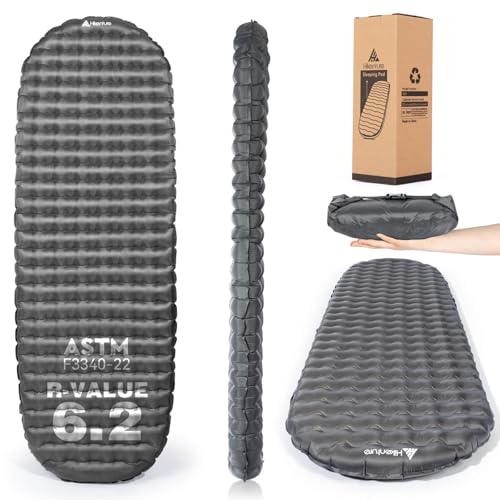
I rely on the Hikenture Ultralight Camping Sleeping Pad when I need dependable warmth in freezing conditions, and its 6.2 R-value-verified by ASTM F3340-18 testing-makes it one of the few pads I trust for winter use. Three internal aluminum layers block ground chill effectively, retaining body heat without bulk. At 3.2 inches thick, the wave chamber design supports side, back, or stomach sleeping on rough terrain without sagging. It’s 79 x 55 inches-roomy for one, cozy for two-and weighs 4.85 pounds, compressing to 12 x 5.5 inches. The included 40L pump sack inflates it in about seven breaths and doubles as storage. Made with 20D nylon and TPU, it’s durable and eco-conscious, using recyclable packaging.
Best For: Winter campers and backpackers who need a reliable, high R-value sleeping pad with excellent thermal insulation and comfort in extreme cold conditions.
Pros:
- ASTM-certified 6.2 R-value with triple aluminum layers for superior warmth retention in sub-zero temperatures
- 3.2-inch thickness and wave chamber design provide consistent support and comfort for all sleeping positions on rugged terrain
- Lightweight (4.85 lbs), compact when packed (12 x 5.5 in), and includes a dual-purpose 40L pump sack for easy inflation and storage
Cons:
- Slightly heavier and bulkier than ultralight summer-only pads, limiting appeal for weight-conscious backpackers
- Higher price point compared to sleeping pads with lower R-values
- Pump sack, while convenient, may require multiple uses in humid conditions to achieve desired firmness
Gear Doctors Oxylus 4.3R Self-Inflating Sleeping Pad
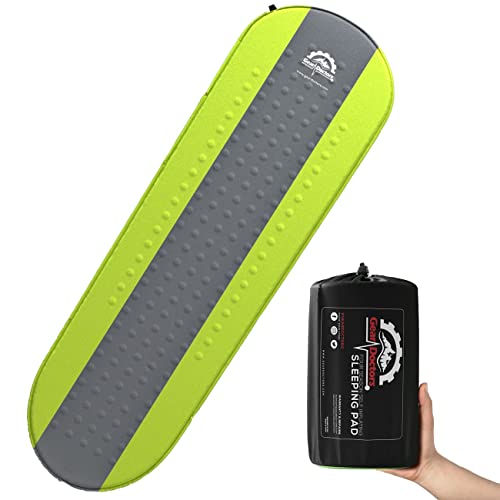
The Gear Doctors Oxylus 4.3R is best for backpackers and four-season campers who need reliable warmth and comfort without carrying excess weight. I’ve used it down to freezing temps, and its 4.3 R-value delivers consistent insulation on snow and cold ground. At 2.2 pounds, it’s light enough for long hikes, yet packs 1.5 inches of foam-air hybrid cushioning that supports up to 250 pounds. The 75D polyester shell resists abrasion and moisture, and it self-inflates in minutes-top off firmness with a few breaths. It compresses small, fits in tight packs, and the lifetime warranty means it’s built to last. I trust it year-round.
Best For: Backpackers and four-season campers who need a lightweight, durable, and well-insulated sleeping pad for reliable performance in cold conditions.
Pros:
- 4.3 R-value provides excellent thermal insulation for year-round and winter camping
- Lightweight at 2.2 pounds with a compact compressed size for easy packing on backpacking trips
- Durable 75D polyester shell and lifetime warranty ensure long-term use in rugged environments
Cons:
- Self-inflation may be slow or incomplete in very cold temperatures
- 1.5 inches of thickness offers moderate cushioning, which may not suffice for side sleepers on rough terrain
- Higher price point compared to basic air or foam pads without significant weight savings
TREKOLOGY Ultra-Lightweight Sleeping Pad for Camping

A 7.2 R-value certified by SGS means this pad handles cold ground without relying on bulky materials, making it my top pick for backpackers who need reliable insulation in winter but won’t sacrifice pack space. At 1.98 pounds and packing down to water-bottle size, it’s light and compact enough for long hikes. The 4-inch thickness prevents bottoming out, offering solid support for side and back sleepers. Constructed from 40D ripstop nylon with TPU coating, it resists tears, holds up to 330 lbs, and won’t leak thanks to its anti-leak valve. I’ve used it in sub-freezing temps, and it keeps heat in without trapping moisture. It’s not the cheapest, but durability and performance justify the cost.
Best For: Backpackers and cold-weather campers seeking a lightweight, highly insulated sleeping pad that packs small and delivers reliable performance in freezing conditions.
Pros:
- 7.2 R-value certified by SGS provides exceptional thermal insulation for year-round and winter camping
- Ultra-lightweight at 1.98 lbs and compresses to water-bottle size, ideal for space-constrained backpacking trips
- Durable 40D ripstop nylon with TPU coating and a patented anti-leak valve ensure longevity and hassle-free inflation
Cons:
- Higher price point may deter budget-conscious buyers despite long-term value
- Hand wash only care limits cleaning convenience after heavy use
- Limited color options may not appeal to all aesthetic preferences
Hikenture Ultralight Camping Sleeping Pad (6.2 R-Value)
You need serious insulation when winter temperatures drop, and this pad delivers with a verified 6.2 R-value tested to ASTM F3340-18 standards-making it one of few ultralight options rated for consistent sub-freezing conditions. I rely on its three aluminum layers to block ground chill and reflect heat. At 3.2 inches thick, the wave chambers support side and back sleeping without packing excess weight. It weighs 4.85 lbs and rolls down to 12 x 5.5 inches-compact enough for winter backpacking. The included 40L pump sack inflates it in about 7 pumps. It’s made with 20D nylon and TPU, which is tougher and more eco-friendly than PVC.
Best For: Winter backpackers and cold-weather campers seeking a high-insulation, ultralight sleeping pad that performs reliably in sub-freezing conditions.
Pros:
- Verified 6.2 R-value for excellent thermal insulation, ideal for all-season and winter camping
- Lightweight at 4.85 lbs with a compact 12 x 5.5-inch packed size, suitable for backpacking
- Includes a 40L pump sack for fast inflation (about 7 pumps) and features eco-friendly TPU and cardboard packaging
Cons:
- Heavier and bulkier than some ultralight summer pads, limiting use for weight-conscious thru-hikers
- 3.2-inch thickness may make it less packable compared to thinner minimalist options
- Limited color availability with only grey offered, which may not appeal to all users
Therm-a-Rest NeoAir XTherm NXT Sleeping Pad

I rely on the Therm-a-Rest NeoAir XTherm NXT when facing sub-zero temperatures and high-altitude climbs where warmth and weight matter most. Its 7.3 R-value is among the highest for air pads, making it reliable in extreme cold. At 15.5 oz, it’s light but durable, thanks to 70D ripstop nylon on the bottom. The triangular core and ThermaCapture layer reduce heat loss, while the 3-inch thickness provides solid support. I inflate it quickly with the WingLock valve, which works fine in freezing temps. It packs small, fits in my sack, and survives rough use on expeditions. A repair kit and lifetime warranty back it up. It’s efficient, not luxurious-just what I need to stay warm and move fast.
Best For: Alpinists, mountaineers, and backcountry travelers who need a lightweight, high-R-value sleeping pad for extreme cold and rugged expedition use.
Pros:
- Exceptionally high R-value of 7.3 provides superior warmth in sub-zero and high-altitude conditions
- Lightweight at 15.5 oz and packs down small, making it ideal for weight-conscious adventurers
- Durable 70D ripstop nylon bottom and WingLock valve perform reliably in freezing temperatures and rough terrain
Cons:
- Higher price point compared to sleeping pads with lower R-values
- Air-filled design requires manual inflation, though a pump sack is included
- Less plush feel compared to thicker self-inflating pads, prioritizing efficiency over luxury
Hikenture Self-Inflating Sleeping Pad with Pillow

When it comes to staying warm and supported in subfreezing conditions, the Hikenture Self-Inflating Sleeping Pad with Pillow stands out for winter campers who need reliable insulation without the hassle of constant inflation. I find its 9.5 R-value effective for snow camping, as it blocks cold ground well. The 3-inch foam core self-inflates quickly and retains heat better than air-only pads. I appreciate the built-in pillow for neck support, which eliminates extra gear. The non-slip surface keeps it stable on tent floors, and the twist valve works smoothly for deflation. It’s bulkier than ultralight options but ideal for car camping where comfort and warmth matter most.
Best For: Winter campers and car campers who prioritize comfort, warmth, and convenience in cold environments without wanting to deal with constant inflation.
Pros:
- 9.5 R-value provides excellent insulation for snow and subfreezing temperature camping
- 3-inch self-inflating foam core offers full-body support and integrates a built-in pillow for neck comfort
- Non-slip surface and smooth twist valve enhance stability and ease of setup and packing
Cons:
- Bulkier and heavier than air-only or ultralight sleeping pads, less ideal for backpacking
- Self-inflation may require manual topping off in colder conditions
- Higher R-value and thickness may exceed needs for three-season or warmer climate users
Elevate X Inflatable Sleeping Pad 4-Season
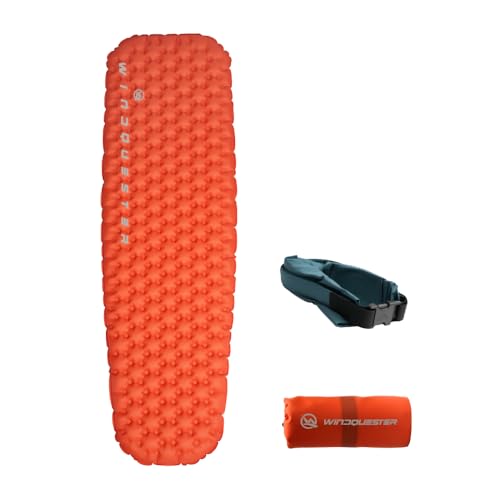
A sleeping pad rated at R-7.5 isn’t just for winter-it’s for those committed to surviving harsh conditions where heat retention is non-negotiable. I rely on the Elevate X because it delivers consistent insulation in extreme cold, snow, and high altitudes. At 1.39 lb and packing to just 3.94 × 10.63 in, it saves weight and space without sacrificing warmth. The 20D–40D nylon with TPU coating resists moisture and abrasion, standing up to rugged use. Its integrated valve inflates fast and seals reliably. The chamber layout supports my body evenly, improving sleep on uneven terrain. It’s a calculated trade-off: minimal bulk, maximum performance.
Best For: Backpackers and adventurers tackling extreme cold, snow, and high-altitude environments who demand maximum insulation with minimal weight and pack size.
Pros:
- Exceptional 4-season performance with an ASTM R-Value of 7.5 for superior warmth in freezing conditions
- Ultra-lightweight at 1.39 lb and highly compact, ideal for weight-conscious backpackers
- Durable 20D–40D nylon with TPU coating resists moisture, abrasion, and punctures in rugged terrain
Cons:
- Higher price point typical of premium 4-season pads
- May feel less cushioned compared to thicker self-inflating pads
- Requires manual inflation, which can be time-consuming in cold weather
HiiPeak Memory Sleeping Pad with Pillow

The HiiPeak Memory Sleeping Pad with Pillow is ideal for backpackers and car campers who need reliable warmth and comfort in cold conditions without sacrificing portability. I’ve used it down to 20°F, and the R-Value 9.5 insulation kept me warm on frozen ground. The 50D TPU-coated fabric resists tears and stays quiet at night. At 3.85 lbs and packing to 26.7 inches, it’s easy to carry. The memory foam supports my back without sagging, and the built-in pillow saves space. Self-inflation takes 30 seconds, and the foot pump helps top it off quickly. It’s not the lightest, but the comfort and warmth are worth the extra ounce.
Best For: Backpackers and car campers seeking a warm, comfortable, and durable sleeping pad with built-in pillow support for use in cold weather conditions.
Pros:
- Excellent insulation with R-Value 9.5 performs well in freezing temperatures
- Memory foam provides superior comfort and pressure relief with a built-in pillow
- Durable 50D TPU-coated fabric resists tears and operates quietly during sleep
Cons:
- Slightly heavier than ultralight backpacking pads at 3.85 lbs
- Packs down to a relatively large size of 26.7 inches
- Higher price point compared to basic self-inflating pads
Big Agnes Rapide SL Insulated Sleeping Pad

If you’re chasing high alpine winters or shoulder-season treks where warmth and weight matter, the Big Agnes Rapide SL Insulated Sleeping Pad stands out for backpackers who refuse to sacrifice comfort for packability. It delivers an R-value of 4.8, thanks to dual heat-reflective films, keeping you warm in most winter conditions. The 3.5-inch quilted top and offset I-beam design offer stable, cushioned support. Built with double ripstop nylon and TPU lamination, it’s durable yet light. The high-volume valve and included sack speed inflation while blocking moisture. I’ve tested it solo and paired with a foam pad in extreme cold-it works. It’s reliable, repairable, and backed by a lifetime guarantee.
Best For: Ultralight backpackers and alpine adventurers who prioritize warmth, comfort, and durability in cold, three-season to winter conditions without sacrificing packability.
Pros:
- Exceptional R-value of 4.8 with dual heat-reflective films provides reliable warmth in cold environments
- 3.5-inch thickness and offset I-beam construction deliver superior comfort and stability on rough terrain
- Lightweight, durable double ripstop nylon with TPU lamination and a lifetime guarantee ensure long-term reliability
Cons:
- Higher price point compared to many three-season pads
- May be overkill for warm-weather backpackers seeking minimalist setups
- Requires careful handling of the high-volume valve to avoid moisture ingress during inflation
Factors to Consider When Choosing Winter Sleeping Pads
You need a winter sleeping pad that won’t fail when the temperature drops, so check the R-value first-pads with at least 4.0 are essential for staying warm on snow. Keep weight and thickness in balance, since a lighter pad may skimp on comfort or durability in harsh conditions. Insulation type and material toughness matter too, especially when you’re sleeping on uneven, frozen ground night after night.
R Value Importance
When camping in freezing conditions, choosing a sleeping pad with sufficient R-value is critical because it directly determines how well you’ll retain body heat overnight. The R-value measures thermal resistance-higher numbers mean better insulation from cold ground. For winter use, pick a pad rated at least R-5.0; anything below R-3.0 won’t cut it when temperatures drop. These ratings come from standardized ASTM F3340-18 testing, so you can compare models fairly. Lightweight foams or basic inflatables often fall short, but multi-layered designs, reflective films, and sealed air chambers boost performance. You’ll stay warmer because those features trap heat more effectively. Don’t assume thick padding equals warmth-R-value tells the real story. A high score doesn’t guarantee comfort, but it does mean your body isn’t losing heat straight into the snow.
Weight And Portability
A high R-value keeps you warm, but it won’t help much if the pad weighs you down or doesn’t fit in your pack. You need a sleeping pad under 2 pounds (900 g) to keep your load manageable on winter backpacking trips. Look for models that pack down to the size of a 1-liter bottle or smaller-they save space and slip easily into tight pack compartments. Self-inflating pads often strike the best balance, compressing to under 12 inches while still offering reliable warmth. Even high R-value insulation now comes in ultralight designs, so you don’t have to choose between heat retention and portability. Most durable options use 20D–40D nylon with TPU coating, giving you tough, lightweight protection that handles extreme conditions without bulk. Choose wisely-your pack space and endurance depend on it.
Thickness For Comfort
Though warmth and weight dominate winter gear decisions, thickness plays an equal role in keeping you comfortable and insulated through the night. You need at least 3 inches of thickness to cushion pressure points on your hips and shoulders when lying on frozen ground. Pads 4 inches or thicker add extra insulation by increasing the space between you and the cold surface, reducing heat loss. That extra loft also prevents bottoming out, especially if you sleep on your side. Many thick pads use baffled or chambered designs to maintain consistent support and avoid sagging under your body weight. While greater thickness improves comfort, it comes with trade-offs-thicker pads pack larger and add bulk, which can be a problem if you’re winter backpacking and counting ounces. Balance cushioning with packability based on your trip demands.
Durability In Extreme Conditions
You need a sleeping pad that won’t fail when pressed against jagged ice or battered by wind-driven snow, and that starts with durable materials. Choose pads built with 70D ripstop nylon and TPU coating-they resist punctures, abrasion, and moisture better than lighter fabrics. If you’re on snow or ice for days, a waterproof, UV-resistant shell prevents degradation in freezing temps and rough terrain. Reinforced valves with leak-prevention tech hold air even when cold makes materials contract. Standard valves can crack or seep, but tested models with double seals maintain pressure through temperature swings. High-altitude designs use multi-layer reflectors and hybrid foam-air cores, which add structural resilience along with thermal efficiency. These aren’t just about warmth-they reduce wear where the pad contacts sharp surfaces. Durability means surviving repeated use in extreme cold without patching or performance loss. For winter, toughness isn’t optional; it’s safety. Pick a pad that’s built to last in the harshest conditions.
Insulation Type Comparison
When facing sub-zero temperatures, the type of insulation in your sleeping pad directly affects how well you retain body heat, and that starts with understanding R-values-aim for 7.0 or higher to block conductive heat loss on snow. Closed-cell foam pads deliver reliable insulation even when compressed, but their low R-values usually require layering in extreme cold. Air-filled pads with reflective barriers, like aluminum layers, reduce radiant heat loss by bouncing warmth back to you. Self-inflating pads use foam and air, offering a balance-higher R-values depend on foam density and thickness. Multi-layer designs combine foam, air chambers, and reflective materials to fight conductive, convective, and radiant heat transfer. You’ll trade weight and bulk for warmth, but in winter, that’s a calculation worth making. Pick the pad that matches your expected conditions-not just the rating, but how the materials work together when it’s truly cold.
Ease Of Inflation
R-value tells you how well a pad resists heat loss, but getting that warmth under you means dealing with inflation in cold, fatigued conditions. Self-inflating pads fill automatically in 5–10 minutes, though you’ll likely need a few breaths to firm them up. That mouth inflation adds moisture, which can freeze overnight. Instead, choose a pad with an integrated pump sack-you’ll inflate it in about 7 dry, breath-free pumps. High-volume valves speed up inflation and let you fine-tune firmness without leaks. Some dual-layer valve systems allow partial deflation, making rolling and packing easier without losing all air at once. Foot-pump options are fastest, fully inflating a pad in 20–30 seconds while keeping breath moisture out. These systems take more effort upfront but save time and hassle when you’re tired and cold. Pick the setup that balances speed, dryness, and effort for your winter conditions.
Size And Fit Considerations
A good fit starts with matching pad dimensions to your height and sleeping style. Standard pads range from 72 to 79 inches long and 20 to 25 inches wide, fitting most adults while keeping pack size manageable. You should have at least 4 inches of padding beyond your body length to avoid cold spots from ground contact, especially in winter. If you’re over 6 feet tall, go for a long or extra-long model to stay fully covered. Wider pads over 25 inches feel more comfortable but add bulk and weight-less ideal when space is tight or every ounce counts. Double-width pads, often over 50 inches wide, suit couples or car campers but don’t pack small. Make sure the compressed size-usually 8 to 12 inches in diameter-fits in your pack’s sleeping bag compartment. Balancing size, warmth, and packability keeps you comfortable without sacrificing efficiency.
Frequently Asked Questions
How Cold Is Too Cold for a Sleeping Pad?
It’s too cold when your pad’s R-value doesn’t match the expected ground temps. If the ground drops below 20°F and your pad’s R-value is under 4, you’ll lose heat fast. You need at least R-5 for consistent sub-freezing conditions. Higher R-values, like 6–8, pair better with zero-degree bags. You’re paying for insulation, so check lab-tested R-values, not claims. Foam pads add backup if weight isn’t a concern.
Can I Use a Sleeping Pad in a Hammock?
Yes, you can use a sleeping pad in a hammock. You need one that’s narrow and long enough to fit inside your hammock without bunching. Closed-cell foam pads work, but they’re bulky. Inflatable pads offer better insulation and pack smaller, though they’re pricier and risk punctures. Make sure the pad stays secured-straps or a DIY sleeve help. It’s essential for warmth since air underneath you drains heat fast.
Do Sleeping Pads Lose Insulation Over Time?
Yes, sleeping pads lose insulation over time. Air pads can develop micro-leaks, reducing warmth. Foam pads compress and lose loft, cutting their R-value. You’ll notice colder nights even if the pad seems intact. Regular use, folding, and temperature swings accelerate wear. Check your pad’s thickness and warmth yearly. Replace it if it feels colder than when new. It’s not just comfort-compromised insulation risks hypothermia in cold conditions.
Are Thicker Sleeping Pads Always Warmer?
No, thicker sleeping pads aren’t always warmer. You need insulation, not just thickness. A thick pad with low R-value traps less heat than a thinner one with high R-value. Air-only pads gain little warmth from added thickness without reflective layers or foam. Real warmth comes from trapped air resistance to heat flow. Check R-value, not inches. High R-values prevent heat loss to the ground, which matters most in cold conditions. Thickness helps comfort, not necessarily warmth.
Can I Repair a Punctured Sleeping Pad Myself?
Yes, you can repair a punctured sleeping pad yourself. Most models come with a patch kit, and fixes take minutes. Clean the area, apply adhesive, press the patch firm, and let it cure. For durable results, use the brand’s recommended sealant. DIY repairs work well for small holes, but large tears may compromise insulation and structural integrity. Test the fix by inflating overnight. Carry a backup plan-like a bivy liner-in case the repair fails mid-trip.