Best Portable Fuel Tanks for On-the-Go Power Needs
You need a portable fuel tank that keeps you running off-grid, and models like the 116-gallon VEVOR diesel tank deliver 12 GPM with a 12V electric pump for fast, efficient refueling. Mid-size options like the 58-gallon VEVOR offer dual filtration and 85% fill capacity for safe expansion. HDPE tanks resist UV and chemicals, while stainless steel caddies handle harsh conditions. Wheels, hose length, and fill level matter in real use. Smaller 12- to 16-gallon tanks suit marine and portable power needs. Each model balances capacity, flow, and transport for field reliability-you’ll see which fits your workload next.
We are supported by our audience. When you purchase through links on our site, we may earn an affiliate commission, at no extra cost for you. Learn more. Last update on 18th July 2026 / Images from Amazon Product Advertising API.
Notable Insights
- High-capacity tanks like the 116-gallon VEVOR model support extended runtime with fast 10+ GPM electric pumping for on-the-go power.
- Mid-size 40–60 gallon tanks offer portability, dual-stage filtration, and 12V electric pumps for reliable field refueling.
- Lightweight 15–30 gallon HDPE tanks are 40% lighter than steel, handle diesel and gasoline, and endure extreme temperatures.
- Manual fuel caddies up to 50 gallons enable power-free refueling with durable, chemical-resistant construction for remote use.
- Key safety features include auto-shutoff nozzles, dual filtration, UV-resistant materials, and anti-static components for secure mobile operation.
VEVOR 58-Gallon Portable Diesel Tank with Pump

If you need a reliable fuel solution for heavy-duty equipment or long-haul vehicles, the VEVOR 58-Gallon Portable Diesel Tank with Pump is built for people like me who demand durability and efficiency. I use it in my truck and construction gear, and it handles tough conditions without issue. The 6mm polyethylene tank resists UV and impacts, while the lockable lid adds security. It holds 58 gallons, though I only fill it to the safe 52-gallon mark. The 12V pump delivers 10.6 GPM, and the auto-shutoff nozzle prevents spills. Dual filters keep fuel clean. Forklift pockets and a 13.1ft hose make it practical on-site.
Best For: Heavy-duty truckers, construction professionals, and outdoor industry workers needing a durable, portable fuel solution for on-site refueling.
Pros:
- Durable 6mm UV-resistant polyethylene construction with a lockable lid for secure, long-term outdoor use
- High-performance 12V electric pump delivers fuel at 10.6 GPM for fast, efficient refueling
- Dual-stage filtration and auto-shutoff nozzle prevent contamination, overfilling, and spills
Cons:
- Slightly shorter hose (13.1ft) may limit reach for larger equipment without repositioning
- Mechanical fuel gauge may be less precise than digital alternatives
- Recommended 52-gallon fill level reduces usable capacity below total 58-gallon volume
16 Gal Heavy-Duty Gas Tank with Pump

I rely on the 16 Gal Heavy-Duty Gas Tank with Pump when I need a fuel solution that stands up to harsh job sites and delivers consistent, spill-free transfers. Its HDPE construction handles impacts, UV exposure, and temperatures from -30°F to 120°F, weighing 40% less than steel. Dual brass shut-off valves and anti-static wiring prevent leaks and sparks. I use the 10FT reinforced hose with auto-shutoff nozzle for clean refueling of generators or mowers. The manual pump’s T-grip is comfortable, and gravity feed runs at 3.3 GPM. Six all-terrain wheels and a tow handle make hauling easy. I get full drainage, accurate level readings, and safe storage for gas, diesel, or biodiesel.
Best For: Contractors, outdoor workers, and off-grid users needing a durable, portable fuel tank for reliable, spill-free refueling in rugged environments.
Pros:
- Industrial-grade HDPE construction resists corrosion, UV damage, and extreme temperatures while being 40% lighter than steel
- Leak-proof design with dual brass shut-off valves, anti-static grounding, and child-resistant caps ensures safe handling and storage
- Equipped with efficient gravity feed (3.3 GPM), manual pump with T-grip, and 10FT hose with auto-shutoff for convenient, precise refueling
Cons:
- Manual pump requires physical effort over extended use, which may be tiring for frequent refueling
- Plastic construction, while lightweight, may be less puncture-resistant than metal in extremely sharp or high-abrasion environments
- Capacity, while generous, may require multiple refills for large-scale or long-duration operations
50 Gallon Fuel Caddy with Wheels

I rely on the 50-gallon fuel caddy with wheels when I need a dependable, mobile solution for transferring and storing large volumes of fuel or industrial fluids. It handles gasoline, diesel, and mixed fuels without degrading, thanks to chemical-resistant materials and a spill-free fill neck. The manual rotary pump and 8 ft kink-free hose let me refuel vehicles or equipment precisely, without power. Four flat-free tires and locking brake casters provide stability on rough terrain and slopes. UV-resistant construction and a reinforced frame guarantee durability in harsh conditions. The clear fuel gauge allows quick level checks, making it practical for farms, marinas, or emergencies.
Best For: Individuals and professionals needing a durable, mobile fuel storage and transfer solution for use on farms, at marinas, or in emergency situations.
Pros:
- Chemical-resistant construction safely handles gasoline, diesel, mixed fuels, and industrial fluids
- Manual rotary pump with 8 ft kink-free hose enables precise, power-free refueling
- Flat-free tires and locking brake casters ensure stable, reliable mobility on rough terrain and inclines
Cons:
- Manual pump requires physical effort, which may be tiring during extended use
- 50-gallon capacity makes it heavy and cumbersome when fully loaded
- Lack of built-in power source or electric pump option limits transfer speed
VEVOR 116G Diesel Transfer Tank with Pump

The VEVOR 116G Diesel Transfer Tank with Pump suits heavy-duty users who need reliable, on-the-go fuel transfer across remote or rugged job sites, since its 116-gallon polyethylene tank withstands harsh conditions without cracking. I’ve used it in extreme heat and cold, and the UV-resistant, 6–12mm thick walls hold up. The 12V pump delivers 10.6 GPM, fast enough for trucks or excavators, and the 13.1 ft hose with auto-shutoff nozzle prevents spills. Dual filters clean debris and metal particles, protecting engines. Forklift pockets and base grooves make transport stable. It’s heavy at 104 lbs, but durability and function outweigh the weight. I rely on it daily.
Best For: Heavy-duty professionals needing a durable, high-capacity diesel transfer solution for remote or rugged job sites in construction, agriculture, or marine industries.
Pros:
- Rugged 6–12mm UV-resistant polyethylene tank withstands extreme weather and rough handling
- 12V electric pump delivers 10.6 GPM with a 13.1 ft hose and spill-proof auto-shutoff nozzle
- Dual filtration system and forklift-ready design enhance fuel quality and transport stability
Cons:
- Heavy unit at 104 lbs, making manual handling difficult
- Limited to 12V DC power source, requiring vehicle or battery for pump operation
- Higher upfront cost compared to basic fuel transfer tanks without integrated pumps
VEVOR 48-Gallon Portable Fuel Transfer Tank

Need a reliable way to keep heavy equipment running at remote job sites? I’ve used the VEVOR 48-Gallon Portable Fuel Transfer Tank, and it delivers. At 55.6 pounds empty, it’s manageable, and the 48-gallon capacity handles multiple refuelings. It transfers fuel at 10.6 gallons per minute via a 12V pump, with a 13.1-foot hose and automatic nozzle that stops flow when full-no spills. The polyethylene build resists UV and weather, and the red body makes leaks easy to spot. Forklift pockets and grooved sides aid transport. It filters contaminants well with dual-stage filtration and works with both diesel and gasoline-ideal for mixed fleets.
Best For: Remote job sites and mobile operations requiring a durable, high-capacity fuel transfer solution for mixed fleets of diesel and gasoline equipment.
Pros:
- High 48-gallon capacity and 10.6 GPM flow rate enable rapid, multiple refuelings on-site
- Dual-stage filtration and automatic shut-off nozzle enhance fuel quality and prevent spills
- UV-resistant polyethylene construction with forklift pockets ensures durability and easy transport
Cons:
- At 55.6 pounds, the tank is heavy even when empty, requiring equipment for lifting
- Limited hose reach despite 13.1-foot length due to potential tangling without proper management
- Red color helps spot leaks but may fade over time with prolonged sun exposure
30 Gallon Fuel Caddy with Pump

You want reliability when fueling heavy equipment or prepping for emergencies, and this 30-gallon caddy delivers with its stainless steel build and 9.8-foot automotive-grade hose that holds up in harsh conditions. I use it for my ATV and boat, and the manual rotary pump works consistently without power. The clear fuel gauge helps me track levels, and the anti-static clip adds a basic safety layer. It weighs 64 pounds when full, but the wheels and handle make it manageable on gravel or concrete. At 40 inches long, it’s bulky but fits in my truck bed. I’ve had it outside for months, and it shows no rust. It’s not fast, but it’s dependable for small jobs and backup fuel storage.
Best For: Outdoor enthusiasts and equipment owners needing a durable, portable fuel solution for ATVs, boats, lawn mowers, and backup power use.
Pros:
- Heavy-duty stainless steel construction resists rust, UV rays, and corrosion, ideal for long-term outdoor use
- Includes a 9.8-foot automotive-grade rubber hose and manual rotary pump for reliable, power-free fuel transfer
- Equipped with a clear fuel gauge and anti-static grounding clip for safe, monitored refueling
Cons:
- Weighs 64 pounds when full, making it heavy to carry despite wheels and handle
- Manual pump requires physical effort and is slower than electric options
- Bulky size (40 inches long) may be difficult to store in tight spaces
16 Gal Fuel Caddy with Pump & Wheels
A 16-gallon fuel caddy with pump and wheels makes the most sense when I need reliable, mobile refueling for multiple vehicle types-gasoline, diesel, or kerosene-without relying on fixed infrastructure. I can move it easily over grass or gravel thanks to the 6-inch wheels and sturdy handle. The 12V pump delivers 2.3 to 3.7 GPM and handles both forward and reverse flow, giving me control when transferring fuel. It’s built from durable polyethylene, so dents and rust aren’t an issue. At 30.7 inches tall, it fits in my truck bed or garage. I use it for my ATV, boat, and lawn equipment-practical, tested, and ready when I am.
Best For: Individuals needing a durable, mobile fueling solution for multiple types of vehicles and equipment across automotive, marine, agricultural, or residential settings.
Pros:
- Equipped with a 12V DC pump that delivers 2.3 to 3.7 GPM with forward and reverse flow for precise fuel transfer
- Built with rugged high-density polyethylene to resist dents, corrosion, and damage in tough environments
- Features 6-inch wheels and a heavy-duty handle for easy transport over gravel, grass, and uneven terrain
Cons:
- Limited to 16-gallon capacity, which may require frequent refills for high-consumption applications
- Pump operates only on 12V DC power, requiring access to a compatible power source
- May retain minimal oil residue from factory testing, requiring cleaning before first use with sensitive fuels
Scepter 12-Gal Marine Fuel Tank (Red)

The Scepter 12-Gal Marine Fuel Tank (Red) suits boaters who need reliable, long-duration fuel storage without sacrificing portability. I’ve used it on multiple trips, and its 12-gallon capacity gives me over eight hours of runtime on my 90-horsepower outboard. It’s built from UV-stabilized, high-density polyethylene, so I trust it won’t degrade under sun exposure. The one-piece shell resists leaks and keeps fuel fresh. Molded handles make lifting easy, though it’s best handled with two hands. The direct sight gauge works accurately, and the 1/4 NPT adapter fits my engine without adapters. It’s ISO, CSA, and EPA compliant-no hassles at inspections.
Best For: Boaters who need a durable, portable, and compliant 12-gallon fuel tank for extended runtime on outboard engine vessels.
Pros:
- 12-gallon capacity provides long runtime; ideal for full-day boating trips
- Built with UV-stabilized, high-density polyethylene for durability and fuel preservation
- ISO, CSA, and EPA compliant with accurate sight gauge and standard 1/4 NPT fuel adapter
Cons:
- Can be heavy to handle when fully filled, requiring two hands for safe transport
- Sight gauge may be difficult to read in low-light conditions
- Red color may show scratches and scuffs more easily over time
Portable 50 Gallon Diesel Fuel Tank with Pump
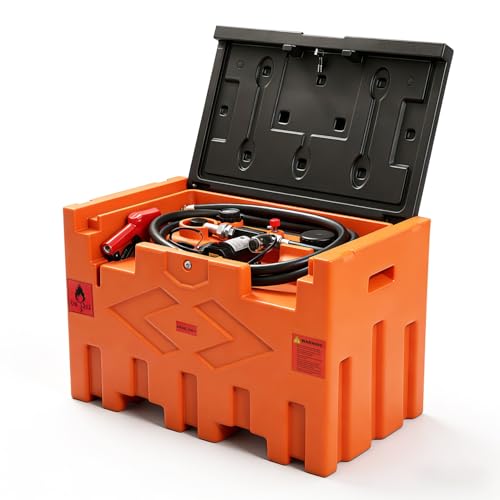
Built for those who demand reliability in remote or demanding environments, this 50 gallon portable diesel fuel tank stands out where consistent fuel access is critical. I rely on its high-density polyethylene construction-it won’t leak or deform, even under rough use. The solid top lid keeps rain out, reducing corrosion risk. Its forklift-compatible groove makes moving it easy. The 12V pump delivers 11.9 gallons per minute, with a 30-minute duty cycle and internal bypass for short dry runs. The auto shut-off nozzle prevents spills, and the aluminum alloy resists static. A 360-degree swivel keeps the hose from twisting. I trust the mechanical gauge for accurate fuel monitoring, and the in-line filter keeps diesel clean. I mount it on my flatbed-it’s ideal for refueling equipment in the field, where every minute counts.
Best For: Professionals in agriculture, construction, and remote field operations needing reliable, portable fuel supply for equipment refueling.
Pros:
- Durable high-density polyethylene construction resists leaks, deformation, and corrosion
- 12V electric pump with auto shut-off nozzle and 360-degree swivel for efficient, spill-free fuel transfer
- Forklift-compatible design and flatbed-mountable for easy transportation and deployment
Cons:
- Limited to 30-minute continuous pump operation, requiring cooldown periods for extended use
- 15-foot power wire may require extension for some vehicle or equipment setups
- Mechanical fuel gauge may lose accuracy over time compared to digital alternatives
30 Gallon Fuel Caddy with Transfer Pump

You’ll want this 30 gallon fuel caddy if you work on farms, job sites, or marinas and need reliable, on-the-move refueling. I use it daily and find the heavy-duty build holds up to rough conditions without leaks. The manual pump works every time, no power needed, and it transfers fuel smoothly to mowers, boats, or ATVs. An anti-static clip and tight seals keep things safe, and the clear gauge lets me check levels at a glance. Four rugged wheels and a strong handle make it easy to roll over uneven ground. It’s not flashy, but it does the job without drama.
Best For: Professionals and outdoor enthusiasts who need a durable, portable fuel solution for reliable on-site refueling in demanding environments like farms, construction sites, and marinas.
Pros:
- Heavy-duty construction ensures long-lasting performance and leak-free operation in tough conditions
- Manual pump provides consistent, power-free fuel transfer to a variety of equipment
- Equipped with safety features like an anti-static clip, secure seals, and a clear fuel gauge for safe, efficient use
Cons:
- Manual pumping may require physical effort for large-volume transfers
- 30-gallon capacity can be heavy and difficult to maneuver when fully loaded
- Basic design lacks advanced features like automatic shutoff or battery-powered pump options
Factors to Consider When Choosing a Portable Fuel Tank
You need a tank that matches your fuel capacity and efficiency demands without wasting space or weight. Focus on material durability and build, since polyethylene resists corrosion while metal offers puncture resistance, each with clear trade-offs. Check the pump type and flow rate, portability features, and safety compliance-these directly affect how well the tank works in real use.
Fuel Capacity And Efficiency
When choosing a portable fuel tank, start by matching the fuel capacity to your operational needs, as tanks range from 12 to 116 gallons-smaller options work best for light equipment and short missions, while larger tanks support extended use. Fill them only to 85–90% capacity to allow for fuel expansion and cut spill risks during transport. You’ll save time with an electric pump, moving fuel at 10–12 GPM-far quicker than manual or gravity-fed systems that manage just 2–4 GPM. Efficiency isn’t just about speed; dual-stage filtration removes both coarse debris and fine contaminants, which reduces engine wear and keeps combustion clean. That means fewer clogs and more reliable performance in the field. Use tanks with direct sight or mechanical gauges so you can track fuel levels in real time, avoiding surprise run-outs during critical tasks. Choosing the right balance of capacity, flow rate, filtration, and monitoring gives you dependable power when it counts.
Material Durability And Build
Material durability and build directly affect how well a portable fuel tank holds up under stress, exposure, and repeated use. You’ll want high-density polyethylene (HDPE) with 6mm to 12mm wall thickness-it handles impact, UV rays, and chemicals without cracking. UV-stabilized materials keep the tank from degrading in sunlight, maintaining strength over years. Multi-layer HDPE resists corrosion, extreme temps (-30°F to 120°F), and fuel evaporation better than single-layer tanks. If you need maximum toughness, stainless steel won’t dent or scratch easily and stands up to harsh industrial use. Look for reinforced designs with forklift pockets and integrated grooves-they make lifting safer and reduce damage during transport. Each material has trade-offs: HDPE is lighter and cheaper, while steel lasts longer but costs more. Choose based on your environment and how hard you’ll push the tank.
Pump Type And Flow Rate
Efficiency in fuel transfer hinges on the right pump and flow rate. Electric pumps move fuel faster, delivering 10 to 12 gallons per minute (GPM), so you refuel large tanks quickly. They plug into a 12V DC outlet, with power cords up to 15 feet for easy vehicle battery connections. If speed matters, electric is the clear choice. Manual pumps are slower, flowing 1 to 3 GPM, and demand physical effort, but they work anywhere-no power needed. Your choice depends on priorities: speed and convenience or independence from external power. Higher GPM cuts downtime, especially for big equipment, but only if you can support an electric setup. Most models include automatic shut-off nozzles to stop flow when the tank’s full, preventing spills and simplifying operation. These features save time and reduce risk, whether you’re fueling a generator or a work truck. Pick based on your refueling needs and power access, not just specs.
Portability And Handling Design
A portable fuel tank’s design directly impacts how easily you can move and position it, especially in demanding environments. You’ll want dual all-terrain wheels with locking brake casters-they roll smoothly over rough ground and hold firm on slopes. Collapsible tow handles and ergonomic grips cut strain when hauling over long or uneven distances. Look for integrated forklift pockets and reinforced lifting grooves if you’re loading with machinery; they guarantee secure, balanced lifts onto trucks or trailers. The tank’s built with lightweight high-density polyethylene, making it up to 40% lighter than steel without sacrificing durability. That means easier handling and less wear on your equipment. Non-slip foot pads and flat-free solid rubber tires keep the unit stable during fueling, even on muddy or uneven terrain. These features work together to give you reliable, efficient transport and placement wherever fuel’s needed.
Safety Features And Compliance
When filling up equipment in remote or high-risk environments, safety isn’t something you can compromise. You need a tank with an automatic shut-off nozzle-it stops fuel flow when the tank’s full, so you avoid spills and fire hazards. Use models with anti-static grounding clips or conductive materials to discharge static safely during transfer. Make sure the cap is child-resistant and the seals are vapor-tight-this cuts leakage and vapor release. Choose tanks made from flame-retardant materials and check they have pressure-relief vents to prevent rupture in extreme heat. Never skip compliance-look for EPA, ISO, or CSA certification to confirm the tank meets strict safety, environmental, and performance standards. These aren’t extras-they’re essentials. Skimp here, and you risk accidents, fines, or failed inspections. A compliant tank isn’t just legal-it’s proven to handle real-world conditions without cutting corners.
Fuel Compatibility And Versatility
You’ve checked the safety features-now make sure the tank can actually handle the fuel you’re putting in it. Build your choice around material compatibility: high-density polyethylene resists diesel, gasoline, and biodiesel without degrading. Check that seals, hoses, and pump parts won’t swell or crack when exposed to ethanol blends or kerosene. A tank rated for multiple fuels-gasoline, diesel, kerosene-gives you real flexibility across tools and vehicles. You’ll also avoid carrying extra containers when jobs demand different fuels. Confirm the design is vapor-tight and spill-proof, with grounding support for safe handling of volatile gasoline. Using the wrong tank risks leaks, damage, or downtime. Stick to certified models built for your exact fuel type. It’s not about convenience-it’s about keeping your gear running without surprises. Match your tank to your fuel, and you stay ready.
Filtration System Quality
If you’re pulling fuel from old drums or roadside cans, count on the tank’s filtration system to keep gunk out of your engine. A dual-stage setup with an internal pre-filter and an external fine filter stops large debris and captures particles as small as 5 microns, protecting injectors and fuel lines. You’ll want replaceable filter canisters-they maintain purity during transfer, especially in dusty or off-road conditions. Some models pair conductive filters with aluminum alloy nozzles, reducing static while trapping contaminants, which boosts both safety and fuel quality. Without effective filtration, fine sludge and metal particles can clog systems or cause engine damage over time. Look for filters rated for your fuel type and flow rate; cheaper models often skimp here, risking long-term reliability. Upgraded filtration isn’t flashy, but it’s one of the few features that actively prevents costly failures in the field.
Level Monitoring And Visibility
How confident are you that your portable fuel tank won’t leave you stranded mid-job? You need reliable level monitoring to avoid running dry. Choose tanks with mechanical fuel gauges-they give real-time, accurate readings without depending on batteries or electronics. Transparent sight gauges let you visually confirm fuel levels and spot water or contaminants early. Direct sight indicators offer quick checks at a glance, improving safety and efficiency. Graduated markers in gallons or liters on the tank’s exterior provide precise, easy-to-read measurements for better fuel planning. These features help you manage usage and avoid surprises. Pair this with an automatic shut-off nozzle, which stops fuel flow at capacity, preventing overfilling and spills. Reliable visibility and accurate monitoring aren’t luxuries-they’re essentials for uninterrupted operation. Pick a tank that lets you see and trust your fuel status, every time.
Frequently Asked Questions
Can I Use Diesel Tanks for Gasoline Storage?
No, you shouldn’t use diesel tanks for gasoline storage. Gasoline degrades certain seals and linings that diesel tanks use, risking leaks or contamination. You’ll compromise safety and tank integrity. Gasoline also evaporates faster and requires vapor-resistant materials, which diesel tanks might lack. Using the wrong tank could damage equipment or create fire hazards. Always use containers rated for the specific fuel type-gasoline tanks are designed to handle its volatility and chemical makeup safely. It’s not worth the risk.
Are Portable Fuel Tanks Legal for Public Road Use?
You can’t legally use portable fuel tanks on public roads in most states. They’re not DOT-approved for vehicle transport, and doing so risks fines or safety violations. If caught, you’ll face penalties-insurance might even deny claims. These tanks are meant for off-road, temporary storage-not driving. Carry fuel only in factory-installed tanks. Using portable ones while driving creates fire, spill, and vapor hazards. It’s unsafe and prohibited. Stick to approved methods. No shortcuts are worth the risk.
How Often Should I Replace the Fuel Hose?
Replace the fuel hose every 3 to 5 years, or sooner if you spot cracks, stiffness, or leaks. You use it under pressure and temperature swings, so wear happens even if it looks fine. Check it before each use-dry rot or swelling means replace it now. Don’t risk spills or failure. After five years, rubber degrades, even with care. A $20 hose isn’t worth a fire. Swap it on schedule.
Do Fuel Tanks Need Ventilation to Work Properly?
Yes, fuel tanks need ventilation to work properly. Without it, pressure builds up and disrupts fuel flow. You’ll notice sputtering engines or difficulty refueling. Vents let air replace used fuel, maintaining balance. But they also increase vapor risk, so don’t ignore safety. Some tanks use manual vents you open and close-more control, less spill risk. Others have automatic systems; convenient but can fail. Always check vent condition. A clogged or broken one causes performance issues fast. Keep it clean and functional.
Can I Store a Filled Fuel Tank Indoors Safely?
You shouldn’t store a filled fuel tank indoors-it’s unsafe and often violates fire codes. Fuel vapors can accumulate, creating explosion risks near sparks or flames. Even sealed containers vent small amounts, especially in temperature swings. If you must, use only approved safety cans with pressure relief and store in a detached shed or ventilated area away from living spaces. Never keep it in garages, basements, or near appliances. Outdoors is safer and code-compliant.