Best Axes for Chopping, Camping, and Woodworking Enthusiasts
You need an axe that matches your task and strength. For splitting, the Fiskars X27 and X25 deliver power with forward-weighted heads and shock-absorbing handles. The X7 hatchet handles kindling with precision, while the Cold Steel Trail Boss tackles chopping and brush. Fiberglass models like the INTERTOOL 36” offer durability and vibration control. Balance, weight, and blade geometry matter-choose based on log size, frequency, and portability. Each axe here trades weight for efficiency, giving you options that perform when it counts.
We are supported by our audience. When you purchase through links on our site, we may earn an affiliate commission, at no extra cost for you. Learn more. Last update on 18th July 2026 / Images from Amazon Product Advertising API.
Notable Insights
- Fiskars X27 Super Splitting Axe offers 36-inch leverage and a 4.3-lb head for powerful, controlled chopping in heavy-duty tasks.
- Fiskars X7 Hatchet features a 1.5-lb head and 14-inch FiberComp handle, ideal for camping with minimal vibration and portability.
- High-carbon steel blades hold sharp edges longer but require regular maintenance to prevent rust and chipping.
- Convex bevel geometry enhances splitting efficiency by concentrating force, reducing drag and sticking in hardwood.
- Fiberglass and composite handles absorb shock, resist environmental damage, and improve grip in wet or challenging conditions.
Fiskars X27 Super Splitting Axe 36

If you’re splitting medium to large logs regularly-especially as a camper, homesteader, or backyard firewood user-the Fiskars X27 Super Splitting Axe 36 is one of the most effective tools I’ve used for reducing effort and improving strike efficiency. Its 4.3-pound forged alloy steel head and 36-inch handle deliver solid power with each swing, and the convex bevel cuts deep with minimal sticking. I’ve split seasoned oak and hickory cleanly in one hit. The steel-wood composite handle absorbs shock well, though it’s stiff-good for control, not cushion. Textured grip keeps it secure. It’s heavy at 6.28 pounds, but the weight aids momentum. Includes a sheath and carries a lifetime warranty.
Best For: Individuals who regularly split medium to large logs, such as campers, homesteaders, and backyard firewood users seeking efficient, powerful performance with minimal effort.
Pros:
- Delivers one-strike splits on seasoned hardwoods like oak and hickory thanks to its 4.3-pound forged alloy steel head and convex bevel design
- 36-inch steel-wood composite handle provides excellent leverage, shock absorption, and control during use
- Includes a protective sheath and is backed by a lifetime warranty for long-term reliability
Cons:
- Weighs 6.28 pounds, which may be heavy for some users and could cause fatigue over extended use
- Handle stiffness, while good for control, offers minimal cushioning on impact
- Higher price point compared to basic splitting axes, potentially limiting budget-friendly options
Fiskars X25 Splitting Axe 28

The Fiskars X25 Splitting Axe 28 is built for people who split firewood regularly and need a reliable, durable tool that won’t quit after a season of heavy use. I’ve used it on medium to large logs, and the 6.14-pound weight delivers solid splits with minimal rebound. The forged alloy steel blade holds a sharp edge and penetrates cleanly thanks to its convex bevel design. My swings feel efficient-the FiberComp handle absorbs shock well and won’t splinter like wood. It’s lighter than steel but just as strong. At 28 inches, it’s manageable for most users and easier to store than longer axes. I appreciate the included sheath for safety and the lifetime warranty. It’s not meant for fine chopping, but for splitting, it performs consistently.
Best For: Individuals who frequently split firewood and need a durable, high-performance axe that delivers powerful, efficient splits with minimal rebound.
Pros:
- Advanced convex bevel blade design ensures clean, one-strike splits on medium to large logs
- Lightweight yet extremely durable FiberComp handle absorbs shock and resists damage better than wood or steel
- Includes protective sheath and backed by a lifetime warranty for long-term reliability
Cons:
- Not optimized for fine chopping or precision woodwork tasks
- 6.14-pound weight may be heavy for some users during extended use
- Higher price point compared to basic splitting axes
10” Outdoor Hatchet with Fiberglass Handle

You’ll want a hatchet that keeps up when you’re deep in the woods and every ounce counts. I rely on the 10” DESHIL Outdoor Hatchet because its 1.1-pound frame balances strength and portability. The forged carbon steel head holds a sharp edge after heat treatment and resists rust with its coated surface. I’ve split kindling and driven stakes with the hammer poll-both tasks go smoothly. The fiberglass handle absorbs shock and stays grippy, even when wet. It won’t flex or rot like wood. At 10 inches, it’s compact but effective. A plastic sheath keeps the blade safe during transport. This hatchet isn’t flashy, but it works.
Best For: Outdoor enthusiasts like campers, hikers, and backpackers who need a lightweight, durable hatchet for splitting wood, driving stakes, and general campsite tasks.
Pros:
- Lightweight 1.1-pound design balances portability and performance for outdoor adventures
- Forged carbon steel head with heat treatment holds a sharp edge and resists rust and wear
- Fiberglass handle offers shock absorption, durability, and a secure grip even in wet conditions
Cons:
- Plastic sheath may feel less durable compared to premium leather or nylon holsters
- Limited cutting edge length (10 inches) restricts heavy-duty chopping capabilities
- No detailed information on warranty or long-term brand support included
Fiskars X7 Hatchet 14″ Wood Splitter

I reach for the Fiskars X7 Hatchet 14” when splitting firewood or prepping kindling on a camping trip, and it consistently outperforms standard hatchets with its forged steel blade and 1.5-pound head that delivers 3x deeper cuts. The low-friction coating helps it release cleanly from wood, reducing sticking. Its FiberComp handle absorbs shock, cutting vibration and fatigue during repeated swings. I’ve used it for hours splitting small logs and not once did my hand feel sore. At 1.4 pounds total, it’s light enough for portability but heavy enough to stay effective. The 5.12-inch blade balances well, and the ergonomic grip keeps control sharp. It’s built to last-backed by a lifetime warranty.
Best For: Outdoor enthusiasts and adventurers who need a reliable, lightweight, and efficient tool for splitting firewood, prepping kindling, and handling campsite or backyard tasks.
Pros:
- Forged steel blade with low-friction coating delivers 3x deeper cuts and resists sticking
- Shock-absorbing FiberComp handle reduces vibration and hand fatigue during prolonged use
- Lightweight yet powerful design offers excellent balance and control with a lifetime warranty
Cons:
- May be underpowered for very large or dense logs due to 1.5-pound head
- Shorter 14-inch length may not suit users preferring longer handles for leverage
- Higher price point compared to basic hatchets with fewer features
Cold Steel Trail Boss Axe, 27 Inch

Built for those who demand reliability in rugged terrain, the Cold Steel Trail Boss Axe suits campers, trail workers, and woodcrafters needing a compact yet tough tool for sustained outdoor use. I’ve found its 27-inch hickory handle and 1055 carbon steel head deliver solid swing power without sacrificing control. At 2.59 pounds, it’s light enough to carry but heavy enough to chop kindling, clear brush, or fell small trees efficiently. The 4.5-inch plain edge holds up well, even after repeated use in harsh conditions like the Australian outback. While not NATF legal, it outperforms many hatchets in durability. It’s a no-frills, functional axe built for work, not show.
Best For: Outdoor enthusiasts, trail workers, and campers who need a durable, full-sized axe for heavy-duty tasks in rugged environments.
Pros:
- Durable 1055 carbon steel head and straight-grained American hickory handle offer excellent strength and reliability
- 27-inch length and 2.59-pound weight balance power and control for efficient chopping and felling
- Field-tested in extreme conditions, proving superior durability compared to standard hatchets
Cons:
- Not NATF legal, limiting use in certain regulated firewood transport zones
- Heavier than typical hatchets, which may affect portability for some users
- No additional tools or accessories included, sold as axe only
Chopping Axe 33.5” 4.5lbs Fiberglass Handle

One of the few axes that consistently handles dense hardwoods like oak and maple without compromising control is the Chopping Axe 33.5” 4.5lbs Fiberglass Handle, making it a solid choice for homeowners and outdoor workers who prioritize durability and performance. I’ve used it to split knotty logs and fell small trees, and the 4.5-pound weight delivers solid impact without tiring me out. The fiberglass handle resists water, vibration, and warping, and the rubber grip stays secure even when wet. High-carbon steel holds a sharp edge well, though it needs regular maintenance. At 33.5 inches, it’s balanced, reducing strain over long sessions. It’s no-frills, functional, and built to last.
Best For: Homeowners, gardeners, and outdoor workers seeking a durable, high-performance chopping axe for heavy-duty tasks like splitting hardwoods and felling small trees.
Pros:
- Effectively handles dense hardwoods like oak and maple with a balanced 4.5-pound design for powerful, controlled strikes
- Fiberglass handle resists water, vibration, warping, and degradation, with a non-slip rubber grip that ensures security in wet or sweaty conditions
- High-carbon steel blade maintains a sharp edge and delivers long-term durability with proper maintenance
Cons:
- Requires regular sharpening and blade maintenance to sustain peak performance
- Heavier than standard hatchets, which may not suit users preferring lighter tools
- No additional features or accessories beyond the basic axe and sheath, limiting versatility for specialized tasks
Edward Tools 17” Wood Splitting Maul 3 lb
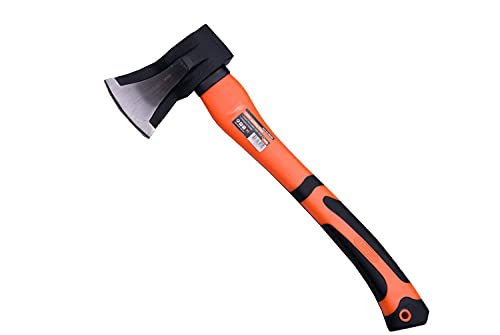
The Edward Tools 17” Wood Splitting Maul is best for campers and homeowners who regularly split firewood and need a durable, no-fuss tool that outperforms basic axes. I use it to split wood twice as fast as I would with a standard camp axe, thanks to the 3 lb forged steel head and sharp blade. The dual-purpose design works like a sledge and wedge, so I don’t carry extra tools. Its fiberglass handle has a rubberized grip that cuts vibration, and it’s held up through months of use. I store it with the included rubber sheath, and I trust it because it’s backed by a lifetime warranty.
Best For: Campers and homeowners who regularly split firewood and need a durable, high-performance tool that combines the power of a sledgehammer and wedge in one.
Pros:
- Splits wood twice as fast as traditional camp axes thanks to a 3 lb forged steel head and sharp blade
- Dual-purpose design eliminates the need for separate sledgehammer and wedge
- Ergonomic fiberglass handle with rubberized grip reduces vibration and enhances control
Cons:
- Heavier than standard hatchets, which may limit portability for some users
- Handle material combines fiberglass, rubber, steel, and wood, potentially raising durability concerns over long-term use
- Limited color options (available only in black)
INTERTOOL 36″ Chopping Axe (HT-0264)

If you’re tackling firewood, clearing brush, or maintaining a homestead, the INTERTOOL 36″ Chopping Axe (HT-0264) delivers solid performance without fuss. The 2.8 lb carbon steel head holds its edge well, and the 36-inch fiberglass handle gives solid swing power while dampening vibration. I’ve used it in rain and heat, and the rubber grip stays secure in my hand. It’s well-balanced, making swings feel controlled rather than clumsy. At 4.8 pounds total, it’s light enough for extended use but still packs enough heft for felling small trees or splitting logs. The blade comes pre-sharpened and resists rust thanks to a protective coating. I keep the included sheath on when stored-it protects the edge and makes transport safer. It won’t replace a maul for heavy splitting, but for general outdoor chopping, it’s reliable and durable.
Best For: DIY woodcutters, campers, and homesteaders needing a reliable, well-balanced axe for chopping firewood, clearing brush, and light tree felling.
Pros:
- Durable 2.8 lb heat-treated carbon steel head maintains a sharp edge and resists rust
- 36-inch shock-absorbing fiberglass handle with textured rubber grip ensures control and reduces vibration
- Lightweight at 4.8 lbs yet powerful enough for firewood splitting and felling small trees
Cons:
- Not suitable for heavy-duty splitting tasks that require a splitting maul
- Fiberglass handle, while strong, may not appeal to users preferring traditional wood handles
- Limited reach for taller users due to fixed 36-inch length
Fiskars 8 lb Splitting Maul 36

You’ll want the Fiskars 8 lb Splitting Maul 36 if you regularly tackle medium to large hardwood logs and need a tool built for power and endurance. I use it for splitting firewood and camp prep, and its 8 lb head delivers solid, one-strike splits. The 36-inch handle gives me leverage, especially as a taller user, and the IsoCore technology reduces vibration, so my hands stay comfortable. The forged steel blade resists rust and holds its edge longer than cheaper models. While it’s heavier at 10.4 lbs, that weight helps with momentum. It’s not for fine work, but for splitting, it’s efficient and durable.
Best For: Individuals who regularly split medium to large hardwood logs and need a durable, powerful maul with excellent shock absorption and leverage.
Pros:
- Delivers efficient, one-strike splits thanks to optimized weight distribution and advanced blade geometry
- IsoCore handle reduces vibration and hand fatigue, improving control and comfort during extended use
- Rust-resistant forged steel blade stays sharp longer and withstands heavy-duty splitting tasks
Cons:
- Weighs 10.4 lbs, which may be too heavy for some users or for prolonged overhead swings
- Not suitable for fine woodwork or kindling due to its heavy, specialized design
- Higher price point compared to basic splitting mauls without advanced ergonomic features
36” Camping Axe with Shock-Absorbing Handle

A 36-inch camping axe with a shock-absorbing handle like the ZEUSTR R01V1250 suits anyone serious about reducing fatigue during prolonged chopping tasks. I’ve used it for splitting wood and kindling, and the fiberglass and TPR handle noticeably cuts vibration. The forged steel head holds its edge well, even after repeated use on hardwoods. At 4.69 pounds, it’s light enough to pack on trips but still delivers solid impact. The textured grip stays secure in wet or gloved hands, and the compact 11-inch head improves control. It’s multipurpose-good for camp chores or kitchen prep. Not the lightest axe out there, but the balance between weight and durability works.
Best For: Outdoor enthusiasts and campers who need a durable, shock-absorbing axe for prolonged chopping tasks with reduced fatigue.
Pros:
- Forged steel head maintains sharpness and withstands heavy use on hardwoods
- Fiberglass and TPR shock-absorbing handle significantly reduces vibration and user fatigue
- Textured ergonomic grip ensures secure, non-slip control in wet or gloved conditions
Cons:
- At 4.69 pounds, it may feel heavy for users seeking an ultralight camping tool
- Limited portability due to full 36-inch length despite compact head design
- Multipurpose claims include kitchen use, but appearance and outdoor focus may not suit indoor settings
Factors to Consider When Choosing Axe
You’ll want to check the blade material’s durability, since high-carbon steel holds an edge longer but needs more maintenance than softer alloys. Handle length and weight distribution directly affect your swing power and control, so match them to your usual tasks-shorter for precision, longer for heavy chopping. Features like shock-absorbing grips or full tang construction improve comfort and safety over time, especially when sharpness and edge geometry influence cutting efficiency.
Blade Material Quality
High-carbon steel delivers a sharp, durable edge that holds up under repeated use, thanks to heat treatment that boosts hardness and resistance to wear. You’ll find it keeps its edge longer, reducing how often you need to sharpen. Forged alloy steel is stronger and more durable because of its refined grain structure, formed through controlled heating and shaping. If you’re splitting wood regularly, a convex bevel edge increases splitting power and helps the axe glide through fibers without sticking. Look for rust-resistant coatings-especially if you work in damp conditions-as they slow corrosion and extend blade life. Sharpness and how long it lasts also depend on precise grinding techniques and low-friction coatings, both of which reduce resistance on each swing. These features won’t fix poor technique, but they do make a measurable difference in performance and maintenance when you’re relying on your axe day after day.
Handle Length And Balance
Length and balance shape how the axe performs in your hands. A longer handle, like 36 inches, gives you more leverage and momentum, making it easier to split large logs with fewer swings. But if you’re working in tight spaces or camping, a shorter handle between 14 and 28 inches offers better control and portability. Your height and strength matter-too long or too short a handle reduces accuracy and increases fatigue. Balance is key: peak performance happens when the center of gravity is near the head, transferring maximum energy on impact. This improves swing efficiency and strike precision. A poorly balanced axe feels awkward, wastes effort, and can lead to mistakes. Choose a length and balance that match your body and task-you’ll work smarter, not harder, with cleaner results and less strain over time.
Weight Distribution And Power
When the weight shifts forward toward the head, you get more force behind each swing, turning raw momentum into effective splitting power. A heavier head increases momentum, driving the axe deeper with each strike, especially in dense or knotted wood. Models with forward-weighted designs can deliver up to three times deeper cuts than evenly balanced ones. The center of gravity near the blade boosts cleaving efficiency, making splitting tasks faster and less repetitive. Still, a good power-to-weight ratio matters-you want maximum impact without quick fatigue. An optimized balance between head and handle keeps your swing fast and controlled, improving accuracy and energy transfer. You’ll notice the difference in prolonged use, where efficient designs reduce strain. For campers and woodworkers alike, this balance means fewer swings and better results. Choose based on how the weight feels in motion, not just in hand.
Edge Geometry And Sharpness
Edge geometry shapes how effectively your axe bites into wood, and a convex bevel gives you better penetration by concentrating force along a stronger, more durable edge. You’ll get cleaner splits with less effort because the convex shape reduces drag as it drives into timber. A sharper edge with precise grinding cuts deeper on impact, lowering resistance and improving efficiency. Look for heat-treated or forged steel-it holds its sharpness longer, even after repeated use. The bevel angle matters too: too steep, and you lose bite; too shallow, and the edge rolls easily. Low-friction coatings help the blade release cleanly after each strike, reducing sticking. You want a grind that balances splitting power with edge retention. This isn’t about looks-it’s about function. A well-ground axe makes each swing count, especially when fatigue sets in. Choose an edge that stays sharp, cuts efficiently, and withstands harsh use.
Shock Absorption Features
A sharp edge cuts efficiently, but even the best grind won’t save you from fatigue if your axe doesn’t manage shock. You’ll feel every jolt in your hands and arms if the handle transmits vibration. Composite handles reduce that feedback by up to 70%, so you can swing longer with less strain. Look for internal dampening systems or flexible cores-they absorb impact energy instead of passing it to your joints. Fiberglass and reinforced polymers offer consistent vibration resistance without sacrificing durability. Textured grips help too, keeping your hold secure while cushioning each strike. Proper weight distribution between head and handle also minimizes kickback, especially when splitting dense wood. These features work together to cut down on wear over hours of chopping. You’re not just swinging metal-you’re using a system designed to protect your body. Smart engineering here means fewer breaks and better performance when it counts.
Grip Comfort And Control
Though strength matters, your control hinges on how well you hold the axe, and that starts with the grip. You need a textured, non-slip surface-rubber or composite-so your hold stays secure in wet or sweaty conditions. Overmolded thermoplastic rubber (TPR) adds cushioning and keeps your grip firm, even in rain or cold. Look for ergonomically shaped handles; they fit your hand’s natural curve, boosting comfort and strike precision. Shock-absorbing materials cut vibration by up to 70%, reducing hand fatigue and strain during long sessions. A balanced handle, weighted right between head and grip, minimizes hand shift and improves swing accuracy. These aren’t luxuries-they’re necessities for control and safety. When your hands stay comfortable and stable, your swings stay accurate. Choose grip features that match your use, not just feel. Details like texture, balance, and material directly impact performance where it counts.
Durability In Harsh Conditions
When you’re working in extreme cold or constant damp, your axe needs to hold up without failing. Choose a blade made from heat-treated carbon steel-it stays sharp and resists cracking or bending, even after repeated use in freezing or wet conditions. Fiberglass or composite handles absorb shock better than wood, reducing the chance of splintering when temperatures swing or impacts are heavy. Look for a non-slip, textured grip; it keeps your hold steady in rain, snow, or mud. A rust-resistant coating on the blade fights corrosion when exposed to moisture, so you won’t need constant maintenance. Make sure the head-to-handle connection is fully sealed-this stops water from getting inside, which can cause long-term damage. These features don’t just add durability; they keep the axe functional when conditions are toughest. Skip them, and you risk early failure.
Intended Use And Versatility
What kind of work will you actually be doing with your axe? If you’re splitting logs for firewood, go for a heavy-headed axe with a wedge-shaped blade-it drives through wood fibers efficiently and reduces effort. For felling trees or cutting limbs, choose a chopping axe with a sharper, narrower blade that bites cleanly into wood across the grain. Need something more flexible? A multi-purpose axe with a hammer poll lets you drive stakes or perform light hammering, adding utility without extra tools. If you’re backpacking or camping, a compact axe with a 14 to 17-inch handle saves space and weight. For heavy-duty splitting, a long handle-28 inches or more-gives you added leverage and power. Pick based on what you’ll actually do, not what the axe can possibly do.
Frequently Asked Questions
Can I Use a Splitting Axe for Camping Tasks?
You can use a splitting axe for camping, but it’s not ideal. It’s heavier and bulkier than necessary, making packing and handling harder. It splits logs well along the grain but struggles with general camp tasks like limbing or carving. A lighter, all-purpose axe gives you better control and versatility. If you’re only splitting firewood at camp, it’ll work-otherwise, you’re better off with a compact, balanced axe designed for outdoor use.
Are Fiberglass Handles Better Than Wooden Ones?
Fiberglass handles are stronger and more weather-resistant than wood, so they won’t rot or warp over time. You’ll find they absorb vibration better, reducing fatigue during repeated swings. But they’re stiffer, which can transfer more shock to your hands if the strike isn’t clean. Wood feels more balanced and dampens shock naturally, but it can crack or splinter with heavy use. Choose fiberglass for durability in wet conditions, wood for comfort and feel.
How Often Should I Sharpen My Axe?
You should sharpen your axe every few uses or whenever it struggles to bite into wood cleanly. A dull edge forces you to work harder and increases slip risks. You’ll notice it’s time when chopping requires excessive force or produces crushing instead of clean splits. Regular stropping between full sharpenings helps maintain the edge. How often you sharpen depends on use frequency and wood type-softer woods dull it slower than resinous or dirty wood. Keep it sharp; it’s safer and more efficient.
Is a Heavier Axe Always More Effective?
No, a heavier axe isn’t always more effective. You’ll gain power per swing, but you’ll also tire faster and lose control. For precision or prolonged use, a lighter axe gives better swing speed and accuracy. Match weight to your task-splitting logs demands more heft, but limbing or carving needs agility. Balance, handle length, and edge sharpness matter just as much. Choose function over weight alone.
What Safety Gear Should I Wear When Chopping Wood?
You should wear cut-resistant gloves to protect your hands and steel-toed boots to shield your feet from accidental drops. Always use safety goggles to guard against flying wood chips. A hard hat helps if working overhead or in wooded areas with falling debris. Hearing protection reduces long-term risk from repetitive axe strikes. Durable, close-fitting clothing prevents snagging. These gear choices reduce injury without limiting movement, balancing safety and practicality in real use.