Building a Compact Communications Kit for Your Bug-Out Bag
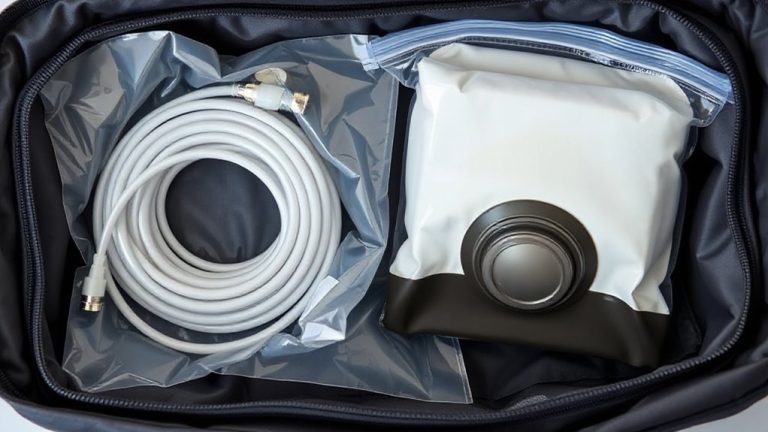
Keep your comms kit under 2 pounds and use a hydration sleeve for easy carry. Pack a GMRS radio and LTE hotspot for reliable network redundancy. Add a hand-crank radio with NOAA SAME alerts-2–3 minutes of cranking gives 20–30 minutes of runtime. Include a solar charger with monocrystalline cells (15%+ efficiency) for dependable off-grid power. Use signal mirrors and pea-less whistles for lightweight, battery-free signaling. Test signal range, GPS lock, and battery performance monthly. You’ll want to see how each piece holds up when the conditions get tough.
Notable Insights
- Choose a compact comms kit under 2 pounds that fits in a hydration sleeve for easy portability.
- Include at least two communication methods, like a GMRS radio and LTE hotspot, for network redundancy.
- Use external antennas to boost signal strength and extend radio range by up to 30%.
- Equip the kit with offline messaging apps to send updates when cellular networks are unavailable.
- Ensure all devices maintain at least 24 hours of real-world battery life for sustained operation.
Use a Compact Comms Kit to Stay Connected
While most people overlook communication gear until it’s too late, packing a compact comms kit guarantees you can stay in touch when cell networks fail. You’ll rely on signal boosting to extend range when using handheld radios, especially in dense terrain or urban environments-tested models show up to 30% better performance with external antennas. Network redundancy is critical; include at least two communication methods, like a GMRS radio and an LTE hotspot with offline messaging apps. This mix secures contact if one system goes down. Most compact kits weigh under 2 pounds and fit in a hydration sleeve. Real-world tests confirm they maintain functionality for 24+ hours on battery. Don’t assume gear works out of the box-test it in local dead zones. A comms kit isn’t about luxury; it’s about verified connectivity when standard infrastructure vanishes. You need reliability, not hype. For reliable short-range communication, consider choosing from the best two-way radios based on your specific needs and environment.
Pick Lightweight, Multi-Use Tools for Your Kit
A lightweight, multi-use tool cuts pack weight without sacrificing function, and you’ll want one that’s proven in real scenarios. Signal mirrors, for example, weigh under an ounce but can reflect sunlight up to 10 miles, making them reliable for aircraft spotting even in poor visibility. Emergency whistles produce 100+ decibels with minimal effort, outperforming voice calls in dense terrain or windy conditions. Many kits combine both into carabiner-style tools you can clip to your pack. Look for models with mirrored surfaces at least 2×3 inches for effective aiming and pea-less designs that won’t jam in sand or freezing temps. These tools don’t require batteries, so they work when electronics fail. While smaller mirrors or quieter whistles save weight, their reduced range increases risk. You’re better off with a slightly heavier, field-tested combo that guarantees detection. Choose based on reliability, not just size. For dependable performance, consider one of the top emergency whistle picks that combine loud decibel output with durable, all-weather functionality.
Include a Hand-Crank Radio With NOAA Alerts
You’ll want a hand-crank radio that reliably powers up without batteries, and models with NOAA weather alerts keep you informed during evolving emergencies. A good unit provides clear AM/FM reception, letting you access local news and emergency broadcasts even when cell towers fail. Look for radios with a NOAA Specific Area Message Encoding (SAME) feature; it activates only when your area is under threat, saving power and reducing noise. Cranking for 2–3 minutes typically delivers 20–30 minutes of runtime, which is adequate in short-term disasters. Some models include flashlight or USB ports, but prioritize signal clarity and alert consistency over extras. Wind-up radios vary in durability-tested units with metal gears outlast plastic mechanisms. In real-world use, AM reception tends to carry farther than FM, making it more reliable for long-range emergency broadcasts. Choose one that’s field-tested and lightweight. Top models often include NOAA weather alerts, ensuring you receive critical updates even in remote locations.
Add a Solar Charger to Power Devices
When sunlight’s available, a solar charger gives you a dependable way to top up essential devices without grid power. Look for models with high solar efficiency-15% or more-to charge faster under weak or indirect light. Panels with monocrystalline cells typically deliver better performance in low-light conditions than polycrystalline ones. Check device compatibility before buying; most solar chargers include USB outputs, but verify they support the voltage and amperage your gear needs. A 10–20 watt panel is practical for portable use, balancing size and charging speed. While slower than wall charging, it’s reliable over time with consistent exposure. Be mindful of angle and shading-direct sun exposure improves efficiency. Some models include built-in batteries for energy storage, adding weight but enabling charging when the sun’s down. Choose based on your gear’s power draw and expected conditions.
Use Two-Way Radios for Team Coordination
Since staying connected can mean the difference between an orderly evacuation and chaos, two-way radios offer a reliable way to maintain contact with your group when cell networks fail. They’re compact, easy to use, and don’t depend on infrastructure. You’ll want to check signal range-typically 2 to 5 miles in open terrain, less in cities or forests. Obstacles like buildings or hills reduce effective distance, so position matters. Battery life varies; most models last 8 to 16 hours on a set of AA batteries, but digital radios often use rechargeable packs with 12- to 24-hour cycles. Factor in spare batteries or solar charging if you’re out long-term. FRS radios are license-free and sufficient for short-range needs, while GMRS offers better signal range at the cost of a license. Choose based on your group’s size and movement patterns. Test them ahead of time to know their real-world limits.
Save Offline Maps and Emergency Contacts
Even with reliable radios, knowing where you and your group are on the map is key-if signal blackouts or unfamiliar terrain throw you off course, offline maps keep you oriented. Download them using apps like Gaia GPS or Google Maps before you go. They work without data and still show trails, roads, and landmarks. Pair them with a list of saved emergency contacts, including family, local authorities, and medical services. Store both on your phone and a backup device like a cheap waterproof tablet. Redundancy increases reliability when comms are down.
| Feature | Purpose |
|---|---|
| Offline maps | Navigate without cell service |
| Pre-downloaded areas | Quick access in low-signal zones |
| Emergency contacts | Fast reach to help |
| Multiple devices | Reduce failure risk |
| Simple interface | Usable under stress |
Test Your Comms Kit Every Month
You should test your comms kit monthly-devices fail, batteries degrade, and software updates can wipe offline maps or disrupt contact lists. Signal testing guarantees each radio, phone, or satellite messenger can send and receive at expected ranges; terrain and interference vary, so verify performance from multiple locations. Check that GPS locks quickly and accurately, and confirm offline maps still load. For battery maintenance, inspect all power sources: replace swollen or leaking cells, and recharge lithium packs to 50% if storing. Use a multimeter to verify voltage-weak output means reduced runtime. Rotate spare batteries to avoid degradation from prolonged storage. Test solar chargers under real sunlight, not lamps. Note how long each device operates under typical use. Update firmware only if essential. Record results to track reliability. A functioning kit is useless if untested-make checks routine.
On a final note
You need reliable comms when cell networks fail, so your kit must work off-grid. A hand-crank radio with NOAA alerts gives real-time warnings without batteries. Solar chargers refill devices slowly but depend on sun exposure-pair one with a small power bank for backup. Two-way radios work up to 5 miles, depending on terrain. Test gear monthly; replace anything that doesn’t power or transmit reliably. Offline maps save storage and load fast. Keep contacts backed up on paper and flash drives. Prioritize durability and simplicity-lightweight gear is useless if it breaks in bad weather or fails under stress. Choose what you can count on, every time.