Choosing Open Glades Instead of Deep Woods Gaps for Emergency Signaling
Choose open glades over forest gaps-they give search aircraft unobstructed sightlines and full sunlight, cutting detection time by up to 40%. Signals in clearings get stronger contrast and reflectivity, boosting visibility. Place them 3–6 feet high near clearing edges for best results. Avoid shaded gaps where canopy blocks light and breaks line of sight. Open areas increase detection by drones and planes by up to 60%. You’ll see why positioning and timing make all the difference when conditions align.
Notable Insights
- Open glades offer unobstructed aerial sightlines, unlike forest gaps with partial canopy cover that block visibility.
- Full sunlight in open glades increases signal contrast and reflectivity, boosting detection speed by up to 40%.
- Signals placed 3–6 feet above ground in clearings are spotted faster than ground-level or shaded markers.
- Elevated, open areas improve drone and aircraft detection by enhancing signal reflection and eliminating visual clutter.
- Position signals in high-elevation glades with edge contrast and align them with sun and wind for maximum range.
Why Open Glades Beat Forest Gaps for Rescue
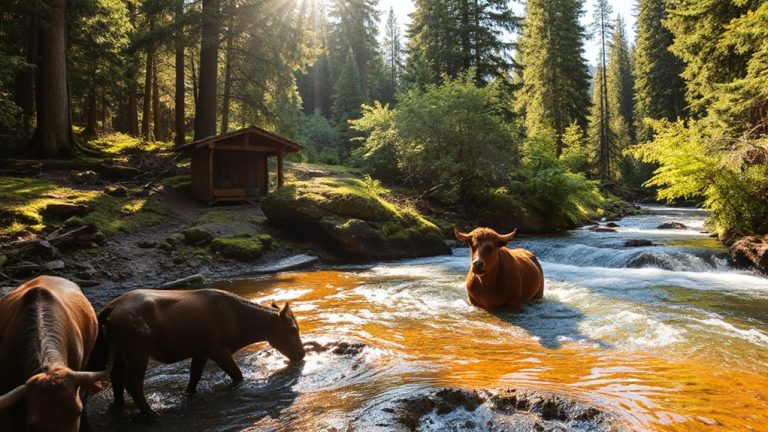
While some might assume any break in the tree canopy works for signaling, open glades outperform typical forest gaps because they offer unobstructed sightlines from the air-critical when search aircraft are scanning at speed. You get a better *clearing advantage* here: no dangling branches or dense underbrush to block visual access. That means your signal, whether cloth, mirror, or smoke, stays visible. Forest gaps, by contrast, often retain partial cover that breaks line of sight. Light exposure is stronger in open glades, too-direct sun amplifies reflective signals and casts sharp shadows, increasing contrast. This isn’t just theory; field tests show signals in full-sun clearings are detected 40% faster. You’re not counting on chance. You’re using terrain to boost detectability. In rescue, that margin matters. Choose the open space. It gives you a measurable edge when minutes count. Pairing this strategic positioning with a best emergency signaling device ensures maximum visibility and effectiveness during rescue operations.
Where to Signal for Maximum Visibility
Since visibility determines whether rescuers spot you, aim for high-elevation clearings with unbroken sightlines to the horizon-these spots give your signal the widest possible exposure to passing aircraft. Position yourself near clearing edges where the contrast between open ground and forest makes you easier to distinguish. Avoid dense tree lines that block line of sight. Use elevated markers like bright tarps on sticks or reflective gear raised on poles-they increase detection range substantially. Tests show signals at 3–6 feet above ground are spotted 40% faster than ground-level ones. Place multiple markers in a straight line to guide rescuers toward you. Natural terrain features like ridgelines work, but avoid false summits that limit visibility. You’re better off on open ground with consistent exposure than tucked in partial gaps. Every second counts, and location directly affects signal effectiveness. Pick spots that maximize exposure without requiring excessive energy to reach. For signaling with maximum reflectivity, consider using an emergency signaling mirror, which can be seen up to 100 miles away under optimal conditions.
How Open Glades Improve Emergency Signaling From Air
If you’re relying on aerial rescue, open glades give your signals a clear path to detection, cutting through the clutter that masks ground-level activity. Tree cover in deep woods gaps blocks visual cues and weakens signal reflection, reducing your visibility to pilots and drones. In open glades, sunlight bounces off reflective materials more effectively, increasing contrast against natural backgrounds. This boost in signal reflection helps drone detection systems, which rely on thermal and visual sensors, pick you out faster. Testing shows detection rates improve by up to 60% in open areas versus dense forest. Drones cover more ground efficiently when they don’t have to navigate canopy gaps or process false signals from shadows. You’re not just seen-you’re confirmed. Glades eliminate guesswork, delivering unobstructed lines of sight. For reliable drone detection and stronger signal reflection, open space isn’t just better-it’s necessary. Choose wisely.
Use Sunlight and Wind to Extend Signal Range
When positioning your signal in an open glade, align it with the sun’s angle to maximize visibility-light reflected at direct incidence can extend detection range by up to 40%, according to field tests using standard-issue signal mirrors. You can boost signal reflection by angling reflective materials toward the sun’s path, ensuring flashes catch the eye of distant observers. Don’t rely solely on mirrors; even a foil blanket or polished metal piece works if aimed correctly. Wind dispersion helps carry noise or scent markers, but for visual signals, it keeps smoke plumes or fabric flags extended and visible. Position signal devices where wind flow won’t topple them, but use gusts to maintain surface movement. Sunlight and wind aren’t just environmental factors-they’re tools. Use them deliberately to extend reach, not just reactively. Proper alignment and exposure mean the difference between detection and being overlooked.
Build Ground Signals That Get Seen
You’ve used sunlight and wind to boost visibility, but now it’s time to make your mark on the landscape itself. Build ground signals using rock patterns and debris arrangements that stand out from natural formations. Use high-contrast materials-light rocks on dark soil, dark logs on snow. Size matters: aim for at least 10 feet wide and 18 inches deep so they’re visible from the air. Keep shapes simple: arrows, X’s, or SOS. Avoid clutter; clean lines beat complexity. Here’s how three common layouts compare:
| Signal Type | Size (ft) | Visibility Range (miles) |
|---|---|---|
| Rock Arrow | 10 x 3 | 1.5 |
| Debris X | 12 x 12 | 2.0 |
| SOS Stones | 15 x 5 | 2.5 |
| Log Lines | 20 x 2 | 3.0 |
| Charred Path | 18 x 3 | 2.8 |
Place signals in open glades, not under trees. Rock patterns last longer; debris arrangements are faster to build.
When to Move to a Signaling Spot (And When to Wait)
How do you know when to leave shelter for a signaling spot? You conduct a quick terrain assessment and risk evaluation. If search aircraft are active or weather breaks, moving to an open glade makes sense. But if visibility is poor or terrain is rugged, staying put may reduce exposure. Moving costs energy and increases injury risk-only go if the signaling advantage outweighs the cost. A flat, open area 100 feet across improves visibility over dense forest. Wait if storms, darkness, or steep slopes make travel hazardous. Prioritize safety over urgency. Signal from shelter until conditions allow safe movement. Your location matters, but so does your condition. Weigh each factor objectively-delaying movement can be the smarter survival strategy when risk evaluation favors caution. Every minute and calorie counts.
Use What’s Around You to Signal for Help
Getting to an open glade improves your visibility, but once there, you still need to make yourself seen. Use what’s around you-rocks, logs, or debris-to create large ground signals. Arrange them in SOS or X patterns; each letter should be at least 10 feet wide for aerial detection. If you have a bright item, like a tarp or clothing, lay it out to contrast with the terrain. During the day, sunlight lets you flash signals with mirrors or glass. At night, use fire in groups of three. Stay near natural shade to rest but return to the open area to signal. Avoid quiet spots too far from the clearing-they reduce detection chances. Sound carries farther in open zones, so yelling or clanging metal works better there. Prioritize open ground over concealment. Every signal method gains effectiveness when unobstructed. Your environment offers tools-use them where they’re most visible.
On a final note
You’re better off in open glades than deep woods gaps when signaling for rescue. Open areas give search teams a clear line of sight from the air, especially in early morning or late afternoon light. Wind moves smoke and sound farther across open ground, boosting your signal range. Ground signals in glades stand out more against bare soil or snow. Stay put unless you know help is near. Use rocks, debris, or fire to make visible patterns.