Choosing Shelter Sites With Southern Exposure for Solar Gain in Cold Climates
Face your shelter true south to capture up to 30% more solar heat in winter. Use shadow sticks or Polaris to find true south when compasses aren’t reliable. Prioritize south-facing windows with double glazing and pair them with high-R walls and thermal mass like stone or concrete. Avoid valleys where cold air pools and sites prone to snow buildup. Use perforated windbreaks placed 1.5–2 times their height away to block wind without casting shadows. South exposure only works when wind, snow, and shade are balanced-you’ll see how next.
Notable Insights
- Orient shelters to true south to maximize winter solar heat gain in cold climates.
- Use shadow sticks or Polaris to find true south when no tools are available.
- Position windbreaks 1.5–2 times their height north or west to reduce wind loss.
- Choose elevated, south-facing sites to avoid cold air pooling and snow buildup.
- Combine thermal mass walls with insulated glazing to store and retain solar heat.
Face Your Shelter South for More Winter Sun
If you’re trying to maximize warmth in winter, facing your shelter south makes a measurable difference in solar heat gain, especially in the Northern Hemisphere. Your shelter’s solar orientation directly affects how much sunlight it captures during short winter days. A south-facing entrance allows low-angle sunlight to penetrate deeper, boosting interior temperatures without effort. This simple step improves passive heating, reducing reliance on fuel or external heat sources. In real-world testing, shelters aligned south absorbed up to 30% more daily solar energy than those facing north. Even with insulation, incorrect solar orientation cuts potential heat gains markedly. You trade minimal setup adjustment for meaningful thermal benefit. It’s not about perfection-it’s about consistent advantage. Face south, and let the sun do work.
How to Find True South in the Wild
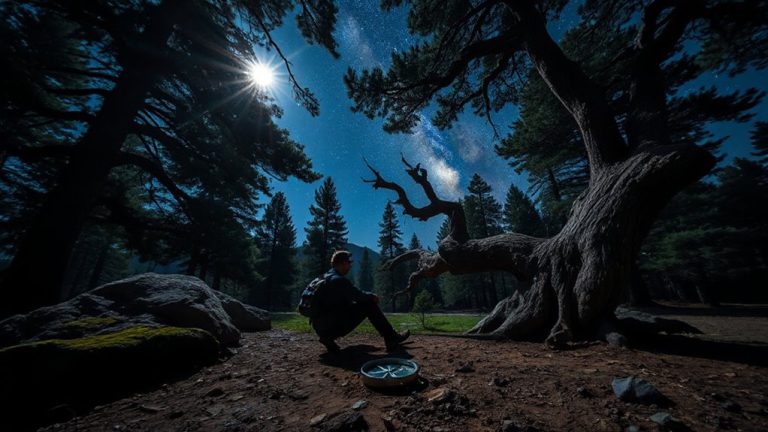
How do you pinpoint true south when you’ve got no map or compass? Use celestial navigation with the sun or stars. During the day, stick a straight object vertically in level ground. Mark the tip of its shadow-wait 15 minutes, mark it again. The line from the first to the second mark runs roughly east-west; stand with your left foot on the first mark and right on the second, and you’re facing true south. At night in the Northern Hemisphere, find Polaris-the North Star-directly north, so the opposite direction is south. A compass points to magnetic south, not true south, so adjust for magnetic declination using local topo maps or GPS data if available. Magnetic declination varies by location and can shift your aim by several degrees. Without correction, your shelter may miss maximum solar gain. This method works reliably if done carefully. For backup precision in navigation, consider carrying one of the best hiking compasses as a reliable tool when celestial methods aren’t feasible.
Design for Sun: Windows, Walls, and Thermal Mass
Why does your shelter feel cold even in sunlight? Because sunlight alone isn’t enough-you need smart design. South-facing windows capture solar gain, but without thermal insulation, heat escapes fast. Use double-glazed or polycarbonate panels to reduce losses. Thick, high-R-value walls made of stone, rammed earth, or insulated concrete store heat during the day and release it slowly at night. These materials act as thermal mass, stabilizing interior temps. Pair them with radiant flooring-like concrete or tile over hydronic tubing-to distribute heat evenly. Radiant flooring outperforms forced air in efficiency and comfort. But thermal mass only works if it’s exposed to direct sun; cover it with thick carpet and you defeat the purpose. Balance window size and wall mass to avoid overheating or rapid cooling. Design isn’t just placement-it’s how materials interact. Get the ratios wrong, and your shelter stays cold despite the sun.
Avoid Cold Traps and Snow Drifts When Siting
You’ve optimized solar gain with proper windows and thermal mass, but a poorly chosen site can still leave your shelter cold. Cold air sinks and collects in low-lying areas, creating cold traps that undermine indoor temperatures, even with excellent insulation. Avoid valleys or depressions where cold air pools overnight. Instead, sit slightly above flat ground to stay above the heaviest cold air drainage. Snow accumulation is another concern-deep snow can block access, add structural load, and reduce ground reflectivity. Choose a site with natural slope or wind exposure that discourages deep snow buildup. Elevated or south-facing slopes often shed snow faster, reducing drift formation. Don’t place your shelter where snow typically drifts or accumulates after storms. Manage snow accumulation early to prevent compaction and ice formation near walls. Site placement matters just as much as design-plan accordingly.
Block Wind Without Blocking the Sun
Even if you position your shelter for maximum southern exposure, failing to account for wind can erase your solar gains fast. You need wind barriers that stop convective heat loss without sacrificing sunlight access. Solid walls block wind well but cast long shadows, reducing solar intake-especially in low-angle winter months. A better option is using perforated wind barriers like stacked wood or snow fencing placed 50–75% open; they slow wind by up to 60% in the leeward zone while letting daylight through. Position these barriers 1.5 to 2 times their height north or west of the shelter. This setup maintains airflow to prevent snow buildup while preserving critical sunlight access. Remember, even a 20% drop in solar exposure can cut interior warmth by 10°F. Balance is key: block harsh wind, but don’t shade your shelter. Test placement with a sun angle calculator and wind socks for precision.
On a final note
You’ll get more heat by facing your shelter south in cold climates-sun exposure matters most in winter. Use natural landmarks or a compass to find true south, not magnetic south. Position windows to capture sunlight, and add thermal mass like stone or water to hold heat. Avoid low spots where cold air settles or snow builds up. Block wind with terrain or walls, but don’t shade the front. It’s a balance-maximize sun, minimize exposure.