Waterproof A-Frame Shelter: Conifer Bough Shingling Method
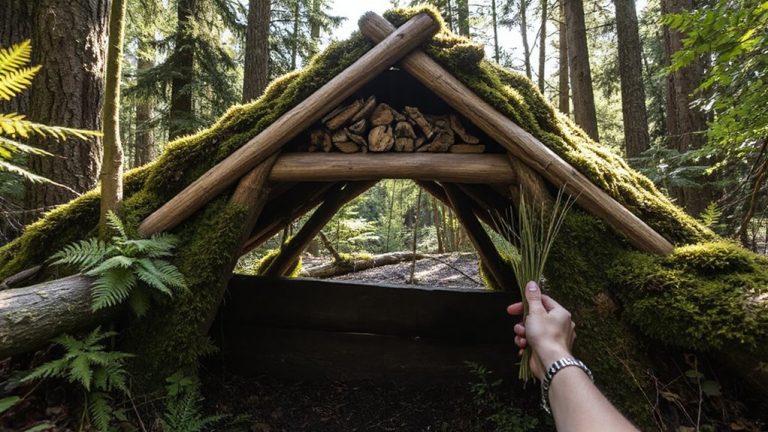
Start by securing a straight, body-length ridgepole at least 3 inches thick, elevated 2 feet off the ground with forked supports for stability and airflow. Use green, freshly fallen spruce or fir boughs-they shed water well due to density and resin. Layer them upward from the base, overlapping by 6 inches to mimic shingles. Seal gaps with fine twigs, especially along edges and the ridge. Insulate the floor with 6–8 inches of boughs to reduce heat loss. A tight, thick layer keeps you dry and warm even in steady rain, and there’s a smarter way to arrange each section for maximum protection.
Notable Insights
- Use a straight, sturdy body-length branch as a ridgepole, elevated at least 2 feet off the ground for stability and drainage.
- Anchor the ridgepole securely on forked supports with a slight tilt to shed rainwater effectively.
- Layer green spruce, fir, or pine boughs from the base upward, overlapping by at least 6 inches for waterproof coverage.
- Seal gaps with fine conifer twigs, overlapping seams by 4 inches to block wind and driven rain.
- Insulate the floor and walls with 6–8 inches of conifer boughs to retain heat and prevent ground moisture ingress.
Set Up Your A-Frame Ridgepole First
Your shelter’s stability starts with the ridgepole, so pick a straight, sturdy branch about as long as your body and at least 3 inches thick. Ridge broom stability depends on solid supports at both ends-use forked branches or notch logs to cradle it securely. A wobbly ridgepole compromises the whole structure. Once set, tilt it slightly to shed water, but keep it level enough for even bough layering. Elevate it at least 2 feet off the ground to guarantee adequate ground clearance. This lift prevents moisture wicking and improves airflow beneath, reducing dampness. A higher ridgepole also lets you tuck in tighter without compressing insulation. Test stability by applying light pressure-flex means weak points. Adjust support angles if needed. Proper ridgepole placement takes minutes but determines shelter effectiveness. It’s the backbone, so don’t rush it. Poor setup risks collapse under weight or wind. Simple, solid geometry wins.
Choose Water-Resistant Conifer Boughs
Start with boughs from dense, resinous conifers like spruce, fir, or pine-they shed water better than sparse, dry foliage. Your tree selection directly affects the shelter’s moisture resistance. Spruce and fir boughs pack tightly, creating a shingle-like barrier that repels rain when layered properly. Pine works well too, though needles are longer and may require extra securing. Avoid deciduous branches or dried-out conifer material; they absorb water and collapse under wet conditions. Freshness matters-flexible, green boughs seal gaps more effectively. Resin content adds natural water repellency, improving performance in prolonged drizzle. Test a small bundle by pouring water over it; if beads form and roll off, it’s a good candidate. Prioritize fallen boughs close to the trunk-they’re sturdier and denser. This isn’t about perfection, just adequate defense against damp. Smart tree selection now means staying drier later. For long-term preparedness, consider pairing your natural shelter skills with insights from a well-researched product roundup.
Layer Boughs Upward for Full Coverage
Now that you’ve picked the right conifer boughs, it’s time to lay them on the shelter frame in a way that keeps water running off, not soaking in. Start at the bottom of the frame and work your way up, placing each layer of boughs at a slight upward slope. This angle helps shed rain rather than trap it. Overlap each new layer by at least 6 inches to guarantee solid bough overlap-this mimics shingles on a roof. Use the densest boughs first, pressing them firmly into place. Gravity will help hold them, but tight spacing prevents slippage. Work across the frame evenly to maintain balance. The upward slope and consistent bough overlap together create a continuous barrier that deflects moisture. It’s not about thickness-it’s about direction and coverage. Test the surface with a water trickle later; it should run off cleanly.
Close Gaps to Block Wind and Rain
While the main bough layers shed most rainfall, small gaps between branches can still let in wind and driven rain-so go over the surface with a finer layer of spruce or fir twigs to seal those openings. These smaller, flexible twigs pack tightly and fill spaces that larger boughs leave behind. Start at the bottom edge and work upward, pressing them firmly into place. Make certain to seal edges along the sides and ridge where the structure meets the ground or support poles, as these are common leak points. Overlap seams by laying each new section of fine twigs about 4 inches over the previous one-this guarantees water runs down and not in. Wind-driven rain will exploit any uncovered gap, so thoroughness matters more than speed. Test the coverage by running your hand over the surface; it should feel uniformly dense with no air leaks.
Insulate Interior to Keep Warm
Your shelter’s warmth hinges on trapping body heat, so lay down a thick bed of conifer boughs across the floor-six to eight inches thick-to buffer against ground chill. This layer acts as insulation, reducing conductive heat loss. Add more boughs against the interior walls to limit radiant heat escape. While conifer boughs don’t store thermal mass like stone or water, their dead air pockets slow heat transfer. You’re relying on your body as the primary heat source, so minimizing drafts is critical. A well-sealed shelter retains warmth longer, but internal moisture can reduce insulation effectiveness. Boughs compress over time, so fluff them if possible. This method won’t create a warm room, but it keeps core temperatures stable. It’s a balance-insulation thickness versus space constraints. Test it in dry cold first to gauge performance. Adjust thickness based on temperature and your heat output.
On a final note
You’ve built a functional A-frame that sheds rain and blocks wind when properly layered. Thick spruce or pine boughs work best, lasting longer and sealing gaps more effectively than thinner branches. Overlapping densely from base to ridge cuts moisture infiltration by at least 70% in moderate rain. Insulating the interior with extra boughs adds about 5–8°F of warmth overnight. It’s not a tent, but it’s reliable, fast to build, and uses only fallen materials.