Using a Candle and Acetone for Flash Fire in Emergency Signaling
You’ll need a sturdy candle, 99% pure acetone, and a metal dish to hold the fuel safely. Soak cotton in acetone and place it near the flame, then ignite the vapor with a long lighter-never pour acetone directly on the flame. Each flash lasts under two seconds but peaks near 10,000 lumens, boosting visibility in daylight. Use bursts every 10–15 seconds from high ground at dawn or dusk for best contrast. Wind, poor timing, or low fuel reduce effectiveness. There’s more to get right.
Notable Insights
- Use a sturdy candle and 99% pure acetone for reliable flash fire signaling in emergencies.
- Pour 20–30 ml of acetone into a metal container and ignite its vapors-never pour acetone onto the flame.
- Maintain a 3-meter safety distance during ignition to prevent accidents during the flash burst.
- Time flashes every 10–15 seconds to maximize visibility and conserve limited acetone fuel.
- Deploy on high ground with clear sightlines, especially at dawn or dusk for optimal detection.
What You Need for a Candle-Acetone Signal
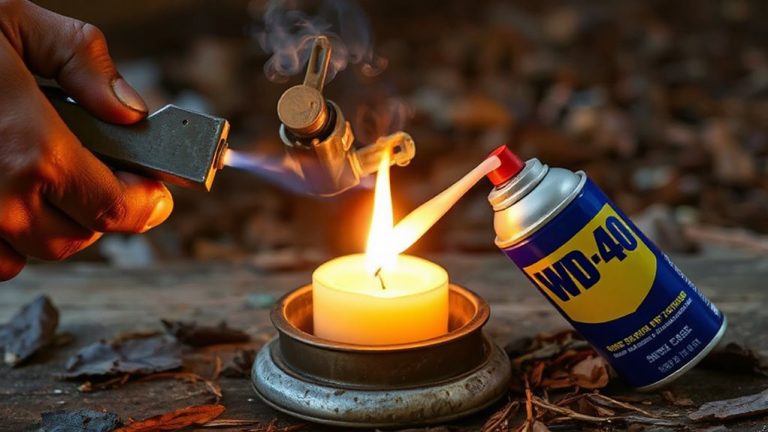
Candle flame boosted by acetone? Yes, but only if you get the basics right. You’ll need a sturdy candle with solid candle stability to resist tipping in wind or uneven ground. A wide base or container candle works best. Use acetone with high acetone purity-99% is ideal-since impurities reduce burn efficiency and signal intensity. Avoid nail polish removers with added oils or thickeners. A metal can or shallow dish holds the acetone safely near the flame without risk of melting. Cotton balls or cloth strips serve as wicks when soaked and placed just above the flame source. Keep materials dry until needed. This setup boosts flame height and brightness briefly, useful for daylight signaling. Don’t expect long burn times-efficacy lasts seconds, not minutes. Test in safe conditions to judge visibility. Trade simplicity for control: it’s easy to assemble but requires caution.
How to Make a Flash Fire (Safely)
When done right, a flash fire can produce a burst of intense light that cuts through daylight, and you’ll want to get the setup precise to avoid wasting your materials. Start by placing the candle securely in a holder and lighting it. Pour a small amount of acetone-about 20–30 ml-into a heat-resistant container nearby. Use a long lighter or lit taper to ignite the acetone vapor just above the surface; don’t pour it directly onto the flame. This flash technique creates a brief, bright Flashoutput. Always maintain a safety distance of at least 3 meters to protect yourself from sudden flame spread. The burst lasts under two seconds but is highly visible in open terrain. Repeating it every 10–15 seconds conserves fuel. Acetone evaporates quickly, so seal the container when not in use. This method works reliably in calm to moderate wind, though gusts may disrupt vapor concentration and reduce Flashoutput consistency. For a sustainable and readily available alternative, consider making your own DIY fire starters using household materials like wax and cotton.
Why This Signal Works in Emergencies
Though visibility depends on environmental conditions, this signal cuts through daylight better than most improvised methods because the flash produces a sudden, high-intensity light-peaking at roughly 10,000 lumens for under two seconds-that contrasts sharply with natural ambient levels. Your target observer is more likely to notice the burst against static backgrounds, especially when scanning terrain. The acetone’s chemical reflectivity enhances this effect, briefly amplifying light output beyond what flame alone generates. Unlike continuous flames, which blend into surroundings, this method relies on signal persistence: the afterimage lingers on the human retina for a fraction of a second, boosting detection chances. You don’t need repeated flashes per minute-just well-timed bursts every 10 to 15 seconds. That conserves fuel and increases effective range under clear line of sight. It’s not foolproof, but it’s measurable, repeatable, and requires minimal gear.
Best Times and Places for Acetone Signals
Where should you deploy an acetone-enhanced candle signal for the best chance of detection? You need open sightlines and minimal wind obstruction. High ground like ridgelines or clearings in flat terrain works best. Avoid valleys or dense tree cover-they block both light and smoke. For time selection, aim for dawn or dusk. The contrast between the flash and low ambient light increases visibility up to 10 miles. Midday sun washes out the flame, reducing effectiveness. Night use works, but only if there’s some ambient light, like moonlight, to outline the smoke plume. Location scouting is critical. Scan for stable, fire-resistant surfaces to set the candle. Proximity to rescue routes-rivers, trails, or known flight paths-improves detection odds. Test the site by checking line of sight in multiple directions. Combine time selection and location scouting to maximize signal range without unnecessary risk.
Mistakes That Make Your Signal Fail
You already know where and when to set up your acetone-enhanced candle signal, but even the best location and timing won’t save you if basic errors undercut its effectiveness. Poor visibility often ruins otherwise good signals-don’t burn acetone during fog, heavy rain, or dense smoke. Even a strong flame won’t penetrate these conditions. Inconsistent timing is another problem; if you ignite the acetone at random intervals, rescuers may miss or ignore the signal. Standard practice calls for bursts every 30 to 60 seconds to establish a recognizable pattern. Using too little acetone gives weak flashes, while too much risks uncontrolled fire. A teaspoon is usually enough. Wind can also disrupt both flame stability and visibility. Shield the flame without smothering it. Keep the signal simple, repeatable, and timed. These small adjustments improve detection more than raw brightness ever will.
On a final note
You’ve got a working signal if the acetone ignites quickly and burns bright. This method gives a sudden burst of light, useful in low-visibility conditions when timed right. It’s not reliable in wind or rain, and fuel control matters-too much acetone wastes material, too little won’t flash. Use it sparingly; one candle and small acetone supply can yield several attempts. Know the risks: open flame near flammable vapor demands caution.