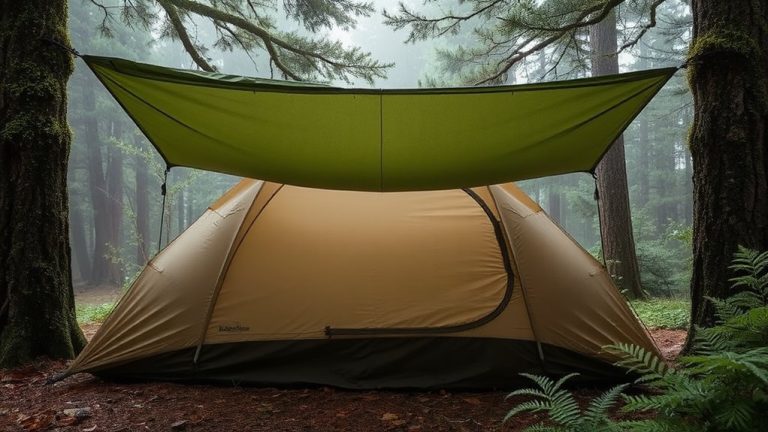
Top-Rated Cabin Tents for Spacious and Comfortable Camping
You want space and comfort-choose a cabin tent with high ceilings and a roomy floor plan. Models like the CORE 6-12 Person or UNP 10-Person give you 180 sq ft and dual doors for airflow and access. They set up fast, often in under two minutes, with pre-attached poles. Steel or aluminum frames add stability, while 1000–1200mm waterproof coatings handle rain. Mesh ceilings and multiple vents cut condensation. Larger sizes need more space and aren’t for backpacking. Your next pick could save time and keep you drier with better airflow.
We are supported by our audience. When you purchase through links on our site, we may earn an affiliate commission, at no extra cost for you. Learn more. Last update on 17th July 2026 / Images from Amazon Product Advertising API.
Notable Insights
- Spacious cabin tents offer 126–180 sq ft of floor space, accommodating 6–12 people with room for gear.
- Top models feature 72+ inch ceilings, allowing full standing height for added comfort.
- Instant setup tents with pre-attached poles deploy in under 2 minutes for quick, hassle-free assembly.
- Multiple windows, mesh ceilings, and adjustable vents provide excellent airflow and reduce condensation.
- Reliable weather protection includes 1000–1200mm waterproof coatings, taped seams, and full-coverage rainflies.
UNP 4-Person Portable Cabin Tent

If you’re looking for a no-frills, dependable shelter that sets up fast and handles weekend trips with ease, the UNP 4-Person Portable Cabin Tent fits the bill. I’ve used it in light rain and steady wind, and it held firm thanks to its steel legs and rainfly. It weighs 13 pounds, so it’s not ultralight, but the 6 kg pack size fits snugly in my car. Two people can pitch it in 3 minutes; I’ve done it alone in 5. The 72-inch ceiling lets me stand, and the mesh roof and windows cut condensation. It’s not for extreme conditions, but for car camping with 2–4 people, it works.
Best For: Car campers and outdoor enthusiasts seeking a quick-setup, spacious tent for weekend trips with 2–4 people.
Pros:
- Sets up in 3 minutes with two people (5 minutes solo) and requires no special skills
- Nearly vertical walls and 72-inch ceiling provide standing room and maximize interior space
- Mesh roof, windows, and zippered vents offer excellent ventilation and reduce condensation
Cons:
- Weighs 13 pounds, making it less ideal for backpacking or long hikes
- Not recommended for extreme weather conditions despite all-weather design
- Limited packability due to 23.8-inch packed length, though suitable for car camping
Core 9 Person Instant Cabin Tent – 14′ x 9′, Green (40008)
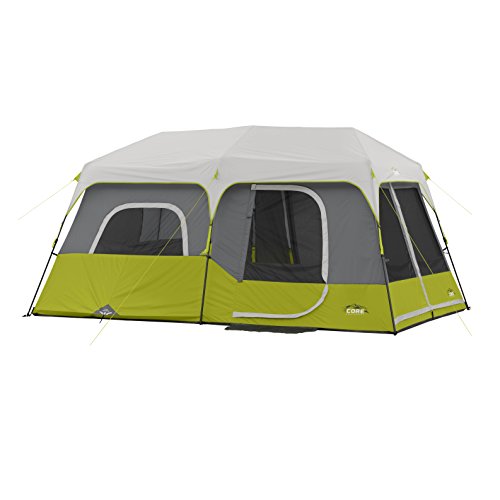
I need a tent that fits my whole family without sacrificing setup speed or weather protection, and the Core 9 Person Instant Cabin Tent delivers with its 126-square-foot floor plan and two-room layout. It fits two queen air beds and sleeps up to nine if space is tight. I got it up in under two minutes using the instant pop-up design, and the steel frame held firm in light wind. The 1200mm waterproof coating and taped seams kept me dry during rain. Ventilation was decent through the mesh ceiling and adjustable vents. At 78 inches tall, I could stand comfortably inside. It’s a 3-season tent, so don’t expect heavy winter use. With included stakes and guylines, stability was solid.
Best For: Families or groups seeking a spacious, quick-setup tent with reliable weather protection for 3-season camping adventures.
Pros:
- Spacious 126-square-foot cabin design fits up to nine people or two queen air beds
- Instant pop-up setup assembles in under two minutes with pre-attached poles
- Fully waterproof with 1200mm coating, taped seams, and sealed rainfly for reliable rain protection
Cons:
- Steel frame may lack durability in high winds or extreme conditions
- Ventilation could be improved for humid or hot weather
- 3-season design not suitable for heavy snow or winter camping
CAMPROS 8-Person Camping Tent with Mesh Windows

The CAMPROS 8-person tent works best for campers who need spacious, all-season shelter without sacrificing portability. I’ve used it in spring, summer, and fall, and it stands up well, thanks to its 1000mm waterproof coating and sealed seams. It’s 126 square feet with 72-inch center height, so I can stand and move easily. The polyester body and polyethylene floor handle moisture and wear. Eighteen stakes and a rainfly add stability. Five mesh windows and a mesh ceiling improve airflow and reduce condensation. Setup takes about five minutes with the color-coded poles-no experience needed. It fits in a 24.5-inch carry bag, though it’s a bit heavy at 17.4 pounds.
Best For: Campers seeking a spacious, weather-resistant, and easy-to-set-up tent for 3-season adventures with room for multiple people and gear.
Pros:
- Spacious 126 sq ft interior with 72-inch center height allows standing and easy movement for up to 8 people
- Excellent ventilation with five mesh windows and a mesh ceiling reduces condensation and improves airflow
- Quick 5-minute setup with color-coded poles and included stakes makes assembly simple, even for beginners
Cons:
- At 17.4 pounds, it’s relatively heavy for backpacking or long hikes
- Limited cold-weather performance due to 3-season design and polyester construction
- Single zipper door may reduce convenience compared to double-zipper models for larger tents
EVER ADVANCED 6-Person Camping Tent

This 6-person EVER ADVANCED tent suits campers who value speed and simplicity without sacrificing floor space or weather resistance. I set it up alone in 60 seconds-no tools needed-and appreciated the 81 square feet of interior room. The 4000mm waterproof coating held against light rain, though it’s not fully waterproof. Dark fabric inside blocks sunlight, helping with sleep and reducing heat swings. I used the power pass-through to run a cord inside and hung a light from the interior belt. Four windows and a skylight provided solid airflow. It weighs 22.3 pounds, packs small, and stores easily. Steel poles add stability. One door works fine for six.
Best For: Campers who prioritize quick, tool-free setup and ample interior space for family outings in fair to moderate weather conditions.
Pros:
- Sets up in 60 seconds with no tools required, ideal for one-person assembly
- Spacious 81 sq ft floor plan with high 72-inch ceiling and dark interior for improved sleep and privacy
- Features four windows, a skylight, power pass-through, and interior hanging points for comfort and convenience
Cons:
- Not fully waterproof-limited protection in heavy rain despite 4000mm coating
- Single door may reduce convenience for multi-person entry and exit
- Dark interior fabric, while beneficial for sleep, may feel stuffy in low-light conditions
UNP 4-Person Portable Camping Tent

Unless you need something ultralight for backpacking, the UNP 4-Person Portable Camping Tent makes sense for car campers who want quick setup and room to move. I found it spacious, with nearly straight walls and 72 inches of center height-enough to stand comfortably. It weighs 13 pounds, so it’s easy to carry short distances, and I set it up solo in under 5 minutes. The mesh door, two windows, and roof vents provide solid airflow, reducing condensation. It’s built with steel poles and a polyester body, and the included rainfly kept me dry in a downpour. At 96 x 84 inches, it fits two people with gear or four people tightly.
Best For: Car campers who prioritize quick setup, standing room, and spacious interiors for short outdoor trips with family or friends.
Pros:
- Spacious interior with nearly straight walls and 72-inch center height allows for comfortable standing and movement
- Easy, tool-free setup in under 5 minutes, even for one person
- Excellent ventilation with mesh door, two windows, and roof vents that reduce condensation and improve airflow
Cons:
- At 13 pounds, it’s too heavy for backpacking or long-distance hiking
- “4-person” fit is tight with gear; best suited for two people comfortably
- Polyester material and steel poles may degrade over time with repeated exposure to harsh weather
CORE 10-12 Person Family Camping Tent
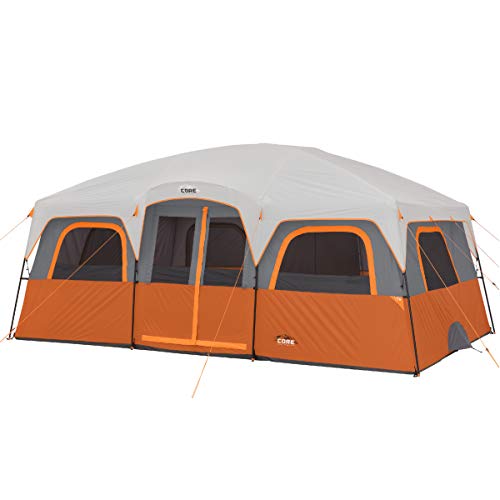
Need space for a family or group without sacrificing setup ease? I’ve used the CORE 10-12 Person Family Camping Tent, and it delivers on its promise of room and simplicity. It measures 16 by 11 feet, with 176 square feet of floor space-enough for three queen air beds. The cabin shape and room divider offer privacy. H20 Block Technology and a 1200 mm water-resistant rainfly keep rain out. Ventilation from nine windows and mesh panels reduces condensation. It’s heavy at 6.73 pounds, but the setup is straightforward. Includes stakes, guylines, footprint, and carry bag. Best for car camping, not backpacking.
Best For: Families or groups of up to 12 campers who prioritize space and privacy and are car camping rather than backpacking.
Pros:
- Spacious 176 square feet layout fits up to three queen air beds and includes a room divider for privacy
- Excellent weather protection with H20 Block Technology, 1200 mm water-resistant fabric, and fully taped seams
- Good ventilation with nine windows and mesh panels to reduce condensation
Cons:
- Heavy at 6.73 pounds (excluding stakes and accessories), making it unsuitable for backpacking
- Polyester and fiberglass construction may not withstand extreme weather or long-term heavy use
- Limited to three-season use, not recommended for winter or severe storm conditions
Coleman Instant Camping Tent 4-10 Person

I choose the Coleman Instant Camping Tent when I need a shelter that sets up fast and holds up in rough weather, especially if I’m camping solo or with a small group. It pops up in about 60 seconds thanks to pre-attached poles, and the cabin design gives me 8 x 7 feet of floor space with nearly 5 feet of headroom. I can fit a queen airbed and still move around. The 100% polyester fabric and Polyguard 2X material resist tears, while welded floors and inverted seams keep water out. A vented rainfly and five windows cut condensation. It’s heavy at 19.1 pounds, but the carry bag makes transport manageable.
Best For: Campers who need a quick-setup, weather-resistant tent with ample space for solo or small-group adventures.
Pros:
- Sets up in approximately 60 seconds with pre-attached poles for instant shelter
- Durable construction with Polyguard 2X fabric, welded floors, and inverted seams for superior weather protection
- Spacious 8 x 7 ft floor plan with nearly 5 ft of headroom, fitting a queen airbed and allowing room to move
Cons:
- Weighs 19.1 pounds, making it less ideal for backpacking or long carries
- Limited ventilation in heavy rain despite vented rainfly and windows
- Polyester fabric may degrade over time with prolonged UV exposure
CORE Instant Cabin Tent 6-12 Person
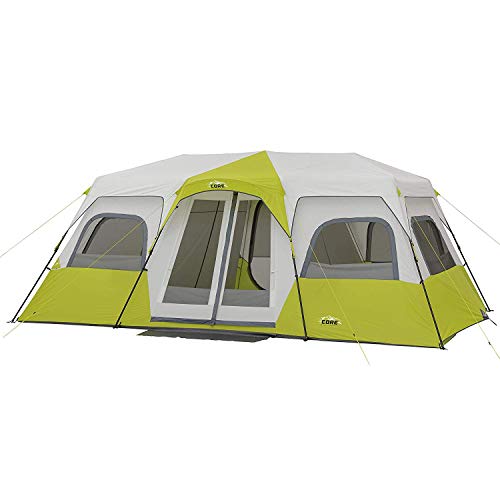
The CORE Instant Cabin Tent 6-12 Person is best for campers who need a spacious, quick-setup shelter for group or family outings without sacrificing durability in typical spring, summer, and fall conditions. I set it up in under two minutes using the pre-attached aluminum poles, and it held firm in light rain thanks to the 1200mm water-resistant fabric and taped seams. It’s not fully waterproof, but the H20 Block Tech and rainfly kept me dry. At 47.8 pounds, it’s heavy, but the 180-square-foot interior fits my family and gear. Two doors, 11 windows, and mesh vents cut condensation. The room dividers create three spaces, and storage pockets help organize essentials.
Best For: Campers seeking a spacious, quick-setup tent for family or group outings in fair to moderate weather conditions.
Pros:
- Sets up in under 2 minutes with pre-attached aluminum poles for effortless assembly
- Spacious 180-square-foot interior with room dividers creating three separate areas for privacy
- Effective weather resistance with H20 Block Technology, taped seams, and a full rainfly
Cons:
- At 47.8 pounds, it is heavy and less ideal for transport or car camping with limited space
- Not fully waterproof, limiting performance in heavy or prolonged rain
- Large packed size (49.8 x 12.65 x 12.6 inches) may be cumbersome for some vehicles
UNP 10-Person Waterproof Camping Tent
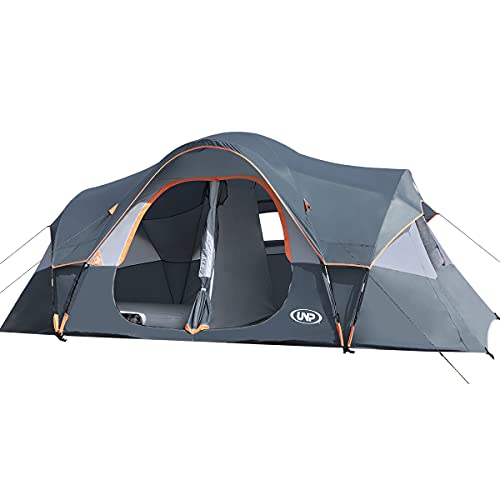
This 10-person tent suits groups up to that size or families needing separate sleeping zones, and I find it especially useful when camping with kids or friends who value privacy and airflow. It’s 162 sq ft with two rooms, two doors, and five large mesh windows that keep air moving. I’ve used it in light rain-the PU1000mm coating and rainfly held well. The polyester fabric resists wear, and the double-layer design adds durability. Setup takes two people under 10 minutes, and the 21-pound weight is manageable. I store it in the included carry bag-it fits easily in my SUV. It’s not ultralight, but it’s solid for car camping.
Best For: Families or groups of up to 10 people who prioritize space, privacy, and ventilation during car camping trips.
Pros:
- Spacious 162 sq ft floor area with two rooms and two doors for privacy and easy access
- Excellent ventilation with five large mesh windows and a mesh roof for airflow and stargazing
- Quick and easy setup for two people in under 10 minutes with a durable, waterproof design
Cons:
- At 21 pounds, it’s too heavy for backpacking or extended hikes
- PU1000mm waterproofing is suitable for light rain but may struggle in heavy downpours
- Limited color options and not freestanding in high winds without guylines staked properly
Ozark 10-Person 2 Room Cabin Tent
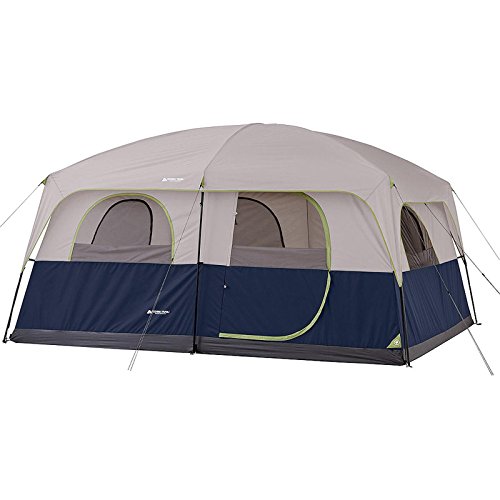
Ten campers seeking a dependable, room-divided shelter for group or family use will find the Ozark Trail 10-Person 2 Room Cabin Tent a solid option, especially when splitting space between sleeping and storage. I’ve used it in spring and fall storms, and the 600 mm waterproof coating with taped seams kept me dry. At 140 square feet, it’s spacious, though the 13.5-pound weight makes it less ideal for backpacking. The two rooms and dual doors add privacy and access, while the gear loft and electrical port improve comfort. Fiberglass poles held up in moderate wind, but I’d stake it well. It’s not lightweight, but for car camping, it delivers reliable, all-season function without gimmicks.
Best For: Families or groups of up to ten campers looking for a spacious, durable, all-season cabin tent for car camping with room separation and weather protection.
Pros:
- Spacious 140-square-foot layout with two rooms and dual doors for privacy and easy access
- Fully taped, factory-sealed seams and 600 mm waterproof coating provide reliable rain protection
- Includes useful features like a gear loft, electrical cord access, and a rainfly for comfort and convenience
Cons:
- 13.5-pound weight makes it impractical for backpacking or long carries
- Fiberglass poles are less durable than aluminum in high winds or harsh conditions
- Larger size requires more setup space and may not fit well on smaller campsites
Factors to Consider When Choosing Cabin Tents
You’ll want to check the size and capacity first-make sure it fits your group without adding unnecessary bulk. Setup should be quick and straightforward, especially if you’re arriving late or in poor weather. Look closely at weather resistance, ventilation, material durability, and how easily the tent goes up, since each affects your comfort and safety when it counts.
Size And Capacity
While cabin tents offer straightforward shelter for campers, choosing the right size means matching capacity to your group and gear needs. You’ll find models from 4 to 12-person sizes, with floor areas between 80 and over 170 square feet. A 4-person tent typically measures 96 x 84 inches-tight for four with full gear-but stepping up gives room to move. Larger 10–12 person tents can stretch to 18 feet long and 10 feet wide, fitting big groups or families comfortably. Most cabin tents offer 72 to 86 inches of center height, so you can stand fully inside. Multi-room layouts in bigger tents use dividers for separate sleeping or storage spaces, adding privacy and function. Remember, manufacturer ratings often assume little gear; for real comfort, pick a tent rated for fewer people than you’re carrying or accept tighter quarters. Prioritize floor space and height over headcount alone.
Setup Ease
After sorting out how many people and how much gear the tent needs to hold, the next factor is how fast and simple it goes up. You can pitch some models in under 2 minutes thanks to pre-attached poles and instant pop-up designs-no tools or experience needed. Free-standing tents with clip or sleeve pole systems go up easily on uneven ground and let you reposition without disassembling. Color-coded poles and clear instructions help you set up most models solo in 5 to 10 minutes. For larger cabins over 100 square feet, two people cut setup time nearly in half. Compact packed sizes and included carry bags make transport easier and deployment quicker. While instant tents save time, they’re often heavier. Clip attachments are faster than sleeves but can be less stable in wind. Choose based on how much weight you’ll carry and how often you’ll pitch alone.
Weather Resistance
When steady rain or strong wind threatens your campsite, a cabin tent’s weather resistance determines whether you stay dry and sheltered. You need a 1200mm water-resistant coating-anything above 1000mm is reliable-for solid rain protection. Fully taped seams and inverted seam construction prevent leaks, while welded floors and polyethylene materials block ground moisture. A PU-coated polyester fabric adds durability and keeps water out during prolonged storms. Pair that with a rainfly that extends past walls to shield joints and keep rain from seeping in. For wind, look for reinforced poles, a low-profile shape, and guyline points that anchor the tent securely. These features work together to maintain structural integrity in gusts. Don’t assume all cabin tents are built for harsh weather-check specs. A well-designed one won’t collapse or leak when conditions turn.
Ventilation Quality
How well does your cabin tent handle stale air and moisture buildup? You need consistent airflow to avoid condensation and maintain comfort. Look for mesh ceilings, zippered windows, and mesh doors-they work together to let air move freely. Vented rainflies and adjustable ground-level vents give you control, letting you balance weather protection with ventilation. Even with sealed seams and waterproof coatings, breathable mesh panels in key areas keep air circulating. Elevated cabin designs with near-vertical walls don’t just add space-they improve airflow compared to sloped models. Peaked or dome-shaped roofs with built-in mesh help hot air rise and escape through upper vents, boosting convection. You won’t eliminate moisture entirely, but these features reduce it markedly. Don’t assume big tents breathe well by default-check for intentional vent placement. Proper ventilation cuts dampness and stuffiness, especially in humid or cold conditions. You’ll sleep better when air moves efficiently without sacrificing weather protection.
Material Durability
Your cabin tent’s lifespan hinges on material durability, and smart choices start with proven specs. Choose polyester fabric with at least a 1000mm PU coating-it withstands prolonged rain without leaking. Reinforced polyethylene floors resist punctures and abrasions, especially on rocky or uneven ground. Fiberglass or alloy steel poles hold up well under wind and stress, and thicker pole walls add strength without excess weight. Always check for fully taped and sealed seams; they block water entry and maintain integrity in constant dampness. UV-resistant coatings matter too-they slow degradation from long sun exposure, preserving fabric strength over seasons. You’ll get fewer surprises in harsh weather if every component is built for endurance. These features aren’t luxury extras-they’re baseline requirements for reliable shelter. Prioritize them, and your tent will handle year after year of real use without failing.
Interior Organization
A well-organized cabin tent makes life easier when weather keeps you inside for hours. You’ll want interior storage pockets near sleeping areas to keep phones, flashlights, or keys within reach at night. Room dividers made of fabric panels let you section off sleeping or living spaces, giving you more privacy and a clearer layout. Ceiling-mounted loops or webbing let you hang lights or small fans, which clears floor space and improves airflow. Gear lofts with mesh panels work well for storing damp or bulky items overhead, helping with air circulation and keeping things dry. Power pass-through ports let you run charging cords inside without breaking the weather seal, so you can power devices safely. These features don’t add luxury-they reduce clutter, improve function, and make your time inside more manageable when conditions are poor. Choose based on how they support your actual needs.
Frequently Asked Questions
How Do I Store My Cabin Tent When Not in Use?
You clean and dry your cabin tent thoroughly before packing it, since trapped moisture causes mold and fabric damage. You never store it compressed; instead, you keep it loose in a cool, dry place. You use a breathable storage sack, not the stuff bag, to prevent mildew. You check zippers and poles periodically for wear. You avoid plastic bins, which trap humidity. Proper storage extends your tent’s life and maintains its performance.
Can Cabin Tents Withstand Heavy Rain Overnight?
Yes, most cabin tents can handle heavy rain overnight if they’re designed with a waterproof rainfly, sealed seams, and a bathtub floor. You’ll stay dry as long as the tent uses a hydrostatic head rating of at least 1500mm and you pitch it correctly. Poor ventilation or improper setup increases condensation, which feels like leaks. Always check real-world storm tests-some models sag under prolonged downpours.
Are Cabin Tents Easy to Set up Alone?
You can set up most cabin tents alone, but it’s not always easy. They’re heavier and have more poles than dome tents, so you’ll need strength and patience. Some models come with color-coded clips and pre-attached poles to simplify the process. Still, wind or uneven ground complicates things fast. Practice at home first. If you’re camping solo often, pick a model under 20 pounds with a straightforward frame. It’ll save time and frustration when you’re tired or in bad weather.
Do Cabin Tents Have Enough Ventilation in Summer?
Yes, cabin tents usually have enough ventilation in summer if they include mesh roof panels, multiple windows, and adjustable vents. You’ll stay cooler when cross-ventilation is possible through opposing door and window placements. Some models trap heat due to vertical walls and low air exchange, so check for large ceiling vents and breathable fabrics. Always pair ventilation with shade or a tarp for best results. No tent eliminates condensation completely, but good airflow reduces it.
What’s the Best Way to Clean a Cabin Tent?
You clean a cabin tent best by wiping it down with mild soap and lukewarm water using a soft sponge. You avoid harsh chemicals or bleach-they damage coatings. You rinse thoroughly and let it air dry completely before storing to prevent mold. You never machine wash it; that ruins seams and waterproofing. You spot clean stubborn stains gently. You clean the rainfly separately. Regular maintenance keeps your tent functional and prolongs its usable life without compromising performance or durability in the field.