Best Canned Meat for Survival: 5-Year vs 30-Year Options
You’ll want canned meats with long shelf life, minimal ingredients, and no prep needed. Options like Mountain Essentials and Keystone use only beef and sea salt, last up to 5 years, and are ready to eat straight from the can. The Ready Hour freeze-dried kit offers 30-year storage and rehydrates quickly. Larger #10 cans save space, while smaller cans help with portion control. Consider weight, storage space, and how you’ll use them-some perform better in meals than eaten plain. More details follow on specific product trade-offs.
We are supported by our audience. When you purchase through links on our site, we may earn an affiliate commission, at no extra cost for you. Learn more. Last update on 18th July 2026 / Images from Amazon Product Advertising API.
Notable Insights
- Canned meats with only meat and salt offer clean, long-lasting nutrition ideal for survival scenarios.
- Products like Mountain Essentials and Keystone provide 5-year shelf life with no refrigeration required.
- Ready Hour’s freeze-dried meat kit delivers up to 30-year shelf life and lightweight portability for emergencies.
- Fully cooked, ready-to-eat options require no preparation, making them perfect for no-cook survival situations.
- High protein, zero carb, and gluten-free formulations support keto and emergency dietary needs.
Mountain Essentials Canned Beef 28 Oz (Pack of 1)

If you’re stocking a survival kit or planning a long backcountry trip, Mountain Essentials Canned Beef 28 oz fits the bill as a dependable protein source built to last. I keep it because it’s ready to eat straight from the can and stays good for up to five years without refrigeration. It’s made with just beef and sea salt-no preservatives or fillers. The single ingredient simplicity means fewer digestive issues in the field. I’ve used it in stews, tacos, and over rice, and it reheats evenly. The 5-character code on the bottom lets me track production, and since it’s made in the U.S., I trust its consistency. Lightweight and compact, it saves space and adds reliable calories when I need them most.
Best For: Outdoor enthusiasts, preppers, and busy individuals seeking a long-lasting, no-fuss protein source for emergencies, camping, or everyday meals.
Pros:
- Ready to eat straight from the can with no refrigeration required
- 5-year shelf life makes it ideal for emergency preparedness and long-term storage
- Simple ingredient list with just beef and sea salt-no artificial preservatives or fillers
Cons:
- Single 28 oz can may be too large for solo backpackers or small meals
- No printed expiration date; requires contacting manufacturer for shelf life details
- Limited flavor variety due to minimal seasoning
Mountain Essentials Canned Beef 14.5 oz (Pack of 1)

I rely on Mountain Essentials Canned Beef when I need dependable, no-fuss protein that won’t quit when the grid goes down. This 14.5 oz can contains just beef and sea salt-no preservatives or fillers-so I know exactly what I’m eating. It’s fully cooked and ready to eat, straight from the can or added to meals. I’ve used it in rice bowls, tacos, and stews, and it holds up well in heat. It stores easily, doesn’t need refrigeration, and lasts up to five years. While smaller than bulk options, its size fits perfectly in bug-out bags or camping kits.
Best For: Outdoor enthusiasts, preppers, and busy individuals seeking a shelf-stable, high-protein food option with minimal ingredients and no refrigeration requirements.
Pros:
- Fully cooked, ready-to-eat beef with simple, all-natural ingredients (beef and sea salt)
- Shelf-stable for up to 5 years and requires no refrigeration until opened
- Lightweight, compact can ideal for emergency kits, camping, and on-the-go meals
Cons:
- Single 14.5 oz can offers limited quantity for larger families or extended use
- Higher cost per ounce compared to fresh or bulk canned beef options
- No seasoning beyond sea salt, which may require additional ingredients for flavor
Swanson White Chunk Chicken Breast (4.5 oz, Pack of 4)

When stacking pantry shelves for emergencies or outdoor trips, I count on dependable, long-lasting protein, and Swanson White Chunk Chicken Breast fits that role perfectly. Each 4.5 oz can delivers 12 grams of protein and is 98% fat free, making it a lean, efficient fuel source. I’ve used it straight from the can on crackers, mixed into cold salads, and in cooked dishes like buffalo dip-no prep needed. The meat contains no antibiotics or added MSG, and it’s gluten free, which suits sensitive diets. While the chunks are small, they’re consistent in texture and easy to incorporate. Four cans offer light, compact backup for short to mid-term needs.
Best For: Outdoor adventurers, emergency preppers, and busy individuals seeking a convenient, shelf-stable, and high-protein food option.
Pros:
- Delivers 12 grams of protein per can with 98% fat-free content for lean nutrition
- No antibiotics, no added MSG, and gluten free-ideal for sensitive diets
- Ready-to-eat with versatile use in salads, snacks, or cooked dishes
Cons:
- Small chunk size may not satisfy those looking for hearty, whole-meat pieces
- Packed in water, which can make texture slightly softer than fresh chicken
- Limited flavor variety in the standard product line
KEYSTONE Meats All Natural Canned Meat Pack

You’ll want the KEYSTONE Meats All Natural Canned Meat Pack if you’re stocking food for long-term emergencies or rugged outdoor trips, since it delivers shelf-stable, fully cooked protein with no artificial ingredients. I rely on it because each can contains just meat and sea salt-beef, chicken, or pork-with no preservatives, gluten, or carbs. It’s 98% fat-free chicken and rich in protein, keeping me full and energized. The chunk-style meat holds texture and works in meals without prep. I’ve used the pork in stews and over rice, and it performs like fresh-cooked. It’s made and inspected in Ohio under USDA standards, and each can lasts five years on the shelf.
Best For: People seeking long-lasting, minimally processed, and convenient protein sources for emergency preparedness, outdoor adventures, or simple, clean eating.
Pros:
- Fully cooked, shelf-stable canned meat with a 5-year shelf life, ideal for emergency kits and camping
- Made with only two ingredients-meat and sea salt-free from preservatives, gluten, carbs, and artificial additives
- High-quality, 98% fat-free protein source that supports satiety and energy, easily incorporated into various meals
Cons:
- Limited flavor variety due to minimal seasoning, which may not appeal to those preferring bold or seasoned meats
- Heavier and less compact than freeze-dried or dehydrated protein options, making it less ideal for ultralight backpacking
- Contains no vegetables or additional nutrients, so it must be paired with other foods for balanced meals
Keystone Meats 24-Can Variety Pack

This 24-can variety pack suits survivalists who prioritize ingredient simplicity and long-term reliability. I rely on it because every can contains just meat and sea salt-no preservatives or fillers. It includes 6 cans of beef, 4 chicken, 4 turkey, 4 pork, and 6 ground beef, all fully cooked and made in Lima, Ohio, under USDA inspection. Each option is gluten-free, with chicken and turkey being 98% and 97% fat-free. The ground beef is keto-friendly, zero carb. Cans last 5 years from manufacture, hold nutrients, and need no refrigeration. I use it for emergencies, camping, or long-term storage-it’s practical, predictable, and built for real preparedness.
Best For: Survivalists and preppers who value simple, shelf-stable, all-natural meals with long-term storage capability.
Pros:
- Contains only meat and sea salt with no preservatives, fillers, or artificial ingredients
- Shelf-stable for up to 5 years, making it ideal for emergency preparedness and outdoor adventures
- Gluten-free, carb-free, and keto-friendly options with high-fat-free content in poultry varieties
Cons:
- Limited variety with no mixed flavors or seasoned options for culinary diversity
- Slightly smaller can size for ground beef (14 oz vs. 14.5 oz for others) may create inconsistency in meal planning
- Contains no vegetables or additional nutrients, requiring supplementation for balanced meals
Keystone Meats Ground Beef (14 Oz, Pack of 2)

If you’re assembling a survival food supply that prioritizes simplicity and real nutritional value, Keystone Meats Ground Beef stands out because it’s fully cooked and ready to eat straight from the can, with no refrigeration needed. I keep a pack of two 14-ounce cans for emergencies-they’re lightweight, durable, and last up to five years. Made with just beef and sea salt, it’s low in sodium and fat, zero carbs, and has no preservatives or fillers. I’ve used it in chili and tacos while camping, and it performs like fresh ground beef. It’s gluten-free, keto-friendly, and requires no prep, making it reliable when time or resources are limited.
Best For: Emergency preparedness enthusiasts, outdoor adventurers, and home chefs seeking a shelf-stable, all-natural ground beef with no preservatives or cooking required.
Pros:
- Fully cooked, ready-to-eat ground beef with a 5-year shelf life, ideal for long-term storage and emergency kits
- Made with just beef and sea salt-no preservatives, fillers, MSG, or artificial ingredients
- Lightweight, portable, and versatile for use in tacos, chili, casseroles, and more without refrigeration
Cons:
- Higher price point compared to fresh or conventional canned ground beef
- Limited flavor profile due to minimal ingredients (only beef and sea salt)
- Smaller 14-ounce size may not meet high-volume meal needs without multiple cans
Mountain Essentials Canned Ground Beef (28 Oz)
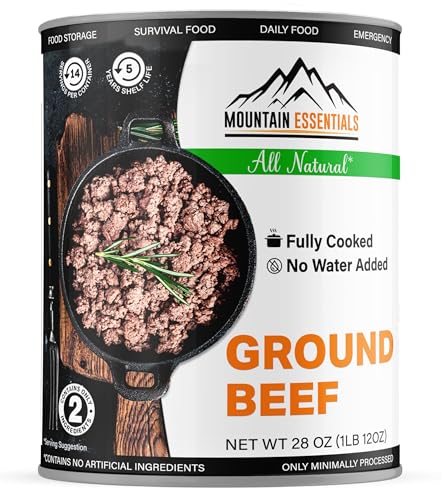
Mountain Essentials Canned Ground Beef suits those who prioritize minimalism and reliability in survival food. It contains just beef and sea salt, with no preservatives, carbs, or gluten. I rely on it because it’s fully cooked, ready to eat, and requires no refrigeration. At 28 oz, it’s larger than most survival cans, making it practical for groups or multiple meals. It lasts five years on the shelf, and the production date is easy to trace. I’ve used it in tacos, stews, and casseroles during emergencies and camping trips. It’s lightweight, portable, and performs consistently under pressure.
Best For: Outdoor enthusiasts, preppers, and busy households seeking a simple, shelf-stable, high-protein food option with minimal ingredients.
Pros:
- Contains only beef and sea salt with no preservatives, carbs, or gluten
- Fully cooked, ready to eat, and requires no refrigeration or prep
- 5-year shelf life and 28 oz size ideal for emergencies, groups, or extended outdoor trips
Cons:
- Higher price point compared to fresh or frozen ground beef
- Limited flavor profile due to minimal seasoning
- Heavier and less compact than freeze-dried meal alternatives
Ready Hour Freeze-Dried Meat Kit (20 Servings)

When every gram of protein counts in an emergency, I rely on the Ready Hour Freeze-Dried Meat Kit because it delivers 334 grams of real meat across 20 servings without needing refrigeration or cooking. The mix of beef crumbles, beef dices, chicken, and pork sausage is pre-cooked and seasoned, so I can add it directly to meals or rehydrate it fast with hot water. Each serving integrates easily into soups, stews, or broths. Quadruple-wrapped, resealable pouches inside a sturdy, water-resistant bucket keep the meat fresh for up to 30 years. I store mine without special conditions, and it’s lightweight enough to move when needed. While it costs more than canned meat, the shelf life and versatility make it worth it for long-term prep, camping, or daily use when convenience matters.
Best For: Preppers, outdoor enthusiasts, and households seeking a long-lasting, high-protein, shelf-stable meat solution for emergencies or convenient meal enhancement.
Pros:
- Delivers 334 grams of real, pre-cooked meat across 20 servings with no refrigeration required
- Lightweight, resealable, quadruple-wrapped pouches in a durable, water-resistant bucket for 30-year shelf life
- Versatile usage-adds directly to meals or rehydrates quickly with hot water for soups, stews, and broths
Cons:
- Higher upfront cost compared to traditional canned meat options
- Flavor and texture may vary slightly from fresh meat due to freeze-drying process
- Limited meat variety for those with dietary restrictions or preferences
Mountain House Ground Beef #10 Can

I rely on the Mountain House Ground Beef #10 Can when long-term food storage matters most, especially if space, weight, or cooking conditions are limited. It holds 22 hearty servings in a compact 29-ounce can, lasting up to 25 years when stored properly. I just add hot water and wait under 10 minutes-no cooking needed. The beef is gluten-free, with no artificial flavors, so it tastes consistent and reliable over time. I appreciate that it performs well in cold or rugged environments where stoves or fuel are scarce. Sure, it’s not fresh-cooked, but for practicality and shelf life, it’s a solid choice. I also recycle the can through TerraCycle when done.
Best For: Outdoor enthusiasts, emergency preppers, and anyone needing reliable, long-lasting, and easy-to-prepare meals in remote or challenging conditions.
Pros:
- Provides up to 25 years of shelf life with a 30-Year Taste Guarantee for long-term emergency storage
- Requires only hot water and less than 10 minutes to prepare, making it highly convenient in any environment
- Made with gluten-free ingredients and no artificial flavors, ensuring quality taste and dietary safety
Cons:
- Freeze-dried texture may not match fresh-cooked meals, which can affect enjoyment for some users
- Requires hot water for rehydration, which may be a limitation in situations without access to heat
- Individual serving size may be less substantial for highly active individuals without supplementation
Keystone Ground Beef Canned Emergency Food

If you’re looking for a reliable, shelf-stable protein that fits seamlessly into emergency prep or off-grid living, Keystone Ground Beef stands out for its simplicity and practicality. I rely on it because it’s 100% beef with just sea salt-no carbs, preservatives, or fillers. It’s low in sodium and fat, keto friendly, and requires no refrigeration. With a 5-year shelf life, it stores easily and works straight from the can or in meals like chili, tacos, or casseroles. I’ve used it while camping and during power outages, and it performs like fresh-cooked ground beef. Made in Ohio, it’s USDA inspected and ready when you are.
Best For: People seeking a long-lasting, no-frills, keto-friendly canned protein for emergency preparedness, outdoor adventures, or quick meal solutions.
Pros:
- Made with 100% beef and sea salt-no preservatives, carbs, or artificial ingredients
- 5-year shelf life with no refrigeration required, ideal for emergency storage
- Versatile and ready to eat or use in a variety of recipes like chili, tacos, and casseroles
Cons:
- Higher price point compared to fresh ground beef or other canned meats
- Limited flavor profile due to minimal seasoning with only sea salt
- 14-ounce can may be bulky or heavy for some backpacking or solo use cases
Factors to Consider When Choosing Canned Meat for Survival
You need canned meat that lasts-check the shelf life duration so it won’t spoil when you need it most. Look for clear ingredient labels; transparency helps you avoid unwanted fillers and know exactly what you’re eating. Consider portion sizes, prep needs, and how easy it is to store and carry, since space and time matter in survival situations.
Shelf Life Duration
A typical can of meat lasts 3 to 5 years when sealed and stored in stable conditions, but that timeline shrinks fast if temperatures rise above 75°F. You need to keep cans in a cool, dry place-ideally below 75°F-to preserve quality and safety. High-acid meats corrode linings faster, so they won’t last as long as low-acid options. If you’re stocking for long-term survival, look for freeze-dried or oxygen-barrier packaged meats; some keep well for 25–30 years under proper conditions. Don’t just stash and forget-rotate stock using the “first in, first out” method to guarantee older cans get used first. That way, you’re always consuming within peak freshness windows. Shelf life isn’t just about safety-it affects texture and flavor too. Your storage discipline directly impacts how reliable your food supply remains over time. Think ahead, plan your space, and monitor conditions closely.
Ingredient Transparency
When choosing canned meat for survival, prioritize ingredient transparency to guarantee you’re getting a reliable, high-quality product. Look for labels that list only meat and salt-this means minimal processing and no hidden additives. Avoid options with preservatives, artificial flavors, colors, MSG, or added water, as they often signal lower transparency and inferior quality. Choose products labeled “all natural” with full ingredient disclosure for clearer insight into what you’re consuming. High-quality cans often highlight zero carbs, no gluten, and no fillers, reinforcing their purity. Check for clear identification of the meat source and processing methods like “fully cooked” or “no preservatives added.” Transparent labeling helps you assess nutritional value and reliability without guesswork, making it easier to trust your food when it matters most.
Portion Size Options
Clear labeling sets the foundation for smart choices, but portion size determines how far your food supply will stretch in a survival scenario. You’ll find canned meats ranging from 4.5 to 29 ounces, so pick based on your needs. Smaller 4.5- to 14.5-ounce cans suit single meals or precise rations, cutting waste and simplifying inventory. Larger 28- to 29-ounce cans feed groups or last longer, reducing container clutter and opening fewer cans over time. Portion size directly impacts storage-smaller cans pack tighter and offer more rotation flexibility. Some high-protein options deliver five or more servings per can, depending on serving size, stretching resources further. You trade convenience for efficiency: smaller cans give control, while bulk sizes reduce packaging and storage frequency. Match can size to your group’s size and expected usage. Smart portioning keeps your supply both practical and sustainable.
Preparation Flexibility
Though you might have limited tools in a survival situation, canned meats give you options because they’re fully cooked and ready to eat straight from the can. You can consume them cold with no prep, which saves time and energy when resources are scarce. If you have a heat source, you can warm them easily-no extra water or fuel-intensive steps needed. Their stable texture holds up when added to soups, stews, or rehydrated meals, and chunked or ground varieties integrate well without further processing. Since they don’t require refrigeration or soaking, you can use them immediately in any environment. Their long shelf life and resilience in extreme temperatures guarantee they remain safe and usable for years. You’re not locked into one method either-eat them plain, mix them into wild greens, or stretch them into hot dishes when possible. This adaptability makes canned meat a reliable staple when your options are limited.
Storage And Portability
Canned meats don’t just offer meal flexibility-they’re built for real-world durability and ease of transport. You can store them up to five years without refrigeration if kept in a cool, dry place, making them reliable for long-term emergency prep. Their sealed, compact design stacks neatly in storage bins, bug-out bags, or vehicle trunks without spoiling. Since they’re lightweight and resistant to rough handling, they won’t break down during hikes, evacuations, or bumpy transport. You won’t need special storage-no fridge, no climate control-so they work in sheds, cars, or cabins just as well as pantries. Most cans come in portion-controlled sizes, so you won’t waste food or carry excess weight. That helps you plan meals precisely in survival scenarios. You’ll know what you have, how long it lasts, and how easily you can move it when you need to.
Frequently Asked Questions
Can I Eat Canned Meat Cold in an Emergency?
Yes, you can eat canned meat cold in an emergency. It’s fully cooked during processing, so it’s safe to eat straight from the can. You don’t need to heat it, which saves fuel and time. Texture and flavor improve with heating, but that’s optional. Stick to commercially canned meats-don’t risk homemade. Check seals and avoid bulging or rusted cans. Eating it cold won’t hurt you if the can’s intact and stored properly.
How Long Does Canned Meat Last After Opening?
You can’t keep opened canned meat long-use it within 2–4 days if refrigerated. Bacteria grow fast, especially in warm conditions, so leaving it out isn’t safe. Transfer leftovers to a sealed container and cool it fast. Freezing extends life up to 2–3 months, but texture changes. You’re better off eating it right after opening whenever possible. No refrigeration? Consume within a few hours to avoid spoilage. Safety matters more than saving scraps.
Is Canned Meat Safe for Children During Emergencies?
Yes, canned meat is safe for children during emergencies if you follow storage and handling rules. You keep it refrigerated after opening and serve it within two days. You check labels for high sodium or additives, choosing lower-salt options when possible. You balance it with other foods to meet nutritional needs. It delivers protein and calories when fresh food isn’t available, making it a reliable short-term solution you can trust in crises.
Can I Reuse the Cans for Storage or Cooking?
You can reuse the cans, but only if they’re undamaged and cleaned thoroughly. Don’t rely on them for long-term storage-they’re thin and can corrode. You can safely use them for cooking over a fire, but avoid high heat too long or they might warp. Sharp edges are a risk, so handle with gloves. They’re better for one-time cooking than storage. Use jars or sealed containers instead for lasting food safety.
Does Canned Meat Need Refrigeration After Opening?
You must refrigerate canned meat after opening. Once exposed to air, bacteria can grow quickly at room temperature. You’ll need to store leftovers in the fridge and use them within 3–4 days. Leaving it out risks spoilage, even if it smells fine. Transfer it to a sealed container; never store it in the open can. This applies to all canned meats-no exceptions. Safety trumps convenience every time.