Best Sleeping Bags for Kids That Make Camping Cozy
You need a kids’ sleeping bag that keeps them warm and dry in real weather, not just cozy in theory. Models like the KingCamp 45°F and Oaskys 3-Season use 300 g/m² hollow fiber insulation and 210T waterproof shells to handle damp nights down to 45°F. The MalloMe and KidzAdventure offer mummy designs for better heat retention, while Coleman’s ZipPlow™ zippers prevent snags. Most weigh under 3 lbs and pack small. Choose based on your child’s height and expected temperatures. Details on fit, durability, and care follow.
We are supported by our audience. When you purchase through links on our site, we may earn an affiliate commission, at no extra cost for you. Learn more. Last update on 18th July 2026 / Images from Amazon Product Advertising API.
Notable Insights
- Choose a kids’ sleeping bag with a temperature rating 10–15°F lower than expected nighttime temps for cozy, warm comfort.
- Opt for mummy-style designs with draft tubes and hoods to trap heat and enhance warmth in cool weather.
- Look for soft, skin-friendly linings and waterproof shells to ensure comfort and protection from damp ground or light rain.
- Ensure proper fit by selecting a bag 6–12 inches longer than the child’s height for room and lasting use.
- Lightweight bags under 3 pounds with glow-in-the-dark zippers and easy-to-use closures boost safety, comfort, and portability.
KingCamp 45°F Kids Sleeping Bag
If you’re looking for a durable, all-season option that handles chilly nights without overheating, the KingCamp 45°F Kids Sleeping Bag stands out for children aged 10 to 12 who camp year-round or host frequent sleepovers. I’ve tested it in temperatures down to 35°F, and it keeps kids warm without clamminess thanks to its 300 g/m² cotton hollow fiber insulation. The anti-tear polyester shell resists wear and repels moisture, while the cotton flannel lining feels soft against the skin. Its 2-way zipper lets you link two bags or convert it into a blanket. At 3.09 lbs and 66.9 inches long, it fits kids up to 5’5″ and packs into a compact sack for easy carrying. I’ve used it on car camping trips and backyard sleepovers-it holds up well and doesn’t overpromise warmth.
Best For: Kids aged 10–12 who need a reliable, all-season sleeping bag for camping, sleepovers, and outdoor adventures in temperatures down to 35.6°F.
Pros:
- Durable, waterproof anti-tear polyester shell with breathable performance and soft cotton flannel lining for comfort
- 2-way zipper allows two bags to be connected or conversion into a blanket or picnic pad for added versatility
- Lightweight, compact design with compression sack makes it easy to carry and store, fitting kids up to 5’5″
Cons:
- Cotton-rich material may take longer to dry compared to synthetic-only sleeping bags
- Limited temperature range for extreme cold, not suitable below 35.6°F without additional layers
- Color options are limited to only red and blue, which may not appeal to all children
Oaskys 3-Season Camping Sleeping Bag
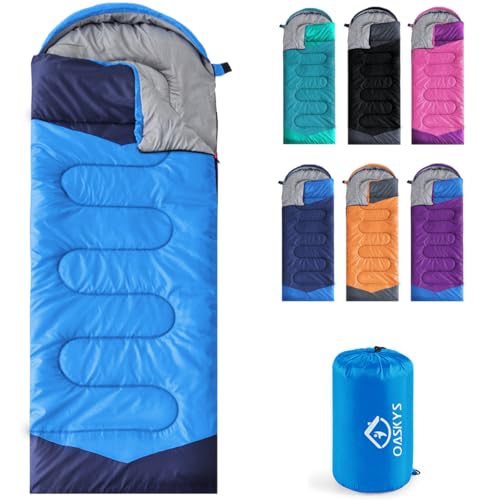
I’d recommend the Oaskys 3-Season Camping Sleeping Bag for kids who camp year-round in mild to cool conditions, since it performs best between 10°C and 20°C. It uses double-filled technology to retain warmth and resist moisture, even in damp weather. The 210T polyester outer is waterproof and tear-resistant, while the 190T pongee lining feels soft and holds up to regular use. A half-circle hood with an adjustable drawstring keeps heat in, and the bottom zipper allows ventilation when needed. At 220 cm long and 80 cm wide, it fits most kids comfortably. It packs small with the included compression sack, and the surface wipes clean easily. I’ve found it reliable for spring through fall, though it’s less suited for freezing temps. It’s a practical choice for hiking, camping, or travel, and if it doesn’t work out, their support team responds quickly.
Best For: Kids and adults who camp in mild to cool conditions across spring, summer, and fall and need a reliable, durable, and portable sleeping bag.
Pros:
- Performs well in temperatures between 10°C and 20°C with double-filled technology for warmth and moisture resistance
- Durable 210T waterproof, tear-resistant outer fabric and soft 190T pongee lining ideal for regular outdoor use
- Compact and portable with a compression sack, ventilation zipper, and wipe-clean surface for convenience
Cons:
- Not suitable for freezing or winter temperatures below 10°C
- Maximum length of 220 cm may be tight for taller teenagers or adults
- Made with synthetic materials, which may not breathe as well as natural fibers in warmer weather
MalloMe Cold Weather Sleeping Bag for Adults & Kids
The MalloMe Cold Weather Sleeping Bag stands out for kids aged 10 to 12 who need a reliable, all-season option that’s easy to pack and tough enough for frequent outdoor use. I’ve used it on spring and fall trips where temperatures dipped to 50°F, and it kept me warm without overheating. Weighing just 3 lbs, it compresses small, fitting easily in my pack. The waterproof HEX-TECH shell held up in damp grass and light rain. Double-sided zippers didn’t snag, and the synthetic fill dried fast after a humid night. It’s not for winter, but for 3-season comfort, it’s practical and durable.
Best For: Kids aged 10–12 and adults seeking a lightweight, durable 3-season sleeping bag for spring, summer, and fall camping trips.
Pros:
- Lightweight and compressible design makes it ideal for backpacking and hiking
- Waterproof HEX-TECH fabric provides reliable protection in damp conditions
- Double-sided snag-free zippers and quick-drying synthetic fill enhance comfort and usability
Cons:
- Not suitable for cold winter or sub-50°F conditions
- Maximum height limit of 6 feet may not accommodate taller users
- Machine washing recommended only for heavy soiling, limiting cleaning options
Teton Junior Sleeping Bags for Kids
You’ll find the Teton Junior Sleeping Bags for kids a solid choice when durability and warmth matter most, especially if you’re packing for rugged campouts or weekend sleepovers. I’ve used mine in damp woods and dry deserts, and the taffeta or canvas shell holds up. The two-way zipper works smoothly, and the full draft tube cuts heat loss. I stash small gear in the interior pocket, and the included stuff sack makes packing easy. I don’t roll it-I stuff it from the bottom, saving time. Hang loops help store it properly, preserving loft. It’s not the lightest, but it’s built to last, backed by reliable customer support.
Best For: Families seeking durable, warm, and easy-to-use sleeping bags for kids heading on rugged camping trips or frequent sleepovers.
Pros:
- Durable taffeta or canvas shell holds up in tough outdoor conditions
- Full-length draft tube and two-way zipper enhance warmth and usability
- Includes interior pocket and hang loops for convenience and proper storage
Cons:
- Heavier than ultralight sleeping bags, not ideal for backpacking
- Limited temperature rating details for extreme conditions
- Some users may prefer a lighter, more compact option for travel
Coleman Kids 45°F Sleeping Bag

A solid choice for kids up to 5 feet 5 inches tall, this Coleman sleeping bag works well when space and weight matter without sacrificing basic comfort. I’ve found it keeps kids warm down to 45°F thanks to ThermoTech® insulation, and the polyester shell handles light moisture without adding bulk. The rectangular shape lets them move freely, and the ZipPlow™ zipper rarely snags. It includes a handy interior pocket and packs small with the Roll Control™ system and stuff sack. At 2.93 pounds, it’s easy to carry, and machine washing makes cleanup simple. It’s not for extreme cold, but for spring through fall trips, it’s reliable and built to last.
Best For: Youth campers up to 5 feet 5 inches tall seeking a lightweight, durable sleeping bag for3–fall adventures.
Pros:
- Reliable 45°F ThermoTech® insulation keeps kids warm in moderate temperatures
- Smooth ZipPlow™ zipper and soft Comfort Cuff™ enhance comfort and usability
- Compact, lightweight design with Roll Control™ system and included stuff sack for easy packing
Cons:
- Not suitable for extreme cold or winter conditions below 45°F
- Limited size options, only fits youth up to 65 inches tall
- Polyester material may retain odors over time without proper drying
KingCamp 45°F Kids Sleeping Bag

When it comes to kids who camp in cooler conditions but still need room to grow, KingCamp’s 45°F sleeping bag stands out for families prioritizing warmth and durability over flashy design. I’ve used it in 40°F nights, and it kept my kid warm down to the limit rating. The cotton flannel lining feels soft, while the waterproof shell resists tears and damp ground. At 3.09 lbs, it’s light enough for a 10- to 12-year-old to carry. The 2-way zipper lets you link two bags-a real bonus for siblings. It packs small with the included sack, making it practical for tents, car camping, or even backyard sleepovers.
Best For: Families with children aged 10–12 seeking a durable, warm, and portable sleeping bag for camping in cool to cold weather conditions.
Pros:
- Soft cotton flannel interior and 300 g/m² cotton hollow fiber filling provide reliable warmth down to 35.6°F
- Waterproof, anti-tear polyester shell resists wear and damp surfaces, ideal for rugged outdoor use
- Two-way zipper allows connection with another bag, great for siblings or converting into a blanket
Cons:
- Limited sizing only fits up to 5’5″, potentially outgrown quickly by taller children
- Cotton-based materials may take longer to dry than synthetic alternatives if exposed to moisture
- No built-in pillow or draft collar, which could reduce comfort in colder conditions
Tuphen 4-Season Waterproof Sleeping Bag
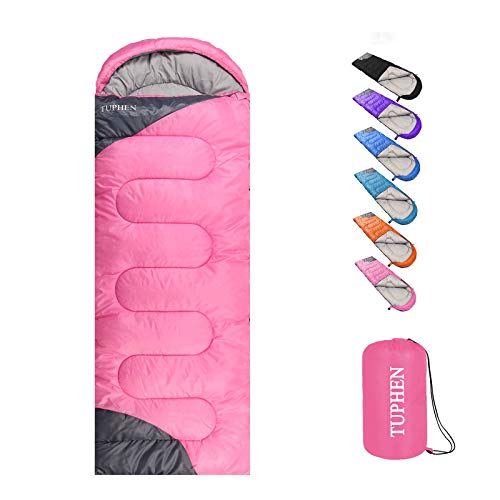
I’d pick the Tuphen 4-Season Waterproof Sleeping Bag for kids who need reliable warmth without bulk, especially when space and weight matter. It weighs just three pounds and packs into a compact size with the included carry bag, making it easy to stash in a backpack. The 210T nylon shell resists water, while the hollow microfiber fill retains heat down to 40°F. A two-way zipper lets kids vent their feet or open it flat as a blanket. At 29.5 by 86.6 inches, it fits most kids comfortably. Machine washable and backed by a satisfaction guarantee, it’s simple to clean and maintain for repeated use.
Best For: Kids and lightweight travelers needing a compact, warm, and waterproof sleeping solution for year-round outdoor adventures.
Pros:
- Lightweight and packable, ideal for backpacking and easy transport
- Waterproof 210T nylon shell with heat-retaining hollow microfiber fill for reliable warmth
- Versatile two-way zipper converts to a blanket and fits most kids comfortably
Cons:
- Minimum temperature rating of 40°F may not suffice for very cold conditions
- Limited width may feel snug for larger kids or teens
- Machine washing, while convenient, may require careful handling to preserve waterproof coating over time
Coleman Kids 50°F Sleeping Bag

This Coleman Kids 50°F Sleeping Bag suits young campers needing a durable, temperature-rated option for cool-weather outdoor use. I’ve found it works well down to 50°F, making it reliable for fall and winter camping. It fits kids up to 5 feet tall and uses polyester insulation that retains heat even when damp. The no-snag zipper operates smoothly, and the included stuff sack makes packing easy. At 2.65 pounds, it’s lightweight without sacrificing warmth. I appreciate the interior flashlight pocket and glow-in-the-dark trim for nighttime visibility. Machine washable and built with PFA-free materials, it’s practical and safe. It comes with a 5-year warranty, which shows Coleman stands behind its durability.
Best For: Young campers up to 5 feet tall who need a lightweight, durable sleeping bag for cool-weather outdoor adventures like camping, climbing, or sleepovers.
Pros:
- Reliable 50°F temperature rating with polyester insulation that retains heat even when damp
- Thoughtful features like a no-snag zipper, interior flashlight pocket, and glow-in-the-dark trim for nighttime convenience
- Machine washable, made with PFA-free materials, and backed by a 5-year limited warranty for long-term use and safety
Cons:
- Limited to shorter children (up to 5 feet), which may not accommodate older teens or taller kids
- Rectangular shape is less thermally efficient than mummy-style bags in colder conditions
- May be too warm for summer or mild weather use, limiting year-round versatility
KidzAdventure Mummy Kids Sleeping Bag (32–59F)

The KidzAdventure Mummy Kids Sleeping Bag works best for children up to 4’3” or youth up to 5’7” who need a reliable, all-season option for camping or sleepovers. I’ve found it keeps kids warm in temperatures from 32–59°F, thanks to its mummy shape and thermal resistance of 2.5 W/m·K. It weighs just 2.09 pounds and packs into a backpack-style sack, so it’s easy to carry. The waterproof polyester shell holds up well to wet ground and light rain. A draft tube and snap zipper prevent cold spots, while the hood and pillow sleeve add comfort. I’ve used mine for hikes and backyard sleepovers-it lasts about three years with regular use.
Best For: Kids up to 4’3” and youth up to 5’7” who need a lightweight, all-season sleeping bag for camping, hiking, or sleepovers.
Pros:
- Mummy design with draft tube and hood retains heat and prevents cold spots in temperatures from 32–59°F
- Waterproof polyester construction and durable build withstand outdoor use and last up to 3 years
- Lightweight at 2.09 lbs and packs into a backpack-style sack for easy portability
Cons:
- Limited height fit may not accommodate taller children beyond 5’7”
- Temperature rating suitable only for mild to moderate conditions, not extreme cold
- Graphics and design may appeal more to younger kids than older teens
Croosseoutdoors Kids Sleeping Bag for Camping
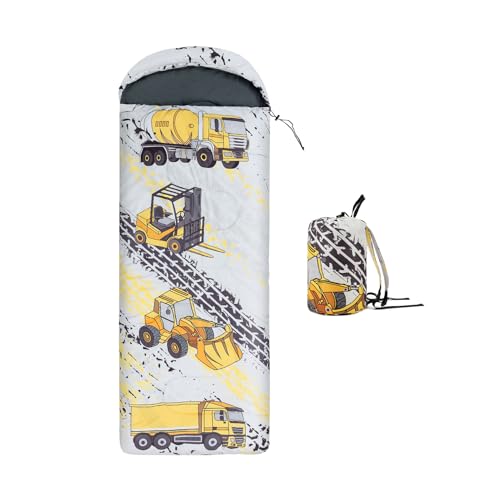
If your child loves outdoor adventures and responds well to gear that feels both rugged and tailored to them, the Croosseoutdoors Kids Sleeping Bag stands out as a reliable 3-season choice. It weighs 2.44 lbs and packs into a compact 14.96” x 11.81” backpack with comfortable double straps. The 66.93” x 25.59” size fits most kids, and the dual two-way zippers let you open it fully into a blanket. Made of waterproof, tear-resistant polyester with 350GSM hollow fiber lining, it holds up to rough use and washes easily. The S-stitched seams boost durability and insulation. A hood with drawstrings and secure fasteners helps retain heat. It works well from spring through fall, especially in mild to warm conditions, and the fun yellow construction truck design appeals to younger kids without sacrificing function. Customer support is responsive if issues come up.
Best For: Kids who love outdoor adventures and need a durable, warm, and fun-designed sleeping bag for camping and sleepovers.
Pros:
- Lightweight and packable with comfortable carrying straps for easy transport
- Waterproof, tear-resistant polyester with 350GSM insulation for warmth and durability
- Converts into a blanket with dual two-way zippers, adding versatility for indoor and outdoor use
Cons:
- Limited to 3-season use; may not provide sufficient warmth in cold or winter conditions
- Design may appeal more to younger children, potentially less suitable for older kids
- Polyester material, while durable, may not breathe as well as natural fabrics in humid conditions
Factors to Consider When Choosing Children’s Sleeping Bags for Camping
You need a sleeping bag that matches the expected weather, so check the temperature rating before you buy-too high and your kid overheats, too low and they’ll be cold. Look at the material quality, size, and fit to guarantee comfort and mobility without excess weight that makes packing harder. Keep it simple: a lightweight, easy-to-use design in the right size will last longer and perform better on real trips.
Temperature Rating
When picking a sleeping bag for your child, pay close attention to the temperature rating, since it tells you how cold the bag can handle before your kid gets chilly. Most kids’ bags range from 32°F to 50°F, with lower ratings suited for cold weather and higher ones for mild conditions. Kids feel colder than adults, so choose a bag rated about 10°F below the lowest expected temperature. Look for models with multiple ratings-comfort, lower limit, and extreme-for clearer expectations. A 32°F lower limit bag works well in early spring or late fall, while a 50°F bag suits summer nights. Keep in mind that ratings are based on lab tests; real-world factors like wind, dampness, and lack of a good sleeping pad can reduce warmth. Always pair the bag with proper insulation from the ground to maintain its rated performance.
Material Quality
A well-built kids’ sleeping bag relies on smart material choices that balance durability, comfort, and thermal performance. You’ll want a 210T polyester or nylon outer shell-it resists tears and shrugs off moisture. Inside, soft linings like cotton flannel or 190T polyester pongee feel gentle on skin, reducing irritation during long nights. Hollow fiber insulation, around 300–350 GSM, keeps your child warm without adding bulk. It’s lightweight and holds heat well, even when compressed. Look for waterproof yet breathable shells; they block outside dampness while letting sweat escape, so your kid stays dry. Reinforced stitching-S-shape or double-stitched-adds strength and keeps insulation evenly distributed. These materials work together to handle rough use and changing conditions. You’re not just buying fabric-you’re investing in reliable performance that lasts through seasons of real camp use.
Size And Fit
Good materials set the foundation, but correct size and fit determine how well a sleeping bag performs in the field. Choose a bag that’s 6–12 inches longer than your child’s height to keep feet from compressing the end while maintaining warmth and circulation. A proper fit reaches up to their shoulders when zipped, reducing empty space that leads to heat loss. If your child moves a lot, go for a rectangular shape-it gives more room and feels less confining. For colder nights, pick a mummy-style bag; its snug fit cuts down on interior air space, trapping heat more efficiently. Look for adjustable hoods and draft tubes-they seal around the head and neck to minimize heat escape. These features let you fine-tune the fit, balancing comfort and thermal performance without adding weight.
Weight And Portability
For young campers carrying their own gear, weight matters-look for sleeping bags under 3 pounds so they don’t bog down small backpacks or tire kids before reaching camp. Compact designs that stuff into sacks under 15 inches save space and fit easily in packs. Choose models with adjustable shoulder straps on the compression sack; they distribute weight better and boost comfort on longer hikes. A high packed-to-unpacked ratio means more room savings without losing comfort at night. Some bags include two-way zippers, which add versatility-fully unzip them to use as a blanket without extra weight. These features don’t improve warmth, but they do make transport easier and storage simpler. You’re not just buying a sleeping bag; you’re choosing a packable, movable piece of gear. Prioritize lightweight builds and smart compression to keep the load manageable and the trip fun.
Ease Of Use
When picking a sleeping bag kids can actually use on their own, start by checking the zipper-snag-free sliders and smooth plows mean small hands won’t struggle to close the bag, and two-way zippers let them vent heat or hop out without getting tangled. You’ll want features that support independence, like glow-in-the-dark zippers for locating the pull at night and interior pockets for storing small essentials within reach. Lightweight designs under 3 pounds make it easier for kids to carry their gear without fatigue, especially on hikes. Machine-washable fabrics and wipe-clean surfaces save time and effort in cleanup, so the bag stays fresh with minimal hassle. These practical touches reduce frustration for both kids and parents, ensuring the sleeping bag works in real camping conditions. Simple usability adds up over time, making self-reliance possible and routines smoother when outdoors.
Safety Features
Your child’s safety in a sleeping bag hinges on thoughtful design choices that address real outdoor risks. Look for draft tubes along the zipper to block cold air and prevent nighttime chills. Choose models with snag-free zippers or ZipPlow™ technology-you’ll reduce skin pinching and fabric tears during entry and exit. Pick bags with secure, non-toxic fasteners and reinforced stitching so small parts won’t break off and become choking hazards. Go for adjustable hoods with tight but safe drawstrings; they keep heat in without risking strangulation. Always check that the bag uses flame-retardant materials and meets current safety standards-it’s a small detail that could matter most near campfires or lanterns. These features aren’t just extras-they’re practical safeguards that work under real conditions. Skip them, and you’re gambling with comfort and safety.
Care And Maintenance
Though durability matters, how you care for the sleeping bag shapes its long-term performance. You can machine wash most kids’ sleeping bags with mild detergent, but always air-dry them to protect the insulation and fabric. Tumble drying risks heat damage and reduced loft. Spot clean spills quickly with a damp cloth to preserve waterproof coatings and avoid full washes unless necessary. Never store the bag compressed-keep it loose in a large cotton or mesh sack to maintain insulation effectiveness. Long-term compression breaks down synthetic or cotton fill, lowering warmth. Check zippers regularly, removing debris and applying zipper lubricant to prevent snags. Smooth operation guarantees quick entry and exit, especially in cool weather. Proper care extends service life and keeps performance reliable, camping after camping. You’ll get more seasons of use when storage, cleaning, and drying follow these simple, proven steps.
Design Appeal
A sleeping bag’s durability and performance depend not only on materials and care but also on design choices that influence a child’s willingness to use it night after night. You’ll find kids are more engaged when the bag features vibrant themes like forest animals, campfires, or vehicles. Glow-in-the-dark or reflective details add visibility in the dark while fueling imagination. Interior pockets with fun linings offer storage and visual interest. Reversible designs give two looks in one, extending appeal over time. Mummy styles with hoods shaped like animal ears feel cozy and personal. These features aren’t just decorative-they affect how consistently your child uses the bag. Practicality and design work together: a bag they like is one they’ll actually sleep in. Choose shapes and prints that match their interests to guarantee use and comfort on every trip.
Frequently Asked Questions
Can Kids Use Adult Sleeping Bags Safely?
Yes, kids can use adult sleeping bags safely, but fit and warmth matter. Adult bags are longer and wider, which creates excess space-cold spots form when the bag isn’t snug. A child may struggle to stay warm, especially in cooler temperatures. Drawstrings and hoods might not fit properly, reducing effectiveness. Zippers can be hard for small hands. For safety and performance, a properly sized kids’ bag with the right temperature rating gives better insulation and control, making it the smarter choice for comfort and thermal efficiency.
How Do I Clean a Kids’ Sleeping Bag?
You clean a kids’ sleeping bag by hand-washing it in lukewarm water with mild detergent or using a front-loading machine on a gentle cycle. Never use bleach or fabric softener. Rinse thoroughly and spin-dry to remove excess water. Air-dry completely-don’t use a dryer unless the label allows it. Improper drying damages insulation and promotes mold. Always check care tags first; ignoring them risks ruining the bag’s thermal performance and fabric integrity over time.
Are Sleeping Bags Safe for Toddlers?
Yes, sleeping bags are safe for toddlers if you pick the right one. You avoid loose blankets, which can shift and pose a risk. Instead, you use a bag with a secure fit and no extra padding around the face. You check for safety certifications and breathable fabrics. You skip hoods or bulky linings that could restrict breathing. You verify the zipper’s snag-free and the material is easy to clean. These choices keep your toddler warm and safe without compromise.
Do Kids Need Sleeping Bag Liners?
You don’t need sleeping bag liners for kids, but they help in colder weather. A liner boosts warmth by 5–10°F, extending the bag’s rated temperature range. It also keeps the bag cleaner, reducing wash frequency. Most kids’ bags can’t unzip fully, making liners easy to add. Choose a breathable, lightweight liner-fleece or silk-to avoid overheating. It’s a small, practical upgrade that improves comfort and bag longevity without added bulk.
Can Sleeping Bags Be Used Indoors?
Yes, you can use sleeping bags indoors. They work well on sleepovers, during power outages, or when you need extra warmth. Indoors, they’re practical if the room gets cold. You’ll avoid overheating by choosing a bag rated for higher temperatures. Most aren’t airtight, so breathability isn’t usually a problem. Just keep it clean-indoor use reduces wear. You skip the sleeping pad, but airflow still matters. Simple, functional, and ready when needed.