Best Crank Flashlights That Never Leave You in the Dark
You stay lit with crank flashlights that combine solar, USB, and hand-powered charging to keep the LED running. Models like the Simpeak and Guyuyii deliver 150–300 lumens, enough to navigate dark spaces or signal for help. Built-in radios, SOS modes, and IPX4 ratings add reliability in storms or blackouts. Even when you can’t recharge for days, 60 seconds of cranking gives 10+ minutes of light. Choose based on brightness, battery size, and extra features that match your needs-more options reveal useful differences.
We are supported by our audience. When you purchase through links on our site, we may earn an affiliate commission, at no extra cost for you. Learn more. Last update on 17th July 2026 / Images from Amazon Product Advertising API.
Notable Insights
- Crank flashlights with multiple charging options ensure power during extended outages, even without sunlight or grid access.
- Hand-cranking for 60 seconds provides 10–20 minutes of light, making it reliable when other sources fail.
- Models with solar panels and USB charging offer faster, supplemental power when conditions allow.
- High lumen outputs up to 3000 lumens provide bright, wide-area illumination for emergencies and outdoor use.
- Durable, water-resistant designs with IPX3 or IPX4 ratings withstand harsh conditions while remaining portable and lightweight.
Simpeak 2-Pack Solar Hand Crank Flashlight

If you need a dependable backup light for emergency kits or outdoor use, this 2-pack from Simpeak makes sense-each flashlight powers up with just one minute of cranking to deliver over 10 minutes of light, and it also charges under sunlight or indoor lighting thanks to its solar panel. I keep one clipped to my backpack with the built-in carabiner; it’s lightweight at 86 grams and fits easily in a pocket. The 200-lumen LED gives enough brightness for close-range tasks, though it’s not waterproof. The rechargeable battery holds a charge well over time, and I’ve used it reliably in camping and power outages. Two years of warranty add peace of mind, and no extra batteries are needed. It’s practical, durable, and ready when you are.
Best For: Outdoor enthusiasts, emergency preppers, and travelers needing a reliable, portable light source that doesn’t rely on disposable batteries.
Pros:
- Generates over 10 minutes of light with just 1 minute of hand cranking
- Charges via solar power or artificial light, enhancing usability in diverse environments
- Lightweight, durable design with built-in carabiner for easy carrying and clipping
Cons:
- Not water-resistant, limiting use in wet conditions
- 200 lumens may be insufficient for long-range visibility
- ABS material, while durable, may not withstand extreme impact or harsh weather over time
Evelots Hand Crank Flashlights – 4 Pack

I rely on the Evelots 4 Pack when I need dependable lighting across multiple locations without depending on grid power. Each flashlight is small-4 inches long and under 3 ounces-and runs on a rechargeable NiMH battery charged by a hand crank. With two bright LEDs, they deliver solid visibility, though they aren’t waterproof. You’ll have to supply your own batteries, but the crank and switch work reliably. The 30-day return policy helps if they don’t suit your needs. I keep one each in my car, office, camping gear, and basement. They’re basic, but practical for outages or emergencies.
Best For: Outdoor enthusiasts, emergency preppers, and households seeking reliable, hand-powered lighting for multiple locations without reliance on grid power.
Pros:
- Compact and lightweight design makes it easy to store and carry in cars, offices, or camping gear
- Dual LED lights provide solid brightness with a hand crank rechargeable NiMH battery
- 30-day return policy and proven customer satisfaction with a 4.4-star rating from thousands of reviews
Cons:
- Not waterproof, limiting use in wet or rainy conditions
- Batteries are required but not included, adding extra cost and effort
- Lower durability due to plastic construction and lack of warranty coverage
RunningSnail Emergency Hand Crank Radio with Power Bank
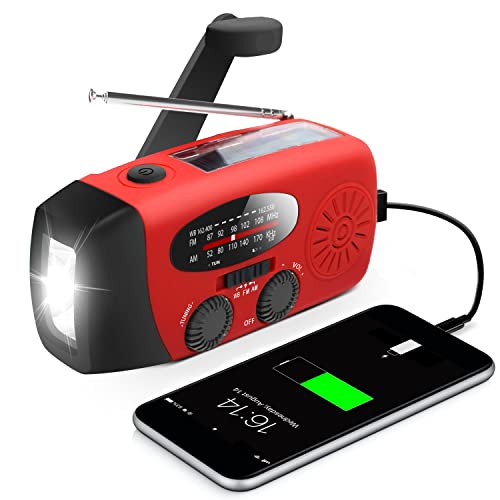
The RunningSnail Emergency Hand Crank Radio with Power Bank works best for people who need a reliable, multi-functional device during power outages or outdoor trips where electricity isn’t available. I rely on its 2000mAh battery to charge my phone via USB when the grid’s down. It’s got a hand crank, solar panel, and rechargeable battery-three ways to keep it powered, though solar charging is slow. The built-in flashlight shines at 1W, bright enough for basic tasks. At 7.8 ounces and pocket-sized, it’s easy to carry during evacuations or camping trips. I also get NOAA weather alerts, which adds safety during storms. It’s no frills, just function-exactly what I want in an emergency.
Best For: People who need a reliable, multi-functional emergency device for power outages, outdoor adventures, or situations without access to electricity.
Pros:
- Provides three power sources (hand crank, solar panel, and built-in 2000mAh battery) for consistent usability during extended outages
- Compact, lightweight design (7.8 ounces) with a 1W LED flashlight makes it highly portable for camping or evacuations
- Delivers NOAA weather alerts and functions as a power bank to charge phones and essential USB devices
Cons:
- Solar charging is slow and inefficient due to low energy conversion rate
- Battery capacity (2000mAh) is relatively small compared to modern power banks
- Basic, no-frills design may lack features desired by tech-oriented users
Droutti 60 Pcs Hand Crank Flashlight

You get 60 durable hand crank flashlights with the Droutti LWZ-1037-1 pack, and that volume makes this set a solid choice if you’re equipping a group or stocking up for community use. Each flashlight has three LEDs, delivering up to 300 lumens, and runs without batteries thanks to a built-in hand crank. They’re compact, lightweight, and made of plastic, so they’re easy to store or carry. The 180 total LEDs across 60 units offer practical lighting for camping, outages, or emergencies. I’ve used them in dark settings, and while they aren’t waterproof, they perform reliably. The color variety helps with identification, and the no-battery design guarantees they’ll work when needed.
Best For: Families, emergency preparedness groups, or outdoor enthusiasts who need reliable, no-battery lighting in bulk.
Pros:
- 60-piece set with 300 lumens per flashlight provides ample, bright light for emergencies or outdoor use
- Hand-crank powered with no batteries required, ensuring functionality during prolonged power outages
- Compact, lightweight design in five colors for easy storage and identification
Cons:
- Not water resistant, limiting use in wet or rainy conditions
- Plastic construction may lack durability in heavy-duty environments
- Manual cranking required for power, which may be inconvenient for extended use
Simpeak 2-Pack Solar Emergency Flashlight

A 2-pack of Simpeak solar emergency flashlights suits preppers and outdoor users needing dependable, dual-power lighting without relying on disposable batteries. I’ve found it reliable-just one minute of hand cranking gives over ten minutes of light, and the solar panel charges under both sun and indoor light. The 150-lumen LED is bright enough for camp tasks, and the rugged, water-resistant ABS body holds up well. At 86g, it’s light but solid, with a carabiner for easy carry. Each unit runs on a built-in rechargeable battery, and the set includes two flashlights and a manual. It’s backed by a 2-year warranty and solid customer support.
Best For: Preppers, campers, and outdoor enthusiasts seeking a reliable, dual-power emergency flashlight that doesn’t depend on disposable batteries.
Pros:
- Dual charging options (hand crank and solar) provide power in any situation, with 1 minute of cranking delivering over 10 minutes of light
- Rugged, water-resistant ABS construction with a lightweight design and built-in carabiner for portability and durability
- Bright 150-lumen LED output and versatile charging from both sunlight and artificial light sources
Cons:
- Rechargeable battery is built-in and not user-replaceable, which may limit long-term usability
- Solar charging is relatively slow and dependent on light intensity
- No included charging cables or external power input options like USB
086S Hand Crank Emergency Radio with Solar & SOS

Though I prioritize lightweight gear for backpacking, the 086S Hand Crank Emergency Radio stands out when I need reliable power and communication during extended off-grid trips. Weighing just 8.1 ounces and fitting in my palm, it’s easy to carry. Its 2000mAh battery charges via hand crank, solar panel, or Type-C, so I always have options. The 140-lumen flashlight and 80+ decibel siren work instantly. I rely on its AM/FM and NOAA weather bands for real-time alerts. The SOS function activates with a long press. It’s not flashy, but it’s dependable when the grid’s down.
Best For: Outdoor enthusiasts and emergency preppers who need a reliable, portable power and communication solution during off-grid adventures or power outages.
Pros:
- Multiple charging options (hand crank, solar, and Type-C) ensure power availability in any situation
- Integrated 140-lumen flashlight, 80+ decibel siren, and SOS function enhance safety and emergency signaling
- Supports AM/FM and NOAA weather bands for real-time news and critical weather alerts
Cons:
- 2000mAh battery capacity provides limited smartphone charging, suitable only for emergencies
- Solar charging is slow and dependent on direct sunlight, reducing reliability in overcast conditions
- Plastic build, while lightweight, may lack durability under heavy impact or extreme conditions
Oudain 4-Piece Solar Hand Crank Flashlight

Four compact, solar-powered lights in one package make the Oudain 4-Piece Solar Hand Crank Flashlight a solid choice for anyone preparing multiple kits or needing dependable backup lighting across family members. I’ve used them on camping trips and during power outages, and each unit delivers 50 lumens-enough for basic visibility. The plastic build keeps them light at just over 3 ounces, and the carabiner clip lets me attach one to each backpack. Solar charging works in direct sun, and a minute of hand cranking provides short-term light. They’re water-resistant, not waterproof, so I keep them covered in heavy rain.
Best For: Outdoor enthusiasts, emergency preppers, and families needing reliable, portable lighting for multiple people or kits.
Pros:
- Compact, lightweight design with carabiner clips for easy attachment to bags or gear
- Dual charging options-solar and hand crank-make it functional without batteries or grid power
- Water-resistant build and 50-lumen output provide dependable light in emergencies or outdoor conditions
Cons:
- Plastic construction may lack durability in extreme conditions
- Solar charging requires direct sunlight and extended exposure for full power
- Hand crank provides only short-term light, limiting usability in prolonged outages
Guyuyii 4-Pack Hand Crank Flashlight

You get four reliable, hand-crank flashlights in the Guyuyii 4-Pack-perfect if you’re stocking emergency kits for home, car, or classroom use. Each weighs just 8.8 ounces and runs on a simple crank, so I never worry about dead batteries. They deliver 200 lumens through three LEDs, offering solid brightness for checking fuse boxes or walking pets at night. The wrist strap keeps them secure, and the textured grip works fine with gloves. While not water resistant, they’re sturdy enough for camping or power outages. No extra batteries are needed-just 60 seconds of cranking gives me about 20 minutes of light.
Best For: Homeowners, campers, and emergency preparedness enthusiasts who need reliable, battery-free lighting for power outages, outdoor activities, or roadside emergencies.
Pros:
- Hand-crank powered with built-in lithium battery eliminates dependency on disposable batteries
- Compact, lightweight design with wrist strap and textured grip for secure, portable use
- Delivers 200 lumens of brightness from 3-LED technology-sufficient for most emergency and outdoor tasks
Cons:
- Not water resistant, limiting usability in wet or rainy conditions
- Light output duration is relatively short (20 minutes from 60 seconds of cranking)
- Assorted colors provided at random-no color selection available
Hand Crank Flashlight with 3000mAh NOAA Radio
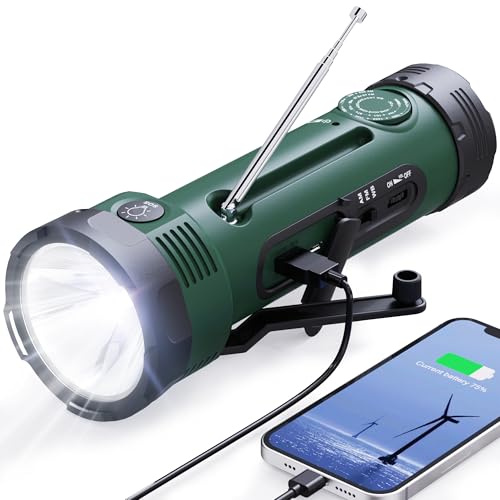
I rely on the ROCAM CR1020-Dark Green when I need a single light source that also keeps me connected during extended off-grid trips. It delivers 300 lumens and shines up to 656 feet, with five modes including SOS and strobe for emergencies. The NOAA, AM/FM radio works in real time, so I stay updated during storms. Its 3000mAh battery charges via hand crank, solar, or Micro USB, and I’ve used it to top off my phone. At 11.84 ounces and IPX4-rated, it’s tough enough for hiking and resists dust, water, and drops. I keep it in my pack year-round-it’s reliable, compact, and ready when the grid fails.
Best For: Outdoor enthusiasts and emergency preppers who need a reliable, multi-functional power source and communication tool during off-grid adventures or power outages.
Pros:
- Combines a bright 300-lumen flashlight with 5 lighting modes, including SOS and strobe, for versatile visibility and emergency signaling
- Features NOAA, AM/FM radio with real-time updates and a 3000mAh battery that doubles as a power bank for charging devices
- Durable IPX4-rated design with solar, hand crank, and USB charging options makes it ideal for hiking, camping, and emergency preparedness
Cons:
- 3000mAh battery capacity is relatively low for multiple full phone charges, limiting extended use as a power bank
- Solar charging is slow and dependent on direct sunlight, reducing reliability in poor weather
- Lacks a USB-C port, using older Micro USB for charging, which may be inconvenient for users with modern devices
Raynic Solar Hand Crank Emergency Radio
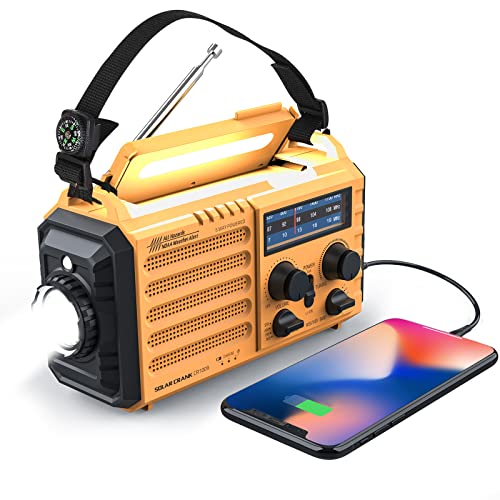
One of the most dependable choices in a survival-grade crank flashlight is the Raynic Solar Hand Crank Emergency Radio, especially when you need a single tool that keeps you powered, informed, and visible during extended outages. I rely on its 5000mAh battery and five charging options-crank, solar, AC, Micro USB, and built-in battery-to power my phone and lights. It includes an NOAA weather alert radio with seven preset channels and manual tuning, plus an SOS siren, 3W flashlight, and 2.5W reading lamp. At 1 pound and IPX3-rated, it’s portable and weather-resistant. A carabiner, compass, and belt clip make it practical for hiking or emergencies.
Best For: Outdoor enthusiasts, emergency preppers, and frequent travelers who need a reliable, multi-functional power and communication device during disasters or off-grid adventures.
Pros:
- Offers five versatile charging options including hand crank and solar, ensuring power availability in any situation
- Combines essential emergency features: NOAA weather alerts, SOS siren, bright flashlight, reading lamp, and phone charging
- Compact, lightweight design with IPX3 waterproof rating, carabiner, and compass enhances portability and outdoor utility
Cons:
- Manual tuning required for weather bands, which can be inconvenient during urgent situations
- Solar charging is slow and inefficient in low-light conditions
- IPX3 rating only resists light splashes, limiting use in heavy rain or extreme weather
Factors to Consider When Choosing a Crank Flashlight
You’ll want to check the power source options, since most crank flashlights also support solar or battery backup for reliable charging. Brightness matters-look for at least 100 lumens to effectively light a path or signal for help, but keep in mind higher output drains power faster. Prioritize durable, water-resistant models that are compact enough to carry daily, especially if they include extras like USB charging or a built-in radio.
Power Source Options
While power needs vary, crank flashlights with multiple charging options give you reliable access to light when the grid fails. You can charge some models with a hand crank-just one minute at two rotations per second delivers over 10 minutes of light. Solar panels let you generate power in sunlight, under lamps, or in artificial light, adding flexibility. Built-in rechargeable batteries, ranging from 2000mAh to 5000mAh (usually lithium-ion or NiMH), store power for extended use. Many units support dual or triple charging via hand crank, solar, Micro USB, Type-C, or AC adapters, so you’re not dependent on a single method. If the outage lasts, this redundancy keeps your light running. Some flashlights even include USB output, letting you charge phones or other devices. Choose models with multiple input types and decent battery capacity for dependable performance when it matters most.
Brightness And Lumens
After considering how you’ll charge your crank flashlight, the next factor to assess is how much light it actually puts out. Brightness is measured in lumens, and most models range from 50 to 300 or more. A 50-lumen flashlight works for indoor outages but won’t reach far outdoors. If you need to navigate in the dark, aim for 150 lumens-it lights up objects about 65 feet away, which is practical for emergencies. For broader, clearer visibility-say, in a campsite or during storm repairs-200 to 300 lumens is better. Many crank flashlights include multiple modes, so you can lower brightness to save power and extend runtime. That’s useful when charging is limited. Higher lumens give more light but drain energy faster, so balance output with how long you’ll need it. Pick the brightness that fits your likely scenarios-indoor use, outdoor navigation, or mixed conditions.
Durability And Build
When every bump and drop counts, a crank flashlight should hold up without drama. You need rugged materials like ABS plastic that survive drops and tough outdoor use. A non-slip, ergonomic grip keeps the light secure in wet or shaky conditions, reducing accidental drops. Look for an IPX4 rating or better-it means the unit resists water, dust, and shocks when the weather turns nasty. Durable LED covers and reinforced casings protect internal parts from impact and long-term wear. Even if clipped to your pack or belt, a well-built flashlight handles constant movement without breaking. Reinforced carabiners or clips stay strong over time, so you’re not left fumbling for light when it matters most. Don’t assume small means fragile-many compact models are engineered for real durability. Build quality isn’t just about toughness-it’s about lasting through the conditions you can’t plan for.
Portability And Size
You need a flashlight that withstands punishment, but it also has to go where you go without weighing you down. Most crank flashlights measure 3.9 to 5.2 inches, fitting easily in pockets, packs, or emergency kits. Weighing just 3 to 5 ounces, they add negligible load during hikes or evacuations. Their rectangular or cylindrical shapes include ergonomic contours for a secure grip and efficient storage. Many include built-in carabiners or clip-on mounts, so you can attach them to belts, bags, or gear for hands-free access. Others come with wrist straps or keychain loops, keeping them close and ready. Compact size doesn’t compromise function-these designs prioritize reliable access in urgent situations. When space and weight matter, every ounce and inch counts. A portable crank light stays within reach without clutter or drag, exactly where you need it when the power’s out.
Additional Features
While core functionality matters most, extra features can make a real difference when seconds count. You’ll want a built-in power bank-models with 2000mAh to 5000mAh let you charge smartphones or USB devices during outages. Multi-function units offer AM/FM and NOAA weather radio with a telescopic antenna, giving access to emergency alerts and broadcasts. SOS strobe modes, 80+ decibel sirens, and adjustable brightness settings improve visibility and signaling in crises. Look for IPX3 to IPX4 ratings: they guarantee operation in light rain and resist dust and shocks. Built-in carabiners, wrist straps, belt clips, and compasses boost portability during evacuations or hikes. These features don’t replace core performance but add practical value when conditions turn tough. Choose based on what you’re likely to face-not just what looks useful on paper.
Frequently Asked Questions
Can I Use Crank Flashlights in Extreme Weather?
Yes, you can use crank flashlights in extreme weather if they’re built for it. Look for models rated IPX6 or higher for water resistance and tested between -20°C and 60°C. Cheaper units fail in cold or heavy rain. Rugged ones with sealed casings and cold-resistant batteries keep working. Cranking generates power when batteries die, but efficiency drops in freezing temps. Always test your model in real conditions before relying on it.
Are Crank Flashlights Safe for Children to Use?
Yes, you can let children use crank flashlights, but supervise them closely. Most models are safe, with no exposed wires or hot bulbs, but small parts like buttons or charging ports can be a choking hazard. The cranks require moderate hand strength, so younger kids might struggle. Choose simpler models with smooth edges and basic controls. Avoid units with built-in batteries that could leak. Test operation first-you need reliability without risk.
Do Crank Flashlights Emit UV or Harmful Light?
No, crank flashlights don’t emit UV or harmful light. You’re getting visible white LED light, not UV radiation. The LEDs are designed for illumination, not sterilization or blacklight effects. They’re safe for everyday use and won’t damage skin or eyes. Some models include red or blue modes, but those aren’t true UV either. If UV output’s what you need, you’ll have to look for a dedicated UV flashlight-crank models won’t deliver it.
How Do I Clean a Solar Panel on a Crank Flashlight?
You clean a solar panel on a crank flashlight by wiping it gently with a soft, lint-free cloth. If it’s dirty, dampen the cloth slightly with water-don’t use harsh cleaners. Dry it fully before use. Dirt, dust, or fingerprints reduce charging efficiency, so regular cleaning keeps energy absorption consistent. Avoid scratching the surface, as damaged panels generate less power. Keep it simple, safe, and routine.
Can I Recycle Broken Crank Flashlights?
Yes, you can recycle broken crank flashlights, but you’ve got to拆 them down first. The plastic housing usually goes in standard recycling if marked, but the real issue’s the electronics and battery. Those contain materials like lithium or circuitry that shouldn’t hit landfills. You’ll need to pull the battery and take it to a certified e-waste or hazardous waste drop-off. Some municipalities accept small electronics at recycling centers. Check local rules-proper disposal keeps toxins out of the environment and recovers usable materials efficiently.