Best Emergency Cooking Equipment: 6 Stoves Compared
You need a stove that works without power, and Coghlan’s Emergency Stove fits the bill-compact, lightweight, and storing 24 fuel tablets inside. It ignites instantly, no priming or parts to fail. For more cooking control, the Gas One dual-fuel stove runs on common canisters and delivers adjustable heat. Pair either with a durable cookware kit like the 17pc anodized set for efficient meal prep. Wood-burning options save fuel but need dry tinder. Each has trade-offs in speed, fuel availability, and setup-your environment will decide what works best when the grid fails.
We are supported by our audience. When you purchase through links on our site, we may earn an affiliate commission, at no extra cost for you. Learn more. Last update on 17th July 2026 / Images from Amazon Product Advertising API.
Notable Insights
- Coghlan’s Emergency Stove folds flat and stores 24 fuel tablets, making it ideal for compact, no-fuel-carry emergency use.
- InstaFire canned heat provides six hours of smoke-free, indoor-safe heat per can and is easy to store in small spaces.
- Gas One Dual Fuel Stove works with butane or propane and features reliable piezo ignition and safety cut-off for consistent emergency cooking.
- REDCAMP Wood Burning Stove uses twigs and leaves as fuel, eliminating reliance on fuel canisters during prolonged power outages.
- 17pc Camping Cookware Kit includes a folding stove and nested, lightweight cookware for a complete emergency cooking system under 3 lbs.
Coghlan’s Portable Folding Camp Stove

If you’re packing light for a backpacking trip or building a bug-out bag, the Coghlan’s Portable Folding Camp Stove is a solid choice for anyone who needs a compact, reliable way to cook in the field. It weighs just 16 oz and folds flat, saving space without sacrificing stability. Made from coated alloy steel, it handles rugged use and supports small to medium pots. I use it with fuel tablets or canned heat when gas isn’t available, and it boils water in minutes. It doesn’t come with fuel, so you’ll need to pack that separately. The design is simple, effective, and field-tested.
Best For: Backpackers, campers, and emergency preppers needing a lightweight, compact cooking solution.
Pros:
- Ultralight at 16 oz and folds flat for easy packing
- Durable coated alloy steel construction withstands rugged outdoor use
- Compatible with multiple fuel types including canned heat and fuel tablets
Cons:
- Does not include fuel, which must be purchased separately
- Limited cooking surface size, not suitable for large cookware
- Lower heat output compared to propane stoves
Gas One Dual Fuel Portable Camping Stove
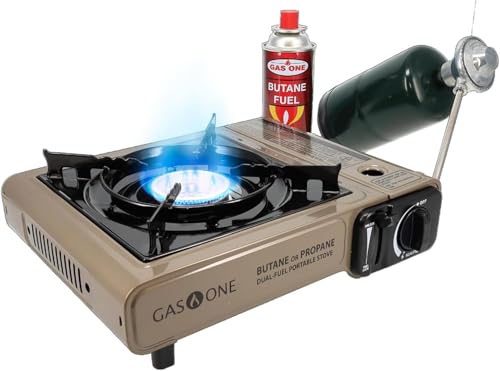
I rely on the Gas One Dual Fuel Portable Camping Stove when I need a dependable cooking solution that works in remote or emergency situations without access to standard fuel sources. It runs on 8 oz butane cartridges or 16.4 oz propane cylinders, giving me flexibility. The included propane converter adds convenience. I appreciate the piezo ignition-it lights every time without matches. The adjustable heat dial offers control, and the steel construction feels durable. At 3.1 pounds with a carrying case, it’s easy to transport. Safety features like pressure sensors and gas cut-off work quietly. I’ve used it in cold and wind-it performs steadily.
Best For: Outdoor enthusiasts and emergency preparedness users who need a reliable, portable stove that operates on widely available fuel types.
Pros:
- Dual fuel compatibility allows use of both butane and propane, enhancing versatility in various environments
- Piezo ignition and adjustable heat dial provide easy, consistent lighting and precise flame control
- Durable alloy steel construction with safety features like pressure sensors and gas cut-off enhance reliability and peace of mind
Cons:
- Fuel not included, requiring separate purchase for immediate use
- Limited to 8 oz butane and 16.4 oz propane, which may not suit long-duration cooking needs
- Performance, while steady, may diminish in extreme cold despite propane capability
17pc Camping Cookware Kit with Pots, Pans, and Utensils

This 17pc camping cookware kit packs everything I need for reliable meal prep in tight situations-ideal for backpackers, solo adventurers, or small groups who demand efficiency without excess weight. I rely on its hard anodized aluminum and 304 stainless steel construction-it’s durable, heats quickly, and resists corrosion. The set weighs under 3 pounds and nests compactly into a mesh bag, saving space. It includes a 1.70L pot, 1.15L kettle, 7.5-inch pan, cup, cutlery, and a folding stove that delivers 3500W. It works across heat sources, serves 2–4, and is easy to clean. I’ve used it in the field-it lasts.
Best For: Backpackers, solo adventurers, and small groups who need a lightweight, durable, and efficient cooking solution for outdoor meals.
Pros:
- Compact, nesting design with a total weight under 3 pounds for easy portability and space-saving storage
- Made from durable hard anodized aluminum and 304 stainless steel, offering fast heat conduction, corrosion resistance, and food-safe materials
- Includes a powerful 3500W folding stove and full set of cookware, utensils, and cutlery-ideal for cooking and serving 2–4 people
Cons:
- Limited pot and pan sizes may not suit larger groups or family camping trips
- Folding stove fuel efficiency and performance may vary depending on external weather conditions
- No lid included for the frying pan, potentially limiting cooking versatility
Coghlan’s Emergency Stove with 24 Fuel Tablets
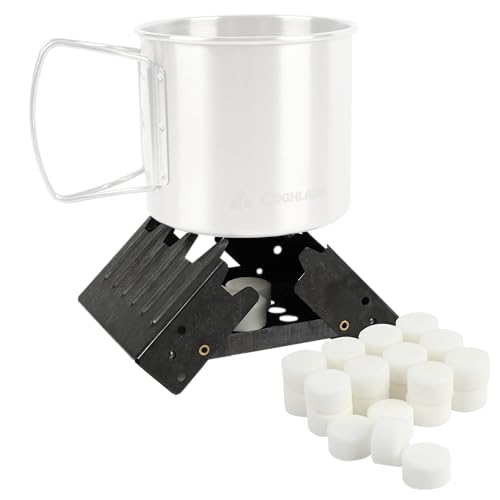
The Coghlan’s Emergency Stove with 24 Fuel Tablets is built for hikers, preppers, and outdoor minimalists who need a dependable, ultralight cooking solution when space and weight matter. I’ve used it on backcountry trips and during power outages, and it’s reliable-no priming, liquid fuel, or moving parts. Made from carbon steel, it folds flat and weighs just over 10 ounces. It burns solid fuel tablets, including Coghlans Fire Discs, and stores all 24 inside. At 5.88 inches long, it fits in small packs. It won’t replace a full stove system, but it boils small amounts of water when you need it most.
Best For: Ultralight backpackers, emergency preppers, and outdoor enthusiasts needing a compact, reliable cooking solution in minimal space.
Pros:
- Ultra-compact and lightweight at just over 10 ounces, ideal for backpacking and emergency kits
- No priming, liquid fuel, or moving parts-simple and reliable operation with solid fuel tablets
- Stores 24 fuel tablets internally and folds flat for easy packing
Cons:
- Limited heat output and cooking capacity-not suitable for large meals or prolonged use
- Burns only solid fuel tablets, which may be less efficient than liquid or gas fuels
- Carbon steel construction may rust over time if exposed to moisture without proper care
Ohuhu Portable Wood Burning Camping Stove
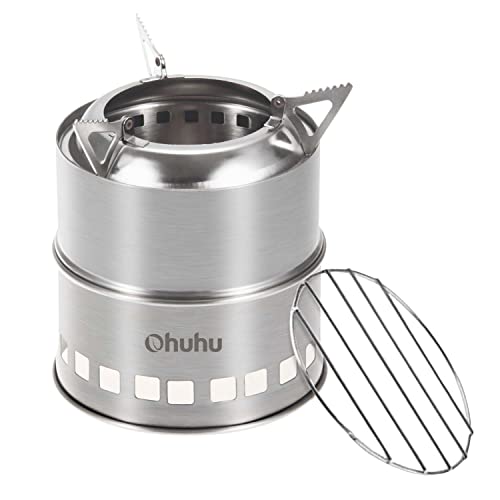
A lightweight, durable option like the Ohuhu Portable Wood Burning Camping Stove suits backpackers and emergency preppers who need reliable cooking in remote or unpredictable conditions. I’ve used it to boil water and cook meals using sticks or pinecones, which means I don’t have to carry fuel. It weighs just 0.98 lbs and packs into a carry bag, so it’s easy to stash in my backpack or trunk. The stainless steel build holds up to high heat and supports standard pots. I can adjust the ash tray for better airflow and control. It’s simple to assemble, works with multiple fuel types, and gives me a real cooking surface, which helps when I need more than just boiling.
Best For: Backpackers, campers, and emergency preppers seeking a lightweight, fuel-efficient cooking solution for outdoor use.
Pros:
- Weighs only 0.98 lbs and includes a carry bag for easy portability
- Burns various fuel types including wood, alcohol, and solid fuel tablets
- Stainless steel construction provides durability and supports standard cookware
Cons:
- Single burner limits cooking capacity for larger groups
- Requires gathering natural fuel, which may not always be available
- Assembly required upon first use, though no tools are needed
Gas One Portable Butane Camping Stove

You’ll find the Gas One GS-1000G Butane Portable Stove works best if you need a lightweight, reliable heat source for emergency scenarios or outdoor use where speed and efficiency matter. I’ve used it to boil water quickly-its 7,650 BTU output gets the job done faster than most. It’s CSA-certified, so I trust the safety features, like automatic shut-off and canister ejection under pressure. The piezo ignition sparks reliably, no matches needed, and the heat control is precise. At 3.1 pounds, it’s easy to store or carry, and the included case helps. Just remember: it’s for outdoor use only, and fuel isn’t included.
Best For: Outdoor enthusiasts, emergency preppers, and anyone needing a lightweight, fast-heating portable stove for camping, tailgating, or on-the-go cooking.
Pros:
- High 7,650 BTU output quickly boils water and handles efficient cooking
- CSA-certified with reliable safety features including automatic shut-off and canister ejection
- Piezo ignition provides match-free starts and precise heat control
Cons:
- Fuel not included, requiring separate purchase of 8oz butane canisters
- Designed for outdoor use only, limiting indoor emergency use
- Compatible only with specific butane cartridges, reducing fuel flexibility
InstaFire 6-Hour Canned Heat (3-Pack)

When packing for emergencies or outdoor trips, I look for fuel that lasts, burns cleanly, and won’t fail when needed-InstaFire 6-Hour Canned Heat delivers exactly that, offering six full hours of steady heat per can. Each of the three small, black cans weighs under a pound and fits easily in a glove box or bug-out bag. They burn cleanly with no toxic fumes or smoke, making them safe for indoor use. The diethylene glycol fuel won’t flare up if spilled and reseals with a cap, so I can save unused portions. I’ve used them to cook meals on camp stoves, and they provide reliable output the whole burn.
Best For: Outdoor enthusiasts, preppers, and emergency planners seeking reliable, clean-burning, portable heat for cooking or warmth in compact, spill-safe cans.
Pros:
- Provides a full six hours of consistent, smoke-free heat per can, ideal for cooking multiple meals
- Safe for indoor use with no toxic fumes, making it suitable for emergencies or power outages
- Spill-safe and resealable design allows for fuel conservation and convenient reuse
Cons:
- Limited heat output compared to propane or wood, potentially unsuitable for high-temperature cooking
- Fuel is less energy-dense than other camping fuels, requiring more volume for extended use
- Diethylene glycol is toxic if ingested, posing a risk if stored improperly around children or pets
Fire-Maple Fixed Star 1 Stove System

I rely on the Fire-Maple Fixed Star 1 Stove System when fast, efficient boiling matters most in tight outdoor conditions. Its heat exchange tech cuts wind impact and boiling times by up to 30% over standard stoves, and the 7,500 BTU output delivers reliable performance. The whole setup weighs 18.03 oz and packs into a compact 5.04 x 5.04 x 6.81-inch unit, integrating a stove, 1L pot, and accessories. I appreciate the hard-anodized aluminum pot with its locking stainless steel handle and included neoprene sleeve for safe handling. It runs on propane, butane, or isobutane canisters-just don’t use Coleman fuel. The built-in ignitor sparks reliably, and pairing it with a windscreen boosts efficiency in breezy weather.
Best For: Backpackers and thru-hikers who need a lightweight, efficient, and compact stove system for fast boiling in challenging outdoor conditions.
Pros:
- Industry-leading heat exchange technology reduces boiling times by up to 30% and improves wind resistance
- Integrated, ultralight 18.03 oz design includes stove, 1L pot, and accessories in a single compact unit
- Built-in piezoelectric ignitor and compatibility with common propane, butane, and isobutane fuel canisters
Cons:
- Not compatible with Coleman fuel canisters, limiting fuel options in some regions
- Fuel canister not included, adding to overall system cost and weight
- Optimal performance requires a separate windscreen, which is not included
Odoland 15pc Camping Cookware Mess Kit

The Odoland 15pc Camping Cookware Mess Kit works best for solo travelers or pairs needing a complete, lightweight cooking solution for emergency or outdoor use. I’ve used it on propane, alcohol stoves, and campfires-it boils 1.9L of water in under five minutes. The anodized aluminum pot, pan, and kettle heat quickly and nest with 304 stainless steel cups, plates, and cutlery, all protected by silicone sleeves. Foldable handles stay cool and save space. At 2.45 pounds, it’s packable and fits in a 7.5-inch mesh bag. I avoid metal utensils to protect the non-stick coating. It’s not dishwasher safe, but cleanup’s easy with the included cloth.
Best For: Solo travelers or couples seeking a lightweight, compact cookware set ideal for backpacking, camping, or emergency preparedness.
Pros:
- Lightweight and packable design with all components nesting neatly into a compact mesh bag for easy transport
- Fast heating anodized aluminum cookware boils 1.9L of water in under 5 minutes and is compatible with various heat sources
- Durable 304 stainless steel dining pieces with silicone protectors and foldable, heat-insulated handles enhance safety and convenience
Cons:
- Non-stick coating requires careful handling; metal utensils and high heat can damage the surface
- Not dishwasher safe, requiring hand cleaning and thorough drying to maintain longevity
- Limited capacity and cutlery set size make it less suitable for groups larger than two people
REDCAMP Wood Burning Folding Camp Stove
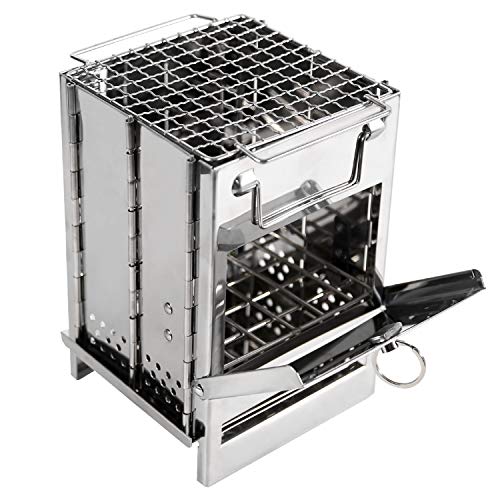
A lightweight, foldable stove like the REDCAMP Wood Burning Folding Camp Stove is a solid pick for backpackers and survivalists who need a compact cooking solution that doesn’t rely on fuel canisters. I’ve used it on multiple trips, and its 1.9-pound weight and folded size of 8.3 x 5.9 x 1.5 inches make it easy to pack. Made of stainless steel, it’s durable and includes a stable grid and backing plate. It burns twigs or leaves efficiently, works well with standard cookware, and folds flat for storage. It comes with a carry bag and fits most emergency kits. Over 3,800 reviews back its reliability, and it ranks high in camping stoves.
Best For: Backpackers and survivalists seeking a lightweight, portable cooking solution that uses natural fuel and doesn’t rely on gas canisters.
Pros:
- Lightweight at 1.9 pounds and folds to a compact size for easy packing and portability
- Burns readily available natural fuels like twigs and leaves, ideal for off-grid adventures
- Durable stainless steel construction with a stable cooking surface and included carry bag
Cons:
- Performance can vary with fuel moisture levels, requiring dry wood for optimal efficiency
- Open flame design may not be suitable for all environments or fire restrictions
- Longer setup time compared to canister stoves, with ash cleanup required after use
Factors to Consider When Choosing Emergency Cooking Equipment
You need to think about fuel type compatibility because it affects what you can burn and where you can cook. Weight and portability matter when every ounce counts, especially if you’re on the move. Consider setup, durability, and cooking surface size-they shape how fast, safe, and effective your meals come together in real conditions.
Fuel Type Compatibility
When choosing emergency cooking equipment, matching the fuel type to your environment and storage needs makes a critical difference in reliability. You’ll want dual fuel stoves if you face varying temperatures-propane works better in cold weather, while butane is efficient in milder conditions. If you prioritize simplicity and safety, solid fuel tablets are compact, stable, and require no pressurized containers. For long-term sustainability, wood-burning stoves let you cook without carrying fuel, using twigs or leaves you gather on-site. Canned heat burns cleanly indoors for up to six hours per can, making it ideal during prolonged outages. Liquid fuels like alcohol are spill-resistant but vary in ignition temperature and burn time, so check compatibility carefully. Each fuel type has trade-offs in availability, safety, and ease of use-your best choice depends on your storage space, cooking environment, and how long you expect to operate off-grid.
Weight And Portability
For emergency cooking gear, every ounce counts-especially if you’re on the move. Lightweight stoves under 2 pounds won’t slow you down, making them ideal for bug-out scenarios or long hikes. If space is tight, choose compact, foldable models that shrink volume by up to 75%, fitting easily in a bug-out bag or car trunk. Nesting cookware sets weigh less than 3 pounds total and combine pots, pans, and lids into one efficient unit-great for saving space without sacrificing function. Stoves with built-in fuel storage cut down on extra containers, streamlining your load and reducing loose parts. A carry bag isn’t just convenient-it keeps components organized, protects against damage, and makes transport simpler. You don’t need bulk to cook when the grid fails. Prioritize gear that balances weight, size, and practicality because in an emergency, mobility matters just as much as flame.
Setup And Operation
A lightweight, compact stove won’t do much good if it takes too long to get it running when temperatures drop or weather turns. You want something that deploys quickly and works reliably. Foldable stoves open to about 6.5 inches and collapse to under 1.5 inches thick, setting up in seconds. Models with piezo-electric ignition spark with a button press, so you don’t fumble for matches. Canned heat or solid fuel stoves go live almost instantly-just light the source. Wood-burning units take longer, requiring 2–5 minutes to assemble stainless steel panels. Dual-fuel stoves add steps-adjusting regulators or swapping cartridges-slowing your start. Simpler isn’t always better, but in emergencies, faster setup means food sooner and less exposure to the elements. Pick a stove that matches your need for speed and ease without sacrificing fuel access.
Durability And Build
Though lightweight gear may seem ideal, you’ll want materials like stainless steel or hard-anodized aluminum for lasting resistance to corrosion, heat, and physical wear. These metals handle repeated exposure to flames and moisture without warping or rusting. You should check that joints are reinforced and supports are stable-weak connections fail under constant expansion and contraction from heating cycles. Coated surfaces, such as carbon steel with protective finishes, add extra defense against harsh weather and abrasion. Thicker walls usually mean better durability, and while heavier units sacrifice portability, they’re less likely to dent or degrade over time. If you choose folding models, inspect the hinges and locks closely-flimsy plastic parts won’t survive long-term use. Robust metal mechanisms hold up after hundreds of setups. Durability isn’t just about material strength; it’s about thoughtful design that balances resilience with real-world demands.
Cooking Surface Size
Your cookware won’t sit securely if the stove’s surface doesn’t match its size, so pay close attention to the cooking diameter when selecting emergency gear. Most stoves support pots up to 8 inches, but compact models often cap out between 5.5 and 6.5 inches, limiting you to smaller pans best for one-pot meals or single servings. A cooking surface under 6 inches can lead to uneven heating or flame spillage with larger pots, reducing efficiency and fuel economy. Look for stoves with raised or segmented supports spaced wide enough to stabilize cookware up to 7.5 inches-it improves balance when boiling water or simmering liquids, especially outdoors. Adequate contact points keep pans steady in windy or uneven conditions, which matters more when you’re cooking off-grid. Match your typical cookware size to the stove’s design so you avoid spills and maximize heat transfer where it counts.
Safety Features
When flames flare up or gas leaks go unchecked, your safety hinges on smart design-so pick stoves with built-in pressure sensors and automatic shut-off systems that stop fuel flow the moment something goes wrong. You’ll also want a flame supervision system, which cuts off fuel if the flame blows out, preventing gas buildup. Models with cartridge ejection safely remove canisters when pressure drops or spikes, reducing explosion risks. Choose units with wide, stable bases to resist tipping, especially on uneven surfaces, and heat-resistant exteriors that protect countertops and hands. For simpler safety, go with spill-safe options like canned or gelled heat-they kill flames instantly if knocked over and don’t release toxic fumes. These features aren’t luxuries; they’re essentials when cooking in dim light, tight spaces, or high-stress situations where mistakes happen fast.
Storage And Compactness
A compact stove that folds down to less than 2 inches saves critical space in emergency kits or backpacks, and models with nesting cookware can pack into a space as small as 5.5 x 5.5 x 3 inches. You’ll want this level of small because every inch counts when storing gear long-term or carrying it on foot. Stoves under 2 pounds reduce bulk and make it easier to transport everything together without strain. Collapsible burners and folding legs shrink the stove by up to 70%, letting you tuck it into tight compartments. Look for models with built-in fuel canister storage-this cuts the need for separate containers and keeps parts together. Integrated designs improve organization and reduce lost items. While compactness helps storage, make certain the stove still stabilizes properly when expanded. Smaller packed size doesn’t mean it’s better if it wobbles during use. Balance portability with function by checking packed dimensions, weight, and setup stability before deciding.
Frequently Asked Questions
Can I Use These Stoves Indoors Safely?
No, you can’t use most stoves indoors safely unless they’re specifically designed for indoor use. Propane and butane stoves produce carbon monoxide, which is deadly in enclosed spaces. Even with ventilation, the risk remains high. You should only operate fuel-burning stoves outdoors or in well-ventilated areas. Battery-powered or alcohol stoves are safer indoors, but still require caution. Always prioritize ventilation and never leave a stove unattended.
How Do I Store Fuel Long-Term?
You store fuel long-term in sealed, compatible containers away from heat and light. Use stabilizers for gasoline and rotate every 6–12 months. Propane lasts 5–7 years unopened; inspect tanks for damage. Diesel lasts 12–24 months, longer with additives. Keep containers in a well-ventilated shed or detached garage, not indoors. Label everything with fill dates. Avoid plastic unless rated for fuel. Check local codes-some limit storage amounts.
Are These Stoves Safe for Children Around?
You can’t leave these stoves unattended around kids-they get hot fast and pose burn risks. You’ll need to secure them on stable surfaces away from reach. Fuel leaks or tipping could happen if bumped, so use models with stability fins and auto-shutoff if possible. You’ll still have to supervise closely. No stove’s truly “child-safe,” but you can reduce risk with careful placement, proper handling, and immediate cleanup after use.
What’s the Lifespan of Fuel Tablets?
You can expect fuel tablets to last 3–5 years if stored properly in a cool, dry place. They degrade faster when exposed to moisture or extreme temperatures. Once opened, their shelf life drops markedly-usually within a year. You’ll notice reduced burn time and inconsistent flames when they’ve gone bad. For long-term prep, rotate your stock every few years. They’re compact and reliable, but you’ve got to plan for eventual replacement.
Can I Cook Large Meals With These?
You can cook small to medium meals with fuel tablets, but large meals are impractical. The heat output is low, so boiling a big pot takes too long and burns through fuel fast. You’d need multiple tablets per meal, which adds cost and weight. For feeding more than two people regularly, a tablet stove isn’t efficient. It works in a pinch, but you’ll save time and resources using a portable propane or alcohol stove instead.