Top Heated Vests for Women Who Hate Being Cold
You stay warm in cold conditions with the WASOTO and ORORO heated vests, both offering targeted heating zones in the collar, back, and pockets. The WASOTO reaches 158°F and lasts up to 11 hours on a 16,000 mAh battery with fast charging, while the ORORO offers 13.5 hours on low heat with water-resistant nylon. Fleece linings, adjustable fits, and layer-friendly designs improve comfort. Effective warmth depends on both heating performance and proper insulation. More details follow.
We are supported by our audience. When you purchase through links on our site, we may earn an affiliate commission, at no extra cost for you. Learn more. Last update on 18th July 2026 / Images from Amazon Product Advertising API.
Notable Insights
- Heated vests with 35%+ heating zone coverage provide targeted warmth in collar, back, and pockets for women sensitive to cold.
- Look for vests with adjustable heat settings up to 158°F to customize warmth in varying winter conditions.
- High-capacity 16,000 mAh batteries offer up to 13.5 hours of heat, ideal for long commutes or outdoor work.
- Fleece-lined collars, moisture-wicking fabrics, and water-resistant exteriors enhance comfort and dryness in cold, damp weather.
- Features like two-way zippers, waist cinches, and lightweight designs allow easy layering and unrestricted movement.
WASOTO Heated Vest for Women (16000 mAh)
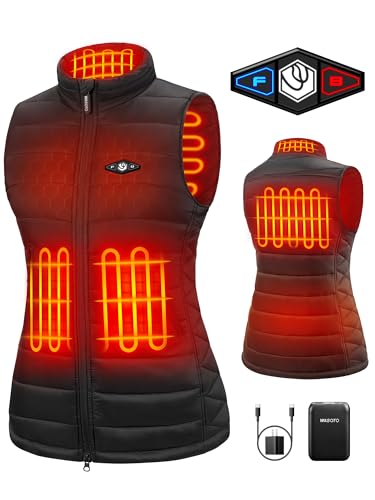
I’d recommend the WASOTO Heated Vest for women who need reliable, long-lasting heat during extended outdoor use-especially if you’re out in the cold for hours without access to power. It delivers heat to 35% of the vest-collar, mid-back, and under both pockets-with temps up to 158℉. A long press (3–5 seconds) activates heating, and you can control front and rear zones separately. The 16,000 mAh battery lasts up to 11 hours and recharges fast via PD2.0/PD3.0. Dual outputs let me charge devices. Fleece-lined collar and pockets add comfort. The waist cinch and two-way zipper improve fit. I wear it skiing or commuting-it works well layered or alone.
Best For: Women who need long-lasting, reliable warmth during extended outdoor activities or commutes in cold weather.
Pros:
- Provides targeted heating across 35% of the vest with independent front and rear zone controls
- High-capacity 16,000 mAh battery offers up to 11 hours of heat and doubles as a portable charger
- Comfortable fleece lining, adjustable fit with waist cinch, and versatile layering design
Cons:
- Heating activation requires a 3–5 second long press, which may be inconvenient in cold conditions
- No mention of waterproofing or weather resistance for extreme outdoor use
- Indicator lights, though optional, may still be distracting despite the light switch function
ORORO Women’s Heated Vest (Upgraded Battery)

The ORORO Women’s Heated Vest with upgraded battery stands out for anyone needing long-lasting, reliable warmth during extended outdoor exposure-delivering up to 13.5 hours of heat on a single charge. I’ve used it in sub-freezing temps, and it consistently maintains warmth across four zones: collar, mid-back, and both handwarmer pockets. The 100% nylon fabric resists light moisture and static, which helps in dry, windy conditions. Its full-zip collar seals in heat, while horizontal quilting keeps the insulation evenly distributed. I can easily layer it over a base and under a shell. The regular fit doesn’t restrict movement, and the zippered pockets stay secure. It’s not the lightest vest out there, but the trade-off is longer runtime and durable construction. I rely on it for hiking, commuting, and winter chores-situations where consistent heat matters most.
Best For: Women who need reliable, long-lasting warmth during extended outdoor activities in cold weather.
Pros:
- Delivers up to 13.5 hours of heat with targeted warming in four zones
- Water-resistant, anti-static 100% nylon fabric offers durability and comfort
- Full-zip collar and regular fit allow for easy layering and heat retention
Cons:
- Not the lightest vest available, which may be noticeable during high-mobility activities
- Heating performance may diminish in extremely wet conditions despite water resistance
- Higher price point compared to non-heated or basic insulated vests
Factors to Consider When Choosing Heated Vests for Women
You’ll want to check the heating zone coverage so you stay warm where it matters-typically across the back, chest, and sometimes the collar. Battery life varies by model, so pick one that matches your outdoor time without needing constant recharges. Look for fabrics that feel comfortable, layer well, and resist wind or light rain when the weather turns.
Heating Zone Coverage
A well-designed heated vest delivers warmth where it’s needed most, and coverage across 25% to 40% of the garment’s surface guarantees core areas stay warm without wasting energy on less critical zones. You’ll typically find 3 to 5 heating zones, with elements placed in the collar, mid-back, and pocket areas to target heat where your body loses it fastest. Most zones reach 113°F to 158°F, offering adjustable settings so you can dial in comfort based on conditions. Some vests let you control front and rear zones separately, giving you flexibility when facing wind or adjusting for activity level. Carbon fiber or alloy wires vary in density and placement, affecting how evenly heat spreads. Poor distribution creates hot spots; better layouts maintain consistent warmth. More zones don’t always mean better performance-smart placement and uniform output matter more for real-world effectiveness.
Battery Life Performance
Expect anywhere from 8 to 13.5 hours of heat, depending on the battery size and the setting you use. You’ll get the longest runtime-up to 13.5 hours-on low heat with a high-capacity battery, typically 10,000 mAh or more. Higher heat settings cut that time nearly in half, so managing the output level is key for all-day use. Larger batteries add slight weight, but the trade-off is fewer charges during extended wear. Some vests support fast charging via Power Delivery, getting you back to full power in under 2 hours. If your vest powers other devices through USB or Type-C ports, expect reduced heating time since the battery splits output. You’re better off charging externally if you rely on accessories. Choose based on your daily needs: longer runtime matters most if you’re outdoors for hours without access to power.
Fabric Comfort Quality
Comfort hinges on fabric choice, and top-performing heated vests for women use polar fleece linings in collars and pockets to boost warmth without irritation. You’ll stay comfortable longer because these linings feel soft against skin and retain heat efficiently. Look for moisture-wicking fabrics-they pull sweat away from your body, keeping you dry during long outdoor use. Lightweight, flexible materials let you move freely and fit smoothly under jackets without adding bulk. That’s essential when every ounce matters in cold, active conditions. Some vests include water-resistant and anti-static treatments, helping them hold up in snow or wind while reducing cling. Smooth interior linings cut down on chafing, especially during extended wear. You don’t want distractions from itching or stiffness when you’re focused on the task at hand. Prioritize fabric that balances warmth, breathability, and durability. It makes a real difference in how well the vest performs when you’re relying on it.
Layering And Fit
When choosing a heated vest, how it layers and fits determines whether it works when you need it most. A lightweight design with a regular or contoured fit lets you wear it under a jacket or alone without bulk. Two-way zippers make it easy to move and adjust, while the adjustable waist keeps the vest snug even with layers underneath. Full-zip stand-up collars protect your neck from cold air and stay in place without restricting motion. Horizontal quilting and elastic hems keep the shape and prevent ride-up, so the vest stays where it should. Smooth, low-bulk fabric and minimal interior seams cut down on friction, making layering comfortable under tight outerwear. These features work together to guarantee consistent heat and fit, no matter what you’re wearing over or under the vest.
Weather Resistance Features
A properly fitted vest won’t help much if it can’t handle the elements. Look for water-resistant fabric treatments to stay dry in light rain or snow-they boost durability without adding bulk. Choose vests with sealed seams or DWR coatings; they block moisture better than untreated fabrics. Wind-resistant outer shells, especially with tightly woven fibers, cut cold air infiltration and help retain heat. A full-zip stand-up collar adds real protection around your neck, sealing out wind where heat loss is common. Anti-static materials aren’t just about comfort-they reduce cling in dry, cold air and let you move freely under or over layers. These features don’t guarantee full waterproofing, but they strike a practical balance for winter conditions. You’ll stay drier, warmer, and more comfortable during commutes, walks, or outdoor work. Skip them, and even the best heating elements won’t keep you truly protected.
Frequently Asked Questions
Can I Wear the Heated Vest Under a Jacket?
Yes, you can wear the heated vest under a jacket. It’s designed to fit snugly beneath outer layers without adding bulk. Most models are slim, flexible, and won’t restrict movement. Just make sure your jacket allows enough room for airflow and doesn’t compress the heating elements. Avoid waterproof shells that trap heat, since overheating can reduce battery life and comfort. Wearing it underneath keeps warmth close to your body and boosts overall insulation without compromising mobility or safety.
How Do I Wash a Heated Vest Safely?
You remove the battery and power bank before washing-always. You turn the vest inside out and zip it closed to protect the wiring. You use cold water on a gentle cycle or hand wash with mild detergent; never use bleach or fabric softener. You air dry it flat, away from direct heat. Machine drying damages the heating elements. You check manufacturer guidelines since not all models tolerate machine washing. You inspect connections after cleaning to guarantee functionality.
Are Heated Vests Safe to Wear During Pregnancy?
You can wear heated vests during pregnancy, but you should use them cautiously. Avoid high heat settings and limit use to short periods to prevent overheating, which isn’t safe for your baby. Stick to vests with even heat distribution and automatic shut-off features. Keep the vest over your outer clothing, not directly on skin. Always check with your doctor first-your health provider knows your risks and can give personalized advice based on your pregnancy.
Do Heated Vests Work in Extremely High Humidity?
Yes, heated vests work in high humidity, but moisture can reduce heat retention. You feel warmth faster in dry air since humidity slows evaporation and insulates less. Most vests use carbon fiber or alloy heating elements that operate reliably in damp conditions, but the outer fabric may feel clammy. Waterproof models handle humidity better. Battery life stays consistent, but perceived warmth drops slightly. For best results, wear a moisture-wicking base layer to maintain comfort and efficiency when humidity’s high.
Can Men Use These Women’s Heated Vests Too?
Yes, you can wear women’s heated vests if you’re a man-fit’s the main issue. They’re usually cut smaller with narrower shoulders and a tapered waist, so if you have a slimmer build, they might work. Check the size chart and go by measurements, not gender labels. Heating elements function the same. Just expect less room for layering. For broader frames, unisex or men’s models give better coverage and comfort. Don’t ignore fit-it affects heat distribution and mobility.