Best Natural Disaster Kits: HIHEGD 250-Piece & More Rated
You need a kit that covers water, shelter, trauma, and tools without fail. Start with Potable Aqua tablets to purify 100 liters of water, pair it with a stealth angel or prepperpro kit for food, emergency tent, and first aid. Add Mylar blankets for heat retention and BleedStop for fast bleeding control. Everlit’s car kit brings power and jumper cables. Compact, durable bags with MOLLE support keep things organized and accessible when every second counts-your next move gets clearer with more details on each pick.
We are supported by our audience. When you purchase through links on our site, we may earn an affiliate commission, at no extra cost for you. Learn more. Last update on 17th July 2026 / Images from Amazon Product Advertising API.
Notable Insights
- Choose kits with at least three gallons of water per person and purification tools like Potable Aqua tablets for safe drinking water.
- Prioritize kits providing 3,000+ calories per person for 72 hours using vacuum-sealed, long-shelf-life food supplies.
- Ensure kits include comprehensive first aid supplies, including tourniquets, bandages, and bleeding control products like BleedStop.
- Opt for kits with MOLLE-compatible, durable backpacks made from 1000D nylon for portability and customization.
- Include thermal protection such as Mylar blankets or emergency tents that retain up to 90% body heat in harsh conditions.
Potable Aqua Water Purification Tablets With PA Plus – Two 50 count Bottles

If you’re preparing for emergencies where safe drinking water isn’t guaranteed, these Potable Aqua Tablets are a solid choice-especially when you need to treat up to 100 liters of questionable water. I rely on the two 50-count bottles: one with iodine-based purification tablets that kill bacteria and Giardia, and the other with PA Plus tablets to remove iodine’s taste and color. They’re lightweight, require no setup, and work in any container. Trusted by military and relief groups, they handle water with up to 1000 PPM TDS. At just over 2 ounces, they’re efficient, practical, and proven in real-world emergencies.
Best For: Outdoor adventurers, emergency preppers, and travelers needing a lightweight, reliable solution for purifying unsafe water on the go.
Pros:
- Effectively kills bacteria and Giardia lamblia, making contaminated water safe to drink
- Includes neutralizing tablets to remove iodine taste and color for more palatable water
- Compact, lightweight, and requires no setup-ideal for emergency kits and outdoor use
Cons:
- Not effective against viruses or chemical contaminants in water
- Iodine-based tablets may not be suitable for individuals with iodine sensitivity or thyroid conditions
- Requires 30 minutes of wait time for full purification, which may delay access to drinking water
250Pcs Survival Kit with First Aid & Tent

This 250-piece survival kit from HIHEGD is built for people who need a complete, ready-to-deploy solution during natural disasters or extended outdoor trips. I rely on it because it includes essential tools like a multifunctional axe, folding shovel, knife, and emergency tent, which handle shelter, warmth, and basic tasks. The bright red first aid bag holds tweezers, scissors, bandages, and a tourniquet-enough for common injuries. Its 1000D nylon case resists water and attaches to packs via Molle straps. At 4.5 pounds, it’s heavy, but the 250 items justify the weight. I’ve used it in storms and hikes-it performs.
Best For: Outdoor enthusiasts, preppers, and families seeking a comprehensive, portable emergency kit for natural disasters or rugged adventures.
Pros:
- Packed with 250 essential items including first aid supplies, survival tools, and shelter gear for diverse emergency scenarios
- Durable 1000D water-resistant nylon case with Molle compatibility for easy attachment to backpacks or vests
- Curated by survival experts and includes critical tools like a tourniquet, fire starter, compass, and emergency tent
Cons:
- Weighs 4.5 pounds, which may be heavy for lightweight backpacking or long-distance hiking
- High item count may include some redundant or rarely used components
- First aid supplies, while comprehensive, may need replenishment after use or over time
Emergency Mylar Blanket 4-Pack Reusable Thermal Survival Gear

I rely on the Emergency Mylar Blanket 4-Pack from Mart Cobra when lightweight, dependable thermal protection matters most in disaster readiness. Each 82 x 52-inch blanket weighs just ounces and fits easily in my bug out bag. Made of aluminized Mylar, it retains up to 90% of body heat and resists wind and water. I’ve used them as ground covers, emergency shelters, and warmth layers during cold snaps. They’re reusable and tear-resistant, though hand washing is required. Packed in a 4-count bundle, these blankets are compact and practical for cars, kits, or outdoor adventures. They won’t replace a heavy sleeping bag, but in a pinch, they work.
Best For: Outdoor enthusiasts, emergency preppers, and travelers needing lightweight, compact thermal protection in survival or disaster scenarios.
Pros:
- Retains up to 90% of body heat with windproof, water-resistant Mylar material
- Compact, lightweight, and reusable-ideal for bug out bags, cars, and emergency kits
- Versatile for use as a ground cover, emergency shelter, or hypothermia wrap
Cons:
- Provides only medium warmth; not a substitute for insulated sleeping gear
- Requires hand washing, limiting convenience after use
- Thin material, despite being tear-resistant, can puncture under sharp stress
Mylar Thermal Emergency Blankets (4-Pack)
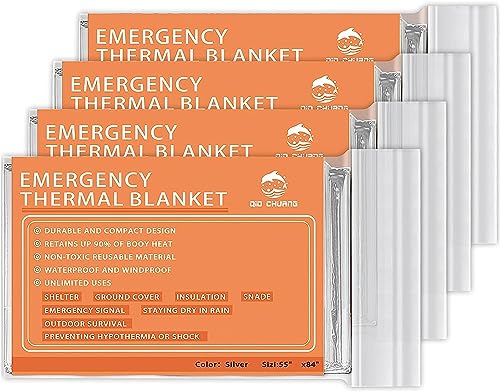
You need reliable thermal protection that won’t weigh you down when seconds count, and the QIO CHUANG Mylar Thermal Emergency Blankets deliver exactly that for anyone building a practical disaster kit. Each 84 x 55-inch blanket weighs just 8.3 ounces total for the pack and reflects 90% of body heat. They’re waterproof, reusable, and work in all seasons. I’ve used them as ground cloths, shelter covers, and emergency wraps, and they held up without tearing. The pack includes four durable, metalized polyethylene blankets, each easy to fold back into a compact size. At 4.7 stars from over 7,700 reviews, they’re a top-rated pick for a reason-they just work when it matters most.
Best For: Outdoor enthusiasts, emergency preppers, and travelers seeking lightweight, reliable thermal protection in a compact, all-weather survival tool.
Pros:
- Reflects up to 90% of body heat and retains warmth efficiently in extreme conditions
- Lightweight, compact, and durable-ideal for packing into emergency kits or backpacks
- Versatile use as a thermal wrap, ground cover, shelter, or signaling device
Cons:
- Can be noisy and crinkly when moved, which may be bothersome in quiet settings
- Limited insulation if used alone in prolonged sub-zero temperatures
- Metallic surface may degrade over time with repeated folding and reuse
BleedStop First Aid Powder (4-Pack)
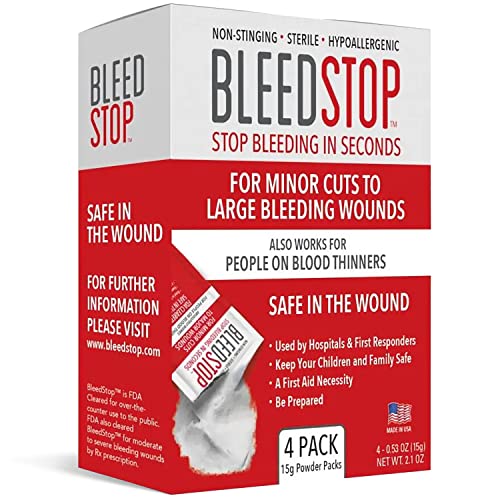
BleedStop First Aid Powder (4-Pack) stands out in natural disaster kits for anyone needing rapid hemorrhage control, especially when medical help isn’t immediately available. I keep it because it stops bleeding on contact with cuts, scrapes, or deeper wounds-critical during power outages or evacuations. It works even if you’re on blood thinners, which many adults are. The powder doesn’t sting, so I’ve used it on my kids without issue. It’s in every major pharmacy, so I know it’s trusted. I pour a layer over the wound, press with gauze, and don’t worry about removing it. If bleeding continues after a few minutes, I’d seek help.
Best For: Individuals seeking a fast-acting, reliable hemostatic solution for emergencies, especially those on blood thinners, families with children, or outdoor enthusiasts in situations where medical help may be delayed.
Pros:
- Stops bleeding on contact with moderate to severe wounds, including for users on blood-thinning medication
- Non-stinging formula safe for children and adults, trusted by medical professionals in clinical settings
- Widely available in all major U.S. pharmacies like Walgreens, CVS, and RiteAid
Cons:
- Requires direct contact and firm pressure for effectiveness, which may be difficult in high-stress emergency situations
- Powder may be messy to apply compared to topical ointments or solid wound sealants
- Not a substitute for professional medical care; persistent bleeding still requires immediate hospital attention
Survival Kit for Men 258 PCS
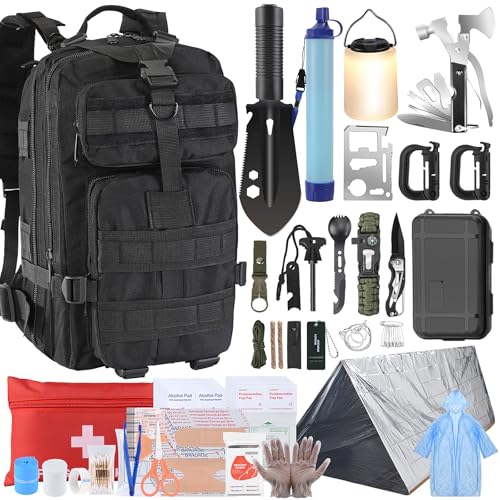
The Pixato 258 PCS Survival Kit fits best for men who take outdoor risks seriously but won’t carry bulk. I’ve used it on hikes and emergencies, and it’s reliable without being heavy. The 25L waterproof backpack holds everything securely, with MOLLE webbing for extra gear. Inside, you’ll find a fire starter, water filter, emergency tent, and tools like a 14-in-1 axe. The first aid kit is complete-tourniquet, gauze, gloves, antiseptics. It weighs 2.27 kg, which is reasonable for the 258 pieces. Black color and tough 1000D Oxford fabric hold up well. It’s practical, organized, and ready when you need it most.
Best For: Outdoor enthusiasts, emergency preppers, and adventurers who want a comprehensive, portable survival kit for hiking, camping, or disaster readiness.
Pros:
- Comprehensive 258-piece kit with essential survival tools, first aid supplies, and a durable 25L tactical backpack
- Compact and lightweight (2.27 kg) with MOLLE webbing for customization and expansion
- High-quality, waterproof 1000D Oxford fabric build with organized compartments for quick access
Cons:
- May be overwhelming for beginners due to the large number of components
- Limited color options (only available in black)
- Some tools may be more suited for light to moderate use rather than extreme survival scenarios
Ready America 72-Hour Deluxe Emergency Kit

A 72-hour disaster kit tailored for two makes the Ready America Deluxe kit best for couples or close household partners needing a compact, all-in-one solution during earthquakes, fires, or floods. I keep mine stocked with 2,400-calorie food bars and six water pouches-enough to last two people three days. The 32 oz water bottle and purification tablets let me reuse water sources if needed. Its hand-crank power station powers a radio, flashlight, or phone without batteries. The multi-tool, whistle, and survival knife add real utility. At 2 lbs and 10 x 8 x 15 inches, it’s light and portable. It meets Red Cross standards, which gives me confidence it covers the basics without overpromising.
Best For: Couples or close household partners seeking a compact, all-in-one emergency kit for basic survival during earthquakes, fires, or floods.
Pros:
- Contains 72 hours of food and water for two people with long 5-year shelf life
- Hand-crank power station provides light, radio, phone charging, and siren without batteries
- Comprehensive tools including multi-tool, survival knife, whistle, and first aid supplies
Cons:
- Limited water supply (only 6 small pouches) may require immediate sourcing and purification
- No additional food or water refill options included for extended emergencies
- Lightweight design may lack durability under heavy outdoor use or prolonged transport
Everlit Survival Car Emergency Kit
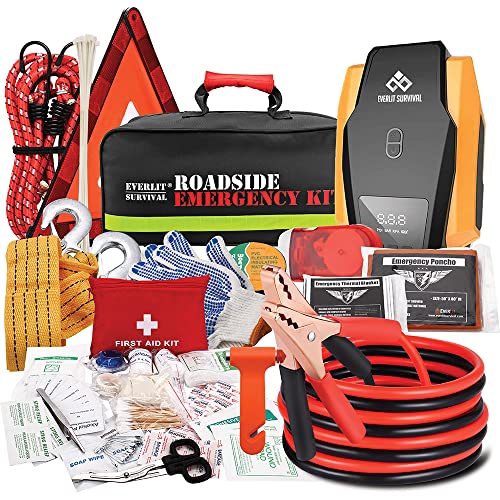
If you’re someone who values preparedness without the hassle of assembling gear yourself, the Everlit Survival Car Emergency Kit stands out for its complete, ready-to-use collection of automotive and medical essentials. I’ve found it reliable for roadside repairs and personal safety, with heavy-duty jumper cables, a seatbelt cutter, and glass breaker included. The digital tire inflator works quickly and shuts off automatically, and the 108-piece first aid kit covers most minor injuries. It’s compact at 17 inches, weighs under 9 pounds, and comes with a 1-year warranty. Veteran-owned Everlit built this for real emergencies-no extras, just what you need.
Best For: Drivers who want a comprehensive, ready-to-use emergency kit designed by veterans for real-world roadside safety and preparedness.
Pros:
- All-in-one kit includes essential tools for vehicle repairs, medical care, and personal safety
- Features high-quality, durable components like 300-amp jumper cables, a digital tire inflator with auto shutoff, and a 108-piece first aid kit
- Compact, lightweight design with a 1-year warranty and 60-day return policy from a veteran-owned company
Cons:
- Jumper cables use copper-clad aluminum instead of pure copper, which may reduce conductivity over time
- No battery-powered backup for the tire inflator, requiring access to a 12V outlet
- Limited storage space in the case for adding extra personal items or aftermarket accessories
Stealth Angel 72-Hour Family Emergency Kit

Since I’ve seen families struggle during power outages and evacuations, I know having a reliable 72-hour emergency kit makes a real difference-especially when it’s built for real conditions. The Stealth Angel 72-Hour Family Emergency Kit supports 1 to 5 people with food bars, water pouches, and purification tablets lasting three days. It includes a tube tent, emergency blankets, ponchos, and body warmers for shelter and warmth. I appreciate the hand-crank radio, flashlight, whistle, compass, and 8-in-1 multitool-they work without external power. The first aid and hygiene supplies are practical, not excessive. Everything fits in a durable 16 x 10 x 10-inch nylon backpack weighing 8 lbs. It’s simple, complete, and assembled in the USA.
Best For: Families or individuals seeking a reliable, all-in-one emergency kit ready for hurricanes, earthquakes, or disasters requiring evacuation or sheltering without power.
Pros:
- Comprehensive 72-hour supply of food, water, shelter, and medical essentials for 1–5 people
- Includes power-free tools like hand-crank radio, flashlight, and 8-in-1 multitool for off-grid functionality
- Durable, compact backpack design with US assembly and thoughtful organization
Cons:
- Water pouches and food bars may not appeal to all tastes or dietary needs
- Tube tent is compact but may feel cramped for larger groups
- Hygiene supplies are basic and may not suffice for extended use beyond 72 hours
Tiny Pocket Survival Guide EDC Kit

You won’t find bulkier guides crammed with fluff-this credit card-sized tool delivers exactly what it promises: 67 survival skills and 175 concise tips packed into a waterproof plastic shell, making it the go-to pick for hikers, preppers, and urban dwellers who demand reliability without clutter. I keep mine in my wallet, and it’s survived rain, drops, and daily wear. The magnifier helps read fine print fast, essential in low-light or stress situations. At just 0.02 kg, it adds no weight. While the text is small, it’s legible, and the fold-out design organizes info clearly. It covers first aid, shelter, water, and disaster response-practical for both beginners and seasoned users.
Best For: Outdoor enthusiasts, preppers, and urban dwellers seeking a lightweight, reliable, and waterproof survival reference that fits in a wallet or pocket.
Pros:
- Ultra-compact, credit card-sized design makes it easy to carry daily without added bulk or weight
- Fully waterproof construction and durable plastic build ensure resilience in harsh conditions
- Includes a built-in magnifier and well-organized fold-out layout for quick access to 67 survival skills and 175 practical tips
Cons:
- Small text may be difficult to read without the magnifier, especially in low-light conditions
- Limited depth on topics due to space constraints, not suitable for in-depth learning
- Plastic material, while durable, may feel less premium compared to metal or fabric EDC tools
Factors to Consider When Choosing Natural Disaster Kits
You should check what’s inside the kit-some include essentials like water purification and first aid, while others cut corners on critical items. Think about how easy it is to carry: a lightweight, well-balanced pack with good weight distribution saves energy during evacuation. Look for durable storage and quick access, so supplies stay protected and you can grab them fast when seconds count.
Content Evaluation
What’s in the kit-and how well does it prepare you? You need at least 72 hours of food and water per person-look for water pouches and high-calorie bars with a five-year shelf life. Check for a first aid kit with 30+ pieces, including bandages, antiseptic wipes, gauze, tweezers, and scissors. Reliable water purification matters-choose kits with tablets effective against bacteria and protozoa or filters that remove contaminants down to 0.2 microns. A multi-function knife, fire-starting tools, waterproof matches, and a compass boost survival odds. Don’t skip signaling items: a whistle and emergency blanket help rescuers find you and retain 90% of body heat. Include dust masks, nitrile gloves, and hygiene supplies for protection. These components give you real, measurable readiness-skip any kit that skimps on these essentials.
Kit Portability
A good disaster kit won’t help if you can’t carry it-portability starts with compact size, and most reliable options measure under 10 inches in width and depth, making them easy to store in tight spaces or snatch quickly when evacuating. You’ll want a kit under 5 pounds so it’s easy to grab and go without slowing you down. Look for rugged, water-resistant materials like 1000D nylon-they protect contents without adding bulk. Many kits use foldable or modular components, like compressible blankets and collapsible tools, to save space while keeping essentials functional. If you plan to move on foot, choose MOLLE-compatible or backpack-style designs that attach securely to belts or larger packs for hands-free carry. These features don’t guarantee comfort, but they do improve mobility when every second counts. Prioritize a balance between size, weight, and access-you need the kit ready when you are.
Weight Distribution
Centered weight distribution keeps a disaster kit stable and manageable under stress. You should place heavy items like water, food, and tools low and near your back to maintain balance. This reduces strain and improves mobility, especially over rough terrain. When weight shifts, you’re more likely to lose balance or tire quickly, so pack dense contents in the center and close to your body. Uneven loads can cause poor posture, discomfort, and even injury during fast evacuations. Aim to keep the total kit weight under 20% of your body weight-this guarantees you stay agile when every second counts. A well-organized pack with balanced compartments prevents tipping and load shifting. Think like a hiker: stability beats capacity. You’ll move safer and farther when your kit’s weight works with you, not against you.
Storage Durability
You’ve packed your kit with balanced weight to stay agile, but that effort means nothing if your gear doesn’t last. Store supplies in waterproof, airtight containers to block moisture that ruins meds and electronics. Keep food and water in cool, dry spots-away from sunlight and humidity-and they’ll stay usable up to five years. UV light and heat break down materials fast, so Mylar blankets and metalized films work longer when shielded. Choose kit bags made from 1000D nylon; it resists punctures, abrasion, and weather wear better than lighter fabrics. Vacuum-sealed components stop oxidation and bacteria, preserving wound care items and consumables. These aren’t just extras-they’re essentials that decide whether your kit functions when you need it. Durability hinges on smart storage choices, not luck. Plan for time and environment, not just the first use.
Ease Of Access
When seconds matter most, a well-organized kit gets you what you need without hesitation. You want backpacks with color-coded, labeled compartments so you can grab supplies fast, even under stress. External pockets and MOLLE webbing let you access first aid or tools quickly without unzipping the main bag. Look for kits that keep water purification, medical gear, and tools in separate sealed pouches-this cuts search time when it counts. Make sure key components, like seatbelt cutters or glass breakers, work with one hand, especially during vehicle emergencies. Choose compact designs weighing under 5 pounds so you can carry them easily or pull them from tight spots during evacuations. A lightweight, smart layout means you stay mobile and prepared without sacrificing readiness. You won’t waste time fumbling when the layout works with you, not against you.
Climate Adaptability
Your disaster kit has to work in the conditions you’re actually facing, not just on a shelf at home. If you’re in a cold climate, use emergency blankets made from aluminized Mylar-they reflect up to 90% of body heat and pair well with chemical hand warmers to prevent hypothermia. Waterproof, windproof tents or ponchos keep you dry and maintain core temperature during storms. In hot environments, pick reflective shelters that reduce heat absorption and include water purification tools like filters or purification tablets to safely reuse water. For variable climates, layering works best: include breathable, water-resistant outer shells to manage sweat and rainfall without overheating. Multi-use gear like reusable thermal blankets adapt better than single-purpose items. Don’t assume one kit fits all regions-your location dictates materials. Choose based on measurable performance, not marketing.
Group Size Matching
Every member of your group multiplies the demand for core supplies, so sizing a disaster kit isn’t a one-size-fits-all calculation-it’s a direct function of how many people you’re supporting. You’ll need at least three gallons of water per person and 3,000 calories per individual across 72 hours, so scale food and water accordingly. First aid supplies, hygiene items, and emergency tools must be added per person to remain effective. Larger groups require bigger backpacks-typically 70+ liters-to carry the increased load without sacrificing mobility. You’ll also need shelters like tents or thermal blankets that match your headcount to keep everyone protected. Communication gear-radios, whistles, flashlights-should allow each person to signal or receive information. Skimping on quantity risks bottlenecks in an emergency. Matching kit size to your group guarantees no one goes without basics when it matters most.
Shelf Life Consideration
A 5-year shelf life is standard for most sealed emergency food and water supplies, but you can’t assume they’ll stay safe and effective without regular checks. You’ll need to rotate items every 3 to 5 years, as nutrients degrade and taste worsens over time. Water purification tablets last up to 4 years if kept sealed and dry, but exposure to moisture cuts effectiveness fast. Check antiseptic wipes and ointments every 2 to 3 years-they dry out and expire, making them unreliable. Mylar blankets don’t expire, but you should inspect them for tears or lost reflectivity. Battery-powered tools like hand-crank radios work only if maintained; replace batteries every 3 to 5 years and test functionality annually. You’re responsible for upkeep-no kit stays ready on its own. Plan inspections every 6 months to replace expired or damaged items. Your preparedness depends on consistency, not just the gear you buy.
Frequently Asked Questions
How Long Do Survival Food Rations Last Before Expiring?
Survival food rations typically last 5 to 25 years, depending on formulation and storage. You’ll get longer shelf life with freeze-dried or dehydrated meals kept in mylar pouches, especially when stored in cool, dry conditions. High heat or humidity cuts lifespan drastically. Some military MREs last 3–5 years, while specialized kits use oxygen absorbers and sealed packaging to hit 20+ years. Always check manufacturer dates and rotate stock.
Can I Customize My Own Emergency Kit Components?
Yes, you can customize your own emergency kit components, and it’s often smarter than buying pre-assembled. You pick items that match your needs, environment, and family size. Standard kits may include redundant or unnecessary items. Building your own lets you control quality, expiration dates, and space use. Just make certain you cover core supplies: water, food, first aid, light, radio, and tools. Test each piece yearly.
Are Mylar Blankets Suitable for Use in Hot Climates?
Yes, you can use Mylar blankets in hot climates, but they trap heat, so you must use them carefully. They reflect up to 90% of your body heat, which helps at night but can cause overheating during the day. Use them as shade shelters or ground cover instead of wrapping yourself. They’re lightweight and durable, but rely on smart deployment. Pair them with breathable insulation if warmth’s needed. They’re not ideal standalone in heat, but they’re functional with strategy.
Do First Aid Powders Work on Animal Bites?
Yes, first aid powders work on animal bites by absorbing moisture and helping prevent infection in minor wounds. You apply them directly to clean bites, but they won’t replace proper wound care. They’re lightweight and easy to use, but lack the proven efficacy of antiseptic wipes or antibiotic ointments. For deep or contaminated bites, you still need professional medical help. Powders are a backup, not a primary solution, and work best when combined with cleaning and bandaging.
Is It Safe to Use Water Purification Tablets for Children?
Yes, you can safely use water purification tablets for children when you follow dosage instructions. Most tablets, like those with sodium dichloroisocyanurate, are effective and pose minimal risk if used correctly. You’ll need to adjust for water volume and clarity-cloudy water requires pre-filtering. Some kids may dislike the taste, but that’s a minor trade-off. Always store tablets properly; expired ones lose potency. They’re reliable in emergencies but aren’t ideal for long-term use.