Best Premade Bug Out Bags Ready for Any Emergency
You need a bug out bag that’s ready to go, and these premade kits deliver. Models like the Sirius 72-Hour and Denver 72-Hour Backpack pack 50L of essentials-food, water, shelter, first aid-in durable 900D fabric. They include years-long shelf-life rations, water filtration, and solar-powered tools. Weights range from 12 to 23 pounds, with MOLLE webbing and sturdy straps for carry. Some limit customization, but all meet core survival needs. Pick one that fits your evacuation plan and personal capacity-your next step reveals how each model balances gear, weight, and readiness.
We are supported by our audience. When you purchase through links on our site, we may earn an affiliate commission, at no extra cost for you. Learn more. Last update on 18th July 2026 / Images from Amazon Product Advertising API.
Notable Insights
- Pre-made bug out bags like the Sirius 72-Hour Kit offer US-made, long-lasting food and essential gear ready for immediate use.
- Top kits include 45–50L durable backpacks made from 900D Oxford or heavy-duty nylon for reliability in emergencies.
- Many pre-packed bags exceed Red Cross guidelines, providing 72 hours of food, water, first aid, and shelter for one to six people.
- Reliable options feature solar-powered devices, water filters, NOAA radios, and multi-use tools for diverse emergency scenarios.
- Bags such as the Urban Survival Bug-Out Bag are designed for fast deployment, with no-cook food and compact, low-profile storage.
238Pcs Survival Kit with First Aid & Tent
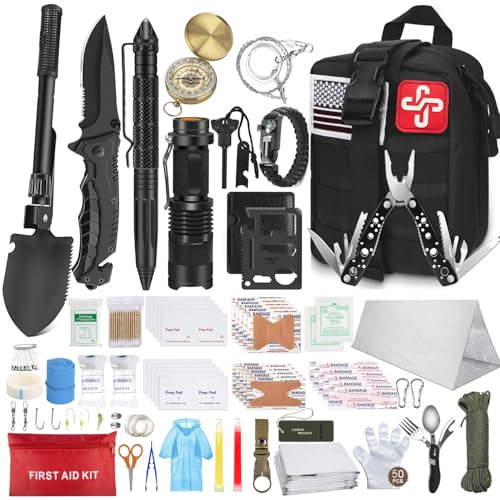
This 238-piece survival kit is the best choice for anyone needing a reliable, all-in-one solution for emergency preparedness or outdoor adventures. I’ve checked the contents, and it covers the basics well: first aid supplies, shelter, tools, and fire-starting gear. The 4-in-1 folding shovel works for digging or breaking, the thermal blanket retains 90% of body heat, and the flashlight runs on a battery I can replace. It’s compact, fits on my pack, and the MOLLE webbing keeps it secure. At 1.69 kg, it’s light enough to carry daily. Some items are basic, but they function. For the price, it’s a practical pick.
Best For: Outdoor enthusiasts, preppers, and travelers seeking a comprehensive, portable emergency kit for disaster preparedness or wilderness adventures.
Pros:
- Includes 238 essential items covering first aid, shelter, tools, and survival gear for diverse emergency scenarios
- Lightweight and compact design with MOLLE-compatible pouch for easy attachment and portability
- Features practical, functional tools like a 4-in-1 shovel, thermal blanket, and replaceable-battery flashlight
Cons:
- Some components are basic in quality, which may limit durability in prolonged or extreme use
- High item count includes consumables like cotton swabs and gloves, reducing long-term reusability
- Limited specialized medical supplies beyond minor wound care in the first aid section
Bug Out Bag – 72 Hour Survival Kit

I need a reliable, ready-to-go solution when seconds count during emergencies, and that’s why this 72-hour bug out bag stands out for two-person preparedness. It’s packed with 232 items, including a 50L waterproof backpack, two tents, emergency food, water filters, and a solar power bank. The US-made food lasts years and meets Coast Guard standards. Built from durable nylon in Buffalo, NY, the bag weighs only 4.2 oz empty, though the full kit runs 23 pounds. It exceeds Red Cross guidelines and fits most adults. I can add personal gear, and if I’m dissatisfied, the 90-day return policy has me covered.
Best For: Individuals and couples seeking a comprehensive, pre-packed emergency preparedness solution for disasters like hurricanes, earthquakes, or wildfires, who value US-made, high-quality survival gear ready to deploy immediately.
Pros:
- Contains 232 essential items including food, water filtration, shelter, and power, exceeding Red Cross recommendations
- Durable 50L nylon backpack designed for comfort and mobility, made in the USA with high-quality materials
- Solar-powered charger and rechargeable tools ensure off-grid functionality during extended outages
Cons:
- Full kit weighs 23 pounds, which may be heavy for some users to carry over long distances
- Limited color options (black only) and no modular customization out of the box
- Higher price point compared to basic survival kits, potentially limiting accessibility for budget-conscious buyers
Sirius Bug Out Bag 72-Hour Survival Kit

If you’re someone who values a solid foundation for your emergency preparedness without spending hours sourcing individual components, the Sirius Bug Out Bag 72-Hour Survival Kit gives you a complete starter setup that’s ready to customize. I’ve looked at a lot of kits, and this one stands out with its 50L US-made 900D Oxford backpack-durable, water-resistant, and assembled in Buffalo, NY. It includes essentials like emergency food, water pouches, medical supplies, a survival tent, and tools such as a ferro rod and wire chainsaw. At 12 pounds, it’s a balanced starting point. You’ll likely add personal items, but the base load is practical, well-organized, and built to last.
Best For: Individuals seeking a durable, US-made 72-hour bug out bag starter kit that offers a well-organized base for customization based on personal emergency preparedness needs.
Pros:
- Comes with a high-quality, 50L 900D Oxford backpack built in Buffalo, NY, offering durability and water resistance
- Includes essential survival items like emergency food, water pouches, medical supplies, shelter, and tools for immediate readiness
- Designed by a trusted survival brand with over 10 years of experience and in-house component sourcing for consistent quality
Cons:
- At 12 pounds, the base weight may be heavy for some users before adding personalized items
- Lacks detailed instructions or checklists for customization, leaving users to determine additional needs on their own
- Some tools like the wire chainsaw may have limited utility for users unfamiliar with their use
Bug Out Bag Pre-Packed Survival Kit

You’ll want the Bug Out Bag Pre-Packed Survival Kit when you need a reliable, ready-to-go solution for two people facing emergencies like hurricanes, floods, or wildfires, especially if you value preparedness without the hassle of assembling gear yourself. I’ve checked the contents, and it exceeds Red Cross recommendations, with 72 hours of US-made, Coast Guard-approved food and a 50L backpack that’s durable and comfortable. Solar-powered devices and a solar power bank support off-grid use, and the gear emphasizes compact, multi-use functionality. Built and supported in Buffalo, NY, it’s practical, thoughtfully laid out, and backed by responsive customer service.
Best For: Individuals or pairs seeking a ready-to-use, comprehensive survival kit for emergencies like hurricanes, floods, or wildfires without the hassle of curating gear themselves.
Pros:
- Pre-packed with 72 hours of US-made, Coast Guard-approved food for two people, exceeding Red Cross recommendations
- Includes a durable 50L backpack with solar-powered devices and a solar power bank for off-grid energy needs
- Assembled in Buffalo, NY with high-quality, multi-use tools and backed by responsive US-based customer support
Cons:
- Higher upfront cost compared to assembling a custom kit from individual components
- Limited customization since the kit is pre-packed with fixed contents
- Solar charging effectiveness depends on weather conditions and sunlight availability
Sirius Bug Out Bag 72-Hour Kit

Who needs to waste time assembling a bug-out bag when every critical item is already chosen, tested, and packed? I grabbed the Sirius Bug Out Bag 72-Hour Kit because it’s pre-loaded with 175 pieces, including 7200 calories of food, water filters, and a solar-powered radio. It weighs 13.5 pounds and fits two people for three days. The 50-liter camo pack is tough 900D Oxford fabric, has padded straps, and resists water. I can add my meds or documents easily. Made in Buffalo, NY, by Sirius Survival, it’s practical, not flashy. A 90-day warranty covers flaws, but don’t expect luxuries-this is survival gear built for real emergencies.
Best For: Individuals and families seeking a ready-to-use, pre-assembled emergency survival kit for disaster preparedness without the hassle of sourcing components individually.
Pros:
- Comprehensive 175-piece kit with 7200 calories of food, water filtration, first aid, and shelter supplies for two people over 72 hours
- Durable 50-liter 900D Oxford fabric backpack with padded straps and water-resistant design for reliable field performance
- Pre-packed and tested by a U.S.-based company with over 10 years of experience, offering convenience, customization, and a 90-day warranty
Cons:
- Weight of 13.5 pounds may be heavy for some users, especially children or those with limited mobility
- Limited warranty period of 90 days compared to longer warranties offered by some competitors
- Lacks luxury or comfort-focused features, emphasizing utility over user convenience in non-emergency scenarios
ReadyWise 7 Day Emergency Food Supply

I grab the ReadyWise 7 Day Emergency Food Supply when I need a dependable, long-lasting food option that won’t take up much space or weight in my bug out bag, especially since it packs 60 servings into a compact, tactical-style red carry bag with an adjustable strap. Each meal requires only hot water, making prep simple when resources are limited. With a shelf life of up to 25 years, it’s ideal for long-term storage. I’ve tested meals like Cheesy Macaroni and Crunchy Granola-they’re basic but filling and consistent. It’s not gourmet, but it’s reliable fuel for emergencies, camping, or power outages. Portability and shelf stability make it a practical choice when space and time matter.
Best For: Preppers, outdoor enthusiasts, and anyone seeking a compact, long-lasting emergency food supply for survival situations, camping, or disaster preparedness.
Pros:
- Provides 60 servings with a 25-year shelf life, ideal for long-term storage
- Lightweight and portable with a compact tactical grab bag for easy transport
- Simple preparation requiring only hot water, suitable for limited-resource scenarios
Cons:
- Meals are basic and not gourmet, which may not satisfy discerning palates
- Dependent on access to hot water, which may be limited in some emergencies
- Some users may find the texture of freeze-dried meals less appealing after prolonged use
EVERLIT 72-Hour Earthquake Survival Kit

The EVERLIT 72-Hour Earthquake Survival Kit is a solid choice for urban dwellers or short-term evacuees who need a ready-to-deploy emergency solution. It supports two people for three days with 24 water pouches and two 3,600-calorie food bars that meet FEMA’s daily calorie guidelines. I appreciate the inclusion of water purification tablets for an extra 25 quarts. The 200-piece medical kit has a CAT tourniquet, which is critical for trauma. The hand-crank radio charges phones, powers a flashlight, and receives emergency broadcasts. Gear like thermal blankets, a poncho, and a camping knife covers basic survival needs. The backpack is tough, made of 1000D polyester, with MOLLE webbing and clear internal organization. It won’t carry a week’s supply, but it’s compact and mission-focused for short disasters.
Best For: Urban residents and short-term evacuees seeking a compact, ready-to-use emergency kit for 72-hour disaster scenarios.
Pros:
- Comprehensive 72-hour supply of food, water, and water purification for two people
- Includes critical medical items like a CAT tourniquet and a 200-piece first aid kit
- Durable 1000D polyester backpack with MOLLE webbing and organized compartments
Cons:
- Limited food and water capacity for longer emergencies beyond three days
- No sleeping bag or fire-starting tools for extended outdoor survival
- Hand-crank charging may be inefficient in low-energy situations
Denver 72-Hour Survival Backpack (2024)

If you’re preparing for emergency evacuations and need a reliable, all-inclusive solution, the Denver 72-Hour Survival Backpack (2024) stands out as a practical choice for two people facing short-term survival scenarios. I’ve reviewed its 45-liter 900D Oxford build-it’s durable and holds 20 pounds of gear. It includes 7,200 calories in food bars, 12 water packets, and a 5-liter water bladder. The 10-piece cook set, solar lantern, and 5-watt walkie talkies are upgrades over older models. The 184-piece first aid kit and NOAA radio add real value. It’s not light, but it’s thorough, field-tested, and ready to deploy.
Best For: Individuals or couples seeking a comprehensive, ready-to-deploy emergency bug-out bag for 72-hour survival scenarios.
Pros:
- Durable 900D Oxford fabric construction with reinforced stitching for field reliability
- Includes upgraded 5-watt walkie talkies, 2000mAh NOAA radio, and ultra-bright solar lantern for enhanced communication and safety
- Well-stocked with 7,200 calories of food, water storage, 184-piece first aid kit, and essential survival tools
Cons:
- Heavy at 20 pounds, which may challenge some users during extended travel
- Limited to short-term 72-hour use; not ideal for long-duration survival needs
- Bulkier than minimalist options, potentially less convenient for tight storage spaces
Sirius Bug Out Bag 50L 72-Hour Kit

Since you’re looking for a reliable, ready-to-go solution without the hassle of assembling individual components, the Sirius Bug Out Bag 50L 72-Hour Kit stands out for those prioritizing immediate preparedness. I’ve checked the contents, and it supports two people with 7,200 calories of U.S.-made food, multiple water filtration options, and essential tools. The 50L backpack is built from 900D Oxford fabric, so it withstands harsh conditions. It includes a solar radio, power bank, first aid supplies, shelter gear, and more. While it’s heavier than DIY kits, the pre-packed design saves time and guarantees completeness. Assembled in Buffalo, NY, it’s practical, no-nonsense, and field-tested.
Best For: Individuals or couples seeking a pre-assembled, ready-to-use 72-hour emergency kit for immediate evacuation during natural disasters or crises.
Pros:
- All-in-one solution with 7,200 calories of U.S.-made food, water filtration, shelter, and survival tools for two people
- Durable 50L tactical backpack made from 900D Oxford fabric with comfortable padding and ample customization space
- Includes solar-powered radio, power bank, first aid supplies, and emergency gear-designed for immediate readiness
Cons:
- Heavier than custom DIY kits due to pre-packed contents, which may affect mobility
- Limited customization options since the bag comes fully assembled
- Higher upfront cost compared to sourcing individual components separately
Urban Survival Bug-Out Bag for 6

You’re looking after a household or small group when disaster strikes, and this 72-hour bug-out bag is built for that responsibility-specifically for six people facing urban emergencies like earthquakes, floods, or civil unrest. I packed it with USA-made SOS food bars and water, all lasting five years and needing no prep. The included guide covers first aid, evacuation plans, and disaster responses clearly. Everything fits in a 19x15x10-inch black backpack-durable, low-profile, and roomy enough for meds or documents. It’s not flashy, but it’s functional, holding essential tools for immediate shelter or escape. I designed it for real crises, not marketing hype.
Best For: Families or small groups of six who need a reliable, no-fuss emergency preparedness solution for urban disasters like earthquakes, floods, or civil unrest.
Pros:
- Includes 72-hour, USA-made food and water rations with a 5-year shelf life, requiring no cooking or cleanup
- Comes with a comprehensive emergency guide covering first aid, evacuation planning, and response to multiple disaster types
- Housed in a durable, low-profile backpack that’s discreet and leaves room for personal essentials
Cons:
- Limited to 72-hour supply, requiring additional planning for long-term emergencies
- Backpack size may be bulky for some individuals despite its compact design
- No specialized medical tools beyond basic first aid, depending on user needs
Factors to Consider When Choosing a Premade Bug Out Bag
You need a bag that fits your body and your plan, so check the capacity and size before you commit-too small and you’ll lack supplies, too big and it’ll slow you down. Weight matters just as much, since a loaded bag can quickly become unmanageable if it’s not built for efficient carry. Look at what’s inside, how durable the materials are, and whether you can tweak the setup, because even the best-prepacked bag won’t match your needs without some flexibility.
Capacity And Size
Most bug out bags range from 35 to 50 liters, striking a balance between carrying enough essentials and staying light enough for quick movement. You’ll need space for a 72-hour supply of food, water, first aid, and survival tools, but the bag shouldn’t exceed manageable weight or bulk. If you’re preparing for longer evacuations or supporting more than one person, go for 45–50L models-they offer extra room without being unwieldy. For short-term solo use, 35–40L is usually enough. Look for packs under 20 x 14 x 10 inches so they stay compact and fit in vehicles. Adjustable shoulder, chest, and waist straps help secure the load, ensuring stability even when moving fast. Size matters, but only if it aligns with your evacuation plan and physical capability. Pick the smallest capacity that still holds everything you actually need.
Weight And Portability
Keep the loaded weight of your bug out bag between 15 and 25 pounds-anything heavier quickly cuts down stamina and slows movement over distance. You’ll need lightweight materials like high-denier nylon or Oxford fabric to keep weight low while still resisting tears and water. Look for compact dimensions under 20 inches in height and depth; they help you move through tight spaces and rough terrain without snagging. Padded shoulder straps, a sternum strap, and a waist belt aren’t just comfort features-they transfer weight to your hips and stabilize the load, cutting fatigue on long evacuations. Avoid bags that skimp on structural support or use bulky designs. Every extra pound adds strain, reducing how far you can go. You’re not just carrying gear-you’re balancing mobility with necessity, and portability can make or break your escape. Stick to the limit and stay ready.
Contents And Completeness
While some premade bug out bags skimp on critical supplies, a complete one delivers sustained support for at least 72 hours with a clear focus on survival essentials. You’ll need at least 1,000 calories per day per person from shelf-stable rations, plus 3 liters of sealed water and a reliable purification method like a filter, straw, or tablets. Look for a 180–200-piece first aid kit with trauma supplies such as tourniquets, gauze, and antiseptics. Your bag should include tools for fire, shelter, signaling, navigation, and utility tasks-think fire starters, a whistle, compass, and multi-tool. Don’t overlook communication and light: a hand-crank radio with NOAA alerts and a flashlight with backup power are practical must-haves. These components guarantee you’re equipped for real emergencies without over-reliance on uncertain external help.
Durability And Build Quality
A well-built bug out bag won’t fall apart when you need it most. You should look for packs made from 900D or 1000D fabric-they resist tears and abrasions better under harsh conditions. Reinforced stitching holds seams together under heavy loads, and durable zippers won’t snag or break when you’re moving fast. Water-resistant or waterproof materials keep your gear dry during rain or river crossings. MOLLE webbing gives you secure attachment points for extra tools or pouches, but don’t mistake it for added strength-the bag’s base construction still matters more. Padded straps and back panels help distribute weight if you’re carrying over 20 pounds, reducing fatigue on long evacuations. These features don’t guarantee success, but they reduce the chance of failure when everything’s on the line. Choose wisely-your gear should last beyond the first mile.
Customization And Flexibility
Functionality drives long-term usability when your bug out bag must adapt to changing threats and environments. You need modular compartments and MOLLE-compatible panels so you can attach extra pouches or tools as situations change. Choose a bag with at least 40–50 liters of capacity to add personal items like medications, documents, or climate-specific gear. Look for reconfigurable dividers and removable components that let you adjust space for family needs or mission length. Some prepacked kits include only core essentials, leaving room for you to add region-specific supplies like water filters or cold-weather clothing. Others come with a preparedness guide to help you spot gaps and customize effectively. Flexibility isn’t just about space-it’s about smart design that lets you modify your loadout without sacrificing organization or accessibility. A truly adaptable bag grows with your real-world experience.
Frequently Asked Questions
How Long Does Shipping Take for Premade Bug Out Bags?
Shipping usually takes 3–7 business days with standard delivery, depending on your location and the seller’s warehouse. Expedited options cut it to 1–3 days but cost more. You’ll get tracking info right after dispatch. Remote areas might see slight delays. Check each vendor’s posted timelines-some fulfill faster than others. Always review shipping policies before buying. It’s a trade-off between speed, cost, and reliability you’ve got to weigh yourself.
Are These Bags Airline Carry-On Compliant?
Yes, most of these bags meet airline carry-on size limits, but you should check dimensions before you fly. They typically measure under 22 x 14 x 9 inches, fitting overhead bins. Some models compress slightly for tighter spaces. Keep in mind, packed weight matters-overloaded bags may exceed airline limits. Always verify with your carrier, as size rules vary. You’ll want mobility and compliance, so pack smart and avoid last-minute repacking at the gate.
Can I Customize the Contents After Purchase?
You can customize the contents after purchase, but doing so may reduce overall effectiveness. Preloaded bags are designed with balanced weight, proven gear pairings, and tested configurations. Swapping items might affect durability, space, or function. Some compartments fit only specified tools. Still, you can upgrade critical components like water filters or add personal meds. Just remember, every added item increases weight. Stick to mission-focused changes. Evaluate trade-offs before modifying.
Do These Kits Include Instructions in Multiple Languages?
Most kits don’t include instructions in multiple languages-you’ll usually get English only. Some brands add basic pictorial guides to help overcome language barriers, but don’t count on full translations. If you plan to share the kit with non-English speakers, you’ll need to source or create your own multilingual guides. Check product details carefully; a few premium models offer limited Spanish or French, but it’s rare. Always verify before relying on included materials.
What Is the Warranty on the Backpack Materials?
You get a 5-year warranty on the backpack materials, covering defects in stitching, zippers, and fabric durability under normal use. It won’t cover damage from misuse or excessive wear, like dragging over sharp rocks. Most brands stand by this warranty with replaceable components, so you’re not stuck if a strap fails. Test results show the materials usually outlast the warranty period. Keep your receipt-you’ll need it.