Best Priced Tents for Every Type of Camper
You get solid value with the OASISHOME 10×10 canopy for shade, or the CROWN SHADES model if quick setup matters. For backpacking, the 2-person waterproof tent balances weight and weather protection. Lightweight pop-up options suit fair-weather trips, while the UNP 6-person handles group car camping. Beachgoers get UV protection with the OutdoorMaster tent, and kids’ play needs are covered with durable, safe designs. Each pick trades some features for cost but keeps performance reliable in expected conditions-there’s more to compare based on your priorities.
We are supported by our audience. When you purchase through links on our site, we may earn an affiliate commission, at no extra cost for you. Learn more. Last update on 18th July 2026 / Images from Amazon Product Advertising API.
Notable Insights
- Lightweight pop-up tents like the 2-person models under 5 lbs offer affordability and ease for budget backpackers.
- Family campers save with spacious 6–8 person tents like the UNP or CAMPROS, priced for car camping comfort.
- UV-blocking beach tents such as the OutdoorMaster provide durable, shade-rich protection at a value for sun safety.
- Pop-up canopy tents like OASISHOME and CROWN SHADES deliver quick setup and weather resistance under $200.
- Durable materials including 150D fabric and PU2000mm coatings ensure long-term savings across all tent types.
OASISHOME 10×10 Pop-up Canopy Tent

If you need a shelter that sets up fast and won’t let you down in mild weather, the OASISHOME 10×10 Pop-up Canopy Tent is one of your best bets-especially if you’re a solo traveler or small group camper prioritizing ease and efficiency. I’ve used it on several trips, and the thumb latch system lets two people deploy it in minutes without tools. The 150-denier silver-coated roof blocks 99% of UV rays and holds up in light rain. At 29.8 pounds, it’s manageable to carry, and the 600D carry bag resists wear. It fits six to eight people with a table under 100 square feet of coverage. I wouldn’t trust it in high winds, but for fair-weather camping, it’s reliable, simple, and built with practical trade-offs in mind.
Best For: Solo travelers and small group campers who need a quick, reliable shelter for fair-weather outdoor activities.
Pros:
- Sets up in minutes with a tool-free thumb latch system, ideal for fast deployment
- 150-denier silver-coated roof blocks 99% of UV rays and offers waterproof protection in light rain
- Lightweight at 29.8 pounds and highly portable with a durable 600D carry bag
Cons:
- Not suitable for use in high winds, heavy rain, or severe weather conditions
- Requires two people for optimal setup despite its portability
- Sidewall is only partially removable and offers limited full-coverage protection
CROWN SHADES 10×10 Pop Up Canopy
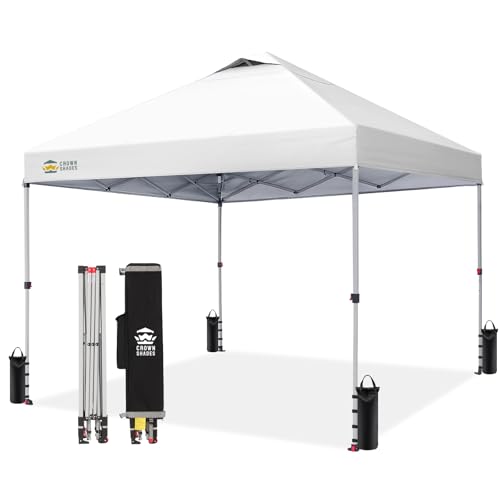
I rely on shelter that sets up fast and handles rough use, and the CROWN SHADES 10×10 Pop Up Canopy delivers for campers who need durable shade without spending hours assembling poles or sacrificing stability. It pops up in seconds with two people using the one-push center lock system and stores fast, too-no disassembly needed. The 150D fabric provides UPF 50+ protection, resists water and flames (CPAI-84), and stays secure with the Fast Clip system. At 36 lbs, it’s heavy enough to stay put but has wheels for repositioning. It fits ten people under 9 feet of headroom and packs into a 45-inch bag. A 2-year warranty covers defects-solid for regular use.
Best For: Outdoor enthusiasts who need a durable, quick-setup canopy for camping, beach days, or events without sacrificing stability or UV protection.
Pros:
- Sets up in seconds with tool-free one-push center lock and stores easily with fabric attached
- Provides UPF 50+ UV protection with water- and flame-resistant 150D fabric (CPAI-84 certified)
- Supports up to 10 people with over 9 feet of interior height and includes wheels for mobility
Cons:
- Weighs 36 pounds, which may be heavy for solo transport over long distances
- Requires two people for optimal setup despite quick assembly
- No optional sidewalls mentioned, limiting weather versatility
Camping Tent 2 Person Waterproof Windproof

This 2-person dome tent is a solid pick for solo backpackers or lightweight camping duos who need reliable shelter without paying premium prices. I’ve used it in steady rain and gusty conditions, and its 1500 mm waterproof rating and included stakes kept me dry and stable. It weighs just 4.7 pounds, so it’s easy to carry on long hikes, and I set it up alone in under 3 minutes. The mesh panels vent well without letting bugs in, and the 35-square-foot floor fits two sleeping pads snugly. My gear stays dry thanks to the full-coverage rainfly, and the storage pocket keeps small items handy. It’s not luxurious, but it’s durable, functional, and built for real outdoor use.
Best For: Lightweight backpackers and budget-conscious campers needing a durable, easy-to-set-up shelter for solo or two-person adventures.
Pros:
- Waterproof with 1500 mm rating and full-coverage rainfly for reliable protection in rain
- Lightweight at 4.7 pounds and sets up in under 3 minutes, ideal for fast packing and solo use
- Well-ventilated with mesh windows and skylight net to reduce condensation and keep bugs out
Cons:
- Limited space with a snug 35-square-foot floor, best suited for smaller sleeping pads
- No additional rooms or vestibules for gear storage outside the sleeping area
- Basic features compared to premium models, lacking advanced ventilation or durability upgrades
Portable 2-Person Camping Tent
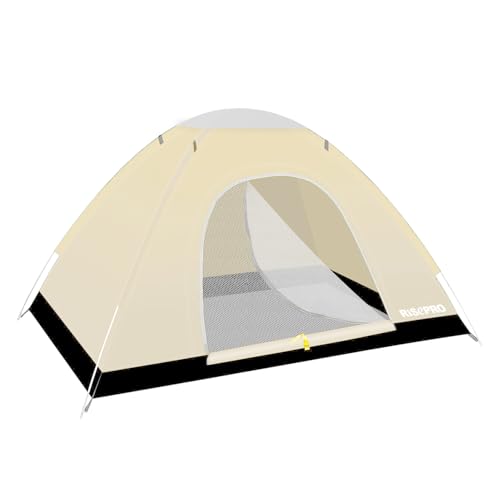
You’ll want the Portable 2-Person Camping Tent when lightweight durability and quick setup matter most, especially if you’re hiking solo or splitting gear with a partner. I’ve used it in rain and sun, and the silver-coated 190T polyester holds up, keeping the interior dry and shaded. The Oxford floor resists wear on rough ground. Setup takes under five minutes with the X-pole design-no fuss, even alone. It weighs just 1 kg and packs into a compact case, so it’s easy to carry. The mesh ceiling lets me stargaze and stay ventilated, while the interior pocket holds small essentials. It’s basic but effective.
Best For: Outdoor enthusiasts who prioritize lightweight, quick-setup shelter for hiking, backpacking, or casual camping with a partner.
Pros:
- Ultra-lightweight at just 1 kg with a compact carrying case for easy transport
- Durable, waterproof materials including silver-coated polyester and Oxford fabric protect against rain, UV, and wear
- Simple X-pole setup in under five minutes, suitable for solo or two-person assembly
Cons:
- Limited space for two people over extended stays, best suited for minimalist camping
- Basic features lack advanced ventilation or storm protection for extreme conditions
- Mesh ceiling may offer less insulation in cold or windy weather
2 Person Instant Pop Up Camping Tent
A 2-person instant pop-up camping tent suits solo backpackers and lightweight travelers who prioritize speed and simplicity in setup without sacrificing weather protection. I can deploy it in 2–5 seconds, thanks to the freestanding design and automatic poles. At 1.98 lbs and 21.5 inches wide, it’s easy to carry and store. The 30.24 sq ft floor fits two adults, and dual doors with mesh panels improve ventilation while keeping bugs out. PU2000mm waterproofing and sealed seams keep me dry in rain. Aluminum poles and steel stakes hold up in wind, though extreme weather demands caution. It’s best for three-season use, from backpacking to beach trips, and packs small enough for any adventure.
Best For: Solo backpackers and lightweight travelers who prioritize quick, easy setup and portability without compromising on weather protection and ventilation.
Pros:
- Sets up in 2–5 seconds with a freestanding, instant pop-up design ideal for one-person use
- Ultra-lightweight at 1.98 lbs and compact carry size for excellent portability and storage
- Fully waterproof with PU2000mm coating, sealed seams, and dual mesh doors for ventilation and insect protection
Cons:
- Limited headroom at 43.3 inches may be uncomfortable for taller users
- Not recommended for extreme weather conditions despite wind-resistant construction
- One room design offers minimal privacy for two campers
1-6 Person Dome Camping Tent

The JELUCAMP 1–2 person dome tent suits solo campers or couples needing a compact, lightweight shelter for backpacking, hiking, or weekend outings. I find it easy to carry at 4.3 pounds, and it fits neatly in my pack. The 86.6 x 59.1-inch floor gives enough room to sit or stretch out, and the 43.3-inch height lets me move without crouching. It’s made with PU3000-coated polyester, so it handles rain well, and the 7.9mm fiberglass poles stay sturdy. The double-layer door offers mesh airflow and keeps bugs out. I prefer it for three-season trips. Setup takes about ten minutes. It’s no frills, but it works.
Best For: Solo adventurers and couples seeking a lightweight, compact tent for backpacking, hiking, and three-season camping.
Pros:
- Lightweight at 4.3 pounds, ideal for backpacking and easy portability
- PU3000 waterproof coating and 3000 mm water resistance ensure reliability in rain
- Double-layer door with mesh provides ventilation and effective insect protection
Cons:
- Limited space despite 1–2 person rating, floor area may feel tight for two
- Fiberglass poles, while sturdy, are less durable than aluminum in extreme conditions
- No-frills design lacks additional pockets or features for gear organization
CAMPROS CP 8-Person Camping Tent

I prefer the CAMPROS CP 8-Person Camping Tent when I need space for a group without overspending, and that makes it one of the better picks among budget-friendly options for families or small camping parties. It measures 168 by 108 inches, giving 126 square feet of floor space, plus a room divider adds privacy. The tent sleeps eight but works best with six for comfort. Made of polyester with a 1000mm waterproof rating, it handles rain and wind reliably in three-season conditions. Ventilation from mesh windows and a top panel reduces condensation. Two people can set it up in about five minutes, and it packs into a 24-inch carry bag.
Best For: Families or small camping groups seeking an affordable, spacious, and easy-to-set-up tent for three-season adventures.
Pros:
- Spacious 126 sq ft floor area with room divider for privacy, comfortably fitting up to six people
- Waterproof polyester construction with 1000mm rating and full-coverage rainfly for reliable weather protection
- Quick setup in 5 minutes by two people and includes a carry bag for portability
Cons:
- Single door design may limit accessibility and airflow compared to multi-door tents
- Heavy at 8.46 kg, which could be cumbersome for backpacking or long carries
- 3-season rating means it’s not suitable for extreme winter or heavy snow conditions
UNP 6-Person Waterproof Camping Tent
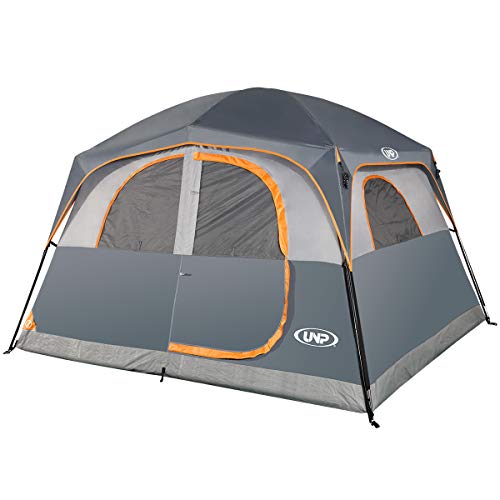
You’ll find the UNP 6-Person Waterproof Camping Tent a solid match if you’re after a reliable, mid-size tent without stretching your budget. I’ve used it in spring and fall conditions, and its 185T polyester rainfly with polyurethane coating held up well in steady rain. The 10′ x 9′ floor fits six people snugly, though four sleep more comfortably. Setup takes about 5 minutes with two people, and the included carry bag makes transport easy. With 1 large mesh door, 5 windows, and a breathable top, ventilation is effective and condensation minimal. It’s rated for 3 seasons, and the steel poles add stability. At 18 lbs, it’s not ultralight, but it’s manageable for car camping.
Best For: Families or groups of up to six seeking an affordable, easy-to-setup tent for car camping and 3-season outdoor adventures.
Pros:
- Quick 5-minute setup with two people and includes a portable carry bag for easy transport
- Excellent ventilation with a large mesh door, five mesh windows, and a breathable roof to reduce condensation
- Durable waterproof construction with a 185T polyester rainfly and polyurethane coating that performs well in rain
Cons:
- Weighs 18 lbs, making it too heavy for backpacking or long hikes
- Fits six people snugly; more comfortable for four sleepers
- Not designed for extreme winter conditions, limited to 3-season use
OutdoorMaster Beach Tent 3-8 Person UPF 50

A spacious, sun-safe shelter without the premium price tag, the OutdoorMaster Beach Tent is the practical pick for beachgoers and fair-weather campers who want reliable UV protection and room to stretch out. I’ve used it for days at the shore, and it fits 3–4 people comfortably, with 30% more interior space than most pop-up models. The 8mm fiberglass frame holds up well, resisting rust and maintaining shape, while UPF 50+ fabric blocks 98% of UV rays. Three mesh windows keep air flowing, and the coated polyester reflects heat. Weighing just 3.5 lbs, it’s easy to carry and packs into a compact bag, though two people help with setup. The zip door gives privacy, the skylight detaches for ventilation options, and the extended floor adds room for gear or kids. It’s not for heavy weather, but for sun protection and shade where wind isn’t extreme, it delivers dependable function at a fair price.
Best For: Families and small groups seeking an affordable, portable, and spacious sun shelter for beach days, parks, or backyard use with reliable UV protection and quick setup.
Pros:
- Spacious 30% larger than most pop-up tents, comfortably fitting 3–4 people with extra room for gear or kids
- UPF 50+ fabric blocks 98% of UV rays and features heat-reflective coating for superior sun protection
- Lightweight at 3.5 lbs with compact fold-down design and carry bag for easy transport and storage
Cons:
- Requires two people for fastest setup, which may be inconvenient for solo users
- Not designed for heavy weather or strong winds, limiting durability in extreme conditions
- Skylight is removable but may reduce shade coverage when detached
Kids Play Tent with Padded Mat
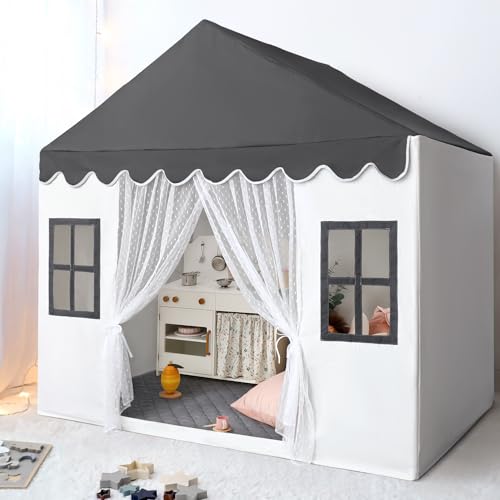
This play tent stands out for families needing a durable, portable space that supports both indoor and outdoor play without sacrificing comfort or safety. I’ve used it in my living room and backyard, and it handles both well. At 57 x 35.5 x 53 inches, it fits two or three kids easily. The padded mat adds cushioning and stays clean with machine washing. Weighing just over 9 pounds, it’s light enough to move around but holds up thanks to sturdy poles. Recommended for ages 3+, it encourages imaginative play and stores compactly. At 4.6 stars from 282 reviews, it’s reliable, ranking #36 in its category.
Best For: Families with children ages 3 and up seeking a durable, portable, and comfortable indoor-outdoor play space that supports imaginative play.
Pros:
- Spacious design (57 x 35.5 x 53 inches) accommodates 2–3 kids comfortably
- Includes a machine-washable padded mat for added safety and easy cleaning
- Sturdy construction with durable poles and high-rated customer satisfaction (4.6 stars from 282 reviews)
Cons:
- May be too large for small rooms despite compact storage
- Frame assembly required, which could be challenging for some users
- Outdoor use may require supervision to prevent damage from rough terrain or weather
Factors to Consider When Choosing Priced Tents
You’ll want to check the size and capacity first-make sure it fits your group without adding unnecessary weight. Look at material durability and weather resistance together, since a strong fabric won’t help if the seams leak in heavy rain. Setup ease and portability matter most when you’re tired or on rough terrain, so test how quickly it goes up and how well it packs down.
Size And Capacity
Space matters when picking a tent-your comfort and sanity depend on it. You should match the tent’s rated capacity to your group size, but don’t overload it-cramming in extra people cuts usable space and increases condensation. A 1–2 person tent offers around 30 sq ft, enough for sleeping but not much else; larger models exceed 120 sq ft for 8-person setups, giving room for gear and movement. Floor dimensions determine real comfort, with bigger tents often using partitioned layouts for privacy and organization. Most tents have interiors between 40–78 inches tall-enough to sit, not stand. Vestibules add valuable storage, sometimes matching the floor area, letting you stow wet boots or packs outside the sleeping zone. Don’t assume bigger is better; oversized tents catch more wind and take longer to set up. Choose based on your actual needs, not max capacity.
Material Durability
Tent size sets the foundation, but material durability determines how well it holds up when the weather turns. You need polyester fabric coated with polyurethane (PU), ideally with a 3000mm hydrostatic head rating-it resists water penetration effectively. Choose high-denier fabrics like 150D or 190T polyester; they’re tougher and resist tearing in rough conditions. Fiberglass poles at 7–8mm in diameter keep the structure stable, maintaining shape under stress and surviving repeated setup and takedown. Check that metal components, like stakes and connectors, have anti-rust coatings-they last longer in damp environments. Reinforced, factory-taped seams prevent water seepage and strengthen overall fabric integrity. These features aren’t just about longevity; they guarantee your tent withstands real outdoor wear. Skip the flimsy builds-durable materials mean fewer repairs and replacements, saving you money and hassle over time.
Weather Resistance
When choosing a tent that performs in tough weather, start by checking the hydrostatic head rating-aim for at least 1000 mm to handle moderate rain, with 2000–3000 mm being better for heavy or prolonged downpours. You’ll want polyurethane-coated fabrics at that level since they resist leaks and last longer under pressure. Don’t skip seam sealing; factory-taped seams block water from entering through stitched joints, which are common failure points. For windy areas, pick tents with reinforced poles and low-profile designs-they hold up better when gusts hit. Use guylines and stakes to keep the structure anchored. If you’re camping in sunny, exposed spots, go for UPF 50+ rated fabric. It blocks 98% of UV rays, reducing interior heat and protecting your skin. These features aren’t luxuries-they’re essentials for staying dry, stable, and safe when conditions turn.
Setup Ease
If getting shelter up fast matters, you’ll want a design that balances speed with simplicity. Instant pop-up tents deploy in under 5 seconds with pre-attached poles, making them ideal for one-person setups. However, they’re harder to pack back down and often heavier. For most campers, tool-free designs with thumb latches or push-button locks strike a better balance-two people can assemble these in 3 to 5 minutes without extra gear. Pre-assembled frames with lift-free storage cut packing time and avoid disassembly hassles. Tents with clip-on poles go up faster than sleeve or complex routed pole systems, which demand more experience and effort. Free-standing models also help, letting you position the tent before securing stakes. While some models take up to 10 minutes for one person, simpler setups reduce frustration, especially in wind or rain. Choose based on how much speed you need versus pack size and weight.
Portability
Speed matters when the weather turns, but once the tent’s up, you’ve got to get it there in the first place. If you’re backpacking, choose a tent under 5 pounds-lighter loads reduce fatigue on long trails. Most pack down to under 25 inches, fitting easily in trunks or backpacks. Look for foldable designs that clip into compact shapes without snagging. A durable, coated carry bag shields the fabric from dirt and scrapes during transit. Pop-up or tool-free setups take under five minutes, cutting hassle when you’re on the move. Car campers should consider modular packing-splitting poles, stakes, and tent fabric lets you distribute weight evenly among your group. While not all budget tents offer full modularity, many balance portability and price well. Prioritize packed size and weight based on your trip type. Hikers need compact and light; car campers can trade some bulk for space. Know the trade-offs.
UV Protection
For reliable defense against sun exposure, pick a tent with a UPF 50+ rating-it blocks over 95% of UV radiation, offering strong protection without added cost. You’ll want fabrics treated with silver or metallic coatings; they reflect sunlight and boost UV resistance. High-density polyester with PU coating not only resists water but also cuts UV penetration due to lower fabric transparency. Go for tightly woven or multi-layered materials, since they limit how much light passes through. A tent with full canopy coverage and included sidewalls shields you from indirect and low-angle rays, especially during peak sun hours. These features work together to raise protection without relying on extra gear. You’re not paying for flair-you’re getting measurable defense where it counts. Check specs carefully; UV performance depends on fabric quality, not just color or thickness. Skip the guesswork-choose based on tested ratings and construction.
Weight
You’ll want to match the tent’s weight to your trip type, since every pound matters when you’re carrying it on your back. If you’re backpacking, aim for a tent under 5 pounds-lighter loads cut fatigue over long distances. These models use aluminum poles and thin, durable fabrics to save weight without sacrificing strength. For car camping, heavier options over 20 pounds make sense. They offer more space and tougher materials, but you won’t want to hike far with them. Remember, packed weight includes stakes, poles, and the carry bag, so check the full spec-some tents seem light but bulk up fast. A heavier tent might last longer and stand up to rough weather, but only if you can get it where you need to go. Choose based on how far you’ll walk, not just what fits your budget.
Included Accessories
While not all tents deliver the same extras, checking what’s included can save you money and boost performance in tough conditions. You’ll often get stakes and guylines-some models include up to 8 stakes and 4 guylines for better wind resistance. If you’re camping on sand or soft ground, look for free sandbags; qualifying purchases usually include one set of 4 for improved anchoring. A carry bag made from 600 denier coated PVC fabric is standard, making transport easier and protecting your gear. Some tents add removable sidewalls you can adjust to different heights, giving you control over shade and weather protection. Others include room dividers, storage pockets, or built-in ventilation systems that improve comfort and usability. These accessories aren’t always essential, but they can reduce the need for extra purchases and expand your tent’s real-world utility.
Frequently Asked Questions
How Do I Clean a Pop-Up Canopy Tent?
You clean a pop-up canopy tent by wiping it down with a soft cloth and mild soap mixed with water. Avoid harsh chemicals-they damage the fabric’s coating. Spot-clean stains gently, and never machine-wash it. Let it dry completely before folding to prevent mold. Use a ladder-free duster to remove loose dirt first. If it’s heavily soiled, rinse lightly with low-pressure water. Never use abrasive tools; they tear seams. Regular cleaning extends its life and maintains water resistance.
Can Kids Safely Play Inside Dome Camping Tents?
Yes, kids can safely play inside dome camping tents if you secure the stakes and guarantee the structure is stable. Most dome tents handle light movement, but sharp objects and rough play risk punctures. Use models with reinforced corners and durable poles. Avoid high winds or extreme weather during play. Always supervise young children. Interior space matters-choose a tent with enough headroom and floor area to prevent constant contact with walls, reducing wear and improving safety during active use.
Are Beach Tents Resistant to Strong Coastal Winds?
You can’t fully trust most beach tents in strong coastal winds-they’re built light for sand, not storms. They collapse fast when gusts hit 20+ mph. Use wind stakes and sandbags if you must. Some models with aerodynamic shapes and reinforced poles handle wind better, but they’re the exception. For real wind resistance, a framed dome tent with guy lines works better. Beach tents prioritize UV protection and portability over stability, so don’t count on them in rough conditions.
Do Instant Tents Work Well in Heavy Rain?
You can use instant tents in heavy rain, but they’re not ideal. Their pop-up design speeds setup, yet seams often lack full waterproof sealing. Rainfly coverage is usually minimal, risking leaks under sustained downpours. Poles are lightweight, reducing structural resilience. If you must use one, pick a model with sealed seams, a full-coverage rainfly, and always pair it with a durable ground tarp. You’re better off with a traditional dome tent when weather turns harsh.
What’s the Weight Limit for the Padded Play Mat?
The padded play mat supports up to 200 pounds, so it handles most kids and light adult use. You’ll find it stable during floor activities, but it’s not built for constant heavy loads. The closed-cell foam resists compression under normal play, yet prolonged pressure from heavier weights risks permanent dents. It’s durable for toddlers and preschoolers, but if you expect frequent adult kneeling or sitting, consider a thicker gym mat instead. Weight capacity is clear-stay under 200 lbs for best results.