Best Rechargeable Batteries That Keep Your Devices Running Longer
You get longer device runtime with Amazon Basics 2000 mAh AA batteries-they hold 80% charge after two years and survive up to 1000 recharges. For high-drain devices, lithium-based C and D cells deliver steady 1.5V and higher capacity. NiMH AAs and AAAs work well in low-to-moderate drain devices but may underperform if voltage drops. Match battery specs to your device needs. Find which models balance longevity, output, and compatibility most effectively.
We are supported by our audience. When you purchase through links on our site, we may earn an affiliate commission, at no extra cost for you. Learn more. Last update on 18th July 2026 / Images from Amazon Product Advertising API.
Notable Insights
- Lithium-based rechargeables deliver a steady 1.5V output, ensuring longer runtime in high-drain devices than 1.2V NiMH batteries.
- Amazon Basics AAA batteries retain 80% charge after two years, providing reliable power when stored for extended periods.
- Batteries with higher mAh ratings, like 2000 mAh AA cells, offer longer usage between charges in compatible devices.
- Rechargeable C and D lithium batteries support up to 1,200 cycles and maintain capacity better under frequent use.
- Pre-charged low self-discharge batteries, such as Amazon Basics and Energizer models, are ready to use and hold charge for years.
Amazon Basics 24-Pack Rechargeable AA Batteries

If you’re the type who hates replacing batteries every few months, these Amazon Basics 24-pack rechargeable AAs make sense-especially if you power multiple low-to-mid drain devices like remotes, clocks, or flashlights. I rely on their 2000 mAh capacity and 1.2V output for everyday use, and they hold up to 80% charge after two years thanks to low self-discharge tech. They’re pre-charged and ready to go, last up to 1000 recharge cycles, and work best in devices that tolerate 1.2V versus 1.5V alkalines. Just don’t mix them with non-rechargeables or different brands-doing so risks leaks or poor performance. Use a smart charger with individual channel monitoring; skip timer-only models to avoid overcharging.
Best For: Home users seeking reliable, long-lasting rechargeable batteries for everyday electronics like remote controls, clocks, and flashlights without frequent replacements.
Pros:
- Pre-charged and ready to use with up to 1000 recharge cycles for long-term savings
- Low self-discharge technology retains up to 80% charge after two years of storage
- 24-pack provides ample supply for multiple devices and easy replacement in bulk
Cons:
- 1.2V output may result in shorter runtime compared to 1.5V alkaline batteries in some devices
- Requires a smart NiMH charger with individual channel monitoring to prevent overcharging
- Slightly larger size per IEC standards may cause fit issues in tightly designed battery compartments
Amazon Basics 16-Pack Rechargeable AA Batteries

I rely on the Amazon Basics 16-Pack Rechargeable AA Batteries for everyday household devices that drain power slowly but consistently, like remotes, clocks, and flashlights-this pack delivers reliable performance over hundreds of recharge cycles. They hold 2000 mAh and arrive pre-charged, ready to use right out of the box. I’ve found they keep 80% of their charge after two years in storage, which makes them dependable for emergencies. They’re 1.2V, so they work best in low-to-moderate drain devices. I always use a smart charger with individual channel monitoring and never mix them with alkalines or old batteries-I’ve seen that cause fast drain or damage.
Best For: Homeowners and eco-conscious users seeking reliable, long-lasting rechargeable batteries for low-to-moderate drain devices like remotes, clocks, and flashlights.
Pros:
- Rechargeable up to 1000 times with 2000 mAh capacity for long-term cost savings
- Low self-discharge retains 80% charge after 2 years, ideal for emergency use
- Arrives pre-charged and ready to use, compatible with most NiMH-friendly devices
Cons:
- 1.2V output may result in shorter runtime compared to 1.5V alkaline batteries in some devices
- Requires a smart charger with individual channel monitoring for safe charging
- Not suitable for high-drain devices or applications requiring 1.5V input
Rechargeable C Batteries 8 Pack with USB-C Charger
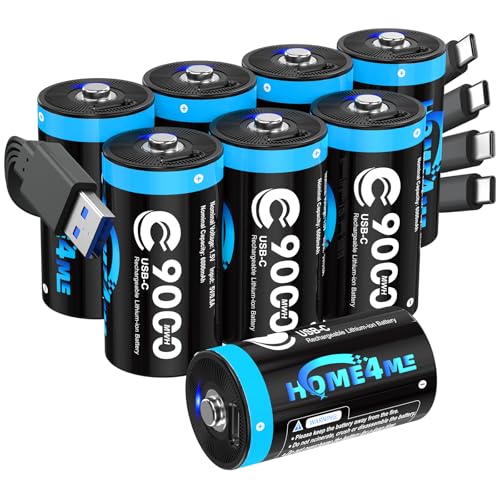
These Rechargeable C Batteries 8 Pack with USB-C Charger suit users who rely on high-drain devices and want a durable, long-term power solution. I use them in flashlights, floodlights, and musical gear, where the 1.5V constant output and 9000mWh capacity deliver steady power until empty. They handle up to 1200 recharge cycles, replacing thousands of disposables and cutting waste. Each battery has a blue LED indicator-flashing while charging, solid when full-so I always know the status. The included 2x 4-in-1 USB-C cables let me charge four at once in 4.5 hours. They’re compact, easy to travel with, and reliable over time.
Best For: Users who need reliable, long-lasting power for high-drain devices like flashlights, musical instruments, and floodlights and want an eco-friendly, cost-effective alternative to disposable batteries.
Pros:
- Delivers consistent 1.5V output and high 9000mWh capacity ideal for power-hungry devices
- Up to 1200 recharge cycles significantly reduces waste and long-term costs
- Built-in LED indicator and included 4-in-1 USB-C cables enable convenient charging and status monitoring
Cons:
- Longer 4.5-hour charge time compared to some fast-charging alternatives
- USB-C cables only allow charging of four batteries at once, limiting full pack charging efficiency
- Higher upfront cost may deter users looking for budget-friendly options
Amazon Basics 12-Pack Rechargeable AAA Batteries

Twelve batteries with a reliable 800 mAh capacity make the Amazon Basics AAA rechargeables a solid choice for anyone who regularly uses low-to-moderate drain devices like remote controls, toys, or digital cameras. I’ve found they recharge up to 1,000 times without significant performance loss, which saves money over time. They retain 80% of their charge after a year in storage, so I don’t worry about power drop when grabbing spares. They work well in most standard devices, though high-drain gadgets may drain them faster. The frustration-free packaging is simple and functional. Design may vary slightly, but performance stays consistent.
Best For: Users who frequently power low-to-moderate drain devices like remote controls, toys, and digital cameras and want a cost-effective, long-lasting rechargeable battery solution.
Pros:
- Rechargeable up to 1,000 times with consistent performance
- Retains 80% charge after 12 months of storage
- Comes in eco-friendly, frustration-free packaging
Cons:
- 800 mAh capacity may not suffice for high-drain devices
- Slightly lower voltage (1.2V) compared to alkaline batteries
- Design may vary slightly from images due to updates
Amazon Basics 8-Pack Rechargeable AA Batteries

Amazon Basics 8-Pack Rechargeable AA Batteries deliver solid performance for everyday use, especially if you run low- to mid-drain devices like remote controls, flashlights, or wall clocks. I’ve used them for years, and they hold 80% of their charge after two years in storage thanks to low self-discharge. With a 2000 mAh capacity and up to 1000 recharge cycles, they last long but need a smart charger-never use timer-only models. They’re pre-charged and ready to go, though runtime’s shorter than 1.5V alkalines. I replace all batteries at once and stick to compatible 1.2V devices to avoid issues.
Best For: Home users who need reliable, long-lasting rechargeable batteries for everyday low- to mid-drain devices like remotes, clocks, and flashlights.
Pros:
- Pre-charged and ready to use, with up to 1000 recharge cycles for long-term savings
- Low self-discharge retains 80% charge after two years of storage
- Compatible with most 1.2V NiMH devices and ideal for emergency or daily use
Cons:
- Shorter runtime compared to 1.5V alkaline batteries
- Requires a smart charger with voltage monitoring-timer-only chargers not recommended
- Slightly larger size than standard alkalines may cause fit issues in tight devices
Amazon Basics 4-Bay Battery Charger

Need a compact, reliable charging solution for AA or AAA NiMH batteries that won’t hog outlet space or overheat your gear? I use the Amazon Basics 4-Bay Battery Charger, and it’s lightweight, folds flat, and fits easily in a drawer or travel bag. It charges 2 AA batteries in 3.5 hours and 4 AAA in 4, with independent channels and auto-shutoff to prevent overcharging. LED indicators show status clearly. It only works with NiMH batteries, not alkaline or lithium, so double-check what you’re using. The included 2000mAh AAs hold charge well and recharge up to 1,000 times.
Best For: Travelers, eco-conscious users, and households needing a compact, efficient charger for multiple AA or AAA NiMH batteries.
Pros:
- Charges up to 4 NiMH batteries quickly with independent channel monitoring for safety
- Foldable plug and slim design make it highly portable for travel
- Includes pre-charged 2000mAh AA batteries rated for up to 1,000 recharges
Cons:
- Only compatible with NiMH batteries; cannot charge alkaline, lithium, or other types
- Charging times increase significantly when charging 4 AA batteries (7 hours)
- May not fit in tight spaces due to slightly larger battery dimensions per IEC standards
Rechargeable D Batteries with USB-C Cable (6-Pack)
If you rely on high-drain devices like flashlights, radios, or portable audio equipment for extended periods, these rechargeable D batteries make sense because they deliver a steady 1.5V output with a 5600mWh capacity, and I’ve found they hold their charge longer than most NiMH alternatives. They charge fully in about two hours via the included 4-in-1 USB-C cable, which works with any USB port-no separate charger needed. I’ve used them hundreds of cycles, and they still perform; they support over 1,000 recharges, reducing waste. Built-in safety features prevent overcharging and over-discharging, and LED indicators show charge status clearly.
Best For: Outdoor enthusiasts and frequent users of high-drain devices like flashlights, radios, and portable audio equipment who need reliable, long-lasting, and eco-friendly power.
Pros:
- Delivers steady 1.5V output and 5600mWh capacity, outperforming many NiMH batteries in charge retention
- Charges fully in about 2 hours via included 4-in-1 USB-C cable, compatible with any USB port-no separate charger required
- Supports over 1,000 recharge cycles with built-in safety features and LED charge indicators, reducing environmental waste
Cons:
- Higher upfront cost compared to disposable or standard rechargeable batteries
- Limited to USB charging only, which may be slower than dedicated fast chargers for some users
- Slightly lower capacity than some high-end NiMH D batteries, which may affect performance in very high-drain devices
Amazon Basics 24-Pack Rechargeable AAA Batteries

I stock these 24-pack AAA batteries when I need a reliable, no-fuss power source for devices I use daily-especially gadgets like digital cameras or kids’ toys that drain power fast. They hold 800 mAh and deliver 1.2V, which is standard but consistent across high- and low-drain devices. I’ve used them in remotes, toys, and gadgets for over a year, and they recharge up to 1,000 times without noticeable drop-off. They come pre-charged and keep 80% of their power after two years sitting idle. At 0.43 ounces each, they’re lightweight and fit snugly in any AAA compartment. With 211,436 reviews and top Amazon rankings since 2019, they’re clearly dependable. Not flashy-just functional, affordable, and always ready.
Best For: People who need a dependable, cost-effective rechargeable battery solution for everyday electronics like remote controls, digital cameras, and children’s toys.
Pros:
- Rechargeable up to 1,000 times with consistent 800 mAh performance across high- and low-drain devices
- Pre-charged and retains 80% capacity after two years of storage, making them always ready to use
- Lightweight, widely compatible, and backed by strong customer approval with over 211,000 reviews
Cons:
- 1.2V output is lower than standard alkaline batteries (1.5V), which may affect performance in some devices
- Not ideal for extremely high-drain devices requiring sustained peak power output
- Basic design with no built-in charge indicator or smart charging features
Energizer Recharge Pro AAA/AA Charger (4-Pack)
The Energizer Recharge Pro AAA/AA Charger (4-Pack) works best for anyone who regularly uses multiple devices requiring AA or AAA NiMH batteries and needs a reliable, fast way to keep them powered. I’ve used it to charge all four included AA batteries in just 3 hours, which is up to 100% faster than basic models. It handles AA and AAA sizes interchangeably and stops charging automatically to prevent damage. A red X light and beeping alert me if a battery’s faulty. LED indicators show charge progress clearly, and audible cues confirm cycle start and finish. It’s compact, weighs only 10.2 ounces, and runs without hassle.
Best For: Anyone who frequently uses multiple AA or AAA NiMH batteries and needs a fast, reliable charging solution.
Pros:
- Charges up to 4 AA or AAA batteries in as little as 3 hours, up to 100% faster than basic chargers
- Features auto shutoff, overcharge protection, and a bad battery detector with visual and audible alerts
- Clear LED indicators and audible cues provide real-time charging progress and completion notifications
Cons:
- No USB or portable charging capability, limiting use to wall outlet power only
- Only charges NiMH batteries, not compatible with other battery types
- Beeping alerts may be annoying in quiet environments without an option to disable them
Energizer Rechargeable AA Batteries (16-Pack)

You’ll want these Energizer Rechargeable AA batteries if you power multiple devices regularly and prefer a reliable, long-lasting option that minimizes waste. I use them in everything from remotes to flashlights, and they hold a charge for up to 12 years when stored, so I always have spares ready. They’re NiMH batteries, which means I’ve recharged them hundreds of times without noticeable drop in performance. The 16-pack cuts down on disposable waste, and since they’re made with 22% recycled materials, they’re a smarter environmental choice. They work with my Energizer charger and most devices, making them a practical, no-fuss pick.
Best For: Customers who frequently power multiple devices and want a durable, eco-friendly rechargeable battery option with long-term charge retention.
Pros:
- Holds charge for up to 12 years when not in use, ensuring reliable shelf life
- Can be recharged hundreds of times with consistent performance, reducing long-term costs
- Made with 22% recycled materials, helping reduce environmental impact
Cons:
- May have lower initial voltage compared to alkaline batteries, affecting some high-drain devices
- Requires a compatible charger, adding to upfront cost if not already owned
- Performance can degrade if improperly stored or overcharged repeatedly
Factors to Consider When Choosing Rechargeable Batteries
You’ll want to check the battery chemistry first-NiMH is common and reliable for most uses. Look at capacity and voltage to match your device’s needs, and don’t ignore how fast the batteries self-discharge when sitting idle. Cycle life and compatibility matter too, since not all chargers or electronics handle rechargeables the same way.
Battery Chemistry Types
While voltage and capacity matter, the chemistry of a rechargeable battery ultimately determines how well it performs in your devices. You’ll mainly choose between Nickel-Metal Hydride (NiMH) and lithium-based batteries. NiMH batteries deliver 1.2V and offer 600 to 2000 mAh in AA size, making them reliable for low-to-moderate drain devices like remotes or clocks. They handle up to 1000 charge cycles and retain 80% of their charge after one to two years thanks to low self-discharge tech. Lithium rechargeables provide a steady 1.5V and pack up to 9000 mWh in C-size cells, ideal for high-drain devices. They last over 1000 cycles and include safety circuits to prevent damage. You must use chargers matched to each chemistry-mixing types risks leakage, shorter life, or hazards.
Capacity And Voltage
How long will your device actually run between charges? It depends on the battery’s capacity and voltage. Higher milliampere-hour (mAh) ratings mean more stored energy-NiMH AA batteries typically offer 2000 mAh, while AAA versions provide 800 mAh, suited for lighter tasks. But voltage matters just as much: most NiMH cells deliver 1.2V, lower than the 1.5V of alkaline batteries, which can affect performance in power-hungry devices. If consistent voltage is critical, lithium rechargeables are a better fit-they maintain a steady 1.5V output throughout their cycle, closely matching alkaline performance. NiMH batteries, meanwhile, gradually drop in voltage as they discharge, which may lead to early performance drop-off. You’ll get longer runtime with high mAh, but only if the voltage supports your device’s needs. Match both specs carefully.
Recharge Cycle Life
Recharge cycle life matters just as much as capacity and voltage when picking the right battery for long-term use. You can expect NiMH batteries to handle up to 1,000 recharge cycles while keeping performance steady. Lithium-based C and D cells may last even longer, reaching up to 1,200 cycles. This means you’ll replace thousands of disposable batteries over time, cutting waste and cost. But how you use and charge them affects longevity. Deep discharges and improper charging wear cells down faster, reducing actual cycle life. High-quality options retain up to 80% of their capacity after long storage, so they’re ready when you need them. You don’t just want a battery that lasts through hundreds of charges-you want one that performs reliably each time. Choose models built for endurance, and follow proper charging practices to get the most out of every cycle.
Self Discharge Rate
You’ll want a rechargeable battery that holds its charge when sitting on the shelf, especially if you use it for emergencies or seasonal devices. A low self-discharge rate means your battery can retain up to 80% of its charge after 12 to 24 months, so it’s ready when you are. Unlike standard rechargeables that lose 15–30% per month, low self-discharge models eliminate the need for a fresh charge before first use. They come pre-charged and stay functional longer, even in storage. Heat speeds up charge loss, so keeping batteries in a cool place helps preserve capacity. NiMH batteries with low self-discharge chemistry maintain performance for up to 5 years with proper storage. You’ll get reliable power over time without frequent recharging, making them a smarter choice for infrequently used devices.
Device Compatibility
While many devices accept rechargeable batteries, checking compatibility guarantees reliable performance. You need to confirm your device supports 1.2V NiMH cells, since some gadgets are built for 1.5V alkalines and may not run properly. Check physical dimensions too-rechargeables can be slightly longer or wider than standard cells, which might cause fit issues. Always use the same battery type, capacity (mAh), charge level, and age in one device to avoid imbalance or strain. Never mix chemistries like NiMH with alkaline or lithium-doing so risks leakage, poor charging, or damage. Replace all batteries at once so voltage and capacity stay consistent. Mismatched cells degrade performance and could harm your device. Matching specs secures longer run times and safer, more dependable operation across all your electronics.
Charging Speed Options
If you’re using standard NiMH batteries, charging speed depends heavily on your charger’s output and the battery capacity. Fast chargers can refill AA batteries in about 3.5 hours, while AAA versions may hit full charge in just 2 hours. You’ll get better results with a charger that monitors each battery on independent channels, adjusting power based on individual needs. Some systems, especially those with USB-C, cut down charging time for larger C and D cells to between 2 and 4.5 hours thanks to higher efficiency. Don’t assume low self-discharge batteries charge faster-they don’t. Their benefit is holding power longer when idle. Charging speed is determined by the charger’s design, not the battery’s shelf life. For quicker turnarounds, match high-capacity batteries with a smart charger that delivers the right current without overloading.
Safety Features Included
When choosing rechargeable batteries, prioritize models and chargers with built-in safety features that actively prevent hazardous conditions. Use only compatible chargers with voltage detection to avoid overcharging, which can cause leakage or damage. Opt for chargers with independent channels so each battery charges safely and evenly. Lithium-based batteries should have internal protection circuits that halt charging during overcharge, over-discharge, or overheating. LED indicators help-you’ll see steady lights for normal charging and fast blinking if a battery is faulty, letting you act quickly. Never mix batteries with different charge levels, ages, capacities, or chemistries; doing so increases heat, accelerates discharge, and raises the risk of leaks. These precautions aren’t optional-they’re essential for safe, reliable use. Build safety into your routine from the start.
Eco Friendly Design
You’ve already secured safety with protection circuits and smart charging, but your battery choice also carries long-term environmental consequences. You reduce landfill waste substantially by using rechargeable batteries, since they can be reused hundreds to over a thousand times. Each one replaces thousands of disposables, cutting down plastic and chemical waste. Many include up to 22% recycled materials, lowering the need for raw resource extraction. That helps reduce mining impacts and energy use. You’ll also waste less energy in storage-low self-discharge tech keeps 80% of the charge after two years. Plus, rechargeables are less prone to leaking and often contain fewer toxic metals than single-use batteries, reducing hazardous waste. You’re not just saving money-you’re limiting environmental harm with each charge cycle. Making the switch is a practical move that delivers real, measurable benefits over time.
Frequently Asked Questions
How Long Do Rechargeable Batteries Last Overall?
Rechargeable batteries typically last 3 to 5 years or 300 to 500 charge cycles, depending on use and type. You’ll see performance drop over time, especially with frequent deep discharges. NiMH lasts longer in high-drain devices than alkaline, but you must recharge them regularly. Lithium-ion degrades even when idle, so stored batteries lose capacity. Heat and overcharging shorten lifespan. You’re better off rotating spares and avoiding full drains to extend overall life.
Can I Mix Old and New Rechargeable Batteries?
You shouldn’t mix old and new rechargeable batteries. They rarely have the same charge capacity or internal resistance, so the older ones drain faster and can overheat. That imbalance stresses both batteries, reducing performance and potentially damaging your device. If you must, use the same brand, model, and charge level-but even then, it’s risky. For reliable results and longer device life, stick to matching, fully charged pairs or sets. It’s safer and more efficient.
Are Rechargeable Batteries Safe for Kids’ Toys?
Yes, you can safely use rechargeable batteries in kids’ toys if they’re the right type and properly installed. NiMH batteries are ideal-low risk, no toxic leaks like old alkalines. Make sure they fit snugly and are from a trusted brand to avoid overheating. Always charge them fully before first use and supervise young kids. Don’t mix old and new cells, and replace any that swell or leak. They’re durable, but care matters just like with any power source.
Do Rechargeable Batteries Work in Cold Weather?
You’ll find rechargeable batteries don’t work as well in cold weather-performance drops below freezing. NiMH cells, common in AA/AAA devices, lose voltage and capacity fast below 32°F. Lithium-ion handles cold slightly better but still slows down. Cold drains power quickly, and charging them outdoors in freezing temps risks damage. You’ll need to warm them first. For reliable operation in winter, use devices with internal thermal management or stick to alkaline disposables when temps plummet.
Can I Recycle Rechargeable Batteries at Home?
You can’t recycle rechargeable batteries at home-you need to take them to a designated drop-off. Most cities have collection points at electronics stores, recycling centers, or fire stations. Throwing them in the trash risks leaks and fires, and it’s often illegal. Rechargeable batteries contain materials like lithium, nickel, and cobalt, which can be recovered safely. Check your local waste authority or Call2Recycle to find the nearest location. Proper recycling keeps toxins out of landfills and reduces environmental harm.