Best Sleeping Bags for Every Kind of Outdoor Adventure
You need a sleeping bag that matches your environment and build. For 3-season use, pick a 40–50°F mummy or rectangular bag like the Oaskys or MalloMe-lightweight, compressible, and efficient. If it’s colder, go for the North Face Stormbreak at 35°F or a 0°F winter bag with 450GSM insulation. Mummy shapes save heat; rectangular ones offer space but lose warmth. Cotton-lined bags feel soft but soak up moisture. Tall? Choose models up to 7 feet. Your best choice depends on temperature, weight, and comfort-know the trade-offs.
We are supported by our audience. When you purchase through links on our site, we may earn an affiliate commission, at no extra cost for you. Learn more. Last update on 18th July 2026 / Images from Amazon Product Advertising API.
Notable Insights
- Choose mummy-shaped bags like The North Face Stormbreak for cold weather and backpacking due to superior warmth-to-weight ratio.
- Opt for 3-season rectangular bags such as Oaskys or Coleman Montauk for car camping and warmer climates with roomier comfort.
- Select 0°F-rated winter sleeping bags with high-density insulation for extreme cold and winter expedition conditions.
- Prioritize lightweight, compressible designs with recycled materials for eco-friendly and packable backcountry performance.
- Consider extra-large sleeping bags up to 7 feet in length for taller adventurers without sacrificing comfort or warmth.
MalloMe Sleeping Bag for Adults & Kids
If you’re looking for a reliable, no-frills sleeping bag that works for both adults and older kids in mild to warm conditions, the MalloMe Sleeping Bag fits the bill. I’ve used it on spring and summer trips where temps stayed above 50°F, and it keeps me comfortable without overheating. It’s a rectangular 3-season bag rated for 50–80°F, suited for camping or backpacking. It weighs just 2.86 lbs, compresses small, and packs into a sack for easy carry. The polyester shell is waterproof, the insulation is synthetic, and the double-sided zipper works smoothly. It fits users up to 6 feet tall, though taller folks will feel cramped.
Best For: Individuals seeking a lightweight, budget-friendly sleeping bag for spring, summer, and fall camping trips in temperatures above 50°F, suitable for both adults and older kids up to 6 feet tall.
Pros:
- Lightweight and compressible design with included sack for easy portability
- Waterproof HEX-TECH polyester shell and synthetic insulation offer reliable performance in mild conditions
- Smooth double-sided zipper and secure closures enhance comfort and usability
Cons:
- Limited temperature range makes it unsuitable for cold or winter conditions
- Rectangular shape is less heat-efficient compared to mummy-style bags
- May feel tight for users over 6 feet tall due to length restrictions
Sleeping Bag for Adults – Lightweight & Waterproof

This sleeping bag works best for adults needing a reliable, lightweight option for three-season adventures. I weigh 3.3 pounds and compress down to 7.9–14.2 inches, so I pack small and won’t slow you down. My waterproof polyester shell resists dampness, and the hollow fiber fill keeps you warm between 50°F and 68°F. I’m built for heights up to 5’11”, with a drawstring hood and footbox vent to manage heat. The zipper runs smoothly, and the included sack makes storage easy. I’re durable, wipe-clean, and suited for camping, hiking, or emergency use. I won’t handle extreme cold, but I perform well where seasons shift.
Best For: Adults seeking a lightweight, waterproof sleeping bag ideal for three-season camping, hiking, and emergency use in moderate temperatures.
Pros:
- Lightweight and highly compressible for easy packing and portability
- Waterproof polyester shell with breathable design to resist dampness
- Includes hood with drawstring and footbox ventilation for optimal heat management
Cons:
- Not suitable for cold-weather camping below 50°F
- Hollow fiber fill may offer less warmth retention than down insulation
- Zipper may require occasional maintenance for smooth operation
The North Face Stormbreak 35F Sleeping Bag

I rely on gear that balances weight, warmth, and durability when I’m miles from the trailhead, and the North Face Stormbreak 35F stands out for backpackers who prioritize sustainability without sacrificing performance. I’ve used it on spring and summer treks, and its 35°F rating holds up in cool nights. The 100% recycled polyester shell sheds light moisture, and the Heatseeker Pro insulation, made with 85% recycled fibers, retains loft. At 2 lbs max, it’s light but not ultralight. The mummy fit and vertical quilting let me move without restriction. The 2-way zipper helps vent heat, and it compresses to 7 x 14 inches.
Best For: Backpackers seeking a sustainable, reliable three-season sleeping bag that balances weight, warmth, and eco-conscious materials.
Pros:
- Made with 100% recycled polyester and 85% recycled Heatseeker Pro insulation, offering sustainable warmth without sacrificing performance
- Lightweight design (max 2 lbs 3 oz) and compressible to 7 x 14 inches, ideal for packing efficiency on long treks
- Features a 2-way zipper and vertical quilting for ventilation and freedom of movement in a mummy fit
Cons:
- 35°F rating may not be sufficient for colder conditions, limiting use to three-season backpacking only
- Mummy shape, while efficient for warmth, can feel restrictive for campers who prefer roomier sleep space
- Recycled materials, while eco-friendly, may show reduced long-term durability compared to some higher-end synthetic or down alternatives
Cold Weather Sleeping Bag with Compression Sack

I prefer the HiZYNICE Cold Weather Sleeping Bag with Compression Sack when I need reliable warmth and room to move during winter camping trips, especially because it’s built for big and tall adults up to 6 ft. 7 in. It’s 90 x 39 inches, with a 3.5-inch cotton fill and a 30 ℉ comfort rating, making it suitable for three-season use. The waterproof polyester shell and cotton flannel lining offer durability and comfort. The anti-snag zipper has a draft tube and works from either side. I can unzip it fully to use as a mat or zip two together. It includes a compression sack and is machine washable. It comes with a 3-year warranty.
Best For: Big and tall adults up to 6 ft. 7 in. who need a roomy, warm sleeping bag for winter and three-season camping.
Pros:
- Spacious 90 x 39-inch design with 3.5-inch cotton fill, ideal for tall or side sleepers
- Comfort rating of 30 ℉ and waterproof shell make it reliable for cold, damp conditions
- Versatile features include conversion to a mat, two-bag zip compatibility, and machine-washable construction
Cons:
- Cotton fill absorbs moisture and may lose insulation when wet, reducing cold-weather performance
- Heavier and bulkier than synthetic or down-filled bags, despite included compression sack
- Limited extreme temperature protection at 0 ℉, which may not suffice for severe winter conditions
MalloMe Sleeping Bag for Cold Weather & Kids
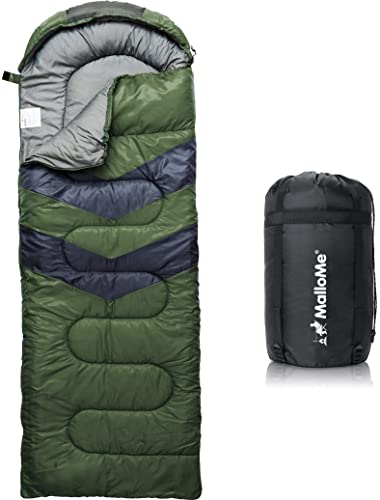
The MalloMe Sleeping Bag stands out for families or solo hikers needing a durable, all-season option that balances weight and warmth without sacrificing comfort. I’ve used it in spring, summer, and fall, and it keeps me warm down to 50°F. It weighs just 1.4 kg and packs small with the included sack, making it easy to carry. The hex-tech waterproof shell shrugs off damp ground, and the synthetic fill stays insulated even when damp. At 86.6 inches long, it fits users up to 6 feet. The snag-free zipper and Velcro stop work smoothly, and the drawstring headrest adds comfort. I can toss it in the washer when it gets dirty-no hassle.
Best For: Families, kids aged 10–12, and adult hikers seeking a lightweight, durable, all-season sleeping bag for spring, summer, and fall adventures.
Pros:
- Lightweight and compact with a compression sack, making it ideal for backpacking and travel
- Waterproof HEX-TECH shell and synthetic insulation perform well in damp conditions
- Machine washable and durable construction ensure long-term use and easy maintenance
Cons:
- Temperature rating starts at 50°F, limiting use in colder winter conditions
- Rectangular shape, while spacious, is less heat-efficient than mummy-style bags
- May be too short for users over 6 feet tall despite the 86.6-inch length
Oaskys 3-Season Camping Sleeping Bag
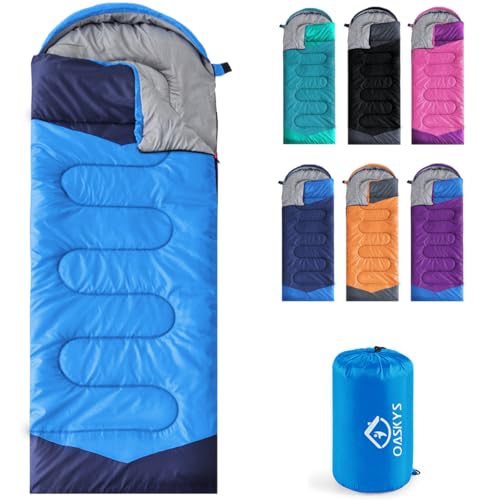
A reliable choice for campers who face shifting spring to fall conditions, the Oaskys 3-Season Camping Sleeping Bag keeps me warm from 50°F up to 80°F, making it best suited for fair-weather backpackers and casual outdoor enthusiasts. It’s roomy in its rectangular design and fits users up to 7 feet tall. The 210T polyester shell resists tears and moisture, while the double-filled polyester insulation retains heat efficiently. I appreciate the foot vent for temperature control and the included compression sack, which cuts bulk. At 3 pounds, it’s moderately lightweight. The 3-year warranty and responsive support add confidence. It won’t handle winter cold, but for three-season use, it delivers solid value.
Best For: Outdoor enthusiasts and casual campers seeking a comfortable, versatile sleeping bag for spring, summer, and fall conditions.
Pros:
- Roomy rectangular design fits users up to 7 feet tall and allows easy movement
- Dual-purpose zipper and foot vent provide excellent temperature control
- Durable 210T polyester shell with waterproof, breathable properties and 3-year warranty
Cons:
- Not suitable for cold or winter conditions below 50°F
- Slightly heavier than ultralight backpacking options at 3 pounds
- Nylon components may reduce breathability in humid conditions
Montauk 40F BT Mum SLPING Bag BLK C01 PF

Coleman’s Montauk 40F BT Mum Sleeping Bag suits campers who need reliable warmth in cool-weather conditions without overspending. I find it works well from 31°C down to about 4°C, making it a solid pick for three-season use. It weighs 3.76 pounds, so it’s not the lightest, but it packs into a 20.5-by-14.5-inch bag that fits most trunks or gear bins. The rectangular shape gives me room to move, and the drawstring hood helps trap heat. Made from a blended brushed fabric, it feels durable and warm. It’s one size, runs adult, and comes alone-no extras. I’d call it practical, not premium, but it does the job.
Best For: Campers seeking an affordable, reliable three-season sleeping bag with roomy comfort and decent warmth down to around 40°F.
Pros:
- Offers solid warmth for cool-weather camping with a 40°F temperature rating ideal for three-season use
- Roomy rectangular design and drawstring hood enhance comfort and heat retention
- Durable brushed blended fabric construction with a compact stuff sack for easy transport
Cons:
- Weighs 3.76 pounds, making it heavier than many comparable sleeping bags
- Basic one-size fit may not suit all body types comfortably
- No included accessories or extras, just the sleeping bag
0° Winter Sleeping Bag for Camping

If you’re tackling winter camping trips and need reliable warmth without excessive bulk, this 0° sleeping bag fits campers up to 6’10” and handles extreme cold down to 5°F. I’ve used it in sub-zero conditions, and the 450GSM polyester fill delivers consistent insulation. The 210T ripstop shell resists abrasion and moisture, while the hooded, rectangular design minimizes heat loss. It weighs 4.1 pounds and packs down to 15.6” x 7.6”, making it manageable for backpacking. The dual zippers work smoothly, and the anti-pinch guard helps prevent snags. It’s machine washable, maintains loft after drying, and suits all-season use-ideal for dependable winter performance without fuss.
Best For: Campers and backpackers seeking a durable, warm, and spacious sleeping bag for winter adventures in extreme temperatures down to 5°F.
Pros:
- Excellent insulation with 450GSM polyester fill for reliable warmth in sub-zero conditions
- Durable 210T ripstop shell resists moisture and abrasion, ideal for rugged outdoor use
- Compact packed size and manageable weight make it suitable for backpacking
Cons:
- Weight at 4.1–5 pounds may be heavy for ultralight backpackers
- Temperature rating may feel tight for some at the lower limit of 5°F
- Rectangular shape, while spacious, sacrifices some heat efficiency compared to mummy bags
REDCAMP Cotton Flannel Cold-Weather Sleeping Bag
You’ll want this REDCAMP Cotton Flannel Sleeping Bag if you need dependable warmth for spring through cold-weather camping without sacrificing comfort. I’ve used it down to 32°F with the 4 lb fill, and it held up well. The cotton flannel lining feels soft, and the polyester shell resists tears and moisture. It’s not ultralight at 4 lbs, but the durability makes up for it. The 2-way zipper works smoothly, and the extra length fits me at 5’11”. It compresses decently, though the pack size is medium. Best for car camping or short backpacking trips where weight isn’t critical.
Best For: Campers and outdoor enthusiasts seeking a durable, comfortable sleeping bag for spring to cold-weather use when weight isn’t a primary concern.
Pros:
- Soft 100% cotton flannel lining provides exceptional comfort and breathability
- Durable 210T polyester ripstop shell offers waterproof and tear-resistant protection
- Reversible 2-way zipper and extended length option enhance usability and fit for taller users
Cons:
- Heavy at 4 lbs, making it less ideal for long-distance backpacking
- Pack size is relatively bulky compared to ultralight sleeping bags
- Lower temperature performance depends on heavier fill, which increases weight and packed size
Coleman Heritage 10°F Flannel Sleeping Bag
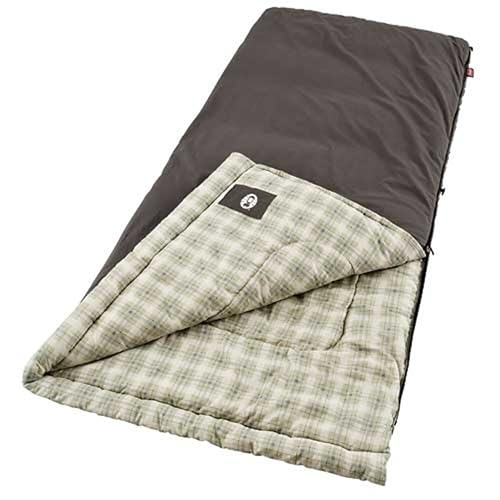
This sleeping bag works best for tall adults needing reliable cold-weather performance without compromising comfort. I’m up to 6 feet 7 inches tall, and it fits me without cramping. It’s rated to 10°F, so it handles winter camping well, thanks to 5 pounds of Holofill 808 insulation and FiberLock technology that stops shifting. The flannel liner feels soft, and the cotton shell holds up in rough conditions. It weighs 8.9 pounds and packs down with the Wrap N Roll system, though it’s bulkier than mummy bags. The zipper has a guard and smooth glide, and the 5-year warranty backs its durability. It’s practical, washable, and built for real use.
Best For: Tall adults up to 6 feet 7 inches seeking a durable, warm, and comfortable sleeping bag for winter camping and cold-weather outdoor use.
Pros:
- Spacious rectangular design accommodates tall users comfortably up to 6’7″
- 10°F rating with 5 lbs of Holofill 808 insulation provides reliable warmth in extreme cold
- Durable cotton shell, soft flannel liner, and machine-washable construction ensure long-term use and easy maintenance
Cons:
- 8.9-pound weight and bulkier profile make it less ideal for backpacking or ultralight trips
- Wrap N Roll system helps, but still larger packed size compared to mummy-style bags
- Limited color options and not suitable for very high-altitude expeditions near or below 10°F
Factors to Consider When Choosing Sleeping Bags
You need to check the temperature rating first-it tells you how cold you can go before you start shivering. Pick a bag that fits your body well and matches the insulation type you’ll rely on, whether down or synthetic, since each has trade-offs in weight and wet conditions. Don’t overlook material durability and packed size, because a lightweight, rugged bag that fits your pack makes all the difference when space and strength matter.
Temperature Ratings
How cold does it really get where you plan to sleep? Check the lowest expected temperature and choose a bag with a rating below that number. Temperature ratings reflect the lowest air temperature an average sleeper can endure, with most three-season bags rated between 32°F and 80°F. Lower limit ratings, typically 0°F to 30°F, indicate the minimum for a standard adult male in static conditions. Many bags list multiple ratings-comfort, limit, and extreme-based on standardized tests like EN 13537 or ISO 23537, which simulate real conditions in labs. These benchmarks help you compare performance objectively. But your actual warmth depends on more than the tag: metabolism, base layers, and ground insulation can shift effective warmth by 10°F or more. A tent adds protection, while sleeping pads boost thermal performance. Always factor in your personal needs and conditions-it’s not just about the rating.
Size And Fit
Fit starts with length and torso match-choose a bag rated for your height, typically from 5’6″ to 6’7″, to prevent heat loss at the extremities. If your torso is too cramped, you’ll create cold spots at the shoulders or feet, even in a well-insulated bag. Mummy bags are snug by design, reducing dead air space and boosting warmth, but they restrict movement. Rectangular bags give you room to shift positions, though they’re less efficient in cold weather. If you’re taller or broader, consider big and tall models-some run up to 90 inches long and 39 inches wide for a better fit. You can also unzip most bags fully to use them as a blanket, or zip two compatible ones together for double capacity. These options add versatility without demanding a new bag. Always match the bag’s cut and size to your body and sleep style-compromises affect both comfort and warmth.
Material Durability
While lightweight fabrics might save ounces, they often sacrifice long-term resilience-durable sleeping bags use high-denier materials like 210D or 300D ripstop polyester to withstand tears and abrasion in rough terrain. You’ll want reinforced stitching, such as S-shaped or box-wall quilting, to keep insulation in place and maintain structure over time. Waterproof coatings and DWR finishes on the outer shell resist moisture, helping prevent mold and mildew in damp conditions. High-quality zippers with anti-snag tapes and double pulls, shielded by draft tubes, reduce wear and guarantee reliable function after repeated use. If you plan to wash your bag regularly, choose machine-washable models with reinforced seams, and follow care instructions-gentle cycles and cold water help preserve fabric strength. These features aren’t just about longevity; they’re about dependability when conditions turn harsh and repairs aren’t an option.
Weight And Portability
A 3-pound weight limit separates backpacking staples from campsite luxuries-most lightweight sleeping bags stay under this mark, making them ideal for long trails where every ounce counts. You’ll find ultralight options between 1.5 to 2.5 pounds, designed to cut pack weight without sacrificing warmth. These models pack down to 7–15 inches, fitting easily into your backpack and leaving room for other essentials. High-loft synthetic insulation helps them compress tightly while maintaining thermal performance. If you’re hiking long distances, every bit of space and weight matters, so choose a bag that balances compactness with comfort. Overly bulky bags slow you down and strain your back. Prioritize models built for efficiency-low weight and small packed size mean less fatigue and more mobility. For serious backpacking, portability isn’t optional; it’s a necessity backed by real trail demands.
Insulation Type
You’ll need to choose between synthetic and down insulation based on your trip’s conditions and your priorities. Down, from duck or goose plumage, gives you the best warmth-to-weight ratio, making it ideal if you’re minimizing pack weight. But it loses insulating power when wet and takes effort to dry. Synthetic insulation, usually polyester, keeps working even when damp and handles machine washing-good for humid climates or frequent use. Hollow fiber fill is a budget-friendly synthetic option, best for 3-season bags where weight isn’t critical. Recycled synthetics, using 85%–100% post-consumer materials, deliver similar performance with less environmental cost. Insulation loft-measured in cubic inches per ounce-directly affects warmth; higher loft traps more air. Choose down for lightweight performance in dry conditions, synthetic when moisture resistance and easy care matter most.
Special Features
Down and synthetic insulation set the base for warmth, but the features built into a sleeping bag determine how well it performs in real conditions. You’ll want dual-zipper systems because they let you vent your feet or turn the bag into a blanket when temperatures rise. Waterproof outer shells made from coated polyester or ripstop fabric keep dampness out and preserve insulation performance in wet environments. Look for draft tubes along the zipper-these insulated channels block cold air from sneaking in. Anti-snag zippers with double pulls and protective guards make opening and closing smoother and reduce fabric damage over time. Compression sacks and integrated straps shrink your bag down to as small as 7 x 14 inches, making it easier to pack and carry. These features add practical adaptability, improve durability, and cut bulk without sacrificing comfort.
Frequently Asked Questions
How Do I Clean a Sleeping Bag Without Damaging It?
You clean a sleeping bag right by machine-washing it on gentle with cold water and a specialized cleaner-regular detergent damages insulation. You always check the care label first; down needs down-specific soap. You run an extra rinse to remove all soap residue. You dry it on low heat with tennis balls to restore loft. You never bleach or dry-clean it. Skipping proper drying risks mildew, and improper cleaners reduce warmth.
Can I Zip Two Sleeping Bags Together?
Yes, you can zip two sleeping bags together if they’re compatible-most mummy bags let you connect a left and right zipper. You’ll need one with a right-side zipper and one with a left-side to fit together properly. This works well for couples or added warmth in cold conditions. But don’t expect perfect insulation; gaps may form at the seam. It also increases weight and reduces individual mobility. Check manufacturer specs before trying-some brands design bags specifically for pairing.
Are Sleeping Bags Safe for Toddlers to Use?
You shouldn’t let toddlers use standard sleeping bags-they’re not safe. Their design restricts movement and can overheat small children. You risk suffocation if the bag fits poorly or covers the face. Toddlers need temperature-regulated sleep solutions with room to move. Use wearable blankets or sleep sacks made for young kids instead. These let you control warmth safely. Always monitor your child’s comfort and watch for overheating. Safety matters more than convenience.
What Is the Weight Limit for a Standard Sleeping Bag?
Most standard sleeping bags support up to 300 lbs, but you’ll see limits vary by design and materials. Exceeding the limit strains zippers and compresses insulation, reducing warmth. Mummy bags often hold less, around 250 lbs, due to tighter fits. Rectangular bags usually handle more, sometimes 350 lbs. Always check the manufacturer’s spec-designs aren’t just about weight but fit and durability. If you’re near or over the limit, size up for safety and performance.
Do I Need a Liner for My Sleeping Bag?
You don’t need a liner, but it helps. A liner boosts warmth by 5–10°F, extends your bag’s life by reducing wash frequency, and improves hygiene. Cotton liners add comfort in mild weather; silk or thermal ones work better in cold conditions. They weigh little and pack small. If you camp often or in extreme temps, a liner’s practical. For occasional use, it’s optional. Choose based on your needs-warmth, cleanliness, or bag care-not hype.