Best Solar Laptop Chargers: Anker SOLIX C200 & More Tested
You need a solar laptop charger that delivers consistent power on the move. Models like the Anker SOLIX C200 and ALLWEI 300W offer high-efficiency LiFePO4 batteries, 3,000+ cycles, and USB-C PD up to 60W, ideal for modern laptops. The Anker charges in 2 hours and works with up to 100W solar input. Others, like the HOWEASY 88Wh, are ultralight but better for short-term use. Solar pairing requires MPPT and 13–24V compatibility for real sun-powered reliability-options with included panels simplify setup.
We are supported by our audience. When you purchase through links on our site, we may earn an affiliate commission, at no extra cost for you. Learn more. Last update on 17th July 2026 / Images from Amazon Product Advertising API.
Notable Insights
- Choose solar chargers with USB-C PD ports delivering at least 60W to efficiently power modern laptops.
- Pair high-capacity power stations like the ALLWEI 300W (256Wh) with solar panels for extended off-grid use.
- Opt for LiFePO4 batteries, such as in the Anker SOLIX C200, for long cycle life and stable output.
- Ensure solar panels have MPPT controllers and 20%+ efficiency for faster, more reliable charging.
- Prioritize portable designs under 3.5 pounds with rugged, splash-resistant builds for outdoor reliability.
MARBERO Portable Power Station 88Wh
If you need a compact power solution for charging laptops and other essentials off-grid, the MARBERO Portable Power Station 88Wh is a solid pick-especially when you’re camping, traveling, or preparing for emergencies. I’ve used it to charge my laptop twice before needing a recharge, which takes just two hours for 80%. It powers devices up to 80W, so it handles laptops, tablets, and phones without issue, but avoid high-heat appliances. The built-in BMS guarantees safety in varied conditions, though I keep it dry and avoid extreme temps. It’s lightweight at just over 2 pounds, fits in a backpack, and the LED light is useful during blackouts. Solar charging works with a compatible panel, but it’s sold separately.
Best For: Outdoor enthusiasts, travelers, and emergency preparedness users needing a lightweight, reliable power source for charging laptops, phones, and small devices off-grid.
Pros:
- Charges laptops twice and reaches 80% in just 2 hours with fast recharge capability
- Compact, lightweight design with built-in LED light and versatile output ports for multiple devices
- Built-in Battery Management System (BMS) ensures safety with protection against overloads, overheating, and short circuits
Cons:
- Solar panel not included and must be purchased separately for solar charging
- Not waterproof or suitable for use in damp, dusty, or extreme temperature environments
- Limited to 80W output, making it unsuitable for high-power or heat-generating appliances
Anker SOLIX C200 Portable Power Station

I rely on the Anker SOLIX C200 when I need a compact yet powerful solar-compatible charger that handles high-wattage laptop charging without sacrificing portability. It delivers 200W continuous power and 192Wh capacity, enough to charge most laptops fully. The 140W two-way USB-C port lets me fast-charge my laptop or recharge the unit quickly. With five ports, including a 100W and 15W USB-C, I can power multiple devices at once. I recharge it via USB-C (140W input), solar panel (up to 100W), or car charger. It’s 39% smaller than similar units and built to last with a 3,000-cycle LiFePO4 battery and 3-year warranty.
Best For: Outdoor enthusiasts and professionals who need a compact, solar-compatible power station for fast-charging laptops and multiple devices on the go.
Pros:
- Delivers 200W continuous power with a 140W two-way USB-C port for fast laptop charging and rapid recharging
- Highly portable with 39% smaller design than similar units and a durable 3,000-cycle LiFePO4 battery
- Multiple recharge options including 140W USB-C, up to 100W solar input, and car charging
Cons:
- Wall charger not included and only USB-C3 port supports wall charging
- Limited solar panel compatibility-does not work with Anker SOLIX PS30, PS200, or PS400 models
- Lower capacity (192Wh) may not suffice for extended off-grid use with high-power devices
HOWEASY Portable Power Station (88Wh)

The HOWEASY Portable Power Station (88Wh) works best for travelers and outdoor enthusiasts who need a compact, reliable power source for laptops and other small devices without the bulk of larger models. I weigh it at 2.3 pounds and fit it easily into my pack thanks to its 6.6 x 4 x 3-inch size. It powers laptops via two AC outlets (up to 120W) and charges phones, tablets, and cameras through five other ports. I can run multiple devices at once if the total stays under 120W. It recharges via wall outlet, car socket, or solar panel (15V–24V), and I appreciate that it passes through power while recharging. Its built-in LED offers steady, flash, and SOS modes-useful during outages or night camping. I’ve got two AC, two USB-C, two DC, and two QC 3.0 ports to work with, which covers most of my gear. It includes an AC adapter, car charger, and manual, and I’m covered by a 24-month warranty with 24/7 support. After 1500 cycles, it still holds a solid charge, which tells me it’s built to last. While it won’t run high-wattage devices long, it’s dependable for light to moderate use where space and weight matter.
Best For: Travelers and outdoor enthusiasts who need a lightweight, compact power source for charging small devices like laptops, phones, and cameras on the go.
Pros:
- Compact and lightweight design (2.3 lbs) with a hidden handle for easy portability
- Multiple output ports including AC, USB-C, QC 3.0, and DC, supporting simultaneous charging of various devices
- Supports multiple recharging methods (AC, car, solar) with pass-through charging and a long cycle life (1500+ cycles)
Cons:
- Limited to 120W continuous power, making it unsuitable for high-wattage appliances
- Solar panel not included, adding extra cost for solar setup
- Small battery capacity (88Wh) may require frequent recharging during extended off-grid use
Portable Power Station 28,000mAh LiFePO4

You’ll want this power station if you need reliable, long-lasting energy for laptops and essentials during off-grid trips or outages. I rely on its 28,000mAh LiFePO4 battery because it lasts over 3,500 cycles-three times longer than standard lithium. It delivers 100W continuous power, enough for most laptops, drones, or mini-fridges. Seven ports let me charge devices simultaneously, and the 0–80% recharge in 1.5 hours saves time. Weighing 2.54 pounds with a comfortable handle, it fits in my backpack. No fan means silent operation. I use the flashlight during blackouts. It won’t run heavy appliances, but I’ve found it ideal for anything under 100W.
Best For: Outdoor enthusiasts, remote workers, and emergency preparedness users who need a lightweight, durable, and high-cycle-life portable power station for devices under 100W.
Pros:
- Compact, pocket-sized design with 2.54 lb weight and ergonomic handle for easy portability
- Long-lasting 3,500+ cycle LiFePO4 battery with advanced BMS and 12 safety protections
- Fast 0–80% recharge in 1.5 hours with dual-input charging and seven versatile output ports
Cons:
- Limited to 100W continuous power, unsuitable for high-wattage appliances
- Solar panel and charging cable not included
- Initial setup requires full charge and discharge twice for optimal performance
Portable Solar Power Station 100W with 40W Panel

Outdoor adventurers and emergency preppers who need reliable, off-grid power will find this kit a solid match, especially when charging laptops and other essentials during extended trips or blackouts. I use the 100W station to run my laptop and drone, and it handles both without issue. The 40W solar panel charges the unit efficiently, even in low light, thanks to its 20.5% conversion rate. It’s not fast, but it’s steady. I appreciate the MPPT controller and BMS for safety and efficiency. While it can’t run high-wattage devices, it’s dependable for small electronics and emergency use. The included cables and adaptability make it practical. I keep mine charged and ready.
Best For: Outdoor enthusiasts, campers, and emergency preppers needing reliable off-grid power for low-wattage electronics like laptops, drones, and smartphones.
Pros:
- Efficient 40W foldable solar panel with high 20.5% conversion rate and MPPT controller for improved charging in various light conditions
- Versatile output options including AC outlets, USB-C with QC, DC ports, and built-in flashlight with SOS for emergency use
- Compact, portable design with comprehensive safety features via Battery Management System (BMS) and multiple included charging methods
Cons:
- Limited to devices under 100W, excluding high-power appliances like coffee makers, hair dryers, or water pumps
- Solar charging is steady but relatively slow, especially under less-than-ideal sunlight conditions
- Junction box on solar panel is not waterproof, requiring careful use in damp or rainy environments
Apowking 146Wh Portable Power Bank with Solar Panel

For anyone relying on electronics during extended off-grid trips or emergency outages, the Apowking 146Wh Portable Power Bank with Solar Panel delivers reliable, field-rechargeable power without the bulk. I’ve used it to charge laptops, phones, and drones via its 100W AC outlet, dual USB-A, and fast-charging USB-C. The 40W solar panel, with 20.5% efficiency, recharges the battery in about 4.5 hours in full sun. It’s compact-under 3.3 lbs-and the solar panel includes hanging loops for tents. While the panel’s IPX4 protection resists splashes, the junction box isn’t waterproof, so I keep it dry.
Best For: Outdoor enthusiasts, remote workers, and emergency preparedness planners who need a lightweight, solar-rechargeable power source for essential electronics.
Pros:
- High 146Wh capacity with multiple output options including 100W AC, USB-C PD, and DC for versatile device compatibility
- 40W solar panel with 20.5% efficiency enables fast recharging in about 4.5 hours under full sun
- Compact, portable design with durable, splash-resistant (IPX4) solar panel and convenient hanging loops for outdoor use
Cons:
- Solar panel’s junction box is not waterproof and requires protection from rain or moisture
- 100W AC output cannot run high-power appliances like microwaves or electric kettles
- Limited solar charging speed in cloudy or low-light conditions due to reliance on direct sunlight
Portable Power Station 200W with Solar Input

This portable power station suits those needing a reliable, mid-capacity backup for laptops and essential electronics during outages or off-grid trips. I’ve used it to power my laptop, phone, and small fan for hours. With a 146Wh battery and 100W rated AC output (200W surge), it handles most essential devices. It weighs just 3.3lb, making it easy to carry. Seven outputs include two AC outlets, USB ports (some with Quick Charge), and a 12V DC. I recharge it via wall, car, or 13–23V solar panel. The built-in BMS guarantees safety, and the dual LED light helps in emergencies.
Best For: Outdoor enthusiasts, remote workers, and emergency preppers needing a lightweight, reliable power source for essential electronics and small appliances.
Pros:
- Versatile charging options including solar, wall, and car input for true portability
- Multiple output types with Quick Charge support and dual LED flashlight featuring SOS mode
- Compact, lightweight design at 3.3lb with built-in BMS for safety and stable performance
Cons:
- 100W rated AC output limits use with higher-power appliances or devices
- Solar panel not included, requiring an additional purchase for solar charging
- Moderate battery capacity (146Wh) may not support extended use of power-hungry devices
Powdeom 300W Portable Power Station
The Powdeom 300W Portable Power Station stands out when I need reliable, fast-charging power for my laptop and other essentials during extended off-grid trips or blackouts. It delivers 300W pure sine wave AC output, safely running laptops, CPAPs, and mini fridges. Dual AC outlets let me power two devices at once. I recharge it via wall, car, solar, or PD 65W, hitting 0–100% in under two hours with dual inputs. Nine output ports support nearly all my gear simultaneously. The BMS guarantees safety in varied conditions. At 7.7 lbs with a sturdy handle, it’s portable enough for anyone. LED light adds backup visibility.
Best For: Outdoor enthusiasts, remote workers, and emergency preparedness households needing a lightweight, fast-recharging power source for laptops, CPAPs, and small appliances.
Pros:
- Delivers 300W pure sine wave AC power with dual outlets for safe, simultaneous device use
- Recharges fully in under 2 hours using dual-input charging with multiple power options including solar and PD 65W
- Compact, 7.7 lb design with 9 output ports and built-in LED light enhances portability and versatility
Cons:
- 300W power limit restricts use with high-wattage appliances or power tools
- Solar panel not included, required for solar charging
- 12-month warranty is shorter than some competitors offering 2–5 years
MARBERO Portable Power Station 150Wh
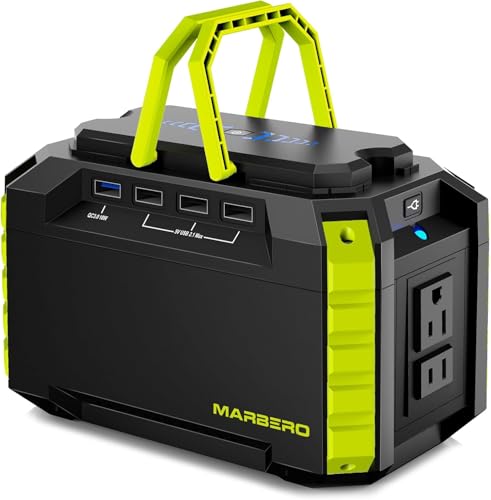
When I need reliable off-grid power that handles both my laptop and essential camping gear without weighing me down, the MARBERO Portable Power Station 150Wh stands out as the best solar laptop charger for light-duty travelers and weekend adventurers. It delivers 150Wh capacity, charging my laptop three times and my phone two dozen times. I can run devices up to 100W continuously, like a mini fridge or CPAP machine, and recharge via wall, car, or solar (panel sold separately). Three USB ports, one QC3.0, four DC outputs, and an AC outlet let me power multiple devices at once. The built-in LED flashlight has steady and SOS modes-useful in emergencies. A solid BMS system prevents overheating, short circuits, and overloads, and cooling vents keep it stable during extended use. I appreciate the 12-month warranty and 24/7 support. It’s not for heavy loads, but for weekend trips, it’s compact, practical, and dependable.
Best For: Light-duty travelers, weekend adventurers, and outdoor enthusiasts who need a compact, reliable power source for charging laptops, smartphones, and essential camping gear.
Pros:
- Versatile output options with multiple USB, DC, and AC ports for charging various devices simultaneously
- Multiple recharging options including wall, car, and solar (panel sold separately) for off-grid flexibility
- Built-in LED flashlight with SOS mode and robust safety features including BMS and overheat protection
Cons:
- Limited to 100W continuous load, making it unsuitable for high-power devices
- Solar panel not included, adding extra cost for full solar setup
- Capacity may be insufficient for extended off-grid trips with heavy usage
ALLWEI Portable Power Station 300W (LiFePO4)

I trust the ALLWEI Portable Power Station 300W (LiFePO4) for reliable off-grid charging when I need consistent power for my laptop and other essentials, especially during extended outdoor stays or power outages. It delivers 300W continuous and 600W surge power, safely running laptops, CPAPs, and mini fridges. The 256Wh LiFePO4 battery lasts 3,000 cycles, offering about 10 years of regular use. Six ports let me power up to six devices at once, including USB-C PD at 60W. I recharge it via AC, car, or solar-solar takes 4–5 hours with a 100W panel. Dual input cuts that to 2.5 hours. It’s compact, weighs 6.4 lbs, and includes a 5-year warranty.
Best For: Outdoor enthusiasts, remote workers, and emergency preparedness users who need a durable, long-lasting power source for electronics and small appliances.
Pros:
- 3000 charge cycles with LiFePO4 battery ensure exceptional longevity and reliability over 10 years
- Multiple charging options including solar, AC, car, and dual input for faster recharge
- Pure sine wave inverter and 6-layer BMS safely power sensitive devices like CPAPs and laptops
Cons:
- Solar panel not included, required for off-grid charging
- 256Wh capacity may not suffice for high-power devices over extended periods
- Slightly longer recharge time when using solar alone (4–5 hours)
Factors to Consider When Choosing a Solar Laptop Charger
You need a solar laptop charger that matches your device’s power requirements, so check the output compatibility to avoid slow or failed charging. Consider battery capacity and portability-smaller units are easier to carry but may not fully charge your laptop in low light. Look at charging speed, solar panel efficiency, and whether the design integrates well with your setup for reliable performance when you’re off the grid.
Power Output Compatibility
Power output compatibility separates reliable solar laptop chargers from those that waste time. You need at least 45W output to actually charge modern laptops, not just maintain battery life. If your laptop uses USB-C PD, get a solar charger with a 60W PD port for effective charging. Check your laptop’s voltage and amperage-most need 19–20V and 2–3.25A-and match those specs exactly. A charger that can’t meet peak power demands, which can run 20–50% above average draw, will cut out during heavy use. If you’re using an AC adapter, make sure the solar charger delivers pure sine wave AC power. It’s stable and safe for sensitive electronics, unlike modified sine wave. Skimp on any of these, and you’ll get slow charging, shutdowns, or even damage. Don’t assume all panels are the same-verify the output matches your laptop’s real needs.
Battery Capacity Needs
A solar charger’s battery capacity, measured in watt-hours (Wh), must exceed your laptop’s total power needs to deliver reliable off-grid charging. Most laptops use 50–100Wh per charge, so a 100Wh battery gives at least one full charge, though real-world losses mean you’ll get slightly less. If you run a gaming laptop or power-hungry device, aim for 200Wh or more to make charging practical. Higher capacity lets you charge multiple devices or power your laptop several times before recharging the unit itself. For long trips without grid access, you’ll want a battery that can keep up without constant solar input. LiFePO4 batteries are your best bet-they last over 3000 cycles and deliver steady output, even after repeated solar recharges. They’re heavier, but the trade-off is durability and reliability when it matters most.
Portability And Design
Size and weight matter when you’re relying on a solar laptop charger in the field. Models under 7 x 5 x 4 inches and under 3 pounds won’t weigh you down on long hikes or during emergency evacuations. You’ll want a foldable or modular design-it packs flat and fits easily in a backpack or travel bag. Built-in handles or pocket-friendly shapes make it simple to carry or grab quickly. Durable, rugged materials protect internals from drops, dust, and rain, so it keeps working when conditions get rough. A slim, fanless design with integrated cooling vents runs quietly and fits in tight spaces, whether you’re in a tent or a car. These features give you reliable power without sacrificing convenience. You’re not just buying a charger-you’re choosing a tool that works as hard as you do.
Charging Speed Efficiency
You’ve picked a charger that’s light and tough enough to carry anywhere, but how quickly it powers your laptop matters just as much. Look for a power station that supports high solar input-100W to 140W-for faster charging. A model with MPPT technology converts up to 30% more sunlight than others, cutting down recharging time. Make sure your solar panel matches the station’s voltage and current specs; mismatches waste energy and slow charging. Even with ideal gear, expect 10% to 30% power loss during transfer due to system inefficiencies. Real-world conditions play a big role: full sun delivers peak performance, but clouds or low light can slash output by half or more. Charging isn’t just about gear-it’s about how well everything works together under actual use.
Solar Panel Integration
How well does your charger tap into the sun? It depends on solar panel integration. You need a model that accepts 13V to 24V input for compatibility with most portable panels. Check maximum solar input-some support 100W or more, cutting recharge time markedly under strong sunlight. Look for built-in MPPT controllers; they boost efficiency by up to 30% compared to basic charge methods, so you get more power from the same panel. If you’re in a rush, pick a unit that allows solar and AC charging at once-this speeds things up when both sun and outlets are available. Make sure it uses standard connectors like DC5521 or Anderson ports to avoid compatibility issues. Proper voltage regulation is a must to protect your unit from damage. Match these specs to your panel, or you’ll waste time and energy.
Durability And Weather Resistance
When you’re relying on a solar laptop charger in the field, it has to withstand tough conditions without failing. Look for IPX4 or higher waterproofing to handle splashing water and light rain. Monocrystalline cells are your best bet-they’re efficient and durable, especially when encased in shock-resistant materials. These panels keep performing in high heat or low light, which matters when weather shifts fast. Sealed circuitry and protected junction boxes block moisture, dust, and humidity, so internal parts stay safe. If you’re charging in partial shade or cloudy skies, high-conversion-efficiency panels (20% or more) deliver more consistent power. Reinforced frames and tear-resistant, foldable designs hold up against wind, sand, and temperature swings. You won’t always have ideal conditions, so choose a model built to last-where durability isn’t a bonus, it’s standard.
Frequently Asked Questions
Can I Use These Chargers Indoors Without Sunlight?
You can’t use these chargers effectively indoors without sunlight-they rely on direct solar exposure to generate meaningful power. Indoor lighting doesn’t provide enough intensity, so charging will be extremely slow or nonexistent. You’ll need to place them near a window or outside. While they work in daylight, output drops markedly under clouds or shade. For reliable indoor charging, plug into a wall outlet instead. These panels are meant for outdoor use, not replacing traditional chargers indoors.
How Long Do These Power Stations Hold a Charge When Stored?
They hold a charge for 3 to 6 months when stored, depending on the model. You’ll lose about 5–10% per month due to self-discharge. High-quality units with lithium-ion batteries retain power longer. You’ll need to recharge every few months to maintain capacity. Don’t expect full performance after a year of storage. Regular top-ups keep the cells healthy and guarantee readiness when you need them most.
Are Replacement Parts Available for These Solar Chargers?
Yes, you can get replacement parts for most solar chargers, but availability depends on the brand and model. Manufacturers like Anker and Goal Zero offer repairable designs with accessible cables, ports, and solar panels. Cheaper models often lack spare parts, forcing full replacements. You’ll want to check warranty terms and part numbers before buying. Keeping spare USB-C cables or external battery packs helps you stay powered when a component fails in remote locations.
Do These Chargers Work With All Laptop Brands?
You can’t assume these chargers work with all laptop brands-they don’t. Most support USB-C PD-compatible devices, so you’ll need to check your laptop’s input requirements. Older models or brands with proprietary charging ports, like some HPs or Dells, often won’t connect. You’ll get 20V output from quality solar chargers, but mismatched voltage or connector types mean they won’t power your device, no matter how strong the sun is.
Can I Charge Multiple Devices at Once Safely?
You can charge multiple devices at once safely if the solar charger has separate USB and DC outputs with built-in surge protection. Most models support concurrent charging, but total output drops when shared, slowing down each device’s charge. Always check the combined wattage demand-exceeding the charger’s max output triggers thermal throttling or shutdowns. Use only one high-draw device at a time for best results.