Best Survival Fishing Kits: 3.7 oz to 35-Hook Options
You need a compact, durable survival fishing kit that won’t fail when you’re miles from help. The Best Glide ASE Basic meets strict over-flight rules and resists corrosion with a sealed plastic case, while the 4 oz Deluxe Kit offers 35 hooks and pliers in an aluminum tin. Kits like LoDinpo and TinTackle Pro trade tools for lighter weight. Consider line length, hook variety, and case durability-your choice balances weight against capability. There’s more to weigh in each model’s trade-offs.
We are supported by our audience. When you purchase through links on our site, we may earn an affiliate commission, at no extra cost for you. Learn more. Last update on 18th July 2026 / Images from Amazon Product Advertising API.
Notable Insights
- Compact, lightweight kits like the Best Glide ASE and LIGHT JAY 2.0 are ideal for backpackers requiring minimal pack space.
- Durable cases made of aluminum or reinforced plastic protect contents in harsh environments, as seen in Deluxe and TinTackle Pro kits.
- Comprehensive kits include multiple line strengths, varied hooks, lures, and tools like mini pliers for versatility in survival scenarios.
- Pre-loaded gear such as finger reels and hollow rod handles streamline setup and storage for on-the-go fishing efficiency.
- Moisture protection with sealed cases, silica gel, and shrink wrap ensures long-term reliability in wet or humid conditions.
Best Glide ASE Survival Fishing Kit Basic Version

If you’re building a lightweight survival kit that has to meet strict over-flight rules-like those for Alaska or Canada-this one’s for you. I’ve checked the specs, and the Best Glide ASE Survival Fishing Kit Basic Version complies. It’s assembled in the U.S.A., now in a durable hinged plastic case instead of tin, which resists corrosion better. The container has a silica gel pack inside and comes sealed in shrink wrap, so contents stay dry. Inside, you get jigs, flies, hooks, leaders, split shot, line, bobbers, and a tube of bait. Everything’s compact and chosen with input from survivalists and anglers. It fits in small kits, but you won’t find extras like lures or tools-just the basics, which saves space and weight.
Best For: Individuals assembling lightweight survival kits that must comply with Alaska and Canada over-flight regulations and prioritize compact, moisture-protected fishing essentials.
Pros:
- Meets strict over-flight requirements for Alaska and Canada
- Durable, corrosion-resistant hinged plastic case with silica gel and shrink wrap for moisture protection
- Thoughtfully curated components designed by survivalists and fishermen for reliability in emergencies
Cons:
- Lacks additional tools or specialty lures, limiting versatility beyond basic fishing needs
- No updated customer photos reflecting the 2025 plastic container change, causing potential confusion
- Bait is limited to one tube (salmon eggs or crappie nibbles), which may not suit all fish species
Mini Survival Fishing Kit for Outdoor Travel

I rely on the Mini Survival Fishing Kit when space and weight matter most, making it the go-to choice for hikers, backpackers, and anyone needing a dependable fishing solution in tight quarters. At just 3.7 oz and 5.12 inches long, it slips into my pack with no fuss. Its desert sand plastic case resists impacts and keeps gear dry in wet conditions. Inside, I’ve got 50 meters of line, hooks from #3 to #12, circle hooks, eagle claw hooks, two floats, and leaders-enough to handle most basic fishing scenarios. Built tough and packed smart, it’s reliable when failure isn’t an option.
Best For: Hikers, backpackers, and outdoor enthusiasts who need a compact, lightweight, and reliable fishing solution for survival or emergency situations.
Pros:
- Extremely lightweight and compact, ideal for packing in tight spaces
- Durable, waterproof case protects gear in harsh outdoor conditions
- Comprehensive set of essential fishing components for basic angling needs
Cons:
- Lacks detailed warranty information
- Limited to basic fishing scenarios; not suitable for advanced techniques
- No additional tools or multi-function features beyond core fishing supplies
TinTackle Pro Compact Survival Fishing Kit
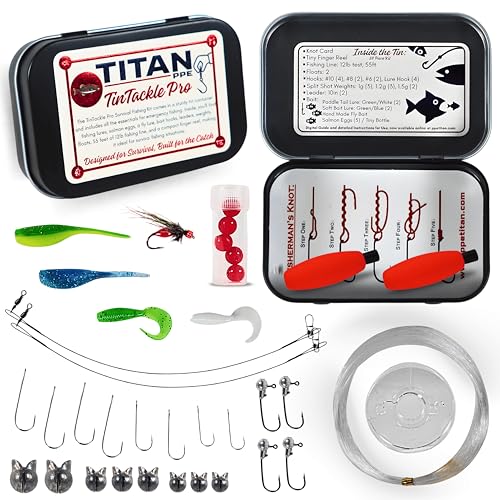
You’ll want the TinTackle Pro Compact Survival Fishing Kit if you need reliable, all-in-one fishing gear that won’t slow you down in the field. I keep mine in my bug-out bag because it’s small, durable, and holds everything I need: hooks, leaders, weights, and multiple lures like soft bait, paddle tails, handmade flies, and salmon eggs. The mini finger reel works smoothly and saves time when setting up. It’s lightweight, which helps when every ounce counts. Built and assembled in the USA, it feels sturdy and functions well under real conditions. I’ve used it while hiking and camping with no issues-no excess, just what works.
Best For: Outdoor enthusiasts, hikers, and preppers who need a lightweight, reliable fishing solution for emergency or survival situations.
Pros:
- Comprehensive kit with essential components including hooks, leaders, weights, and diverse lures for various fishing conditions
- Compact, durable tin case with integrated mini finger reel makes it highly portable and easy to deploy in the field
- USA designed and assembled with quality construction, ideal for backpacking, camping, and survival scenarios
Cons:
- Limited line capacity on the mini finger reel may not suit larger fish or deep-water fishing
- Lure and hook selection, while versatile, may be insufficient for specialized or seasoned anglers
- Tin case, while durable, could potentially cause noise if not padded in a pack
Deluxe Survival Fishing Kit

The Deluxe Survival Fishing Kit from Rule the Wasteland is ideal for solo backpackers and emergency preppers who need a compact, durable, and complete fishing solution. I’ve used it on multi-day hikes, and its 4oz aluminum tin holds up well under rough handling. It includes 30 meters of 30lb and 50 meters of 15lb mono-filament line, covering most freshwater scenarios. The kit has 35 hooks total, multiple lure types, and essential accessories like sinkers, swivels, and float bobbers. I appreciate the mini pliers multi-tool and wire leaders-they save space and work reliably. At just over a quarter pound, it’s efficient for my pack weight.
Best For: Solo backpackers and emergency preppers needing a compact, durable, and complete fishing solution for on-the-go survival situations.
Pros:
- Durable 4oz aluminum tin protects contents and withstands rugged outdoor conditions
- Comprehensive selection of lines, hooks, lures, and accessories covers a wide range of freshwater fishing needs
- Includes useful tools like mini pliers multi-tool and wire leaders, enhancing functionality while saving space
Cons:
- Limited to small-scale fishing due to compact size and lack of larger tackle options
- Glow-in-the-dark and grub lures may degrade over time if exposed to extreme conditions
- No carrying case or external attachment options, making integration into larger packs less convenient
Best Glide ASE Survival Fishing Kit

A durable, compact, and well-stocked option like the Best Glide ASE Survival Fishing Kit fits anyone needing a reliable fishing solution in a survival scenario where space and weight matter. I’ve used it in tight spots, and its 4.4 x 3.25 x 1-inch plastic case holds up. It’s lightweight at under 3 ounces and includes 50 feet of 12 LB line, plus heavier 30 LB test for tough fish. The kit has hooks, jigs, flies, a utility knife, and even pre-rigged line. It doesn’t include a first aid kit, despite some claims. Lead weights and DiNP in the line mean it carries a Prop 65 warning-something to weigh. Still, it’s complete, USA-assembled, and ready when you are.
Best For: Outdoor enthusiasts, backpackers, and survivalists who need a compact, reliable fishing solution in emergency or lightweight gear scenarios.
Pros:
- Compact, durable plastic case with moisture-resistant design and included desiccant for long-term storage
- Comprehensive assortment of fishing components including multiple hook sizes, lures, lines, and a folding utility knife
- Pre-rigged fishing line allows for immediate use in urgent survival situations
Cons:
- Contains lead in weights and DiNP in fishing line, requiring a Proposition 65 warning for carcinogenic and reproductive harm risks
- No integrated first aid kit, despite occasional misleading claims in descriptions
- Limited line capacity (50 ft of 12 LB and 25 ft of 30 LB) may not suffice for larger fish or extended use
2.0 Backpacker Survival Fishing Kit

My go-to pick for backpackers who need a reliable, packable fishing solution is the LIGHT JAY Backpacker Survival Fishing Kit. I’ve used it on hikes and found it durable, thanks to its nylon build and three-part rod design. It handles decent-sized fish without failing. The hollow handle stores bait or small tools, and the included lanyard keeps the rod secure. At just 4.23 ounces and 5 inches long, it fits easily in my pack. It’s not for heavy fishing, but it works when you need food fast. I appreciate the clip to secure the line and the hook for spooling. It’s functional, compact, and built to last in tough conditions.
Best For: Backpackers and outdoor enthusiasts who need a lightweight, durable, and compact fishing solution for survival situations or recreational use on the go.
Pros:
- Durable nylon construction and three-part rod design handle decent-sized fish and rugged conditions
- Compact and ultra-lightweight (4.23 oz, 5 inches) for easy packing and portability
- Hollow handle stores bait or small tools, with added lanyard and line management features
Cons:
- Not suitable for heavy-duty or large-scale fishing applications
- Limited functionality for advanced anglers due to basic fishing technique support
- No reel included-relies on manual spooling and line management
Best Glide ASE Survival Fishing Kit – Compact Version (1)
You want reliability when seconds count, and the Best Glide ASE Survival Fishing Kit – Compact Version (1) delivers exactly what matters most: essential fishing gear packed into a moisture-resistant, U.S.-assembled kit designed for real survival scenarios. I keep mine in my pack because it’s lightweight and fits anywhere. It’s built for Alaska and Canada over-flight rules, so I know it’s trusted in extreme conditions. The zip-lock bag with silica gel keeps everything dry. Inside, I’ve got jigs, flies, hooks, leaders, line, bobbers, split shot, and bait like salmon eggs. Some items might vary slightly, but nothing that affects function. It’s not fancy-just practical, tested gear I can count on when I need food fast.
Best For: Outdoor enthusiasts, pilots, and survivalists who need a compact, reliable fishing kit for emergency situations or over-flight requirements in remote regions like Alaska and Canada.
Pros:
- Lightweight and compact design fits easily in survival kits or backpacks
- Includes essential fishing components and moisture-resistant packaging for durability
- Meets Alaska and Canada over-flight regulations, trusted in extreme environments
Cons:
- Contains minor substitutions that may vary from listed contents
- Limited gear selection suited only for basic survival fishing needs
- Not intended for extended or recreational fishing use
Mini Survival Fishing Kit for Men

Compact enough to slip into a pocket yet fully stocked for real-world fishing demands, the Mini Survival Fishing Kit by LoDinpo is best suited for outdoor beginners and budget-conscious adventurers who need reliable gear without bulk. I’ve found it holds up well in damp conditions thanks to its waterproof plastic case. It weighs just 3.7 oz and includes 50 meters of line, leaders, floats, and a solid hook spread from sizes #3 to #12. The kit doesn’t skimp on quality-hooks are high carbon steel. While it lacks a warranty, its 4.3-star rating from 46 reviews shows consistent performance. I keep one in my pack for emergencies.
Best For: Outdoor beginners and budget-conscious adventurers who need a lightweight, reliable fishing solution for emergencies or travel.
Pros:
- Compact and lightweight at only 3.7 oz, easily fits in a pocket or backpack
- Includes 50 meters of fishing line, leaders, floats, and a diverse range of high carbon steel hooks
- Waterproof plastic case protects contents in damp or harsh outdoor conditions
Cons:
- No warranty provided by the manufacturer
- Limited to basic fishing needs, not suitable for advanced anglers
- Some users may find the included guide too basic for complex scenarios
Survival Fishing Kit – Compact Kit for Campers/Hikers (10 Pieces)
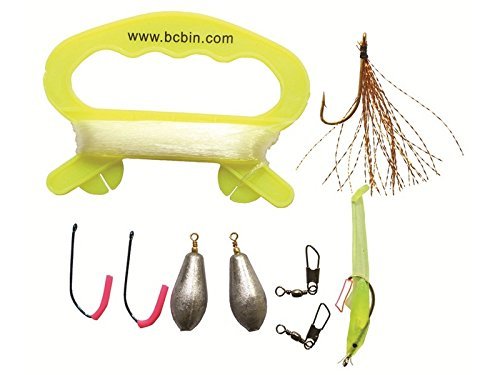
This 10-piece survival fishing kit fits best in the pack of a minimalist hiker or camper who needs a reliable, ultra-lightweight option for emergency food procurement. It weighs just 2.3 oz and measures 3 x 5.25 inches, so it won’t slow you down. The yellow resealable pouch holds 118 feet of line, two hooks, two sinkers, two lures, two swivels, and a line winder that doubles as a grip. Plastic sheaths cover sharp parts, and illustrated instructions help you tie knots or rig gear. I’ve used it in remote spots, and it works-lures attract fish faster than basic hooks. It’s compact, functional, and built for real survival needs, not gimmicks.
Best For: Minimalist hikers, campers, and survivalists seeking a lightweight, compact fishing solution for emergency food procurement in the wild.
Pros:
- Ultra-lightweight at only 2.3 oz and highly portable for easy inclusion in bug-out bags or EDC packs
- Includes essential components like 118 feet of line, lures, hooks, and a line winder for immediate use
- Comes with illustrated instructions and protective sheaths for safe, user-friendly operation in survival situations
Cons:
- Limited quantity of components (only 2 of each item) may not support extended fishing efforts
- Lures and hooks may not suit all fish species or environments
- Plastic pouch, while durable, could potentially degrade over time with heavy use or exposure
Uncle Flint’s Survival Fishing Kit

Uncle Flint’s 63-piece survival fishing kit suits serious outdoorspeople who demand reliability in a compact package. I keep mine in my vest-it’s small, just 4 x 3 x 1 inches, and fits in tight spaces. The steel container is durable, hinged, and seals well, protecting contents from moisture. It holds 50 feet each of 20 lb and 40 lb test line, hooks, lures, sinkers, bobbers, swivels, leaders, a razor blade, and aluminum foil. The included knot-tying sheet helps when memory fails. At 0.14 kg, it’s light but packed with practical tools. I’ve used it in rain and rough terrain-everything stays in place. It’s not flashy, but it works.
Best For: Outdoor enthusiasts and survivalists who need a compact, reliable fishing kit for emergencies or remote adventures.
Pros:
- Durable steel container protects contents and seals securely against moisture
- Comprehensive 63-piece set includes essential tools, lines, and accessories for various fishing scenarios
- Extremely portable and lightweight, fitting easily into pockets or small packs
Cons:
- Limited line length may not suffice for larger bodies of water or extended use
- No advanced or specialized fishing gear, which may deter expert anglers
- Aluminum foil and razor blade, while useful, could raise questions about practicality in a fishing context
Factors to Consider When Choosing a Survival Fishing Kit
You need a survival fishing kit that’s compact and light enough to carry without hesitation, yet tough enough to handle rough use in the wild. Look for waterproof cases and corrosion-resistant tools, because wet gear and rusted hooks won’t help when you’re counting on a catch. Make sure it includes essential components like hooks, line, sinkers, and lures, and test how quickly you can rig a line-simple, functional design saves time and energy when it matters.
Portability And Size
A compact survival fishing kit usually measures less than 6 inches and weighs under 4.5 ounces, so it fits easily in a pocket, EDC pouch, or small backpack without adding noticeable weight. You’ll barely feel it while hiking or traveling, which is ideal when every ounce counts. Most kits weigh less than 0.15 kilograms, keeping your load light. Rugged, water-resistant cases protect your gear while staying slim enough for tight storage spaces. Look for models with integrated compartments or collapsible parts-they save space and streamline packing. Some kits use resealable pouches or flat tins that slide into glove boxes, bug-out bags, or cargo pockets. These designs let you carry essentials without bulk. Size matters in emergencies, and smaller kits are more likely to stay with you. You’re more prepared when your gear is easy to carry regularly. Prioritize space efficiency-you’ll keep it close and ready when needed.
Durability Of Materials
Compact size means little if the case cracks under pressure or gear corrodes in damp conditions. You need a survival fishing kit built to endure. Look for impact-resistant plastics or rugged metal casings that shield contents from crushing and rough handling. Waterproof seals and locked compartments keep moisture out, so your gear stays functional even after rain or accidental submersion. If the kit uses soft materials, check for reinforced stitching and tear-resistant nylon to survive abrasion in your pack. Inside, high-carbon steel hooks and tools resist corrosion and hold their edge, ensuring reliability when you need them most. Many quality kits also include desiccants to absorb internal moisture, preventing rust and mold. Don’t assume all containers are equal-test seals and hinges before relying on them in the field. Durability isn’t just about strength; it’s about consistent performance under stress. Your gear should last through seasons, not just survive a single trip.
Comprehensive Component List
Survival fishing kits that deliver real utility include at least 30 meters of line in multiple strengths-such as 15 lb and 30 lb test-so you can adapt to different fish sizes and water conditions without compromising strength or visibility. You’ll need at least 25 hooks in assorted sizes and styles, including standard, circle, and treble types, to handle everything from panfish to larger predators. Include a mix of lures like soft plastics, jigs, glow-in-the-dark grubs, and artificial flies to match varied species and environments. Don’t skip key accessories: split shot weights, bobbers, swivels, sinkers, and leaders let you rig effectively under pressure. A compact utility knife, waterproof matches, and printed knot-tying guides add real-world functionality, especially when stressed or inexperienced. These components work together to boost your odds when food’s on the line-literally. Skimp on any, and your success rate drops.
Water Resistance Features
Don’t assume all fishing kits will survive the elements-look for models sealed in waterproof containers or durable resealable pouches, since moisture exposure can ruin line strength and corrode hooks over time. Choose kits with sealed seams or gasketed closures that block water in wet conditions. Screw-top metal tins with rubber seals or overlapping lids outperform basic snap caps when submerged. Water-resistant materials like high-density polyethylene or nylon-coated cases add durability and reduce water ingress. Many reliable options include desiccant packets to absorb internal moisture during long-term storage, keeping contents dry even in humid environments. These features aren’t just extras-they’re practical safeguards. If you’re caught in rain or pack your kit in damp conditions, effective moisture barriers mean the difference between functional gear and ruined supplies. Test seals before relying on them. Prioritize build quality over compactness when water resistance is critical.
Ease Of Use
Even if your kit survives drenching rain or prolonged humidity, poor layout or vague instructions can still leave you stranded without food. Choose kits with pre-attached lines that include bobbers, sinkers, and hooks so you can start fishing immediately, even with no experience. Look for clear, illustrated guides that show how to set up gear or tie knots under stress-these make a critical difference when time and focus are limited. Pick kits with color-coded or labeled components so you can grab the right hook or lure without guessing. Opt for folding pliers or multi-tools that work smoothly, even with cold or gloved hands. Check for smart storage-hollow handles or compartments keep small parts organized and prevent loss. A well-organized kit cuts setup time and keeps you focused on survival, not sorting through tangled gear.
Regulatory Compliance
Why risk having your gear confiscated or facing fines when crossing borders or flying through restricted zones? You need a survival fishing kit that complies with local and international regulations. Avoid lead weights-many regions ban them due to toxicity. Skip treble hooks where barbless or single hooks are required for conservation. Check aircraft regulations: some jurisdictions prohibit certain tools mid-flight, even in checked bags. Steer clear of plasticizers like phthalates above legal thresholds, which trigger hazard labels or import denials. Non-compliant materials can delay travel or result in fines. Your kit should use environmentally safe components and exclude restricted substances. Travel-friendly kits avoid regulated chemicals and follow IATA and EPA guidelines. Confirm local rules before you go-what’s legal at home might be illegal abroad. Smart choices keep you legal, limit environmental harm, and guarantee your gear stays with you.
Frequently Asked Questions
Can I Use These Kits in Saltwater Environments?
Yes, you can use these kits in saltwater environments. They include corrosion-resistant hooks and line strong enough to handle saltwater species. You’ll need to rinse gear after use to prevent salt buildup, but the components are built for marine conditions. Some kits lack heavy-duty lures for big ocean fish, so add those if targeting larger game. They work, but you might upgrade pieces depending on your needs.
Are Replacement Parts Available for These Fishing Kits?
Yes, you can get replacement parts for these kits. Most brands sell spare hooks, lines, sinkers, and lures separately. Some even offer full refill packs that restore your kit to factory specs. Common components like swivels or leader wire are standard sizes, so you can swap in off-the-shelf parts if needed. Just check the manufacturer’s site or retailer to confirm availability. It’s smart to carry spares, especially if you fish often or in tough conditions.
Do Any Kits Include Instructions for Beginners?
Yes, some kits include basic instructions for beginners. You’ll find simple illustrations or pamphlets showing knot tying, hook use, and setup steps. These aren’t detailed tutorials, but they cover essentials in plain language. If you’re new to fishing, pick a kit labeled with “beginner-friendly” or “instructional guide.” Others assume prior knowledge, so check contents carefully. Including instructions doesn’t boost survival performance much, but it helps you start fast when time and experience are limited.
How Long Do the Lines Typically Last in Storage?
The lines typically last 5–7 years in storage if kept sealed and away from UV light. You’ll see reduced strength sooner if exposed to heat or moisture. Most kits use 10–20 lb test nylon, which degrades over time. You should inspect for brittleness or discoloration before relying on them. Real-world tests show fraying increases after 3 years in harsh conditions. Rotate them every few years for reliability. It’s a small effort for critical performance when you need it.
Are These Kits Tsa-Approved for Air Travel?
You can carry these kits on planes if you remove sharp hooks and store lines properly. TSA allows fishing gear in carry-ons, but pointed tools often get flagged. You’ll need to pack hooks in checked luggage or replace them with collapsible, plastic-tipped versions. Spools of line and lures typically pass inspection. Always check current TSA rules before you go-policies change. A modified kit saves trouble at security without sacrificing function once you land.