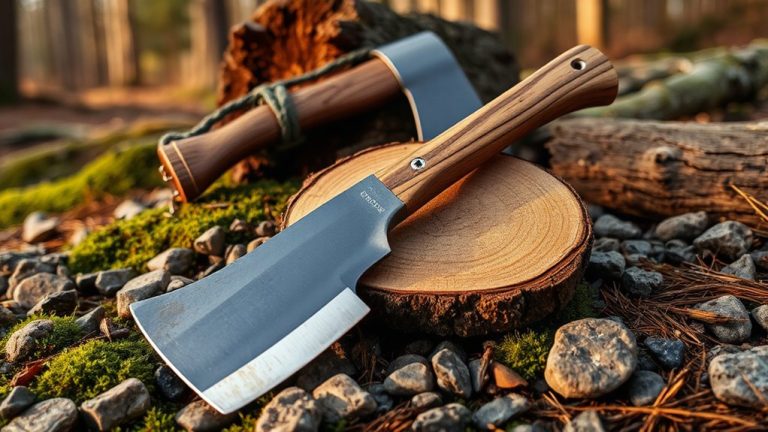
Best Survival Hatchets Every Outdoor Enthusiast Needs
You need a hatchet that’s durable, balanced, and light enough to carry daily. Models like the Gerber Gear Pack and Estwing E24A offer solid full-tang builds, with stainless or high-carbon steel blades for edge retention and rust resistance. Textured grips keep control in wet conditions, while sheaths with belt loops guarantee secure carry. Some include extra tools-saws, fire starters, or hammer polls-but add weight. Choose based on your pack weight limit and intended use. The right pick depends on what you’re willing to carry and what you might face. More details follow on how each model handles real-world demands.
We are supported by our audience. When you purchase through links on our site, we may earn an affiliate commission, at no extra cost for you. Learn more. Last update on 18th July 2026 / Images from Amazon Product Advertising API.
Notable Insights
- Full-tang construction ensures durability and reliability in survival hatchets under heavy use.
- High-carbon steel blades offer superior edge retention but require maintenance to prevent rust.
- Lightweight, compact designs like the Gerber Gear Pack balance portability and functionality for outdoor use.
- Multipurpose features such as fire starters, saws, or hammer polls increase survival utility in the wild.
- Protective sheaths with secure attachment options enable safe carry and quick access in emergencies.
Gerber Gear Pack Hatchet with Sheath

I’d pick the Gerber Gear Pack Hatchet with Sheath if you’re heading into the backcountry and need a dependable, lightweight tool that won’t let you down when chopping small limbs or prepping kindling. It weighs just 16 oz, with a 3.5-inch stainless steel blade that holds an edge well and resists rust thanks to its black oxide coating. The full tang and rubber over-mold grip give you control, even when wet. I’ve used it one-handed, choked up for fine tasks, and it’s balanced enough to avoid fatigue. The nylon sheath attaches to your pack or belt, and the lanyard hole keeps it secure. It’s not for splitting big wood, but that’s not what it’s for. At 9.46 inches overall, it’s compact without sacrificing function. Gerber’s lifetime warranty means it’s built to last, and I’ve relied on mine in rain, snow, and dry heat. It’s a practical, no-frills hatchet that does exactly what you need without extra weight or gimmicks.
Best For: Outdoor enthusiasts like campers, hikers, and bushcrafters who need a lightweight, reliable hatchet for small chopping tasks and portable survival use.
Pros:
- Lightweight at 16 oz with a compact 9.46-inch design, making it easy to carry on hikes or pack trips
- Durable 3.5-inch stainless steel blade with black oxide coating resists rust and holds a sharp edge
- Ergonomic rubber over-mold grip and full tang construction provide control and durability in all weather conditions
Cons:
- Blade size and head weight limit effectiveness on larger chopping or splitting tasks
- Nylon sheath, while functional, may lack the durability of higher-end materials
- Higher price point compared to similar small hatchets with basic features
MOSSY OAK 12″ Camping Axe with Sheath

One key tool stands out for campers and survivalists who need reliability without excess weight: the MOSSY OAK 12″ Camping Axe. I’ve used it for chopping small branches and clearing trails, and it holds up well thanks to its 3/16-inch stainless steel blade and reinforced head attachment. At just under 14 ounces, it’s light but doesn’t feel flimsy. The textured rubber grip stays secure in wet conditions, and the four-screw head design prevents wobbling. It includes a durable sheath with belt loops, so I can carry it easily on long hikes. Five hex slots in the head add utility, though it’s not meant for heavy chopping. For its size, it’s a solid, no-frills choice.
Best For: Outdoor enthusiasts like campers, hikers, and survivalists who need a lightweight, durable, and multi-functional axe for light chopping and utility tasks.
Pros:
- Lightweight at just 13.8 ounces, making it easy to carry on hikes or attach to a backpack
- Durable stainless steel blade with a reinforced head secured by four screws and thread-locking adhesive to prevent wobbling
- Includes a protective sheath with belt loops and features five hex wrench slots for added utility
Cons:
- Limited chopping power due to small size and 12-inch length, not suited for heavy-duty tasks
- Blade width of 6 inches may be too wide for precise cutting in tight spaces
- Hex slots are a useful feature but may not fit all standard tools effectively
Mossy Oak Hatchet and Machete Knife Set

This Mossy Oak Hatchet and Machete Knife Set suits outdoor enthusiasts who need reliable, multi-functional tools for camping, hunting, or emergency scenarios. I use the 10-inch hatchet for chopping and its hex holes as wrenches when needed. The 16.25-inch machete has a serrated spine that cuts small wood efficiently, and the 9.25-inch hunting knife includes a detachable rope for mounting. All blades are stainless steel, resisting corrosion and holding an edge. The set includes a 250-lumen flashlight, flint, whetstone, paracord, and carabiners, all stored in a compact package. It’s practical, well-organized, and ready for real-world use.
Best For: Outdoor enthusiasts, campers, hunters, and survivalists seeking a versatile, durable tool set for adventures or emergency preparedness.
Pros:
- Includes multiple high-quality stainless steel tools (hatchet, machete, hunting knife) with practical, field-ready features
- Comes with essential survival accessories like a flashlight, flint, paracord, and carabiners for comprehensive utility
- Well-organized, compact packaging with protective sheaths for safe storage and quick access
Cons:
- Flashlight requires 3 AAA batteries, which are not included and may limit long-term usability
- Machete and hatchet may be too large or heavy for ultralight backpackers or minimalist setups
- Limited brand-specific customer support information provided for warranty or defects
Camping Axe with Sheath – Survival Hatchet
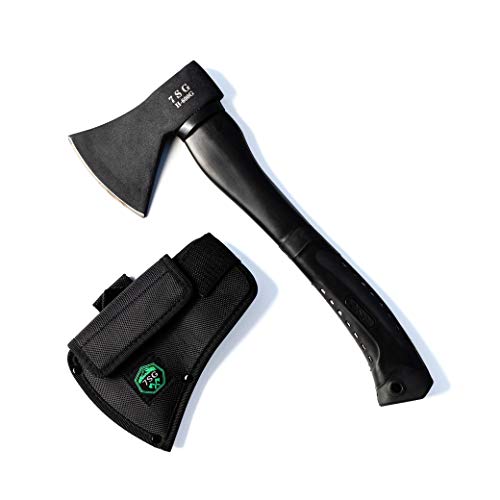
If you’re packing light for backcountry trips where every ounce counts, the Camping Axe with Sheath from 7th Science Gear strikes a balance between capability and carry convenience. I’ve used it for chopping wood and driving stakes, and its 6-inch carbon steel blade holds an edge well. The 1.3-pound head and 1.2-pound overall weight make it easy to swing without fatigue. The full-tang design with a fiberglass-reinforced handle feels solid, even in cold or wet conditions. Its 20-degree blade angle cuts efficiently, and the hammer poll doubles as a striking surface. The sheath fits securely, attaches to gear, and protects the edge during transport.
Best For: Backpackers, hikers, and bushcrafters seeking a lightweight, durable hatchet for survival and outdoor tasks.
Pros:
- Lightweight at 1.2 pounds with a well-balanced design for easy swinging and portability
- Full-tang construction with a rugged fiberglass-reinforced handle ensures durability in extreme conditions
- Multi-functional with a sharp 20-degree blade and hammer poll, plus a secure, pack-compatible sheath
Cons:
- Limited chopping power compared to full-sized axes due to shorter 6-inch blade
- All-black finish may show wear and scratches over time
- Sheath, while durable, may feel bulky when attached to smaller packs
Estwing 14″ Sportsman’s Axe (E24A)

You get a rugged, no-frills tool built for campers and outdoor workers who demand reliability in tough conditions-the Estwing 14″ Sportsman’s Axe (E24A) is forged from a single piece of American alloy steel, so there are no weak points from welding or assembly. I’ve used it to chop small trees and split kindling, and it holds its edge well. It weighs 1.86 pounds, balances nicely, and the leather-wrapped handle reduces fatigue. The 3.25-inch blade is sharp out of the box, and the included nylon sheath makes carrying it easy. It’s made in the USA, built to last, and handles heavy use without flinching.
Best For: Outdoor enthusiasts, campers, and professionals seeking a durable, American-made hatchet for chopping, splitting, and rugged field use.
Pros:
- Forged from a single piece of American alloy steel for unmatched durability and no weak points
- Lightweight at 1.86 pounds with excellent balance and a comfortable, leather-wrapped handle for reduced hand fatigue
- Comes with a durable ballistic nylon sheath for safe, convenient carry and long-term edge retention
Cons:
- Shorter 3.25-inch blade may limit effectiveness for larger chopping tasks compared to full-sized axes
- Leather handle, while comfortable, requires occasional maintenance to prevent drying or cracking
- Higher price point than some imported hatchets with similar size and weight
Wakeman Camping Hand Axe & Survival Gear
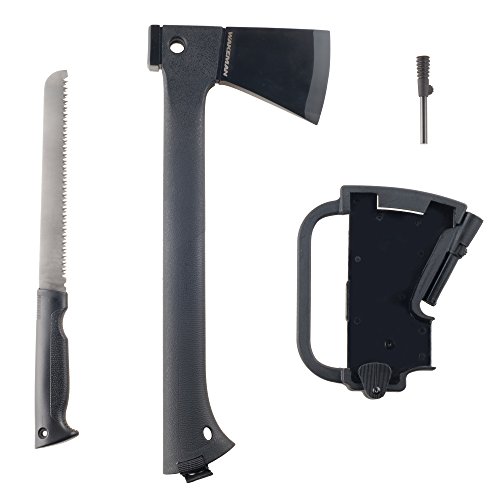
The Wakeman Camping Hand Axe & Survival Gear stands out for backpackers and campers who demand a multi-function tool without added bulk. I carry it because it weighs just 2 pounds and integrates a 5-inch alloy steel blade, serrated saw in the handle, and a magnesium fire starter on the nylon sheath. The textured composite grip stays secure in wet hands, and the hatchet’s rear works as a hammer. Its 14-inch length fits well in packs, and the belt clip keeps it accessible. While the blade’s serrated edge limits fine chopping, it cuts saplings and kindling reliably. You get trade-offs in precision, but gain versatility in a tested, no-frills design.
Best For: Outdoor enthusiasts who need a lightweight, versatile tool for camping, hiking, and emergency survival situations.
Pros:
- Combines a hatchet, serrated saw, and magnesium fire starter in a compact, 2-pound design
- Durable alloy steel blade and textured composite handle provide reliable performance and secure grip, even when wet
- Includes a nylon sheath with belt clip and hammer functionality on the hatchet’s rear for added utility
Cons:
- Serrated blade edge limits precision chopping and fine woodworking tasks
- Limited blade length (5 inches) may struggle with larger wood-cutting demands
- Plastic handle, while lightweight, may not offer the durability of full metal or hardwood alternatives
KSEIBI Wood Axe with Forged Steel Blade

A lightweight yet durable option for campers and hikers who need reliable performance without excess bulk, the KSEIBI Wood Axe with Forged Steel Blade strikes a balance between function and portability. I’ve used it for splitting kindling and driving stakes, and its 600-gram head delivers solid impact without fatigue. The 4.13-inch forged steel blade stays sharp and resists rust thanks to a lacquered finish. Its 14-inch fiberglass handle reduces shock and won’t slip in wet hands. At 1.3 pounds, it’s easy to carry, though the short blade limits heavy chopping. It’s ranked #3 in camping axes, and I’ve found it handles most bushcraft tasks without issue.
Best For: Campers, hikers, and outdoor enthusiasts seeking a lightweight, reliable axe for bushcraft, kindling, and stake driving.
Pros:
- Lightweight 1.3-pound design makes it easy to carry on hikes and camping trips
- Forged steel blade with lacquered finish resists rust and holds a sharp edge
- Fiberglass handle provides shock absorption and secure grip, even when wet
Cons:
- Short 4.13-inch blade limits effectiveness for heavy chopping tasks
- Not ideal for users needing a full-size axe for large-scale wood splitting
- Limited handle length may reduce swing power compared to longer models
14.4″ Survival Hatchet with Sheath

Though compact, this 4.2-inch hatchet delivers reliable performance for anyone needing a durable, no-frills tool in the backcountry. I’ve used it for chopping small wood and clearing brush, and the 1065 high carbon steel blade holds an edge well, especially after a quick touch-up with the included sharpening stone. At 1.16 pounds, the head feels balanced on the beech wood handle, reducing fatigue during repeated swings. The full-tang construction adds durability, and the leather sheath keeps the blade protected while allowing easy belt carry. It’s not for heavy劈ing, but for camping, bushcraft, or survival tasks, it’s practical, dependable, and ready when you need it.
Best For: Outdoor enthusiasts, campers, and survivalists seeking a reliable, portable hatchet for light chopping, bushcraft, and wilderness tasks.
Pros:
- Durable 1065 high carbon steel blade holds a sharp edge and is easy to resharpen in the field
- Full-tang construction with ergonomic beech wood handle ensures balance, strength, and reduced user fatigue
- Includes leather sheath and sharpening stone for convenient carry and on-the-go maintenance
Cons:
- Not suited for heavy-duty劈ing or splitting large logs due to smaller head and overall size
- Beech wood handle may require periodic maintenance to prevent drying or cracking
- Limited blade length (4.2 inches) restricts deep chopping performance compared to full-size axes
Survival Shovel Axe with Extended Handle

You’ll want this Sunkoon Survival Shovel Axe with Extended Handle if you need a durable, multi-role tool that adapts to digging, chopping, or self-defense without adding bulk to your pack. I’ve used it in the field, and its 5.78-pound weight balances well, even when extended to 37.8 inches. The high-carbon steel shovel head holds up to rocky soil, and the 3CR13 axe blade resists corrosion. I can swap in the hunting spear or saw, depending on the task. The aluminum handle extends with threaded sections, adding reach without sacrificing strength. It folds for storage and fits in tight spaces. I keep it in my SUV for emergencies.
Best For: Outdoor enthusiasts, survivalists, and emergency preppers who need a versatile, durable, and compact multi-tool for camping, hiking, off-roading, and self-reliance scenarios.
Pros:
- Multi-functional design combines shovel, axe, saw, hunting spear, fire starter, and 15+ tools in one compact unit
- Extendable military-grade aluminum handle adjusts from 19.2 to 37.8 inches for enhanced reach and leverage
- Durable construction with high-carbon steel and 3CR13 stainless steel components resists wear, rust, and impact
Cons:
- At 5.78 pounds, it may be heavy for ultralight backpackers seeking minimal pack weight
- Extended length of 37.8 inches can be cumbersome in tight spaces or confined storage areas
- Modular assembly requires threading and setup, which may slow deployment in urgent situations
LIANTRAL Folding Camping Axe

When space is tight and every ounce matters, the LIANTRAL Folding Camping Axe stands out for hikers, campers, and survivalists who need a dependable, multifunctional tool without the bulk. I’ve used it on trips where weight counts, and at 2.16 pounds, it’s light but solid. The carbon steel head holds an edge well, and the aluminum handle feels sturdy. It folds down to 17 inches and includes a sheath for safe carry. I can extend the handle for better leverage or shorten it for storage. Beyond chopping, it works as a hammer, fire starter, compass, whistle, and glass breaker-tools I’ve actually needed in real situations. It’s not perfect; the blade isn’t as sharp as premium hatchets, and the finish shows scratches fast. But for the price, it packs more function than size suggests. I keep mine ready for camping, car kits, or emergencies because it handles tasks others require multiple tools for. When reliability and versatility matter most, it earns its place.
Best For: Outdoor enthusiasts, survivalists, and emergency preparedness seekers who need a compact, multifunctional tool for camping, hiking, or car kits.
Pros:
- Multifunctional design combines axe, hammer, fire starter, compass, whistle, and glass breaker in one portable unit
- Lightweight at 2.16 pounds with an adjustable aluminum handle for improved leverage or compact storage
- Durable carbon steel head and included sheath make it reliable and safe to carry on outdoor adventures
Cons:
- Blade is not as sharp as premium hatchets and may require additional sharpening out of the box
- Finish scratches easily, affecting aesthetic longevity despite functional durability
- Some secondary features like the compass and fire starter are basic and less robust than standalone tools
Factors to Consider When Choosing Survival Hatchets
You’ll want a hatchet with a durable blade material like carbon steel-it holds an edge well and stands up to heavy use. Make sure the handle feels comfortable in your grip and that the weight is balanced, so it doesn’t tire your wrist during repeated swings. Look for a lightweight design with a secure sheath and practical extras, since portability and multi-use features matter when you’re out in the wild.
Blade Material Quality
A survival hatchet’s blade material directly impacts its performance and longevity, so choosing the right steel matters. High carbon steel, with a 55 to 60 HRC rating, gives you solid edge retention and durability without chipping easily. You’ll find it holds up well during chopping and splitting, but it needs regular maintenance to prevent rust. Stainless steel resists corrosion thanks to at least 10.5% chromium, making it a smart pick for wet climates, though it’s often slightly less tough under heavy impact. Forged blades go through quenching and tempering, balancing hardness and resilience so they won’t crack under stress. A black oxide or lacquered finish adds extra protection against moisture, boosting the blade’s life in damp conditions. The grind angle-usually 20° to 25°-affects how well it cuts and how easy it is to sharpen in the field with basic tools.
Handle Design Comfort
How well a survival hatchet feels in your hand can make the difference between efficient work and constant fatigue. A textured rubber or composite coating gives you a non-slip grip, so you maintain control even when your hands are wet or cold. You’ll notice less hand fatigue over time thanks to shock-absorbing materials like rubber over-mold that dampen vibration with each strike. Look for ergonomic shaping-finger grooves and contoured grips help you hold the hatchet securely, improving precision and safety during repeated use. A full-tang construction runs the full length of the handle, adding durability and reducing vibration transfer. Most users find a 12 to 15-inch handle strikes the right balance, giving enough leverage for chopping while staying compact enough for one-handed control in tight spaces. Choose a design that supports your grip style and reduces strain over time.
Weight And Balance
Though weight and balance may seem subtle, they directly impact performance and endurance in the field. You’ll want a hatchet with its center of gravity near the head-it gives you more controlled swings and reduces fatigue during extended use. Lightweight models under 1.5 pounds are easy to carry all day, but they lack the momentum for tough chopping tasks. Heavier hatchets, with heads between 1 and 2 pounds, deliver more inertia, splitting wood with fewer strikes. If you’re doing repeated impact work, full-tang construction helps maintain consistent weight distribution, improving balance and durability over time. A well-balanced hatchet feels stable in your hand, whether you’re making precision cuts or swinging hard. That stability increases safety and accuracy. You’ll notice the difference when fatigue sets in-poor balance strains your wrist, while a properly weighted tool stays reliable stroke after stroke. Choose based on your intended use, not just comfort.
Portability And Sheath
You felt the difference a well-balanced hatchet makes when your wrist stays steady after dozens of swings, and that same attention to detail applies when considering how easily you can carry and secure the tool over long distances. A hatchet under 2 pounds cuts fatigue on long hikes, letting you move efficiently when every ounce matters. Models under 15 inches fit neatly in backpacks and stay manageable in tight spots. A sheath made from 1680D ballistic nylon shields the blade from impacts and weather without adding bulk. Look for belt loops or MOLLE-compatible straps if you prefer hands-free carry. Snap closures, retention straps, or dual flaps keep the blade locked in place, so it won’t slip out during rugged movement. A secure, well-designed sheath means you can move fast without checking if your hatchet’s still there.
Multipurpose Functionality
When choosing a survival hatchet, don’t overlook multipurpose functionality-features that expand its role beyond chopping can save time and pack space. A hammer poll on the back drives tent stakes or breaks apart materials without needing a separate tool. Serrated edges or secondary blades let you cut rope or saw through branches efficiently. Some models include a hex hole in the blade that doubles as a wrench, useful for quick field repairs. Others store flint in the handle or sheath, giving you instant access to fire-starting gear when it’s cold or wet. Multi-tool designs may come with built-in saws, small knives, or even compasses, adding preparedness without bulk. These extras trade minor weight increases for broader utility. Not every feature will matter in every situation, but having them when needed makes a real difference. Choose based on your expected use, not just the number of functions.
Frequently Asked Questions
How Do I Sharpen a Survival Hatchet at Home?
You sharpen a survival hatchet at home using a file, sharpening stone, or diamond rod. Hold the blade securely, then file along the bevel at the same angle it already has-usually 20–25 degrees. Use consistent strokes, starting at the base and pulling to the tip. Check for a clean edge; lightly deburr once done. Test with paper or wood to confirm sharpness.
Can I Bring a Hatchet on a Plane?
You can’t bring a hatchet in your carry-on; TSA bans it outright. You can pack it in checked luggage if secured properly-sheathed and wrapped to prevent damage. Airlines may still impose restrictions, so check their policies. Even if allowed, duty-free hatchets at international destinations could raise customs issues. You’re better off buying one at your destination or shipping it. It’s a hassle, but it avoids delays or confiscation at security.
Are Hatchets Good for Self-Defense?
Yes, hatchets can be effective for self-defense if you’re trained and in close range. You’ll need enough strength to swing accurately and decisively. They’re heavier than knives, so follow-through matters. In a panic, accuracy drops. A hatchet also lacks reach compared to a club or firearm. It’s bulkier to carry discreetly. In survival scenarios, it’s better for tools-based defense-building barriers or creating spears-than direct combat. Know the trade-offs.
What’s the Best Way to Store a Hatchet Long-Term?
You store a hatchet long-term by cleaning it thoroughly, drying it completely, and applying a light coat of oil to prevent rust. Keep it in a dry, temperature-stable place-never in damp basements or humid sheds. Use a blade cover or sheath to protect the edge and prevent accidents. Hang it or store it off concrete floors. Avoid plastic bins without ventilation; they trap moisture. You don’t wrap it in cloth or paper long-term-they retain dampness and degrade.
Can I Use a Hatchet for Splitting Large Logs?
You shouldn’t use a hatchet for splitting large logs-it’s not built for that. A hatchet’s head is smaller and lighter than a splitting axe, so it struggles with logs over six inches. You’ll waste energy and risk damaging the tool or hitting glancing blows. For large logs, use a full-size splitting axe. Hatchets work well for kindling or small branches, not heavy splitting. It’s about using the right tool efficiently.