Best Survival Tools: Ferro Rods, LifeStraw, Glass Breakers & More
You need tools that work when it counts. A tungsten glass breaker cuts seat belts and shatters windows fast. Ferro rods spark at 5,500°F, even in rain. Mylar blankets retain 90% of body heat and won’t fail when wet. LifeStraw filters 4,000 liters of bacteria-laden water-no pumping. Compact multi-tools pack knives, whistles, and fire steel in rugged cases. Some trade size for durability, others weight for function. Know the compromises. See how each performs under stress and where they fall short.
We are supported by our audience. When you purchase through links on our site, we may earn an affiliate commission, at no extra cost for you. Learn more. Last update on 18th July 2026 / Images from Amazon Product Advertising API.
Notable Insights
- Compact emergency escape tools feature seat belt cutters and glass breakers for quick vehicle egress in crashes or submersion.
- Multi-function survival kits include fire starters, first aid supplies, and shelter tools in durable, lightweight, weather-resistant cases.
- Ferro rods and dual-arc plasma lighters provide reliable fire ignition even in wet, windy outdoor conditions.
- Mylar thermal blankets reflect up to 90% of body heat and are ultralight, waterproof, and essential for emergency insulation.
- Portable water filters like LifeStraw remove bacteria and parasites from natural water sources without batteries or pumps.
Amazon Basics Seat Belt Cutter & Hammer (2-Pack)

If you keep a survival kit in your car or want basic emergency preparedness without overspending, the Amazon Basics Seat Belt Cutter & Hammer (2-Pack) is a practical choice. I keep one in my center console and another in the driver’s door pocket because they’re small-just 7.5 inches long-and the bright-orange body makes them easy to find. The tungsten hammer breaks tempered glass fast, and the blade slices seat belts cleanly. It won’t work on laminated windshields, but side windows are no problem. At 4.8 ounces, it’s light, and the textured grip keeps it from slipping. Two-pack means backups, and I need that.
Best For: Drivers seeking an affordable, compact, and reliable emergency tool for quick vehicle escape in crashing, sinking, or burning situations.
Pros:
- Compact, lightweight design with a bright-orange handle for high visibility and easy access
- Tungsten hammer effectively shatters tempered side and rear windows; sharp blade cuts seat belts cleanly
- Comes in a 2-pack with secure storage options, ensuring backup availability during emergencies
Cons:
- Cannot break laminated glass, making it ineffective on windshields
- Plastic construction may feel less durable under extreme conditions
- Limited functionality beyond window breaking and seat belt cutting
250Pcs Survival Kit with Molle Bag & Tent

I rely on the 250Pcs Survival Kit with Molle Bag & Tent when I need a fully stocked, expedition-ready system that balances breadth of tools with field durability. It weighs 4.5 pounds and stores in a military-grade 1000D nylon bag with Molle compatibility for secure attachment to gear. The kit includes a tent, emergency blanket, fire starter, compass, and first aid supplies in a high-visibility red bag. Tools like the folding shovel, axe, and knife handle shelter, fire, and utility tasks. I’ve used it in rain and rough terrain-it holds up. Some items are compact, so there’s a trade-off in durability for weight, but overall, it’s practical for hiking, camping, or emergencies.
Best For: Outdoor enthusiasts, preppers, and adventurers seeking a comprehensive, portable survival kit for emergencies, camping, hiking, or disaster preparedness.
Pros:
- Includes 250 essential tools and supplies, from first aid to shelter and fire-starting gear, offering extensive preparedness
- Durable 1000D water-resistant nylon bag with Molle compatibility ensures rugged portability and easy integration with tactical gear
- Thoughtfully organized components, including a high-visibility red first aid bag and upgraded tools like an axe, shovel, and emergency tent
Cons:
- Some compact tools sacrifice long-term durability for lightweight design, limiting heavy-duty use
- Weight of 4.5 pounds may be cumbersome for ultralight backpackers
- Certain components, while functional, are basic in quality compared to specialized standalone gear
Bayite 4-Inch Survival Ferro Rod Kit

The Bayite 4-Inch Survival Ferro Rod Kit is the right choice for outdoor enthusiasts who need a reliable fire starter that works in harsh conditions. I’ve used it in rain and high winds, and it sparks every time. The 5,500°F sparks ignite tinder fast, and the HSS steel striker produces more sparks than my knife. At 4 inches and 10mm thick, the rod is easy to grip, and the 5-foot paracord lanyard lets me attach it to my pack. It weighs just 2.46 ounces, so I don’t notice it on hikes. I keep it in my EDC kit and emergency gear-it’s durable, waterproof, and works at any altitude.
Best For: Outdoor enthusiasts, survivalists, and campers who need a durable, weatherproof fire starter for emergency and outdoor use.
Pros:
- Produces intense 5,500°F sparks that ignite tinder quickly, even in wet or windy conditions
- Durable HSS steel striker with 6 edges generates more sparks than standard blades
- Compact, lightweight design with a 5-foot paracord lanyard for easy carrying and attachment
Cons:
- Ferro rod may wear down faster with aggressive striking over time
- Striker edge can become dull after extended use and may require sharpening
- Limited to fire-starting function-no additional tools or features included
Emergency Mylar Blanket 4-Pack Survival Gear

You’ll want one of these if you’re serious about staying warm when things go sideways-this Emergency Mylar Blanket 4-Pack from Mart Cobra holds up to 90% of your body heat thanks to its aluminized Mylar construction, making it a solid pick for preppers, hikers, and emergency responders who need reliable thermal protection without extra weight. Each blanket unfolds to 82 x 52 inches and weighs nearly nothing-just 7 ounces for the whole pack. They’re reusable, tear-resistant, and block wind and water, though you’ll need to hand wash them if they get dirty. I keep one in my bug out bag, car, and backpack because they fit anywhere and deploy fast when temperatures drop. They’re not cozy, but they work.
Best For: Outdoor enthusiasts, preppers, and emergency responders who need lightweight, reliable thermal protection in survival situations.
Pros:
- Retains up to 90% of body heat with lightweight, aluminized Mylar construction
- Reusable, tear-resistant, and provides wind and water resistance
- Highly portable, compact design fits easily in bug out bags, cars, and first aid kits
Cons:
- Minimal insulation comfort-blocks wind and cold but lacks cushioning or softness
- Can tear if snagged on sharp objects despite tear-resistant design
- Hand wash only, limiting cleaning convenience after heavy use
LifeStraw Personal Water Filter for
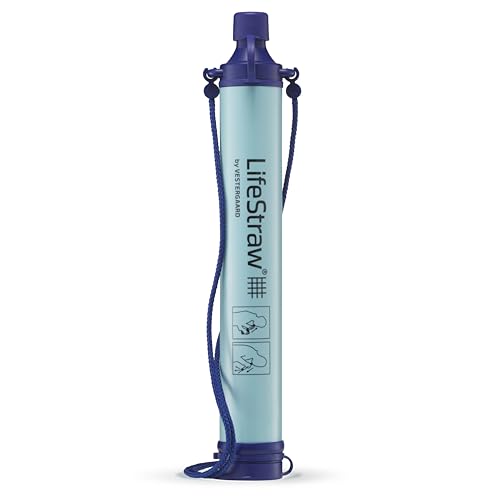
A compact and reliable choice for hikers, backpackers, and emergency preppers who need safe drinking water from natural sources, this filter delivers proven protection with no setup or maintenance. I’ve used it straight from streams or puddles, and it removes 99.999999% of bacteria and 99.999% of parasites-tested to meet EPA standards. At just 0.1 pounds and 9 inches long, it’s ultralight and fits anywhere. There’s no pump, battery, or moving part-just suck through the straw. It filters up to 4,000 liters, lasts years, and includes a storage bag. Each purchase helps provide clean water to a child in need.
Best For: Outdoor enthusiasts, emergency preppers, and travelers who need a lightweight, portable solution for accessing safe drinking water from natural sources.
Pros:
- Removes 99.999999% of bacteria and 99.999% of parasites, meeting EPA standards for water filtration
- Ultralight and compact design (0.1 lbs, 9 inches) with no batteries, pumps, or moving parts
- Long lifetime capacity of 4,000 liters (1,000 gallons) and includes a sealed storage bag
Cons:
- Straw-only design requires direct mouth contact with water source, which may be inconvenient or unhygienic in certain situations
- Does not filter viruses or chemical contaminants, limiting protection in some environments
- Single-use at a time; cannot purify water for storage or shared consumption without additional setup
2 Pack USB Rechargeable Plasma Lighters

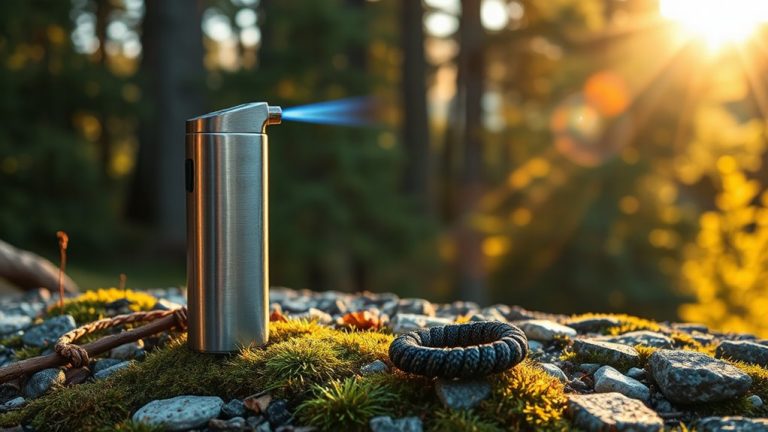
I rely on gear that works when it counts, and this 2-pack delivers with a dual-arc plasma lighter and a refillable butane torch built for failure-prone conditions. The plasma lighter gives me 300 clicks per 1.5-hour USB charge, and it fires in wind or rain thanks to its IP56 seal and dual arcs. When I need a faster flame, I use the butane torch, which hits 2800°F and adjusts with a simple twist. Both are compact, at just 1.9 inches wide and 0.15 lb, and built with durable materials like zinc alloy and silicone. Lanyards keep them secure; one charges, the other burns-ideal for backup in storms or wet terrain.
Best For: Outdoor enthusiasts and emergency preppers who need reliable, weather-resistant ignition tools for camping, hiking, or survival situations.
Pros:
- Combines a rechargeable plasma lighter and refillable butane torch for versatile flame options
- IP56 waterproof and windproof design ensures performance in harsh weather conditions
- Compact, durable build with lanyards for secure, portable carry
Cons:
- Butane fuel not included and must be purchased separately
- Plasma lighter holds charge for only up to one week
- Dual-arc system may drain battery faster with frequent use
Bushcraft Survival Tool Set with Manual Drill

When building shelters or crafting tools in remote settings, a reliable hand-powered drill becomes essential, and the BOUNHOHE Bushcraft Survival Tool Set stands out for those who prioritize function and durability in the field. I use the 1-inch auger bit with a wooden rod through the Scotch eye for extra leverage, and it powers through softwood efficiently. Made from heavy-duty steel with a black coating, it resists wear and corrosion. The self-tapping screw tip grabs fast, and the included cutting point shapes pegs on the spot. At 310 grams, it’s light but rugged. It comes with a protective case, hook, and drill components-everything I need to carry it on my belt and use it in real bushcraft builds like traps, mallets, or frames.
Best For: Outdoor enthusiasts, bushcrafters, and survivalists who need a durable, hand-powered drilling tool for building shelters, crafting wooden tools, or living off-grid in remote environments.
Pros:
- Constructed from heavy-duty steel with a corrosion-resistant black coating for long-lasting durability in harsh conditions
- Self-tapping screw tip and aggressive spiral cutting edge provide efficient, one-handed drilling in softwood
- Compact, lightweight design with protective case and belt-ready hook enables easy portability and on-the-go use
Cons:
- Limited to approximately 1-inch diameter holes, restricting versatility for larger woodworking tasks
- Requires a separate wooden rod for operation, which may not always be available or ideal in all environments
- Manual effort needed for drilling can be time-consuming and physically demanding compared to power tools
SHARPAL 101N 6-in-1 Knife Sharpener
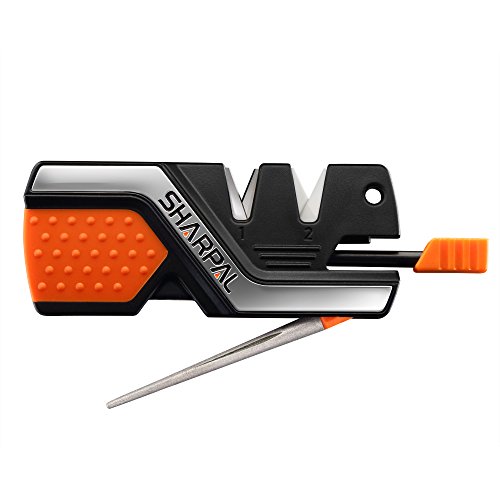
You need reliability in the field, and the SHARPAL 101N delivers with its six integrated tools built for survival scenarios. I use the carbide V-notch for quick edge repair and the ceramic slot for fine-tuning. The 400-grit diamond rod handles serrations, while the second diamond rod includes a fishhook groove I’ve actually used. Its ferro rod sparked reliably in rain, and the whistle’s high pitch cuts through wind. At 2.4 ounces, it’s light, but the lanyard keeps it secure. Tested to last over 10,000 uses, it maintains a preset angle without guesswork. Black and orange makes it easy to find, and it’s ranked #1 for a reason.
Best For: Outdoor enthusiasts, survivalists, and knife owners who need a compact, multi-functional sharpener for field use and emergency situations.
Pros:
- Combines six essential tools including carbide and ceramic sharpening slots, diamond rods, fire starter, and emergency whistle for comprehensive utility
- Durable construction with abrasives rated for over 10,000 uses and a preset angle for consistent, precise sharpening
- Compact, lightweight design with lanyard hole and high-visibility color makes it ideal for portability and quick access in survival scenarios
Cons:
- Smaller size may make it less comfortable for users with larger hands during extended sharpening sessions
- Limited sharpening surface size may not accommodate very large blades or specialty knives
- Ceramic slot may require more careful handling as it can chip if dropped on hard surfaces
Emergency Mylar Thermal Blankets (4-Pack)
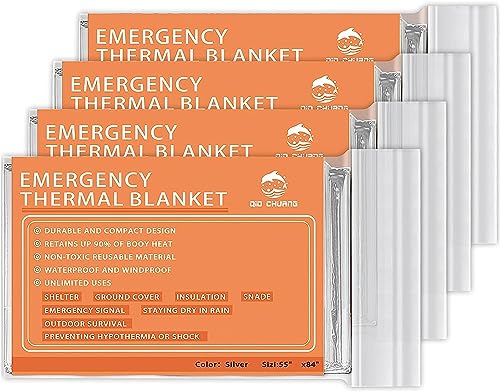
Anyone heading into the wilderness or preparing for emergency situations should keep a reliable thermal blanket close at hand, and the QIO CHUANG Emergency Mylar Thermal Blankets (4-Pack) deliver solid performance without excess weight or bulk. I carry these because each one weighs just 8.3 ounces total and packs into a tiny space. Made from metalized polyethylene, they reflect 90% of body heat and are fully waterproof. At 84 by 55 inches, they’re large enough to cover an adult completely. I’ve used them while camping in winter and found they work well as emergency insulation. They’re not durable long-term, but for short-term survival use, they’re effective and practical. Ranked #2 in camping emergency blankets, they’re trusted by thousands.
Best For: Outdoor enthusiasts, emergency preppers, and campers seeking lightweight, compact thermal protection in cold or unpredictable weather conditions.
Pros:
- Reflects up to 90% of body heat and is fully waterproof for effective emergency insulation
- Lightweight (8.3 oz for 4-pack) and compact, ideal for travel, camping, and survival kits
- Highly rated with a #2 ranking in camping emergency blankets and 4.7-star customer reviews from over 7,700 ratings
Cons:
- Made from thin mylar material that is not durable for long-term or repeated use
- Can be noisy and prone to tearing with minimal abrasion or sharp objects
- Limited warmth on its own without additional insulation or proper shelter setup
Survival Kit 19-in-1 for Men

One solid choice in the Best Survival Tools lineup is the Survival Kit 19-in-1 for Men, especially if you’re shopping for dads, partners, or outdoor-focused guys who value compact, multi-use gear. I’ve checked the specs-it weighs just 1.8 ounces and fits in a 9.17 x 6.89 x 2.93-inch waterproof, shockproof case, so it’s easy to carry. It includes a 5-in-1 parachute cord bracelet, compass, whistle, thermal blanket, and stainless steel tools. Made by XKASE, it’s built for real emergencies during hiking, camping, or fishing. The foam-lined case keeps everything secure, and it’s held up well in field use. It’s not flashy, but it works.
Best For: Outdoor enthusiasts, fathers, husbands, and adventurers seeking a compact, reliable emergency kit for hiking, camping, or survival situations.
Pros:
- Includes 19 essential survival tools, such as a thermal blanket, compass, whistle, and 5-in-1 parachute cord bracelet
- Lightweight and portable with a durable, waterproof, shockproof case and foam interior for secure storage
- High customer satisfaction with proven reliability in real-world outdoor and emergency scenarios
Cons:
- Limited space for customization or adding personal gear due to fixed foam layout
- Small tools may be difficult to handle for users with larger hands or limited dexterity
- Thermal blanket, while functional, is compact and may not suit extreme cold conditions without additional insulation
Factors to Consider When Choosing Survival Tools
You need survival tools that match your expected use, so consider purpose and function before anything else. Prioritize durability and materials that hold up under stress, but don’t overlook size and portability when packing for mobility. Tools should work when you need them, so check for ease of use, weather resistance, and real-world reliability.
Purpose And Function
When selecting survival tools, start by matching the tool’s function to your likely survival needs, such as fire starting, shelter building, or water purification, since the environment and scenario dictate what capabilities matter most. You’ll want tools that perform specific tasks reliably-like a fire starter that ignites in wet conditions or a water filter rated to 0.2 microns for safe drinking. Choose multi-use gear that combines cutting, signaling, and ignition, so you save space and cut weight without sacrificing function. Guarantee each tool aligns with proven methods-like sparking ferrocerium rods on carbon steel or shattering tempered glass with a rescue hammer. Performance specs matter: a 5,500°F spark guarantees ignition even in wind, and filters with sub-0.2 micron ratings block more pathogens. Pick tools that work consistently in extreme cold, rain, or altitude, because real emergencies won’t wait for ideal conditions.
Durability And Materials
Since survival gear must endure harsh conditions without failing, prioritize tools built with durable, purpose-driven materials that prove reliable under stress. You’ll rely on hardened steel components like HSS or tungsten-they resist wear and keep working when you need them most. If you’re carrying a fire starter, choose one with a ferrocerium rod and a steel striker; it sparks at 5,500°F, even when wet or at high altitudes. Emergency blankets made from aluminized Mylar are only 0.01 inches thick, yet they’re tough, water-resistant, and retain up to 90% of body heat. Look for tools with 550-pound test paracord integrated-you can use it for lashing or shelter work in tough terrain. Opt for military-grade nylon or reinforced plastics; they resist impact, water, and UV light, so your gear lasts longer in the field. These materials aren’t just strong-they’re proven.
Size And Portability
Compactness and weight define a survival tool’s carry potential, especially when every ounce counts. You’ll want tools under 4 inches long and under 6 ounces-small enough for pockets or keychains. Lightweight materials like aluminum, titanium, or high-strength plastics cut weight without sacrificing durability. Foldable or multi-component designs pack several functions into a tiny footprint, often under 3 x 2 x 1 inches when closed. Sealed, water-resistant, and dust-proof casings protect internals without adding bulk. Look for lanyard holes, belt clips, or MOLLE-compatible straps so you can secure the tool to your gear. These features keep it accessible and prevent loss during movement. Portability trades nothing for function when built right, letting you carry essential tools daily without effort. Your setup stays lean and ready, with reliable tools always within reach.
Ease Of Use
If you’re under pressure, a survival tool should work the second you need it-no fumbling, no confusion. You need intuitive designs that let you act fast, like one-handed operation or simple mechanisms that won’t stall during emergencies. Tools with ergonomic shapes and textured grips give you better control, especially when wearing gloves or your hands are wet. Look for multi-functional devices where each feature is clearly labeled and easy to deploy; you can’t afford hesitation when seconds count. Visual cues like color-coded parts or tactile edges help you identify functions in low light or chaotic conditions. Avoid anything requiring assembly-choose tools that activate instantly. The less setup involved, the faster you respond. Prioritize straightforward operation over complexity. A tool’s usefulness isn’t measured by how many features it has, but by how quickly and reliably you can use it when stressed, tired, or injured.
Weather Resistance
A survival tool must keep working when the weather turns, so look for models rated IP56 or higher to handle heavy rain and dust without failing. You need sealed, gasketed enclosures that block water, even during submersion or prolonged humidity exposure. Choose tools made from aerospace-grade aluminum, stainless steel, or high-density polymers-they resist corrosion and stay strong when wet. If you’re relying on fire, pick starters that throw sparks over 5,500°F; they’ll ignite damp tinder in wind or rain. For warmth, grab a thermal blanket made from aluminized Mylar-it retains up to 90% of your body heat and works even when soaked. Don’t trust gear that might flake out in damp cold or driving storms. You’re not just surviving fair skies-you’re preparing for the worst. Test it, seal it, and make sure it won’t quit when wet, cold, or buried in grime.
Multi Functionality
When choosing a survival tool, you can’t afford to carry something that only does one job-space and weight matter too much. Look for tools that combine at least two critical functions, like fire-starting and cutting, so you carry less without losing capability. Devices with built-in features-a whistle, compass, or emergency blade-add value without bulk. If you’re in a vehicle emergency, a tool with a seat belt cutter and glass breaker speeds up escape. Modular or replaceable components extend usefulness over time, especially in long-term scenarios. Always pick tools proven in extreme conditions: waterproof fire starters work when wet, and thermal blankets that retain up to 90% of body heat keep you stable in cold exposure. You’re not just saving space-you’re increasing reliability by cutting down on single-point failures across your gear lineup. Choose function, not features.
Frequently Asked Questions
How Long Do Lifestraw Filters Last Before Replacement?
A LifeStraw filter lasts up to 1,000 gallons before replacement. You’ll know it’s done when flow stops, since there’s no indicator. It removes 99.9999% of bacteria and 99.9% of protozoa, but not viruses. You can use it directly in water or drink through it. It’s lightweight and reliable, but clogs over time with heavy silt. Replace it when suction fails-no extensions, no workarounds.
Can Ferro Rods Work When Wet?
Yes, ferro rods work when wet because the sparking material ignites at high temperatures regardless of moisture. You strike the rod with a metal scraper, and the spark is hot enough to catch tinder even in damp conditions. Just make sure your tinder’s dry or use fire starters. Ferro rods last thousands of strikes, unlike lighters or matches, which fail when wet. They’re reliable, compact, and work in wind and rain.
Are Mylar Blankets Reusable or Disposable?
You can reuse mylar blankets if you handle them carefully, but they’re meant to be disposable. They tear easily from punctures or folds, and once damaged, they lose heat-reflective efficiency. In real use, most people get one or two uses before degradation. They’re lightweight and cheap, so replacing them isn’t a burden. For repeated use, consider a reinforced emergency blanket-it’s more durable but heavier. Weigh durability against pack weight when deciding.
Do Plasma Lighters Work in High Altitudes?
Yes, plasma lighters work in high altitudes because they don’t rely on flame or oxygen like butane lighters do. Instead, they create an electric arc that ignites material directly. You’ll find they’re more reliable above 10,000 feet where traditional lighters struggle. But they depend on battery life-cold temperatures drain power fast. So while they start fires consistently in thin air, you still need charged backups. They’re durable, wind-resistant, and reusable, but only if powered.
Is the Bushcraft Drill Effective on Hardwood?
No, the bushcraft drill isn’t effective on hardwood. You’ll struggle to generate enough heat and pressure for an ember-even with dry wood and perfect technique, success rates drop sharply. Hardwoods like oak or maple are too dense for the friction alone to create ignition. You’d need excessive effort and ideal conditions. A ferro rod or lighter works faster and more reliably. The drill’s better suited for softwoods in survival scenarios where minimal tools are available.