Top-Rated Tarp Shelters for Every Outdoor Adventure
You need a tarp that won’t fail when the weather turns, and top models deliver with 3000mm+ waterproof coatings, taped seams, and rugged ripstop fabrics. Options like the Unigear and Wise Owl tarps weigh under 2 pounds for backpacking, while the Texas Bushcraft tarp’s 15,000mm rating handles extreme rain. Look for 19 guy points for setup flexibility or reinforced grommets for durability. Tradeoffs exist-weight vs. coverage, simplicity vs. adaptability-so match specs to your environment. The best ones balance protection, weight, and real-world function without overpromising. Choosing the right one depends on how and where you move through the outdoors.
We are supported by our audience. When you purchase through links on our site, we may earn an affiliate commission, at no extra cost for you. Learn more. Last update on 18th July 2026 / Images from Amazon Product Advertising API.
Notable Insights
- Durable materials like 210D rip-stop Oxford and 3000mm PU coating ensure reliable waterproof performance in heavy rain.
- Multiple anchor points and guy lines allow versatile setups for rain fly, shelter, or groundsheet configurations.
- Lightweight designs, some under 2 lbs, enhance portability for backpacking and ultralight adventures.
- Reinforced seams and heat-sealed edges prevent leaks and increase longevity in harsh weather conditions.
- Multi-functional use across hammock camping, emergency shelters, and sun shades suits diverse outdoor needs.
Unigear Hammock Rain Fly 9.8ft
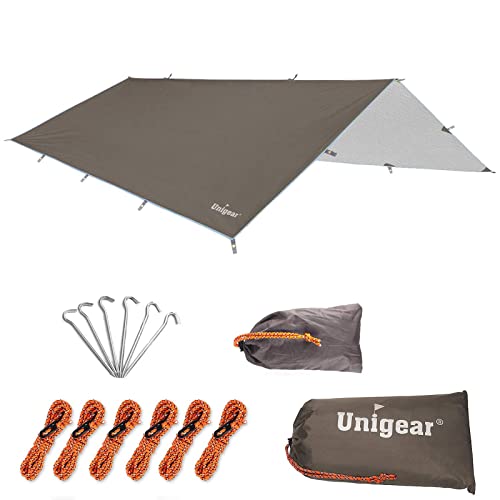
If you’re a solo backpacker or ultralight camper who needs reliable weather protection without extra bulk, the Unigear Hammock Rain Fly 9.8ft is one of the better choices I’ve used for minimizing weight while still staying dry in heavy rain. At 2.43 pounds, it’s light but tough, made from 210D rip-stop Oxford with a 3000mm PU coating that holds up in downpours. I’ve tested it in wind and light snow-it stays sealed and secure. Eight reinforced anchor points with double stitching resist tears. It works as a tarp, shelter, or ground cover, and the included stakes and ropes allow fast setups. It’s not the lightest option, but the durability makes the slight weight worth it.
Best For: Solo backpackers and ultralight campers seeking a durable, versatile, and weather-resistant shelter that balances weight and rugged performance.
Pros:
- Made from 210D rip-stop Oxford fabric with 3000mm PU coating for reliable waterproof protection in heavy rain
- Features eight double-stitched, reinforced anchor points for superior durability in wind, snow, and harsh conditions
- Multi-functional design works as a rain fly, tarp, ground cover, or shelter with included stakes and ropes for quick setup
Cons:
- Weighs 2.43 pounds, which may be slightly heavy for strict ultralight backpackers seeking minimal pack weight
- Limited coverage area for taller users or larger hammock setups due to 9.8 x 9.8 ft square design
- No additional accessories like guy line tensioners or repair kit included for enhanced customization or emergency fixes
Free Soldier Waterproof Portable Tarp
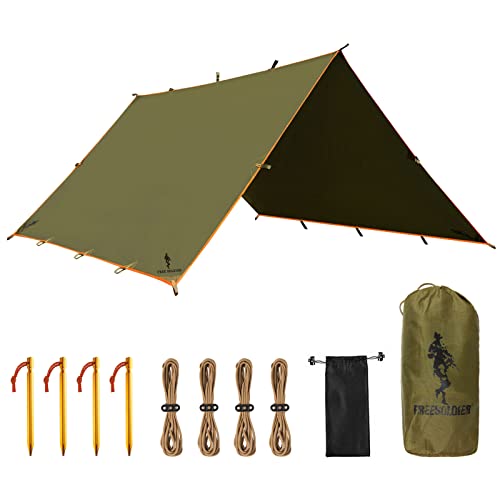
I trust the Free Soldier Waterproof Portable Tarp when I need a reliable, lightweight shelter that won’t quit in heavy rain or strong sun. It’s made from 210T ripstop polyester with a 2500mm PU coating, so it sheds water and resists tears. At just 1 kg, it’s easy to carry, and the 10×10.5 ft size gives two people room. Nineteen guy points let me rig it in multiple ways, whether as a rain fly, groundsheet, or lean-to. It handles sun, wind, and downpours without sagging. The reinforced grommets and seams hold up, and the included guy lines with tensioners make setup fast. I’ve used it backpacking and in survival drills-it works.
Best For: Outdoor enthusiasts, backpackers, and military/survival users needing a durable, lightweight, and versatile waterproof tarp for all-weather shelter.
Pros:
- Lightweight at only 1 kg yet highly durable with 210T ripstop polyester and 2500mm PU waterproof coating
- Versatile 19 guy points and large 10×10.5 ft size allow for multiple setup configurations in various conditions
- Includes guy lines with tensioners and packs into a compact stuff sack for easy transport
Cons:
- Brown color offers low visibility, which may not suit all environments or safety preferences
- Rectangular design may waste coverage area compared to tailored shapes in some setups
- Reinforced features add slight bulk to packed dimensions, potentially less ideal for ultralight backpackers
Free Soldier Waterproof Portable Tarp Shelter

The Free Soldier Waterproof Portable Tarp Shelter delivers reliable protection for backpackers, hikers, and military personnel who need a lightweight, durable shelter in demanding conditions. I’ve used it in heavy rain and high winds, and the 150D ripstop polyester with 3000mm PU coating held up without leaking. It weighs just 1.2kg, so it won’t drag down your pack, but it still gives you 13 × 13 ft of coverage. The 19 guy points and 5 reinforced grommets let you anchor it securely in uneven terrain. I’ve set it up as a rain fly, groundsheet, and lean-to-it works for all. The included guy lines, tensioners, and stuff sack make packing and setup fast. It’s not flashy, but it performs.
Best For: Outdoor enthusiasts, military personnel, and backpackers needing a lightweight, durable, and versatile shelter in harsh weather conditions.
Pros:
- Durable 150D ripstop polyester with 3000mm PU coating offers excellent waterproof and tear-resistant performance
- Multi-configurable setup with 19 guy points and 5 reinforced grommets for stable anchoring in varied terrain
- Lightweight at 1.2kg and comes with included guy lines, tensioners, and stuff sack for easy transport and quick setup
Cons:
- Basic design lacks ventilation features, potentially leading to condensation buildup
- No built-in poles or frame, requiring natural or additional gear for full setup
- Rectangular shape may catch wind more than aerodynamic designs in extreme storms
Texas Bushcraft 10×10 Waterproof Survival Tarp
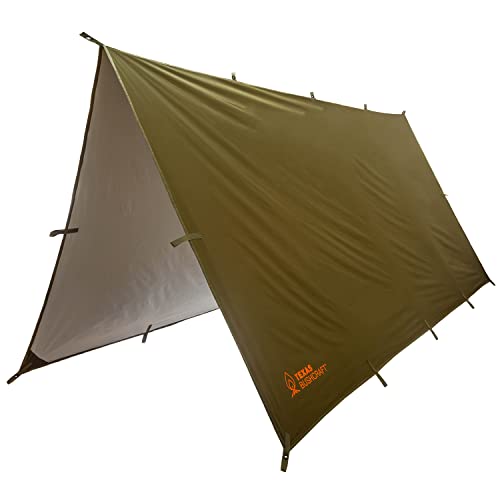
You’ll want the Texas Bushcraft 10×10 Waterproof Survival Tarp if rugged reliability matters most in rainy or cold conditions, since it’s built with a 15,000mm PU coating and heat-taped seams that keep water out even during heavy downpours. I rely on its 70D ripstop nylon and 210T thread count for tear resistance without adding bulk. The aluminized layer reflects body heat, which helps in cold snaps, and it cuts UV exposure in summer. I use the 14 side loops and 5 ridgeline points for flexible setups between trees or with stakes. It weighs 2.31 lbs-light enough to pack, durable enough to trust. Fire resistance and drab green color add practical survival value.
Best For: Outdoor enthusiasts and survivalists who need a durable, lightweight, and waterproof emergency shelter for harsh weather conditions.
Pros:
- Features a 15,000mm PU coating and heat-taped seams for exceptional waterproofing in heavy rain
- Lightweight at 2.31 lbs with a compact design, making it ideal for backpacking and portability
- Reflective aluminized layer retains body heat in cold weather and reduces UV exposure in summer
Cons:
- Drab green color may not stand out enough for quick location in dense terrain
- Requires additional gear like ropes and stakes for full setup, not included
- Limited size for two people; best suited for single occupancy with minimal gear
Unigear Waterproof Hammock Rain Fly 9.8×9.8ft
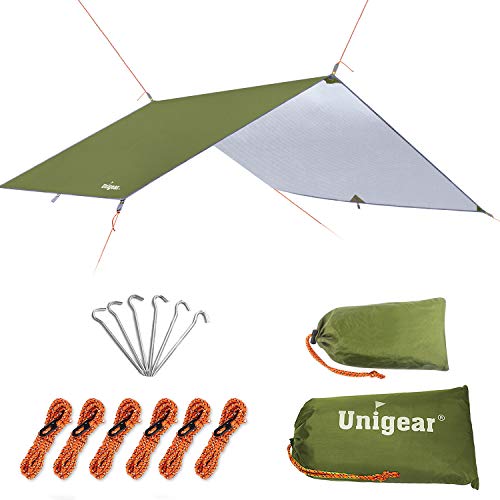
A reliable shelter for backpackers and hikers who prioritize durability and versatility comes in the form of the Unigear Waterproof Hammock Rain Fly. I’ve used it in steady rain and strong winds, and it held up without leaks. The 210D rip-stop Oxford fabric with a PU 3000mm coating keeps me dry, and the reinforced anchor points resist tearing. Weighing just 2.2 pounds, it packs small and carries easily. I’ve set it up as a hammock cover, ground sheet, and shade shelter. It’s not the lightest option, but it’s tougher than most. Includes stakes, guy lines, and a storage bag. Returns are hassle-free if it doesn’t work for you.
Best For: Backpackers and hikers who need a durable, versatile, and waterproof shelter for all-weather outdoor adventures.
Pros:
- Made with 210D rip-stop Oxford fabric and PU 3000mm coating for excellent waterproofing and tear resistance
- Multi-functional design serves as a rain fly, ground tarp, shade shelter, or survival tent
- Includes stakes, guy lines, storage bag, and offers hassle-free returns within 30 days
Cons:
- Slightly heavier than ultralight tarps, which may matter for weight-conscious backpackers
- Actual dimensions are slightly smaller than advertised (9.8×9.8ft vs. 10x10ft listed)
- Green color may not provide optimal visibility in emergency situations
KALINCO Waterproof Camping Tarp Tent Hammock
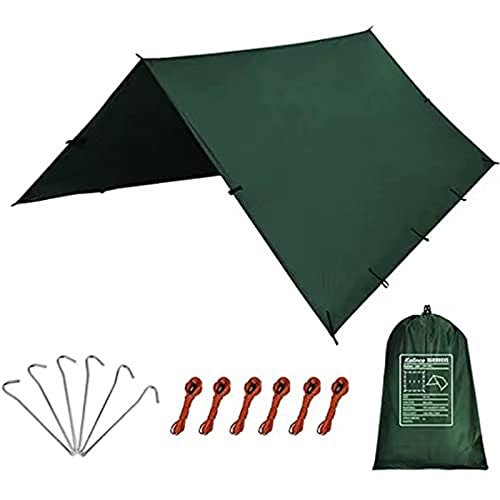
Rain won’t catch me off guard with the KALINCO Waterproof Camping Tarp Tent Hammock-it’s my go-to when shelter reliability means the difference between comfort and exposure. It’s 10×10 ft or 10×15 ft, weighs just 1.8 lbs, and packs small, so I carry it without hesitation. The 210T polyester with PU 3000mm coating keeps me dry, and the taped seam prevents leaks in downpours. I’ve used it as a rain fly, groundsheet, and sun shade-it handles all roles. Nineteen reinforced loops and double stitching hold strong in wind. With 6 stakes, 6 guy lines, and a 90-day warranty, it’s ready for real use.
Best For: Outdoor enthusiasts who need a lightweight, versatile, and durable shelter solution for camping, hiking, or emergency situations.
Pros:
- Lightweight and compact with a carry bag for easy portability
- Highly waterproof with PU 3000mm coating and taped seams, ideal for heavy rain
- Multi-functional design serves as a rain fly, groundsheet, sunshade, and more
Cons:
- Limited size options may not suit larger groups or gear setups
- Stakes and guy lines included may not be heavy-duty enough for extreme conditions
- Polyester material, while durable, may degrade over time with prolonged UV exposure
Kelty Noah’s Tarp Sun Shelter (3 Sizes)

Need dependable overhead protection that handles sun, rain, and wind without weighing down your pack? I rely on the Kelty Noah’s Tarp Sun Shelter when I need lightweight, adaptable coverage across changing conditions. It comes in three sizes-9ft, 12ft, or 16ft squares-so I can match the shelter to my group or terrain. Made from 68D polyester with taped seams, it blocks rain and resists UV. I’ve used it as a sunshade, rainfly, and canopy, and it sets up fast with minimal gear. Reinforced guyout points and attached guylines help me secure it in breezy spots. It’s not for harsh winter storms, but for spring to fall, it delivers solid, packable protection.
Best For: Outdoor enthusiasts seeking lightweight, versatile shelter for camping, tailgating, or beach trips in fair to moderate weather conditions.
Pros:
- Lightweight and packable design ideal for minimalist and hammock camping
- Available in three sizes (9ft, 12ft, 16ft) to fit various group sizes and setups
- Durable 68D polyester with taped seams offers reliable rain and UV protection
Cons:
- Not suitable for extreme weather or winter storm conditions
- Requires separate purchase of poles and stakes for full setup
- Limited enclosed protection-only provides overhead coverage, leaving sides open to wind and rain
Wise Owl Hammock Rain Fly Waterproof Tarp

You’ll want this tarp if your pack list prioritizes weight savings without sacrificing weather protection. I use the Wise Owl Hammock Rain Fly on long hikes where every ounce matters-it weighs just 18.9 oz and packs down small. Made from 3000 mm PU-coated ripstop nylon with taped seams, it holds up in steady rain. At 11 x 9 feet, it gives me room to spare, whether I’m under a hammock or using it as a standalone shelter. The included guy lines, stakes, and waterproof bag make setup fast and reliable. It’s not the cheapest, but it’s durable, versatile, and trusts in harsh conditions.
Best For: Ultralight backpackers and outdoor enthusiasts who need a durable, packable shelter that provides reliable weather protection without adding bulk to their gear.
Pros:
- Lightweight at 18.9 oz and compact pack size make it ideal for ultralight and minimalist backpacking setups
- Durable 3000 mm PU-coated ripstop nylon with taped seams offers excellent waterproof protection in heavy rain
- Versatile design functions as a rain fly, standalone shelter, gear cover, or groundsheet with included stakes and guy lines
Cons:
- Higher price point compared to basic tarps, which may deter budget-conscious buyers
- Limited color options and minimal branding may not appeal to users wanting style or visibility
- Aluminum stakes, while lightweight, may lack the strength of heavier-duty steel stakes in rocky terrain
CARTMAN 2-Pack 8x10ft Waterproof Green Tarp

The CARTMAN 2-Pack 8x10ft Waterproof Green Tarp stands out for those who need durable, no-fail protection in unpredictable conditions. I rely on its 8 mil thickness for waterproof, dustproof coverage, and the heat-sealed edges mean no leaks from needle holes. Each tarp measures exactly 8×10 feet, so I know what I’m working with-no guessing. The embedded nylon ropes and plastic-reinforced corners handle stress without tearing. Metal grommets every 36 inches let me secure it quickly, and the double-layer hems add lasting strength. It’s heavier than 5 mil tarps, but that’s a fair trade for better durability. I’ve used mine for ground cover, gear protection, and emergency shelters-it holds up.
Best For: Outdoor enthusiasts, construction workers, and emergency preparedness users needing reliable, heavy-duty waterproof protection.
Pros:
- 8 mil thickness provides superior durability and waterproof performance compared to thinner 5 mil tarps
- Heat-sealed edges and embedded nylon ropes prevent leaks and enhance tear resistance
- Metal grommets every 36 inches and reinforced corners ensure secure, long-lasting outdoor use
Cons:
- Heavier than lighter-duty tarps, which may reduce portability for backpacking
- Green color may not be ideal for users seeking low-visibility or camouflage options
- Limited color choices available in this product line
Amazon Basics Waterproof Camping Tarp

I rely on the Amazon Basics Waterproof Camping Tarp when I need a no-frills, dependable shelter solution that won’t let me down in wet or windy conditions. Its rip-stop fabric with double-sided polyethylene lamination keeps water out, even during sustained rain. Reinforced corners and edges, plus sturdy grommets, let me secure it tightly without tearing. The tight weave resists rips and makes repairs easier if needed. It’s lightweight and packs small, so I always carry it. I’ve used it as a groundsheet, emergency shelter, and gear cover-it performs the same every time. No bells, no gimmicks, just reliable protection.
Best For: Outdoor enthusiasts seeking a lightweight, durable, and versatile tarp for reliable weather protection during camping, hiking, or emergency situations.
Pros:
- Durable rip-stop fabric with double-sided polyethylene lamination provides excellent water resistance
- Reinforced corners, edges, and multiple grommets ensure secure setup and long-term durability
- Lightweight and compact design makes it easy to carry and store for on-the-go use
Cons:
- Basic design lacks added features like guy lines or zippered attachment points
- Limited color options may not appeal to users seeking visual variety
- Plastic feel and appearance may not suit those preferring eco-friendly or premium materials
Factors to Consider When Choosing Tarp Shelters
You need a tarp that balances material durability with low weight, so it holds up in storms but won’t slow you down on the trail. Look for waterproof performance and full coverage without adding bulk-many lightweight tarps sacrifice one for the other. Setup flexibility matters too, since adaptable configurations save time and fit more terrain types.
Material Durability
When durability matters most, ripstop fabrics like 210D Oxford or 70D nylon deliver by stopping tears from spreading under stress, thanks to their reinforced weave patterns. You’ll want higher denier ratings-like 150D or 210T-because they mean denser, more abrasion-resistant material that withstands rough terrain and constant setup. Look for dual-layer fabric or webbing at anchor points; these reinforcements handle high tension and reduce the chance of tearing where stress concentrates. Heat-sealed seams and taped stitching aren’t just about weather resistance-they prevent fraying and add long-term integrity by closing weak spots left by needle holes. While lighter options exist, they often sacrifice toughness, so you’re better off choosing a slightly heavier tarp if you’re in demanding conditions. Balance weight with resilience: a durable tarp lasts longer and performs when it matters most.
Waterproof Performance
A durable tarp won’t help if it soaks through in a downpour, so waterproof performance matters just as much as tear resistance. You need a PU coating of at least 3000mm to handle heavy rain and extended wet conditions-lower ratings may leak under pressure. Taped or heat-sealed seams are essential; stitched seams without sealing let water in through tiny holes. Fabric density, like 210D or 70D, affects how well the material resists water when pressed by rain or wind. Higher density and coating ratings also slow degradation from UV exposure and wear, so your tarp stays effective longer. Keep in mind, even the best materials can fail if pitched flat-setup angle and coverage matter. Steep angles shed water faster, reducing pooling and seepage. Choose a tarp that combines high waterproof ratings with smart design for reliable storm protection.
Weight And Portability
Most lightweight tarp shelters weigh between 1 and 3 pounds, making them ideal for backpacking where every ounce counts. You’ll find that models using ripstop nylon or lightweight polyester offer a strong balance of low weight and tear resistance. If you’re prioritizing pack space, look for ultra-compact designs that compress to the size of a water bottle-easy to stash in tight packs or emergency kits. A included stuff sack helps you compress the tarp neatly and keeps it integrated in your load. While these lightweight options suit long hikes, tarps over 3 pounds are better for car camping, where weight matters less than durability. You give up some portability but gain sturdiness. Consider your trip type: the lighter the tarp, the easier it is to carry, but check material quality-you don’t want failure in rough conditions.
Size And Coverage
Size matters-choose a tarp that balances coverage with your needs. A 10×10 foot tarp gives you about 100 square feet of protection, enough for two people or a small tent. If you’re solo and prioritizing light weight, go compact-tarps under 9×9 feet pack small and weigh less, ideal for ultralight backpacking. For groups or extra space, larger tarps over 12×12 feet offer room for sleeping, gear storage, and cooking. Common sizes range from 8×10 to 13×13 feet, letting you match coverage to your party size. Keep in mind, setup affects usable space-ridge height and angle change how much shelter you actually get. Bigger isn’t always better if you can’t manage the extra material or weight. Pick the smallest tarp that fits your crew and intended use, and you’ll save weight without sacrificing protection.
Setup Flexibility
When choosing a tarp shelter, how easily you can adapt it to different environments and conditions often comes down to its design for setup flexibility. You’ll want multiple attachment points-like 19 guy loops or reinforced grommets spaced around the perimeter-to secure A-frame, lean-to, or ridge line configurations on uneven ground. Reinforced stitching and dual-layer patches at stress points hold up when you pitch at odd angles or offset anchors. Rectangular or square tarps with symmetrical dimensions let you reposition the shelter as a ground sheet, windbreak, or overhead cover, depending on needs. Integrated ridgeline loops allow stable overhead suspension and let you store gear underneath. Heat-sealed seams and waterproof coatings maintain protection even when the tarp isn’t pitched flat, so rain resistance won’t fail in sloped or angled setups.
Reinforced Attachment Points
You rely on your tarp to hold up when the wind picks up and the rain slants hard, and that starts with how well the attachment points are reinforced. Look for double-stitched seams and dual-layer fabric patches at each anchor-they resist tearing under tension. High-quality tarps have at least 8 reinforced points, usually at corners and mid-sides, so you can stake out in multiple directions without failure. Some models add heat-sealed or taped seams around these zones to block water entry and boost strength. Rustproof metal or plastic grommets are embedded in extra fabric layers to handle high loads without ripping. For maximum adaptability, especially on uneven ground, tarps with 15 or more guy-out points give you more setup options. More anchors mean better control over tension and shape, but they add minor weight. Choose based on your terrain and expected weather-more reinforcement pays off when conditions get rough.
Frequently Asked Questions
Can I Use a Tarp Shelter in Snowy Conditions?
Yes, you can use a tarp shelter in snowy conditions, but it’s risky without proper setup. Snow accumulates on flat or low-angle tarps, increasing collapse risk. Use a steeply angled A-frame or lean-to to shed snow. Pair with insulated ground cover and a reliable sleep system, since tarps offer no insulation. Reinforce guylines and stakes-snow requires stronger anchors. A dedicated winter tent or bivy is safer in heavy snow, but a well-secured tarp works in light to moderate conditions.
How Do I Repair a Torn Tarp While Camping?
You patch a torn tarp fast with a repair kit or duct tape. Clean and dry the area first, then apply the tape or patch over the tear, overlapping by at least an inch on all sides. For lasting fixes, use a peel-and-stick silnylon patch. Avoid stretching the tarp while repairing. This keeps water out and restores strength without adding much weight.
Are Tarp Shelters Allowed in All National Parks?
No, you aren’t allowed to use tarp shelters in all national parks. Each park sets its own rules, and some ban tarps in favor of tents or require permits. You’ll need to check the specific regulations before arriving-some restrict shelters to designated sites, while others prohibit them in sensitive areas. Violating these rules risks fines. Always verify with the park’s official website or ranger station to guarantee your setup complies.
Do Tarp Shelters Provide UV Protection?
Yes, tarp shelters provide UV protection, but the level depends on the fabric’s UPF rating. Most standard polyethylene or nylon tarps block about 70–90% of UV rays, equivalent to UPF 10–30. If you’re out for long hours, look for tarps with UPF 50+ or coatings that specifically state enhanced UV resistance. Darker colors and denser weaves usually offer better protection. You’ll reduce sun exposure markedly compared to being uncovered, but it’s not complete defense.
Can I Paint My Tarp for Camouflage?
You can paint your tarp for camouflage, but it won’t last long. Acrylic or fabric paint adds weight and may clog the waterproof coating, reducing durability. Brush strokes create texture that wears faster under friction and UV exposure. Painted areas crack when folded and reduce breathability. You lose some water resistance unless you reseal the tarp. For better results, use camo netting or drape natural foliage-lighter, removable, and won’t damage your gear.