Best Ultralight Camp Stoves: BRS-3000T, MSR & 3 More Tested
You need a stove that’s light but dependable. Models like the BRS-3000T and MSR PocketRocket 2 weigh under 3 ounces and boil water in under 3.5 minutes. Titanium builds save weight but lack wind protection, so bring a windscreen. Isobutane canisters work well above freezing, but performance drops in cold. The Kuvik wood stove cuts fuel weight but needs dry biomass. For speed and packability, 3000W+ stoves deliver-your next move depends on conditions and trade-offs. Consider what you’ll face on the trail.
We are supported by our audience. When you purchase through links on our site, we may earn an affiliate commission, at no extra cost for you. Learn more. Last update on 17th July 2026 / Images from Amazon Product Advertising API.
Notable Insights
- The MSR PocketRocket 2 weighs just 2.6 oz and boils 1L of water in 3.5 minutes, ideal for ultralight backpacking.
- BRS-3000T, at only 25g, delivers 2700W output, boiling 1L in under 3 minutes with a compact, foldable titanium design.
- Fire-Maple Fixed Star 1 integrates stove, pot, and heat exchanger in an 18.03 oz system for 30% faster boiling performance.
- Kuvik Titanium Wood Stove weighs 6.8 oz, uses no fuel canisters, and burns foraged biomass for true ultralight, off-grid adventures.
- Mini 3000W stove offers powerful 3000W output in a 3.2 oz package with precise flame control and broad canister compatibility.
Fire-Maple Fixed Star 1 Stove System

If you’re a backpacker who counts every ounce but won’t sacrifice cooking efficiency, the Fire-Maple Fixed Star 1 Stove System makes sense. I’ve used it on weekend treks and month-long trips, and it boils water 30% faster than older stoves I’ve carried. Weighing just 18 ounces, it nests everything-stove, pot, and fuel canister (except Coleman)-into a 1-liter pot. The hard-anodized aluminum pot and stainless steel handle lock securely. It needs a windscreen in breeze, but the piezoelectric ignitor works every time. Fuel burns efficiently on propane, butane, or isobutane.
Best For: Backpackers and outdoor enthusiasts who prioritize lightweight, compact cooking systems without sacrificing boiling efficiency.
Pros:
- Boils water 30% faster than traditional backpacking stoves thanks to advanced heat exchange technology
- Entire system, including stove and pot, weighs only 18.03 ounces and nests compactly for easy packing
- Integrated piezoelectric ignitor provides reliable, one-touch ignition with compatibility for propane, butane, and isobutane fuels
Cons:
- Requires a separate windscreen for optimal performance in windy conditions
- Not compatible with Coleman fuel canisters, limiting fuel options for some users
- Fuel canister not included, adding extra cost and planning for first-time buyers
MSR PocketRocket 2 Ultralight Camping and Backpacking Stove

The MSR PocketRocket 2 is best for backpackers who prioritize low weight without sacrificing reliable performance. I rely on it because it weighs just 2.6 oz and boils a liter of water in 3.5 minutes. Its adjustable flame handles everything from simmering to boiling, making meals simple. It runs on widely available isobutane-propane canisters, needs no priming, and screws on easily. The folding design collapses to fit in small packs, and the pot supports grip securely. I’ve used it on trails across seasons, and it’s consistently worked without fail. It includes a lightweight case for protection-compact, efficient, and built for real use.
Best For: Ultralight backpackers and outdoor enthusiasts who want fast boiling times and reliable performance in a compact, portable stove.
Pros:
- Weighs only 2.6 oz, making it ideal for ultralight backpacking
- Boils 1 liter of water in 3.5 minutes with an adjustable flame for precise cooking
- Compact folding design with included protective case for easy packing and global fuel compatibility
Cons:
- Requires isobutane-propane canisters, which can be expensive and leave waste
- Small pot supports may feel unstable with very large or heavy pots
- Performance can decrease in extremely cold weather without a windscreen
BRS Ultra-Light Titanium Camping Stove

I rely on stoves that save every gram without sacrificing function, and the BRS-3000T delivers where it counts for ultralight backpackers. It weighs just 25g and packs small, folding into a tiny profile that fits in a 750ml pot with a 110g canister. It produces 2700W, boiling a liter of water in under three minutes, though it burns 140g of fuel per hour. The flame adjusts smoothly, and the pot supports lock securely. I include it on long trips where weight matters most. It’s basic but effective-no frills, just function.
Best For: Ultralight backpackers who prioritize minimal weight and compact size without sacrificing reliable cooking performance on the trail.
Pros:
- Extremely lightweight at only 25g, ideal for reducing pack weight
- Boils 1L of water in under 3 minutes with 2700W output
- Compact design nests inside a 750ml pot with a 110g canister for efficient packing
Cons:
- High fuel consumption at 140g per hour, requiring extra canisters for long trips
- Basic design lacks wind protection, which can affect efficiency in exposed conditions
- Small pot supports may feel unstable with larger or heavier cookware
Fire-Maple Portable Camping Stove (Greenpeak)

You’ll find the Fire-Maple Greenpeak stove best suits ultralight backpackers and survival-focused travelers who prioritize minimal weight without sacrificing reliable performance. I’ve used it on trails and in harsh conditions, and its 85-gram weight saves space and energy. Made from stainless steel, ceramic, aluminum alloy, and silicone, it handles wear without failing. The compact 2.1 x 2.8-inch folded size slides into any pack. It’s fuel-efficient, delivering strong output while using less propane. I pair mine with a G3 pot for ideal results. Just note: Greenpeak 1 doesn’t work with the Z1 adapter.
Best For: Ultralight backpackers and survival-focused travelers who need a durable, compact, and fuel-efficient stove for on-the-go cooking in rugged conditions.
Pros:
- Weighs only 85 grams and folds to a compact 2.1 x 2.8 inches, ideal for saving pack space
- Constructed with durable materials like stainless steel, ceramic, aluminum alloy, and silicone for reliable performance in harsh environments
- Fuel-efficient design delivers strong heat output while minimizing propane consumption
Cons:
- Not compatible with the Z1 adapter, limiting accessory options
- Requires specific pot pairing (G3) for optimal performance, reducing flexibility
- Small size may make it less stable with larger cookware
BRS 3000T Titanium Ultralight Camping Stove

Looking for a stove that won’t weigh you down on long hikes? I’ve used the BRS 3000T on dozens of trips, and its 26g weight delivers where it counts. It boils 1L of water in under 3 minutes with 2700W output. I’ve consistently boiled 500ml using just 7–8g of fuel. It runs on standard propane canisters and fits inside my 750ml pot with an 110g canister. The titanium legs are stable, and flame control is smooth. Just close the valve before attaching it. The green pouch helps me find it fast. It’s basic but effective-no extras, no waste.
Best For: Backpackers and ultralight adventurers who prioritize minimal weight and compact size without sacrificing reliable cooking performance.
Pros:
- Ultralight at only 26g and packs down small enough to fit inside a 750ml pot with a fuel canister
- High efficiency with 2700W output, boiling 1L of water in under 3 minutes and using just 7–8g of fuel for 500ml
- Durable titanium construction with stable pot support, smooth flame control, and high-visibility green storage pouch
Cons:
- Minimalist design lacks built-in wind protection, reducing efficiency in windy conditions
- Requires careful handling due to small, lightweight build that may feel flimsy
- Fuel canister compatibility limited to standard propane mix, which may perform poorly in very cold weather
Fire-Maple Torch Gas Stove

The Fire-Maple Torch Gas Stove suits ultralight backpackers who prioritize compactness and fast setup. I’ve used it on trails where every gram counts-it weighs just 56g and folds small enough to fit in a pocket. It boils 0.5L of water quickly, though performance dips in wind without a full windscreen. The built-in piezo ignition sparks reliably, saving effort. It runs on isobutane canisters and works with G2/G3 pots. An adapter lets me use propane, but that’s more for car camping. Setup takes under 10 seconds-no tools, no fuss. It’s not for extreme conditions, but for simplicity and weight savings, it’s effective.
Best For: Ultralight backpackers and hikers who need a compact, fast-deploying stove for simple cooking in mild conditions.
Pros:
- Weighs only 56g and folds into a pocket-sized form for easy packing
- Built-in piezo ignition enables quick, tool-free startup in under 10 seconds
- Efficient boiling of 0.5L water with compatibility for isobutane canisters and G2/G3 pots
Cons:
- Reduced performance in windy conditions without a full windscreen
- Not recommended for extreme outdoor environments or prolonged heavy-duty use
- Propane compatibility requires a separate Z1 adapter, adding cost and complexity
BRS 26g Ultralight Titanium Camping Stove

I rely on the BRS 26g Ultralight Titanium Camping Stove when every ounce matters most, and I need a dependable option for fast boils on long backpacking trips. It weighs just 26g and packs small, so it barely takes up space in my kit. It boils a liter of water in under three minutes, which is solid for its size. The flame adjusts smoothly, and the titanium build feels durable despite the minimal weight. I flip out the legs, set it on a canister, and it’s ready. It doesn’t include a lighter or fuel, but that’s expected. At this weight and cost, it’s a pragmatic choice.
Best For: Ultralight backpackers and outdoor enthusiasts who prioritize minimal weight and compact size without sacrificing reliable, fast boiling performance.
Pros:
- Weighs only 26g and packs down small, making it ideal for ultralight and space-constrained backpacking setups
- Boils 1 liter of water in under 3 minutes with a high-efficiency 1940W flame and smooth flame adjustment
- Durable titanium alloy construction with a foldable, one-piece design built for repeated outdoor use
Cons:
- Does not include ignition source or fuel, requiring separate purchases for full setup
- Small pot supports may feel unstable with larger or heavier cookware
- Minimalist design lacks advanced features like automatic shut-off or precision control
Kuvik Titanium Wood Stove

If you’re counting every ounce on a backpacking trip or building a minimalist survival kit, the Kuvik Titanium Wood Stove delivers where weight and packability matter most. I carry it because it weighs just 6.8 oz and collapses to 0.2” thick-barely takes up space. Made from Grade-1 titanium, it’s light but tough, resisting corrosion and lasting through wet or rugged conditions. I can assemble it in seconds, no tools needed, and it holds pans securely. It burns twigs or grass, so I don’t haul fuel. Yes, it needs dry biomass, but that’s a fair trade for shedding weight and relying on what’s around me.
Best For: Ultralight backpackers, survivalists, and outdoor enthusiasts who prioritize minimal pack space and weight without sacrificing reliable cooking performance.
Pros:
- Extremely lightweight at 6.8 oz and collapses to just 0.2” thick for easy packing
- Durable Grade-1 titanium construction resists corrosion and withstands harsh outdoor conditions
- Fuel-efficient design uses readily available biomass, eliminating the need to carry fuel canisters
Cons:
- Performance depends on availability of dry biomass, which may be limited in wet environments
- Small size may restrict use with larger pots or high-flame cooking needs
- Requires careful cleaning and storage to manage soot buildup despite included carrying case
Mini 3000W Portable Camping Stove
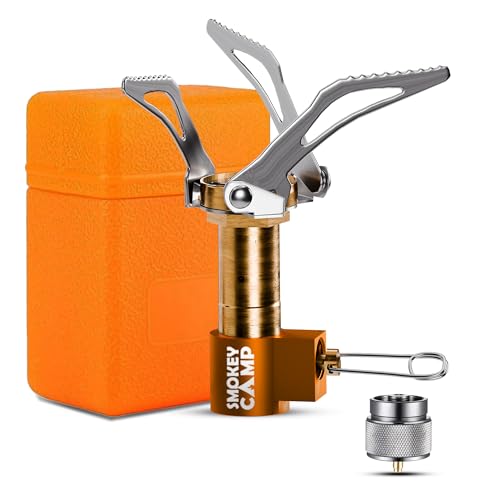
Looking for a stove that won’t weigh you down but still delivers serious power? I’ve used the Mini 3000W Portable Camping Stove on several trips, and it consistently boils water in under five minutes. At just 3.2 ounces, it’s ultralight and packs down to barely over 3 inches. It runs on standard isobutane or propane canisters with an included adapter for global fuels. The flame control works smoothly, letting me simmer or sear. Made from durable alloy steel, it handles rough terrain well. It’s compact enough for my backpack but stable enough for frying. From rain to wind, it performs reliably.
Best For: Backpackers and outdoor enthusiasts who need a lightweight, powerful, and reliable stove for cooking in remote or rugged environments.
Pros:
- Ultralight design at just 3.2 ounces, ideal for minimizing pack weight
- Delivers 3000W power for rapid boiling and precise flame control
- Compatible with standard isobutane and propane canisters globally, including adapter
Cons:
- Standalone fuel canisters required, not integrated, adding to overall pack bulk
- Small size may limit stability with larger pots in windy conditions
- Not suitable for extended group cooking due to compact design
Camping Stove with Fuel Canister Adapter

The RIDEIWAKE RWCP01 stands out for backpackers who prioritize both weight savings and fuel flexibility, since it runs on multiple canister types without tipping the scales. I’ve used it with EN 417, monobutane, and 1lb propane tanks-thanks to the included adapters-and it stays stable under pots up to 10KG. It weighs just 12 ounces and folds compactly, fitting easily in my pack. The copper core handles high heat without warping, and the 3900W output boils water fast. Wind resistance is solid, though I still shield it in gusts. Piezo ignition works reliably, and flame control is precise. It’s practical, durable, and ready for varied fuel sources-key when off-grid.
Best For: Backpackers and outdoor enthusiasts who need a lightweight, durable stove with versatile fuel compatibility for reliable cooking in remote conditions.
Pros:
- Lightweight at only 12 ounces and foldable for easy packing and transport
- Compatible with multiple fuel canister types including EN 417, monobutane, and 1lb propane tanks via included adapters
- Powerful 3900W output with efficient heat distribution and reliable piezo ignition
Cons:
- Wind performance, while improved by the windshield, still requires user shielding in high winds
- Fuel canisters not included, requiring separate purchase depending on trip duration and needs
- Copper core, while durable, may require occasional cleaning to maintain optimal heat transfer
Factors to Consider When Choosing an Ultralight Camp Stove
You need a stove that balances weight and size without sacrificing performance. Consider fuel efficiency and boil time-they directly impact how quickly you eat and how much you carry. Durability, material choice, and ignition type all affect reliability, so match them to your expected conditions and usage.
Weight And Size
You’ll want a stove that won’t weigh you down or take up valuable space-most ultralight models come in under 3 ounces, with some dipping as low as 25 grams, making them easy to carry over long distances. Collapsed, many measure just 2.1 x 2.8 inches, letting them fit neatly inside your cook pot or nest around a fuel canister. Folding designs save room, and stoves with built-in supports cut out extra parts, trimming both size and weight. You’re not hauling gear just to cook-you’re minimizing every ounce. Materials like titanium or high-strength alloys keep stoves light but durable, so they survive trail abuse without adding bulk. A compact stove slips into your pack without costing you space for food or shelter. You’ll value that on mile ten. Prioritize models that balance small packed dimensions with stable cooking performance-because saving weight means nothing if the stove fails when you need it.
Fuel Efficiency
Boiling 500ml of water on just 7 to 8 grams of fuel isn’t rare with today’s top-performing stoves-high-efficiency burners deliver that by focusing heat directly to the cookware, cutting waste and extending each canister’s life. You’ll save fuel further with precise flame control, which lets you simmer instead of blast at full power. Wind-resistant designs and built-in heat exchangers protect the flame and reduce heat loss, especially in cool or breezy conditions. An isobutane-propane blend burns more efficiently in cold weather than butane alone, giving you reliable performance when temperatures drop. You won’t need to carry as many canisters if your stove maximizes every gram of fuel. That means lighter loads and fewer resupply stops. But efficiency often depends on using the right pot and keeping the stove clean. You can’t ignore these details if you want real-world results that match the claims. Choose wisely-efficiency adds up fast when you’re counting every ounce.
Boil Time Performance
A stove that sips fuel often brings fast boil times, but speed isn’t guaranteed just by efficiency. You’ll typically see 1-liter boil times between 3 and 5 minutes, depending on design. Stoves pumping out over 2700 watts can boil that liter in under 3 minutes-ideal when you’re rushed. High-efficiency burners with heat exchange tech cut boiling time by up to 30% by directing more heat into your pot. But wind’s a major slowdown; without a windscreen, expect 50% longer times. Even the best stove struggles in cold weather-fuel type and canister pressure drop, weakening flame and consistency. You’ll want isobutane blends in colder climates for better vapor pressure. Don’t assume compact means slow or efficient means weak; test real-world performance. Match your stove’s output and features to expected conditions so you’re not waiting forever for a hot meal.
Material Durability
When durability matters most, material choice directly impacts how well your stove holds up over time. Titanium alloys weigh under 30 grams and resist corrosion and cracking, so they endure harsh conditions without failing, making them ideal for long-term backpacking. You’ll benefit from titanium’s strength-to-weight ratio, especially when relying on a stove for hundreds of uses. Stainless steel burners and supports handle repeated heating and cooling without degrading, offering reliable structure through seasons of use. Hard-anodized aluminum conducts heat well and holds up to regular use, but it can warp under prolonged high heat, so it’s less dependable under extreme conditions. Copper cores improve heat distribution and resist oxidation at high temperatures, adding efficiency without sacrificing resilience. Each material brings trade-offs between weight, longevity, and performance-choose based on how hard you’ll push your gear and what kind of conditions you’ll face most.
Ignition Type
Reliability starts with how you light your stove, and piezoelectric ignition gives you a spark with just a push-no matches, no lighter, one hand. The system uses mechanical pressure to generate a spark, lighting your stove in under five seconds. But it can fail in damp or icy conditions if moisture blocks the spark, and cold reduces gas pressure, weakening ignition success. At high altitudes, both fuel flow and spark intensity drop, making cold starts harder. Stoves with wind-protected ignition zones help in breezy spots, but they’re not foolproof. Manual ignition with a lighter or matches is more dependable in wet or freezing weather, though it adds a small weight for the tool. You trade convenience for control. If you value speed and simplicity in dry conditions, piezo works. For harsh weather, manual is the safer bet. Choose based on where you’ll actually cook.
Wind Resistance
You can have the most reliable ignition in the world, but if wind steals your heat, you’re still waiting forever for water to boil. Unprotected stoves often fail in winds over 10 mph, with flames flickering or going out. Choose models with recessed burners or enclosed flames-they stay steady and efficient in breezes up to 15 mph. A built-in windshield or flame stabilizer can cut boiling time by up to 30%. Aerodynamic, low-profile designs also resist wind better in exposed areas. Add a lightweight, reflective windscreen for even greater protection and fuel savings. Just make sure it doesn’t block gas flow or overheat the canister. Some stoves integrate these features; others need after-market help. Either way, real-world performance drops fast without wind protection. Don’t rely on sheltered campsites-weather changes. Wind resistance isn’t optional; it’s built-in efficiency.
Pot Stability
Stability starts with the stove’s design. You need three or more wide-set pot support legs-they distribute weight evenly and resist tipping on uneven terrain. Serrated or textured supports grip your cookware, preventing slippage even with mismatched pot sizes. Foldable or adjustable supports let you adapt the stove’s footprint to the ground, improving balance on rocky or sloped surfaces. A low center of gravity, achieved through compact burner placement and broad supports, keeps your setup steady during simmering or boiling. Models tested to support up to 10kg handle heavy pots safely, a key factor in windy or rugged conditions. Don’t assume lightweight means wobbly-some ultralight stoves maintain rigidity without bulk. Stability isn’t just about the stove; it’s how well it works with your pot. Choose a design that balances strength, adjustability, and real-world performance.
Packability And Design
When space and weight are at a premium, packability becomes a deciding factor in choosing an ultralight camp stove. You’ll want a stove that folds down to less than 3 inches in diameter and 2 inches tall, so it fits inside your cook pot or a small pack compartment. Most ultralight models weigh between 1 and 3 ounces, keeping your load light on long hikes. Look for collapsible pot supports and integrated designs-they reduce bulk but still hold your pot steady. Some stoves nest with fuel canisters and pots, saving even more space. Materials like titanium and high-strength alloys deliver durability without adding weight. These features trade a bit of convenience for efficiency, but the payoff is a streamlined pack. You’re not just saving space-you’re making every ounce count.
Frequently Asked Questions
Can These Stoves Be Used Indoors Safely?
You can’t use these stoves indoors safely. They produce carbon monoxide, a deadly gas, and lack shut-off sensors or ventilation controls. Even in well-ventilated rooms, incomplete combustion risks poisoning. They’re designed for open-air use where airflow disperses fumes. Using one indoors, even briefly, increases poisoning and fire risks. No exceptions. Always operate outside, away from tents or shelters. Your safety depends on proper usage-don’t cut corners. Outdoor use only-no compromises.
Are Replacement Parts Available for Titanium Stoves?
Yes, you can get replacement parts for most titanium stoves, but availability depends on the brand and model. Popular brands like MSR, Snow Peak, and Toaks offer jets, pots, and valve components. Smaller or off-brand stoves might not have long-term part support. You’ll want to check manufacturer websites or contact customer service before relying on repairs. Keep in mind, repairing titanium requires specialized tools-most users replace the stove entirely when parts fail.
How Do I Clean an Ultralight Stove After Use?
You clean your ultralight stove by wiping it with a damp cloth while it’s cool, removing fuel residue with isopropyl alcohol. Use a small brush to clear clogged jets-compressed air helps dislodge debris. Avoid soaking titanium parts; moisture accelerates corrosion. Rinse metal components only if needed, then dry immediately. Regular cleaning prevents clogs and guarantees reliable ignition. Inspect O-rings and connections after cleaning-they wear faster if grime builds up.
Do These Stoves Work Well in Cold Weather?
They don’t work well in cold weather unless you use a liquid-fuel stove or place the canister upright in a bowl of warm water. Most rely on canister fuel, which loses pressure below freezing, slowing boil times. You can mitigate this by warming the canister or using a remote canister stove in upright mode. But even then, efficiency drops. For consistent cold-weather performance, opt for white gas stoves-they’re heavier but more reliable when temps fall.
Can I Fly With a Titanium Camping Stove?
You can’t fly with a titanium camping stove if it has fuel residue. TSA bans all stoves with flammable liquids or vapors, even if the stove body is empty. Clean it thoroughly, remove every trace of fuel, and you might get approval. Still, airlines have final say-check their rules first. Flying with any fuel bottle? That’s always prohibited. Better to pack the stove in checked luggage, completely dry, or buy one at your destination to avoid issues.