Best Water Storage Containers for Emergency and Everyday Use
You need reliable water storage that lasts-choose containers with BPA-free HDPE, UV protection, and secure seals. The 40-gallon Chapin tank offers bulk storage, while 5-gallon Scepter and FastRack jugs balance portability and stackability. Reliance’s 7-gallon unit has a leak-proof spigot; collapsible options save space when empty. All are food-grade safe, but rigid models handle long-term use better. Weight, material, and seal type directly impact performance-each choice trades capacity, durability, or convenience. Pick based on your space, rotation, and access needs. More details follow.
We are supported by our audience. When you purchase through links on our site, we may earn an affiliate commission, at no extra cost for you. Learn more. Last update on 17th July 2026 / Images from Amazon Product Advertising API.
Notable Insights
- Choose BPA-free, food-grade HDPE containers with UV protection to ensure safe, long-term water storage.
- Opt for stackable or collapsible designs to maximize space efficiency in emergency kits or small spaces.
- Prioritize leak-proof seals, secure caps, and spigots with shut-off valves for reliable, drip-free use.
- Select durable, rigid containers with reinforced walls for impact resistance and stability when full.
- Consider portability features like ergonomic handles and moderate capacity (5–7 gallons) for easy transport.
Chapin 40-Gallon Water Storage Tank

If you’re managing a large garden or need reliable water transport for irrigation and cleaning on a farm, the Chapin 40-Gallon Water Storage Tank works well because it’s built for durability and outdoor use. I’ve used it on my property, and the UV-protected, translucent polyethylene holds up under sun exposure while letting me see water levels at a glance. At 35.44 inches wide and 22.63 inches high, it’s bulky but manageable on a trailer or truck bed. The 6-inch cap fills quickly, and the 2-inch drain with 3/4-inch hose port allows fast, controlled emptying. Nitrile seals prevent leaks, and though it’s not lightweight at 21.7 pounds, it’s sturdy and made in the USA with a one-year warranty.
Best For: Farmers, gardeners, and property owners needing a durable, large-capacity water storage solution for outdoor irrigation, cleaning, and emergency water supply.
Pros:
- UV-protected, translucent polyethylene construction resists sunlight damage and allows easy monitoring of water levels
- Equipped with a 6-inch wide cap for fast filling and a 2-inch drain with 3/4-inch garden-hose port for controlled, efficient emptying
- Durable nitrile seals and sturdy 21.7-pound design made in the USA with a 1-year limited warranty
Cons:
- Bulky dimensions (35.44L x 35.44W x 22.63H inches) make handling difficult without equipment or support
- Weight of 21.7 pounds when empty adds to overall load during transport
- Basic design lacks integrated wheels or handles, limiting portability without a trailer or truck
Reliance Aqua-Tainer 7 Gallon Water Container

The Reliance Aqua-Tainer 7 Gallon Water Container suits individuals needing dependable, mid-capacity water storage for emergencies or outdoor use. I’ve found it practical for storing water safely at home or transporting it to campsites. Its 26-liter capacity balances portability and supply, while the rigid, rectangular design stacks neatly when empty. The integrated handle and contour grip make carrying easier, and the hideaway spigot dispenses water on demand without leaks. I appreciate the reversible cap for secure transport. Built from durable materials, it lasts years if stored out of direct sunlight. It comes with a five-year warranty and weighs just under 2 kg-light, reliable, and efficient for real-world prep needs.
Best For: Individuals seeking a reliable, mid-capacity water storage solution for emergency preparedness, camping, or portable hydration needs.
Pros:
- Durable 7-gallon rigid container with a space-saving, stackable design for efficient storage
- Features a hideaway spigot and reversible cap for leak-free transport and on-demand dispensing
- Lightweight and equipped with an integrated handle and contour grip for easy carrying
Cons:
- Prolonged exposure to direct sunlight may cause material degradation and brittleness
- Spigot mechanism may require occasional maintenance to prevent dripping over time
- Capacity may be too large for minimalist or solo backpacking use
Stackable 3-Gallon BPA-Free Water Jug

I need dependable water storage that saves space without sacrificing durability, and the ESTARN Stackable 3-Gallon BPA-Free Water Jug fits that requirement perfectly. At 7 inches wide and 16 inches tall, it’s compact enough to store vertically in tight spaces like closets or RVs. The BPA-free plastic is lightweight, weighing just 3 pounds empty, yet sturdy enough for long-term use. Its cylindrical shape and stackable design keep units stable and secure. I appreciate the screw cap for leak resistance and the easy-grip handle for lifting. It holds 384 ounces, making it practical for emergency prep, camping, or daily reuse. Hand wash only, but that’s a fair trade for lasting performance.
Best For: Homeowners, campers, and emergency preppers seeking space-efficient, durable, and reusable water storage solutions.
Pros:
- Stackable design maximizes vertical storage in tight spaces like closets, garages, or RVs
- Made from BPA-free, lightweight yet durable plastic that resists deformation
- Features a leak-proof screw cap and easy-grip handle for secure transport and long-term use
Cons:
- Hand wash only, which may be less convenient for frequent cleaning
- Limited capacity at 3 gallons compared to larger storage options
- Not designed for water purification-only for storing pre-treated water
WaterStorageCube Collapsible Water Container with Spigot
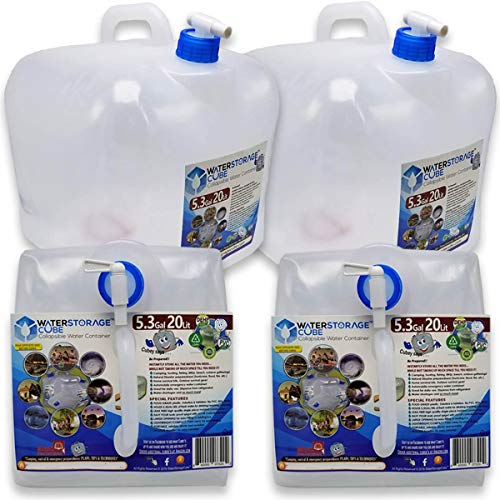
You’ll want the WaterStorageCube Collapsible Water Container with Spigot if you need a reliable, space-saving water solution for backpacking, emergency prep, or daily use. I’ve used it on trips and kept one in my emergency kit, and it works well where space matters. Made from food-grade, BPA-free LDPE, it’s safe and odorless. The 2.6-gallon version folds flat when empty and weighs just 0.18 kg. Its spigot is leak-proof and needs no gasket, which simplifies cleaning. I’ve tested it in cold temps, and it stays flexible. It’s not rigid, so it needs support, but that’s the trade-off for portability.
Best For: Outdoor enthusiasts, emergency preppers, and anyone needing a lightweight, space-saving water storage solution for portable or compact use.
Pros:
- Made from food-grade, BPA-free, and odorless LDPE material, ensuring safe and clean drinking water
- Collapsible design folds flat when empty, saving space and enhancing portability for travel or storage
- Leak-proof spigot with gasketless design allows for easy use and cleaning, ideal for camping, RVs, and emergencies
Cons:
- Not rigid, so it requires external support to stand upright when filled
- Limited capacity compared to larger, rigid containers, making it less ideal for large groups
- Spigot durability may be a concern with frequent or heavy-duty use over time
Scepter 5 Gallon Portable Water Container

A 5-gallon container that handles rough use without failing suits anyone needing dependable water storage for emergencies or outdoor trips, and the Scepter 5 Gallon Portable Water Container fits that role with its military-grade HDPE construction. I’ve used it on multiple camping trips, and it’s tough, resisting cracks even when dropped on gravel. The carry handle stays solid, even when full, and I appreciate the leak-proof seal-it sits tight in my truck bed. It’s BPA-free, so I store drinking water without worry, but I’ve also used it for pet food and smoker pellets. At 6.5 by 18.75 inches, it’s compact enough to stack, and cleaning is simple with a wide opening.
Best For: Outdoor enthusiasts, emergency preppers, and campers needing durable, portable, and safe water or dry storage.
Pros:
- Military-grade HDPE construction ensures durability and resistance to impacts and cracking
- Leak-proof design with a secure seal ideal for transport and long-term storage
- BPA-free and versatile for storing drinking water, pet food, and other dry goods
Cons:
- Black color may absorb heat in direct sunlight, warming contents faster
- Limited color options available, which may not suit all user preferences
- Package weight of over 10 pounds may be cumbersome when transporting multiple units
2 Gallon Collapsible Water Jug

When space and weight matter most, the 2-gallon collapsible water jug from CoreMuse stands out for backpackers, RV travelers, and emergency preppers who need reliable, compact hydration solutions. I’ve used it on trips where every ounce counts-it holds 2.1 gallons (8 liters) but weighs just 3.84 ounces. Its cylindrical shape collapses flat when empty, saving space. The separate inlet and outlet improve flow by balancing air pressure, and the spout allows controlled pouring. It’s leakproof, made from BPA-free, food-grade plastic, and I trust it for water or alcohol storage. Hand wash only. Backed by a 1-year warranty.
Best For: Outdoor enthusiasts, RV travelers, and emergency preppers needing a lightweight, space-saving water storage solution.
Pros:
- Holds 2.1 gallons while weighing only 3.84 ounces, ideal for portable hydration
- Collapsible cylindrical design saves space when empty
- Leakproof, BPA-free, food-grade plastic safe for water and alcohol storage
Cons:
- Hand wash only, not dishwasher safe
- Spout may be prone to debris if not handled carefully
- Limited capacity compared to larger rigid containers
FastRack 5 Gallon Hedpak (Pack of 2)

The FastRack 5 Gallon HedPak (Pack of 2) works best for homebrewers and preppers needing reliable, long-term liquid storage without the fragility of glass. I use these because they’re lightweight, BPA-free, and made from food-grade plastic that won’t shatter. Each holds 5 gallons with clear graduated markings, so measuring is easy. Their square shape saves space and stacks neatly. The threaded cap seals tightly, preventing leaks during transport or storage. I’ve used them for water, homebrew, and kombucha without issues. They’re also handy for non-food uses like waste oil. At 3.64 pounds, they’re easy to move when empty. If damaged, the company replaces them-no hassle.
Best For: Homebrewers, preppers, and DIY enthusiasts needing durable, lightweight, and space-efficient 5-gallon liquid storage.
Pros:
- Lightweight, shatterproof BPA-free food-grade plastic ideal for long-term storage
- Square design with graduated markings maximizes space and enables accurate measuring
- Threaded cap ensures a leak-proof seal, and the company offers a no-hassle replacement guarantee
Cons:
- Plastic may absorb odors over time with repeated use, especially with strong fermentations
- Not as visually transparent as glass, making sediment monitoring slightly harder
- Limited availability of replacement caps or accessories outside the original pack
5-Gallon Stackable Water Storage Containers Set

If you’re prepping for emergencies or need reliable water storage for off-grid adventures, this 5-gallon stackable set from Ready Store delivers practical, space-saving utility without compromise. I’ve got four containers, each made from food-grade, BPA-free HDPE that’s tough and safe for long-term use. They stack neatly thanks to flat tops and bottoms, and the built-in handles make moving them manageable, though each weighs around 40 lbs when full. The twist breathing ports prevent air lock, so pouring is smooth. With 20 gallons total, this set supports basic hydration for one person over 40 days. It’s American-made, built to last, and fits well in cars, campers, or storage bins.
Best For: Individuals preparing for emergencies, outdoor enthusiasts needing portable water storage, or households seeking reliable, space-efficient, long-term water solutions.
Pros:
- Made from food-grade, BPA-free HDPE plastic, ensuring safe, durable, and long-lasting water storage
- Stackable design with flat tops and bottoms maximizes space efficiency and includes built-in handles for portability
- Twist breathing ports prevent air lock, enabling smooth pouring and practical use in emergency or outdoor settings
Cons:
- Each container weighs approximately 40 pounds when full, making handling difficult without assistance
- Limited capacity per container may require multiple sets for larger households or extended emergencies
- Plastic material, while durable, may retain odors over time if not cleaned properly between uses
Legacy 30-Gallon Water Storage Kit

I rely on the Legacy 30-Gallon Water Storage Kit when I need a long-term, space-efficient solution that holds a precise 30 gallons across six stackable 5-gallon tanks. Each BPA-free, food-grade plastic tank blocks light with its dark blue build, slowing algae and keeping water fresh. I’ve used the included treatment drops, and they’ve prevented slime for over four years without rotation. At 40 pounds full, the cylindrical tanks are heavy, but the built-in handles and stackable ribs make transport and storage manageable in tight spaces. The strap wrench guarantees a leak-proof seal. It’s not flashy, but it’s reliable for emergencies.
Best For: Emergency preppers, campers, and survivalists needing reliable, long-term water storage in a space-efficient, stackable design.
Pros:
- Durable, BPA-free food-grade plastic with dark blue tint to block light and inhibit algae growth
- Includes water treatment drops that maintain freshness for up to 5 years without rotation
- Stackable design with built-in handles and a strap wrench for secure, leak-proof storage and transport
Cons:
- Each 5-gallon tank weighs 40 pounds when full, making handling difficult without assistance
- Cylindrical shape may use space less efficiently compared to rectangular containers
- Limited availability of replacement parts or additional treatment drops separately
FastRack 5 Gallon Water Jug (Pack of 4)

Need four durable, 5-gallon containers that handle water storage, fermentation, or transport without failure? I’ve used the FastRack pack for months, and they’ve held up. Made from food-grade, BPA-free HDPE, each jug resists cracks and odors. The threaded lids seal tight, and I’ve carried them full without leaks-reinforced seams help. They’re not just for water; I’ve brewed kombucha and stored waste oil with no issues. The 4-pack saves time and money if you need volume, like for batching or camping trips. One gripper included, so opening is manageable. If a jug arrives damaged, customer support replaces it. No gimmicks-just functional, reusable jugs that work.
Best For: Homebrewers, preppers, and outdoor enthusiasts needing durable, reusable 5-gallon containers for liquid storage, fermentation, or transport.
Pros:
- Made from food-grade, BPA-free HDPE plastic that resists cracks and odors
- Leak-proof threaded lids and reinforced seams ensure safe storage and transport
- Versatile use for water, brewing, emergency storage, and waste oil disposal
Cons:
- Only one rubber cap gripper included for four jugs
- HDPE material may scratch over time with heavy use
- Caps not color-coded, making content identification less convenient
Factors to Consider When Choosing a Water Storage Container
You need a container that matches your storage space and usage-get the capacity right so you’re not stuck with too much or too little. Make sure it’s made from safe, durable materials that won’t crack or leak, especially if you’re moving it around. Look for secure lids and portability features that actually work when you’re relying on that water in a pinch.
Capacity And Volume
A water storage container’s capacity directly impacts its usefulness, so choosing the right volume depends on how long you need it to last and how many people it must serve. You’ll find options from 1.3 to over 4 grinding gallons if exceptions, letting you match size to your needs. For emergencies, plan for one gallon per person per day-so a 30-gallon container supports three people for ten days. A 5-gallon unit weighs about 40 pounds when full, making it manageable but heavy to move often. If space is tight, pick stackable models; some safely stack four high, cutting floor use markedly. Look for containers with clear, graduated markings so you can measure portions accurately and refill with confidence. Larger volumes mean fewer refills but less mobility. You’ll trade portability for capacity, so balance based on your expected use. Choose the volume that fits your real needs, not just convenience.
Material Safety
Size matters, but material matters more when it comes to keeping water safe over time. You need containers made from BPA-free, food-grade HDPE plastic-it won’t leach toxins and is widely trusted for long-term storage. Avoid PVC or plastics with phthalates like DEHP; they can release harmful chemicals into your water. Choose UV-protected or opaque designs to block sunlight, which weakens plastic and fuels algae and bacteria. Check that seals and gaskets use inert materials like nitrile rubber-they won’t degrade or taint the water. A smooth, non-porous interior helps prevent bacterial buildup and makes cleaning easier. You’re not just storing water-you’re protecting its quality. Every material choice impacts safety, so go with what’s proven, not convenient. Your health depends on these details, not just capacity.
Durability And Strength
Built to endure, high-density polyethylene (HDPE) forms the backbone of durable water storage, resisting cracks and impacts even under rough handling or extreme temperatures. You’ll want containers with reinforced seams and thicker walls-they handle full capacity without bulging or rupturing over time. UV-protected HDPE prevents breakdown from long-term sun exposure, so leaving a container outdoors won’t quickly ruin it. If you’re prepping for emergencies, look for models built to military-grade standards; they’re drop-tested and stress-rated to survive harsh conditions. Leak-proof designs with gasketless spigots or tight-threaded caps cut down on seal wear, reducing failure risks during storage. These details matter when failure isn’t an option. You’re not just buying a container-you’re securing reliable access. Prioritize construction that proves toughness through real-world specs, not marketing claims. Strength isn’t just about thickness-it’s about smart, tested engineering that holds up when you need it most.
Portability Features
When you’re on the move, whether evacuating or heading into the backcountry, having a container you can carry without strain makes all the difference. Look for integrated molded handles or soft grips-they distribute weight evenly and reduce hand fatigue when the container’s full. Lightweight BPA-free HDPE plastic cuts heft without sacrificing durability, so you’re not lugging around excess weight. If space is tight, go for foldable or collapsible designs; they shrink when empty and fit neatly into backpacks or emergency kits. Compact sizes and stackable shapes help you pack multiple units in a car without tipping or shifting during transit. While you’ll want secure caps to prevent spills, focus here on how easy it is to lift, grip, and transport the container when full. Real-world use means balancing capacity with manageability-especially when every ounce counts.
Leak Proof Design
You’ll want a container that keeps water in and leaks out-look for threaded caps with secure seals or gasketless spigots, since they consistently prevent seepage during transport and long-term storage. Choose models with reinforced seams and one-piece construction to eliminate weak points that could crack under pressure or impact. Tight-sealing screw-on vents and molded-in lids maintain integrity when moved or exposed to temperature swings. Spigots with built-in shut-off valves and durable gaskets let you dispense water cleanly without drips or gradual leakage. High-density polyethylene (HDPE) and similar rigid plastics resist warping, helping the cap seal stay consistent over time. These features work together to guarantee the container won’t fail when jostled, stacked, or stored for months. Leak resistance isn’t just about convenience-it’s about reliability when you depend on every drop.
Stackability Space
A stackable water container saves significant space compared to non-stackable models, with some designs reducing storage footprint by up to 75%. You’ll want containers with ribs or flat surfaces that allow secure vertical stacking, especially if space is limited. Cylindrical tanks with stackable ribs support multiple filled tiers without compromising stability. Rectangular or square units fit tightly side by side and nest neatly when empty, improving space efficiency. Look for interlocking features or alignment guides-they keep containers from shifting during transport. Flat bottoms with reinforced bases let you stack up to five high safely, provided the lower units are strong enough. But remember: stacking stability depends on both design and weight distribution. Choose shapes and features that match your storage environment, whether it’s a compact closet or a mobile setup. Prioritize tested structural integrity over capacity alone.
Light Protection
Though light might seem harmless, it directly impacts water safety during long-term storage. You need opaque or dark-colored containers because they block sunlight and stop algae and bacteria from growing by cutting off photosynthesis. Clear or translucent jugs let light through, increasing the risk of microbial contamination and biofilm buildup over time. That’s why most quality storage tanks use blue, black, or opaque materials-they limit light penetration and help keep water safe for years. UV-resistant plastics also matter; they prevent the container from weakening and the water from degrading when stored near windows or in garages with sunlight exposure. You won’t always control the environment, so choosing a container that handles incidental sunlight gives you better long-term reliability. Light protection isn’t just about the material-it’s about preserving water quality and container strength with no extra effort on your part.
Ease Of Filling
How often do you wrestle with a funnel or spill water during filling? Choose a container with a wide 6-inch opening to speed up filling and cut down on mess. You’ll save time and avoid frustration, especially in urgent situations. Removable or threaded caps let you attach hoses or use standard funnels easily. Tall, narrow designs often need longer tools, increasing spill risk. Look for top-center fill openings-they keep the container stable and make pouring more controlled. Side or offset openings can tip easily. Smooth interior walls and rounded corners help water flow in faster and reduce trapped air or dirt. You’ll fill and rinse it more efficiently. These details won’t fix a bad design, but they make routine tasks simpler. Pick smart geometry and access points-you’ll notice the difference every time you refill.
Frequently Asked Questions
How Long Can Water Be Stored Safely in These Containers?
You can store water safely in these containers for up to 6 months to 2 years, depending on materials and conditions. Use food-grade plastic or stainless steel to prevent leaching. Keep containers sealed, away from sunlight and heat to avoid bacterial growth and chemical breakdown. Rotate water every 6 months if unopened; sooner if temperature fluctuates or contamination is suspected. You’re ensuring purity and safety through routine checks and proper storage-not just relying on container claims.
Can I Reuse Old Juice or Soda Containers for Water Storage?
You shouldn’t reuse old juice or soda bottles for long-term water storage. Residues from sugars and acids can promote bacterial growth, even after washing. These plastics aren’t designed for extended water storage and may degrade, leaching chemicals. Clear PET bottles aren’t UV resistant, risking contamination in sunlight. Use food-grade, BPA-free containers instead-they’re made to preserve water quality. Label them, store in cool, dark places, and rotate every six months for safety.
Should I Store Water Containers off the Ground and Why?
Yes, you should store water containers off the ground. It prevents contamination from dirt, pests, and moisture. Elevation also reduces the risk of chemical leaching from concrete floors, especially in garages or basements. Use wooden pallets or shelves to keep them stable and away from direct sunlight. This simple step extends water quality and container durability. Rotate water every six months to maintain freshness and safety.
Is It Safe to Store Water in a Garage or Basement?
Yes, you can store water in a garage or basement if you control the conditions. Keep containers away from direct sunlight, chemicals, and fumes, which can degrade plastic and contaminate water. Maintain stable, cool temperatures to prevent freezing or overheating. Use food-grade, BPA-free containers with tight seals. Regularly inspect for leaks, algae, or odors. Rotate water every six months to guarantee freshness and safety for long-term use.
Do I Need to Sanitize Containers Before First Use?
You need to sanitize containers before first use. Residues or mold from manufacturing can contaminate water. Wash with warm, soapy water, then rinse thoroughly. For extra safety, use a diluted bleach solution-1 teaspoon of unscented bleach per quart of water-swish it around, let it sit five minutes, then rinse completely. Skipping this step risks drinking unsafe water. Pre-sanitizing guarantees your storage starts clean, especially important if the container isn’t pre-sterilized.