Best Wood Burning Cook Stoves for Cozy, Off-Grid Cooking
You get reliable off-grid cooking with stoves like the Trailblazer or REDCAMP-both burn wood efficiently and offer real cooking utility. The Trailblazer handles baking with its 13×9 oven and stores its chimney inside, while the ultralight REDCAMP folds flat and weighs under 2 pounds for backpacking. Cast iron models retain heat well but trade portability. Choose based on fuel access, space, and whether you need mobility or sustained indoor heating-your setup determines what works best. You’ll see which fits your scenario next.
We are supported by our audience. When you purchase through links on our site, we may earn an affiliate commission, at no extra cost for you. Learn more. Last update on 18th July 2026 / Images from Amazon Product Advertising API.
Notable Insights
- The Trailblazer Wood Cookstove offers full cooking functionality with a built-in 13×9 oven, ideal for off-grid baking and roasting.
- Cast iron stoves like the Pure Cast Iron Wood Burning Stove provide steady, even heat for both cooking and heating in cabins or tents.
- The VODOR 118″ Camping Stove features a large 3000in³ firebox and durable 3mm alloy steel construction for sustained off-grid cooking performance.
- Portable models such as the Bestargot Camping Stove weigh just 2.64 lbs and use secondary combustion to reduce smoke and boost efficiency.
- Multi-fuel compatibility in stoves like the Lineslife model allows flexible cooking using wood, charcoal, or biomass in remote conditions.
Trailblazer Wood Cookstove with Oven

If you’re living off-grid or need a reliable cooking solution for remote cabins, the Trailblazer Wood Cookstove with Oven stands out because it combines full cooking functionality with true portability. I’ve used it in cabins and camp settings, and it handles boiling, frying, and baking just like a kitchen range. Its 13×9 oven bakes bread and roasts evenly when draft-controlled. Weighing 50 pounds with solid steel construction, it’s durable but still easy to move. I store the pipe sections inside the firebox for transport. It runs on wood, charcoal, or coal, and the adjustable air slider helps manage heat. It needs a chimney and clear space, but the low-smoke burn works efficiently with dry fuel.
Best For: Off-grid living, camping, RV use, and emergency preparedness where portable, multi-fuel cooking and heating are essential.
Pros:
- Combines full cooking capabilities including baking, boiling, frying, and simmering with a portable, all-in-one design
- Durable solid steel construction with efficient combustion and low-smoke burn when using dry fuel and proper venting
- Stores all components-including chimney sections-inside the firebox for easy transport and setup in remote locations
Cons:
- Requires a chimney and proper venting setup, limiting truly indoor use without additional safety precautions
- 50-pound weight, while portable, may be cumbersome for some users to move frequently
- No assembly required but lacks advanced features like multiple burners or digital temperature control
REDCAMP Wood Burning Folding Camp Stove
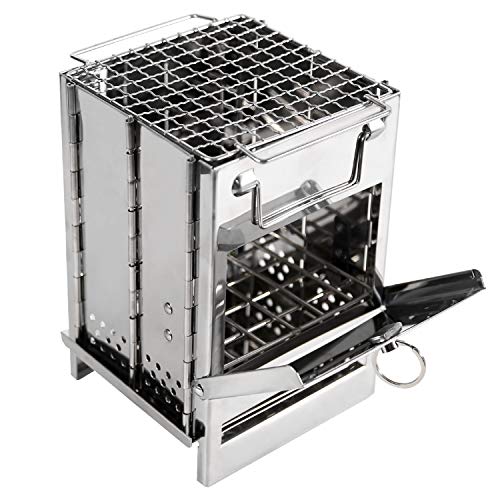
I choose the REDCAMP Wood Burning Folding Camp Stove when I need a reliable, lightweight option for cooking off-grid during backpacking or survival scenarios. It weighs just 1.9 pounds and folds flat for easy packing. Made of stainless steel, it includes a sturdy grid and backing plate-just remove the factory film before use. It burns twigs or leaves efficiently, acting like a rocket stove with solid heat output even under heavy pots. I’ve used it on trails for meals, and it holds up well. The included carry bag helps, though it takes up a little space. It’s simple, durable, and functional-no gimmicks, just results.
Best For: Outdoor enthusiasts who need a lightweight, durable, and fuel-efficient wood-burning stove for backpacking, camping, or survival situations.
Pros:
- Lightweight and compact foldable design makes it highly portable and easy to pack
- Constructed from durable stainless steel with a protective carry bag included
- Efficient rocket stove performance using readily available natural fuels like twigs and leaves
Cons:
- Takes up relatively more space in a pack compared to canister stoves
- Requires gathering dry fuel, which can be challenging in wet conditions
- Factory protective film must be removed carefully before first use
Single Burn Rate Stove

The Single Burn Rate Wood Stove by Cleveland Iron Works suits off-grid cabins, small workshops, or supplemental heating in residential spaces where reliable, no-frills wood heat is essential. I’ve used it in my cabin, and it reliably heats up to 900 sq. ft. with an efficient burn. It’s built from heavy-duty cast iron, weighs 149.7 lbs, and has a 6-inch flue for solid draft. The airtight seal from the ceramic rope gasket helps maintain steady combustion, and the cool-touch handle stays safe during use. It burns wood up to 18 inches long, requires no assembly, and comes EPA-rated for clean emissions. It’s not flashy, but it works.
Best For: Off-grid cabin owners, workshop managers, or homeowners needing reliable, no-frills supplemental heat in spaces up to 900 sq. ft.
Pros:
- Durable heavy-duty cast iron construction with high temperature matte black finish for long-lasting performance
- EPA listed and approved for clean emissions with high-efficiency combustion system
- No assembly required and includes all necessary components for immediate setup and use
Cons:
- Limited heating capacity for larger homes or open floor plans beyond 900 sq. ft.
- Floor-mounted design offers no portable or wall-mount options
- Aesthetic is utilitarian, which may not suit modern or decor-focused interiors
Pure Cast Iron Wood Burning Stove
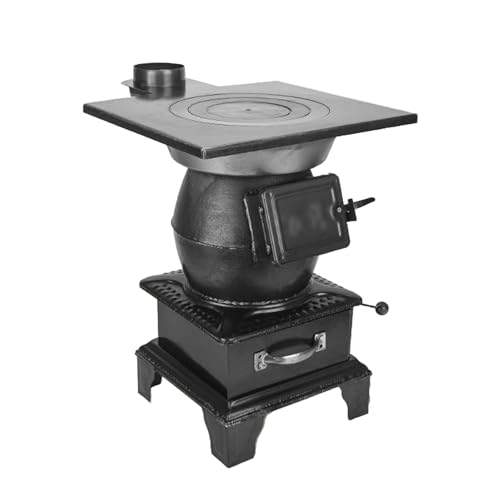
You’ll want a durable, no-fuss stove when reliability matters most, and the YXLUJYY Pure Cast Iron Stove fits that need with its solid cast iron construction and ready-to-use design. I use it for both cooking and heating, and it handles wood efficiently without needing assembly. The view window lets me monitor flames easily, and its freestanding, vent-free setup works in tents, cabins, or small homes. It’s not flashy-just functional, heavy-duty, and stable in drafty shelters. Ranked #3 in wood stoves, it’s a proven choice. Warranty support is included, though you’ll need to check the link for details. At 99 pounds, it’s not portable, but it lasts.
Best For: Outdoor enthusiasts and off-grid dwellers who need a durable, multipurpose wood burning stove for reliable heating and cooking in remote or rustic settings.
Pros:
- Made from pure cast iron for long-lasting durability and efficient heat retention
- Combines heating and cooking functionality with a view window for flame monitoring
- Freestanding, vent-free design requires no assembly and works in tents, cabins, or small homes
Cons:
- Heavy at 99 pounds, making it impractical for portable or frequent transport
- Vent-free operation may pose indoor air quality concerns without proper ventilation
- Warranty details require online access, lacking immediate clarity for buyers
Colorful Cast Iron Wood Stove Pipe Set
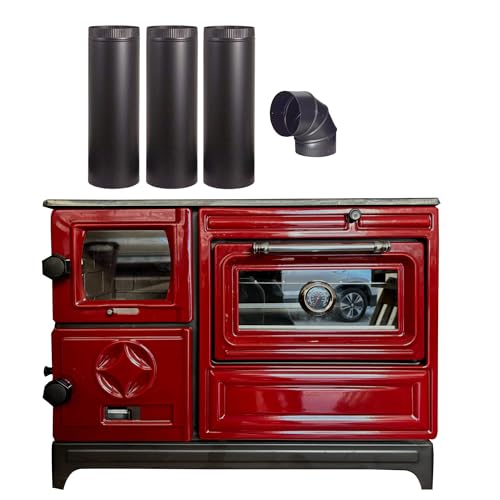
A vibrant centerpiece for off-grid cabins or rural homes needing reliable heat and cooking power, this colorful cast iron wood stove pipe set delivers dual functionality without compromise. I use it for both heating and cooking, thanks to its 8×16-inch kuzine-style surface and built-in oven. The red cast iron construction retains heat well and withstands high temperatures and impacts. It includes three straight pipes and one elbow, with a 5.1-inch chimney diameter-convertible to 5.9 inches using the included adapter. The natural convection design guarantees even heat. A fan and adapter come free. Direct stove connectors aren’t included. Made by Stepnext, it’s solid, functional, and tested in real rural settings.
Best For: Off-grid cabin owners and rural homeowners seeking a durable, dual-function wood stove for reliable heating and cooking in traditional or rustic settings.
Pros:
- Combines efficient heating with cooking capabilities via an 8×16-inch kuzine-style surface and built-in oven
- Durable red cast iron construction offers excellent heat retention and resistance to high temperatures and impacts
- Includes free accessories like a chimney diameter adapter (convertible from 5.1 to 5.9 inches) and a fan for enhanced performance
Cons:
- Direct stove connectors for attaching to wood stoves are not included and must be purchased separately
- Large dimensions (54.72 x 54.72 x 35.04 inches) may not fit in smaller living spaces
- Limited color option (only available in red), which may not match all interior decors
AVOFOREST Wood Burning Stove for Outdoor Use

Looking for a compact wood stove that handles both heat and cooking in harsh outdoor conditions, I find the AVOFOREST Hot Tent Stove fits best for ice fishing, hunting, or winter camping. It’s built from cast iron, holds heat well, and weighs just 15.32 pounds, making it easy to carry. The stainless steel chimney拆 into seven 12-inch sections for flexible setup and packs into one box with the stove. A damper under the glass window controls airflow and burn rate. It includes tongs, a brush, gloves, and ash screen-all stored inside. At 14.3 x 19.68 x 12.4 inches, it’s tight on space but efficient.
Best For: Outdoor enthusiasts who need a portable, durable wood stove for heating and cooking during ice fishing, hunting, or winter camping trips.
Pros:
- Constructed from high-quality cast iron and stainless steel for excellent heat retention and corrosion resistance
- Compact, modular design with detachable chimney and included accessories that store inside for easy transport
- Features a damper and heat-resistant glass window for precise control over combustion and easy monitoring
Cons:
- Limited cooking space due to compact dimensions, which may restrict meal preparation options
- Assembly required, which could be time-consuming in cold weather conditions
- Chimney setup involves multiple parts, increasing complexity and potential for lost components
VEVOR 118″ Camping Wood Stove

The VEVOR 118″ Camping Wood Stove suits users prioritizing durability and full-featured performance in a portable design, especially those who cook outdoors regularly and need reliable heat output without sacrificing build quality. I use its 3000in³ firebox and 3mm alloy steel construction-it handles heavy loads and resists deformation. The powder-coated finish lasts under 550°F, cutting odors and boosting safety. I cook on the 7 x 20-inch detachable shelf, and the heat-conducting plate speeds things up. Mesh sides hold utensils or dry gear. Dampers, a fire grate, and spark arrestor give me control. It weighs 58.6 lbs, stores all parts inside, and sets up fast.
Best For: Outdoor enthusiasts and campers who prioritize durable, high-performance wood stoves with cooking capabilities and easy portability for frequent use in rugged environments.
Pros:
- Large 3000in³ firebox and 3mm alloy steel construction ensure long-lasting, efficient heat and excellent durability
- Detachable cooking shelf, heat-conducting plate, and mesh side racks enhance functionality for outdoor cooking and gear drying
- All components, including chimney parts, store inside the stove for portability and quick assembly
Cons:
- At 58.6 pounds, it may be heavy for some users to transport over long distances
- Requires regular maintenance to prevent rust despite rust-resistant materials
- Limited to wood fuel, which may be less convenient than propane or electric alternatives in certain conditions
Lineslife Wood Burning Camping Stove

You’ll want a stove that handles frequent use in wet or rugged conditions without failing-this one’s cast iron build resists rust and corrosion, making it a reliable choice for backpackers and survivalists who depend on durability. I’ve used it in damp forests and rocky terrain, and it holds up. It weighs 7 lbs, so it’s not the lightest, but the foldable legs and included carrying case make it portable enough for backpacking. The 16 air vents boost airflow, giving me efficient burns that last 40–60 minutes per load. It runs on wood, charcoal, or other biomass, which works well when fuel options are limited.
Best For: Backpackers, campers, and survivalists who need a durable, reliable wood-burning stove for extended outdoor excursions in rugged or wet environments.
Pros:
- Constructed from rustproof, corrosion-resistant cast iron for long-lasting durability in harsh conditions
- Features 16 air vents and a large combustion chamber for efficient, 40–60 minute burns per fuel load
- Foldable design with adjustable pot holders and a carrying case enhances portability and convenience
Cons:
- Weighs 7 lbs (3.2 kg), making it heavier than some ultralight backpacking stoves
- Requires gathering biomass fuel, which may not always be convenient or available
- Black iron finish may show wear or require maintenance to prevent rust over time despite corrosion resistance
Portable Wood Burning Stove for Camping

Though compact enough to stow in a car trunk, this portable wood burning stove works reliably for campers who need both heat and cooking capability in remote settings. At 20.1 pounds and folding to 7.8 x 14.1 x 85.7 inches, it’s easy to transport and stores all components inside. The 5-section chimney adjusts for height, while the spark arrestor and rain cover improve safety and performance in varied conditions. I use the air intake and rotary damper to fine-tune combustion, which burns wood efficiently and reduces smoke. It heats well in tents or tiny shelters and doubles as a cook stove. The ash tray makes cleanup simple. Wind buckles and ground nails keep it stable outdoors.
Best For: Outdoor enthusiasts and campers who need a reliable, portable heating and cooking solution for remote or off-grid locations.
Pros:
- Compact, foldable design with all components stored internally for easy transport and setup
- Efficient dual damper system and adjustable air intake for optimal combustion and heat control
- Includes essential accessories like spark arrestor, rain cover, and ash tray for safe, clean operation
Cons:
- Initial burn-off of rust-proof coating produces smoke, requiring outdoor pre-use preparation
- Assembly of 5-section chimney may be time-consuming in adverse weather conditions
- Limited to small-scale heating, making it less suitable for large or poorly insulated spaces
Bestargot Camping Wood Stove 8×12

Survivalists and outdoor enthusiasts needing a compact yet powerful stove won’t find many options as fuel-flexible as the Bestargot Camping Wood Stove 8×12. I’ve used it with wood, charcoal, and even alcohol, and it burns cleanly thanks to secondary combustion that cuts smoke. At 2.64 pounds, it’s light but sturdy, made of stainless steel that holds up to repeated use. Its 8×12-inch size gives enough cooking space for a single pot, and the stackable design nests neatly into my pack. It lights quickly, performs well in wind, and needs no tools to assemble. While it’s not for large meals, it’s reliable when space and weight matter most.
Best For: Outdoor enthusiasts and survivalists who need a lightweight, fuel-flexible, and compact stove for solo cooking in rugged conditions.
Pros:
- Fuel-flexible design supports wood, charcoal, alcohol, and other combustibles for versatile outdoor use
- Smokeless secondary combustion technology reduces smoke and improves burning efficiency in windy conditions
- Compact, stackable stainless steel construction offers durability and easy packing for backpacking
Cons:
- Limited cooking surface size makes it unsuitable for large meals or multiple pots
- Requires fuel collection or carrying when using wood or charcoal, which may be inconvenient
- Relatively new product with limited availability and user reviews as of late 2024
Factors to Consider When Choosing a Wood Burning Cook Stove
You’ll want to check what fuel types the stove can burn efficiently-some models only work with dry hardwood, while others handle mixed biomass. Look at the material thickness and weld quality; thin steel warps fast, but 3–5 mm stainless or carbon steel holds up over time. Consider how big it is, how much it weighs, and whether the cook surface fits your pots, since poor airflow or a cramped top can make cooking risky or slow.
Fuel Type Compatibility
A wood burning cook stove that accepts multiple fuel types gives you flexibility when firewood is damp or scarce. You can burn charcoal, coal, or biomass like twigs and dried leaves when wood isn’t available. Some models even handle wood pellets, fatwood, or propane, letting you cook in wet or fuel-poor environments. Check if the stove is optimized for hardwoods, softwoods, or processed fuels-efficiency drops if you use the wrong type. Stoves with secondary combustion burn smoke and gases, improving performance across different fuels. Hardwoods deliver longer, hotter burns than bark or grass, so match your fuel to your cooking needs. Multi-fuel stoves offer practical advantages, but they may sacrifice peak efficiency in exchange for versatility. Choose based on what fuels you can reliably access and how long you need sustained heat.
Construction Material Quality
Material choice directly affects how well your stove withstands repeated use and extreme heat. You’ll want cast iron or stainless steel-these materials handle high temperatures without warping. Cast iron retains heat longer and spreads it evenly, which helps with cooking performance. Stainless steel resists rust and corrosion, especially useful if you’re using the stove outdoors or in damp conditions. Thicker materials, like 3mm alloy steel, hold up better over time and are less likely to deform. Look for high-temperature finishes, such as powder coatings rated to 550°F, since they reduce smoke odor and protect the surface. Thin or low-grade metals may warp or degrade quickly under intense, repeated use. You’re better off choosing heavier, proven materials even if the stove costs more. Durable construction means fewer repairs and safer, more reliable operation when you’re off-grid and depend on it daily.
Portability And Size
When space and weight matter, compact stoves weighing as little as 1.9 pounds and folding to under 10 x 6 x 2 inches fit easily into a backpack or storage bin, making them ideal for hikers and those with limited space. You’ll want foldable legs and adjustable parts for quick setup and takedown, especially if you’re camping or prepping for emergencies. Smaller stoves break down fast and store neatly, but they won’t suit long cooking sessions. Larger models may weigh over 50 pounds and stand more than 30 inches tall, needing permanent placement and stronger support. These heavier units aren’t practical for moving often. Look for designs that store chimney sections and accessories inside the body-this cuts loose parts and lets you carry the whole system as one unit. Match the stove size to your use: small for mobility, large for steady duty.
Cooking Surface Area
You’ve considered how size and portability affect where and how you use your stove, but cooking surface area directly shapes what you can prepare. A surface of at least 150 square inches gives you room for multiple pots or a full 13×9 inch baking pan-enough for family meals. If you’re feeding more people or using large cookware, stoves with over 200 square inches let you run a griddle and pot side by side. Compact models may offer just 60 square inches, which limits you to one pot at a time-fine for solo trips or simple meals. Look for reversible griddles or removable rings on smaller stoves to boost flexibility. Even heat distribution matters, especially on larger surfaces, since cold spots ruin baking and frying. Bigger isn’t always better if heat control is poor. Match the cooking area to your typical meal size and cookware to avoid frustration.
Ventilation And Safety
Since incomplete combustion can release dangerous levels of carbon monoxide, a wood burning cook stove must have a properly installed chimney or venting system that routes exhaust outdoors without leaks. You need an uninterrupted exhaust path to prevent deadly buildup indoors. Choose a model with adjustable air intake and a flue damper-you’ll burn cleaner and reduce smoke. If you’re placing the stove near walls or on wood flooring, use heat shields to lower fire risk. For outdoor setups, always install a spark arrestor or fireproof chimney cap to keep embers contained. Indoor-rated stoves should meet emission standards and include cool-touch handles and tight door seals to prevent burns and leaks. These features aren’t optional-they’re essential for safe, reliable operation. Skip them, and you compromise safety. Prioritize certified models with tested safety components to guarantee protection in real-world conditions.
Heat Output Control
Though heat output depends on fuel and design, your control over it determines cooking precision. You adjust air inlets and dampers to regulate combustion, scaling heat from simmering to searing. Flue dampers let you retain or release heat by managing exhaust airflow,直接影响 stove temperature and efficiency. Multi-zone cooking surfaces give you separate areas for different tasks-one side hot for frying, another cooler for warming-using removable burn plates or reversible griddles. Insulated fireboxes and thick cast materials smooth out temperature swings, stabilizing heat during burn cycles. Secondary combustion systems boost control by reburning smoke, delivering consistent heat while cutting fuel needs. You get more usable energy with less wood, which matters when resources are limited. Look for models that combine these features so you can manage heat effectively without guesswork. It’s not about power-it’s about having the right heat, where and when you need it.
Frequently Asked Questions
Can I Use Charcoal Instead of Wood in These Stoves?
You can use charcoal in most wood-burning stoves, but it’s less efficient than wood. Charcoal burns hotter and longer, which may damage some stove materials over time. Airflow design in wood stoves often doesn’t optimize charcoal combustion, leading to wasted fuel. You’ll need more frequent ash cleanup, and ignition takes longer without kindling. While it works in a pinch, you’ll get better results with stoves specifically built for charcoal.
How Do I Clean the Stove After Cooking?
You clean the stove after cooking by letting it cool completely before scraping off soot and ash with a stiff brush or scraper. Wipe down exterior surfaces with a damp cloth if needed, but avoid water near joints or gaskets. Empty the ash pan regularly-it improves airflow and reduces corrosion. For stubborn residue, use a dry rag or light sandpaper. Inspect the flue and burn chamber weekly to maintain efficiency and prevent clogs that could impair performance or become hazards.
Are Replacement Parts Available for These Models?
Yes, replacement parts are available for most models, but you’ll want to check manufacturer support first. Brands like Solo Stove and Camp Chef offer grates, doors, and dampers, while off-grid models may need custom fixes. Stock up on common wear items upfront since shipping to remote areas takes time. You’re better off choosing stoves with simple designs-fewer parts mean easier repairs. Always keep basic tools and high-temp materials on hand to make do when replacements aren’t immediate.
Do I Need a Chimney for Indoor Use?
Yes, you need a chimney for indoor use-no exceptions. Without one, smoke and carbon monoxide build up fast, creating a deadly hazard. A proper chimney vents combustion gases outside, keeps air safe, and improves draft for consistent burn. You can use double-walled stovepipe or a Class A chimney, depending on clearance and setup. Zero-vent models don’t exist for wood stoves. Skipping a chimney risks health and fire safety. Install it right or don’t burn indoors.
Can I Boil Water Quickly With These Stoves?
Yes, you can boil water quickly with these stoves. Most models bring a liter to boil in 8–12 minutes under ideal conditions using dry, seasoned wood. Efficiency depends on stove design, fuel load, and airflow control. Rocket stove variants heat faster due to focused flames and insulation. Adjusting the draft boosts performance. Expect longer times in cold or windy environments. Real-world tests show consistent output, but speed drops with damp fuel or poor maintenance. Prioritize models with high thermal efficiency for best results.