Survival Gear Selection Guide for Various Environmental Hazards
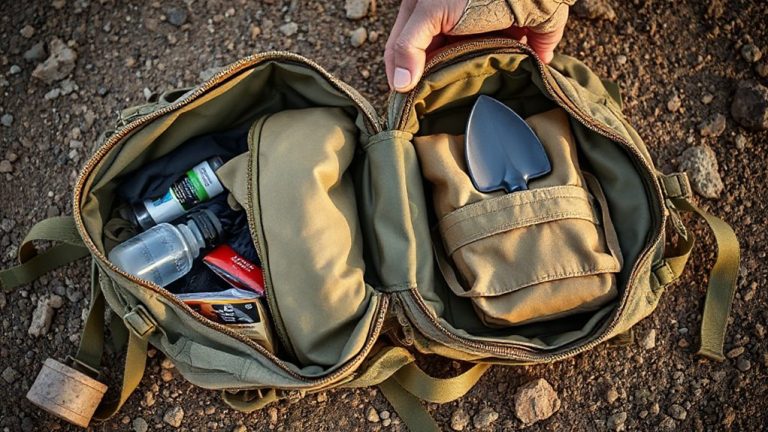
You need gear that matches your environment’s real threats. In extreme cold, use a -20°F sleeping bag, layered wool, and a four-season tent. For desert heat, wear loose, wicking clothes and carry 3 liters of water with electrolytes. In floods, protect gear in IP67 cases and wear a swiftwater PFD. A fixed-blade knife, paracord, and water filter work everywhere. Each choice balances durability, function, and proven performance-know what’s next.
Notable Insights
- Choose cold-weather gear like -20°F sleeping bags and four-season tents for arctic conditions with synthetic insulation.
- Use moisture-wicking, loose clothing and UV protection in deserts to prevent heat exhaustion and sun exposure.
- Carry waterproof IP67-rated containers and a swiftwater-rated PFD in flood-prone areas for safety and gear protection.
- Rely on proven navigation tools like a baseplate compass and topographic map when electronics may fail in extreme environments.
- Pack multi-use tools such as fixed-blade knives, paracord, and water filters adaptable to bottles or bladders in any scenario.
Build a Survival Kit for Extreme Cold and Snow
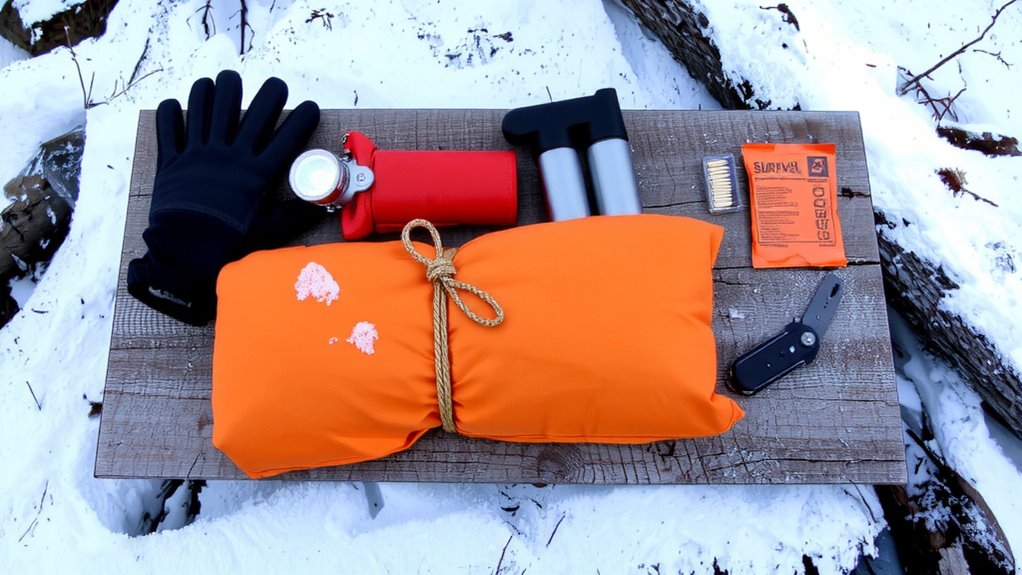
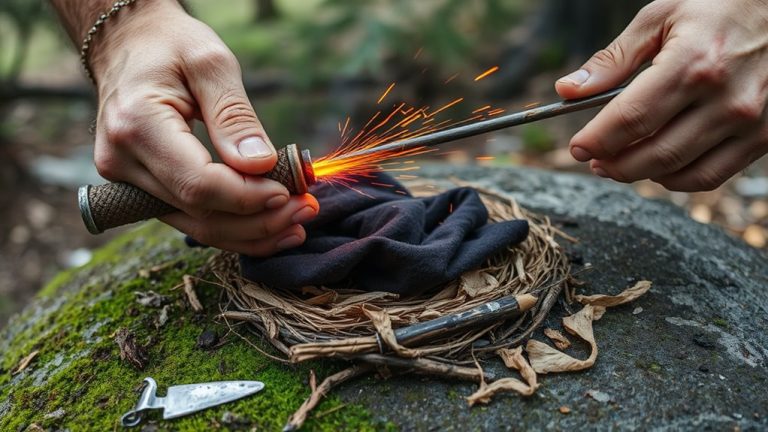
If you’re heading into frigid, snow-covered terrain, you’ll need gear that keeps you warm and functional when temperatures drop below freezing. Cold insulation is critical-choose a sleeping bag rated to at least -20°F and insulated with synthetic or treated down; synthetic retains warmth when wet but is heavier. Layered clothing with wool or synthetic base layers provides adjustable insulation. A three-season tent won’t cut it; use a four-season model with reinforced poles and minimal mesh. For snow navigation, a baseplate compass and topographic map are reliable when GPS fails. Pair them with avalanche transceivers if traveling in risky areas. Relying solely on electronics is risky-batteries die in cold. Snowshoes or skis reduce fatigue and improve mobility in deep snow. Always carry fire-starting tools and a stove that runs on white gas, as butane fails in cold. Your survival depends on tested gear, not marketing claims. Choose a sleeping pad with a high R-value to prevent heat loss to the ground.
Get the Right Survival Gear for Desert and Jungle Heat
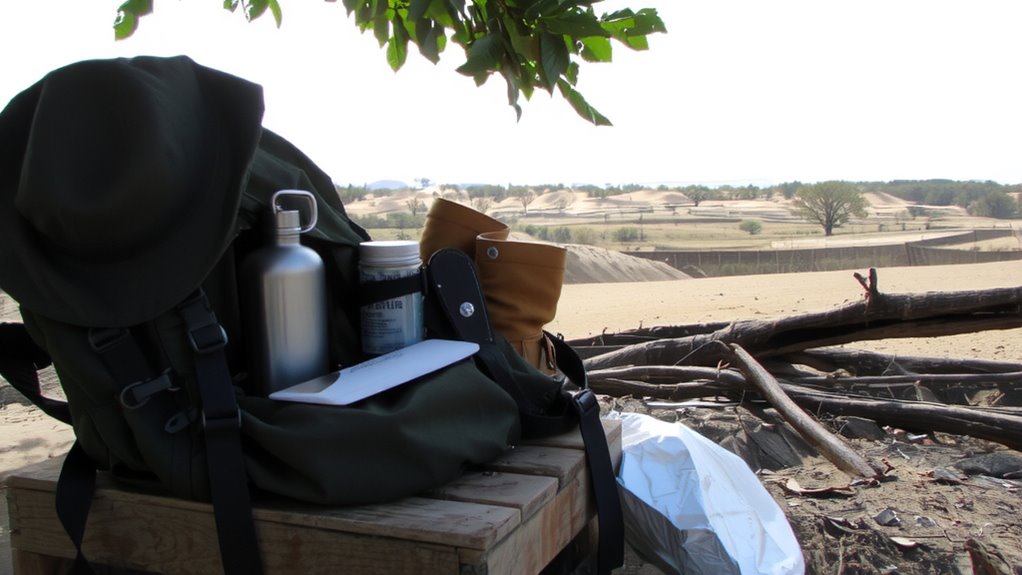
When you’re facing extreme heat in desert or jungle environments, staying cool and hydrated isn’t just comfortable-it’s critical for survival. Choose lightweight, loose-fitting clothing made of moisture-wicking fabric; it aids heat rash prevention by reducing skin friction and sweat buildup. Prioritize a hydration system design that allows continuous access, like a bladder with a sip tube, so you drink regularly without stopping. Aim for a minimum 2-liter capacity, and consider materials resistant to algae growth if you’ll refill often. Wide-brimmed hats and UV-protective gear help regulate body temperature. In humid jungles, ventilation matters-mesh panels improve airflow. In dry deserts, neck gaiters shield skin from direct sun. Both environments demand electrolyte tablets to maintain hydration balance. No single setup works perfectly everywhere, but balancing breathability, coverage, and hydration efficiency improves endurance. Test gear under similar conditions before relying on it in the field.
Grab Essential Survival Gear for Floods and Flash Waters
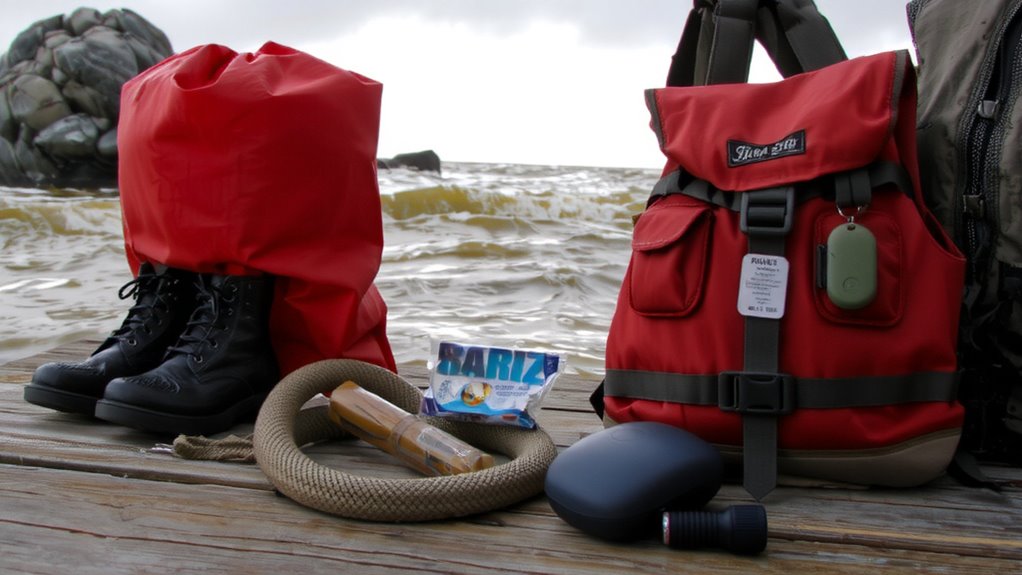
Though flash floods strike with little warning, having the right gear can make the difference between staying safe and facing serious risk. You need lightweight, buoyant items that function in fast-moving water. Waterproof containers keep essentials like phones, maps, and batteries dry-tested models with IP67 ratings seal reliably when submerged. Include a whistle and signal mirror for emergency signaling; both require zero power and work day or night. LED strobes with water-resistant casings increase visibility to rescuers. Wear a personal flotation device (PFD) rated for swiftwater if you’re in flood-prone zones. Rope tethers help in group evacuations across currents. Avoid heavy fabrics that soak up water. Your gear must deploy fast-seconds matter. Waterproof containers protect, but only if sealed before water rises. Emergency signaling devices are useless if buried in a bag. Keep them accessible. Practice using them. Flood survival favors preparation, not luck. Consider deploying flood barriers for home to prevent water from entering your property during imminent flood threats.
Match Survival Gear to Each Environment’s Worst Threats
Since environments dictate survival demands, your gear must counter the most dangerous threats specific to each one-there’s no universal fix. Arctic blizzards demand insulated shelters and vapor-barrier boots to prevent heat loss. At high altitudes, the risk of frostbite means you need heated hand warmers and goggles that resist ice buildup. A reliable emergency shelter can mean the difference between life and death in sudden weather changes. Below is a breakdown of critical gear by environment:
| Environment | Key Threat | Recommended Gear |
|---|---|---|
| Arctic | Arctic blizzards | -40°F-rated sleeping bag, windproof tent |
| High Altitude | High altitude frostbite | Heated gloves, oxygen meter, UV-blocking goggles |
| Desert | Heat exhaustion | Breathable shade canopy, 3L water bladder |
Choose items proven in extreme field tests, not marketing claims. Prioritize thermal regulation and environmental sealing. Your life depends on matching gear precisely to hazard.
Choose Multi-Use Survival Tools That Work Anywhere
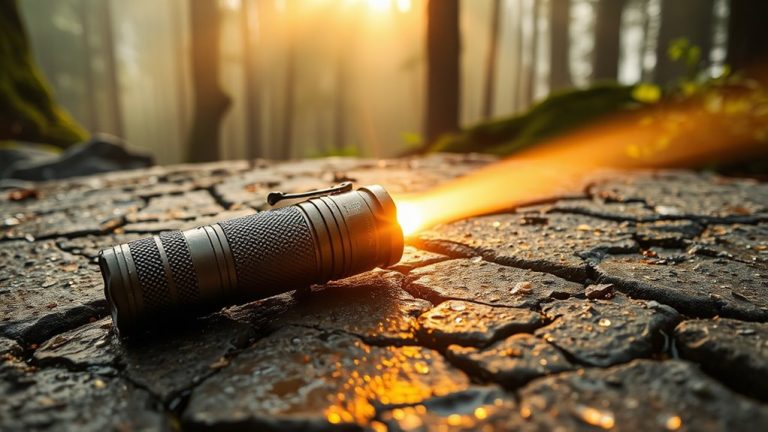
You’ve matched your gear to the harshest threats of specific environments-now narrow your focus to tools that hold up across them all. A multi-tool with compact durability fits in your pocket and handles tasks from cutting seatbelts to repairing gear. Fixed-blade knives with full tang construction survive heavy use but weigh more than folder equivalents. Lighters ignite fires in wet conditions better than matches, yet both are wise to carry. Paracord works for shelter-building, repairs, or rigging. Water filters with universal adaptability attach to bottles or hydration bladders, reducing pack weight. Your headlamp should offer both flood and spot beams, with replaceable batteries to extend runtime. Signal mirrors and whistles take little space but boost rescue chances. Each item should serve at least two reliable functions without sacrificing performance. Prioritize tools tested in extreme cold, heat, and moisture. Compact durability and universal adaptability aren’t just convenient-they’re core to efficient survival packing.
On a final note
You need gear that matches the environment’s real threats, not marketing claims. Cold demands insulation and fire sources that work when wet. Deserts require water storage and sun protection that won’t fail under constant UV. Floods need buoyant, fast-access tools. Multi-use items save weight but must perform reliably in critical roles. Test each piece under stress-your survival depends on function, not features.