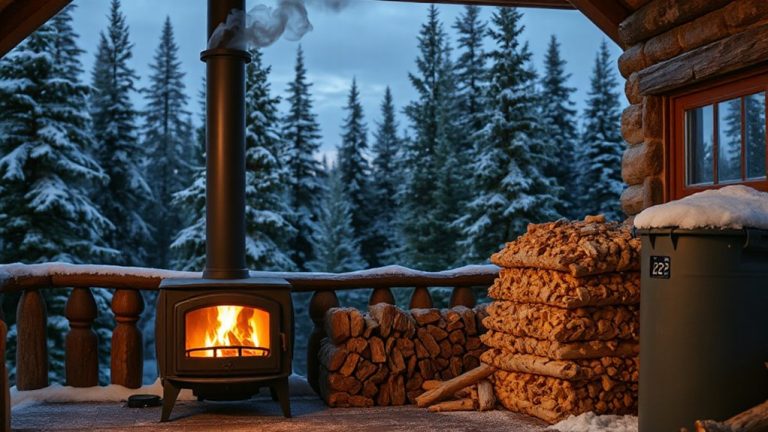
The Importance of Properly Storing Firewood in Preventing Moisture Build-Up and Fungal Growth During Storage Periods
Store your firewood at least 30 feet from your home and elevate it 6–12 inches off the ground to block moisture absorption and discourage pests. Use open racks, stack it bark-side down, and cover only the top to keep rain out while allowing airflow. Full sun and proper spacing speed drying and prevent fungal growth. Wet, poorly stored wood rots faster and burns poorly. You’ll see exactly how to build a dry, efficient stack that lasts.
Notable Insights
- Store firewood at least 30 feet from structures and elevate it 6–12 inches off the ground to prevent moisture absorption and pest infestation.
- Position stacks in full sun and perpendicular to prevailing winds to maximize drying and airflow through the pile.
- Cover only the top of the stack with a slanted or partial cover to block rain while allowing ventilation.
- Avoid stacking wood directly on the ground or using full tarps, as these trap moisture and encourage fungal growth.
- Split wood soon after cutting and season it 6–12 months to reduce internal moisture and prevent rot during storage.
Where to Store Firewood for Maximum Dryness
While you might be tempted to stack firewood right against your house or shed, doing so traps moisture and invites pests, so it’s best to keep it at least 30 feet away from any structure. Choose a spot that gets direct sunlight for most of the day-this helps accelerate drying and reduces fungal risk. Full sun exposure typically lowers moisture content faster than shaded areas, improving burn efficiency. Avoid indoor storage unless the wood has already been seasoned; green wood stored inside can introduce moisture and pests into living spaces. If you must store wood near the home temporarily, make certain it’s elevated and only bring in small amounts as needed. A well-ventilated, sunny location with airflow from all sides makes certain of even drying. Position the stack perpendicular to the wind if possible, improving air circulation. This setup, paired with proper cover, maintains dryness without trapping humidity.
Elevate Your Stack to Block Ground Moisture
You need to keep your firewood off the ground to prevent it from soaking up moisture. Raising your stack on a rack, pallets, or logs creates a barrier against damp soil, which reduces the risk of fungal growth. Proper wood placement guarantees air circulates underneath, speeding up drying and preventing rot. Aim for at least 6 inches of clearance, though 12 inches is better in wet climates. Stack height matters-keep it under 4 feet to avoid instability and guarantee easy access, but tall enough to maximize airflow between rows. Higher stacks can shade lower logs, slowing drying, so balance height with spacing. Flat, sturdy supports prevent sinking and maintain alignment over time. Elevation isn’t optional-it’s a basic requirement for dry, ready-to-burn wood. Without it, even seasoned wood absorbs ground moisture, reducing burn efficiency.
Cover Firewood Properly: Keep Rain Out, Air In
Since rain is the main threat to dry firewood, covering your stack is essential, but trapping moisture underneath defeats the purpose. A successful cover design keeps precipitation out while allowing airflow to maintain a proper ventilation balance. Full tarps over the entire stack often cause moisture buildup at the base, promoting rot and fungal growth. Instead, use a slanted roof-style cover that shields the top while leaving sides exposed.
| Cover Type | Rain Protection | Ventilation Balance |
|---|---|---|
| Solid tarp over stack | High | Poor |
| Half-cover with overhang | Good | Good |
| Wooden roof shelter | High | Moderate |
| No cover | None | Excellent |
| Mesh + top shield | Moderate | Excellent |
Partial covers work best in most climates, balancing protection and airflow. Adjust cover design based on local weather patterns for long-term results.
Avoid These Common Firewood Storage Mistakes
If you’re stacking firewood directly on the ground, you’re inviting moisture and pests right into your supply. Elevate your stack using pallets or a rack to improve airflow underneath and reduce rot risk. Avoid excessive stacking height-keeping it under 4 feet improves stability and prevents collapse, especially in windy areas. Uneven stacking can shift over time, creating gaps where moisture collects. Maximize sunlight exposure by positioning your pile in a south-facing spot; direct sun helps dry wood faster and discourages fungal growth. Don’t overload density-tight stacks restrict airflow, trapping humidity inside. Leave space between rows for ventilation. Store wood with bark side down when possible to minimize water retention. These adjustments may seem minor, but they directly impact dryness, burn efficiency, and storage longevity. Skimping on setup now leads to damp, smoky fires later.
Split and Season Wood Before Storing
Storing firewood properly starts long before it hits the rack-wood that’s split and seasoned burns hotter, cleaner, and more efficiently than green or unprocessed logs. You need to do wood splitting soon after cutting; smaller pieces expose more surface area, speeding up moisture evaporation. Logs left whole retain moisture longer, delaying readiness. Split wood typically requires a seasoning duration of six to twelve months, depending on species and climate. Hardwoods like oak may take closer to twelve months, while softwoods like pine often season in six. You can check readiness by looking for cracks at the ends, lightweight feel, and a hollow sound when two pieces are tapped together. Properly split and seasoned wood guarantees better combustion and less smoke. Skipping this step increases moisture retention, which leads to inefficient burning. You’re better off investing time upfront than dealing with poor performance later.
How Wet Firewood Fuels Mold and Burns Poorly
Though moisture might seem harmless, it’s the main reason wet firewood fails both in performance and safety. You’re inviting mold infestation when you store damp wood, since fungi thrive in moist, dark environments-especially if airflow is restricted. That mold isn’t just unsightly; it degrades the wood’s integrity and releases spores that can affect indoor air quality. When you burn wet firewood, you’ll get smoky combustion because the fire spends energy boiling off water instead of generating heat. This reduces efficiency, increases creosote buildup in chimneys, and raises the risk of chimney fires. Wet wood typically has a moisture content above 20%, while properly seasoned wood stays below 15%. You’ll notice lower heat output-sometimes by nearly half-compared to dry wood. To avoid poor burns and health hazards, always check moisture levels with a meter before storing or burning.
On a final note
You’ll burn less if your firewood stays dry. Store it off the ground to block moisture, covered but ventilated to prevent mold. Split wood seasons faster and resists fungal growth better than whole logs. Wet wood produces less heat-real-world tests show up to 50% efficiency loss-and creosote buildup increases. You’re better off stacking it right the first time. Proper storage isn’t optional; it’s fuel efficiency.