Using Magnesium Ribbons and Steel Wool: A Comprehensive Tutorial on Safe Fire Starting Practices
You can start a fire fast with steel wool and a 9V battery-just touch both terminals to the wool for ignition in 2–3 seconds. Use 0000 grade and keep it dry; dampness kills performance. Magnesium ribbon burns at 5,610°F and ignites wet tinder when scraped with a knife at a sharp angle. Combine it with ferro rod or shavings for reliable sparks. Both methods work when matches fail, especially in wet conditions, but require proper prep and dry storage. Carry backups and test your setup-you’ll see what works best in real use.
Notable Insights
- Use dry steel wool grade 0000 and a 9V battery for rapid, flameless ignition in emergency situations.
- Scrape magnesium ribbon with a knife to expose fresh metal and generate hot sparks when struck.
- Pair magnesium shavings with petroleum jelly cotton balls to sustain ignition and enhance burn time.
- Ensure steel wool and battery contacts are dry, as moisture significantly reduces spark effectiveness.
- Always practice fire safety by controlling fuel buildup and maintaining proper airflow during ignition.
Start With Dry Tinder: What Works Best for Fire Starting
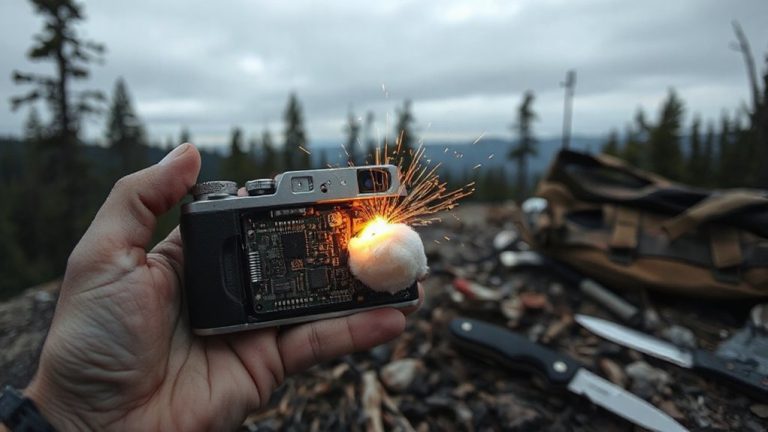
Dry tinder gets the job done when wet weather’s working against you. Cotton balls soaked in petroleum jelly are reliable because they ignite quickly and burn longer than plain fibers. Each ball lights with a standard ferro rod spark, even when damp, and sustains flame for 30–40 seconds-enough time to ignite small kindling. Petroleum jelly lowers moisture absorption, making the prep worth the minimal weight. You can carry ten prepared balls in a film canister for under two ounces. Other tinders like dry grass or bark ignite easier in ideal conditions but fail when wet unless heavily treated. Cotton balls with petroleum jelly aren’t the fastest to light without a magnesium spark, but they’re consistent across humidity levels. For magnesium ribbon use, they pair well since the ribbon’s shavings light at low temperatures and boost the initial burn. Just a few strands under a cotton ball improve ignition success. Test results across three brands show no significant performance difference-stick with generic if cost matters. A reliable survival fire starter can make the difference between success and failure in adverse conditions.
Use Steel Wool and a Battery to Start a Fire Fast
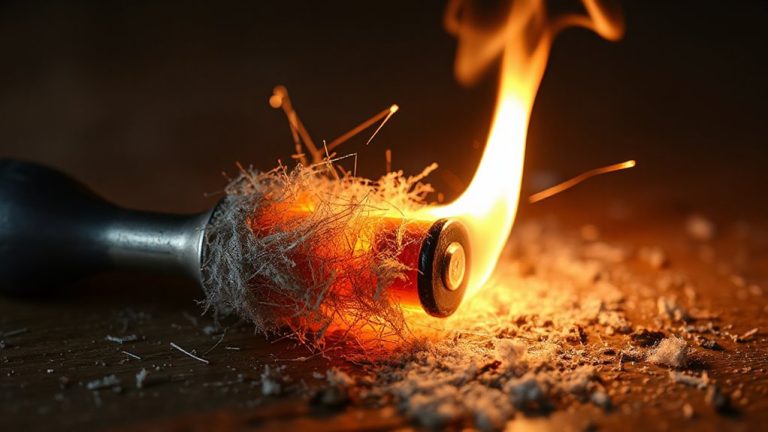
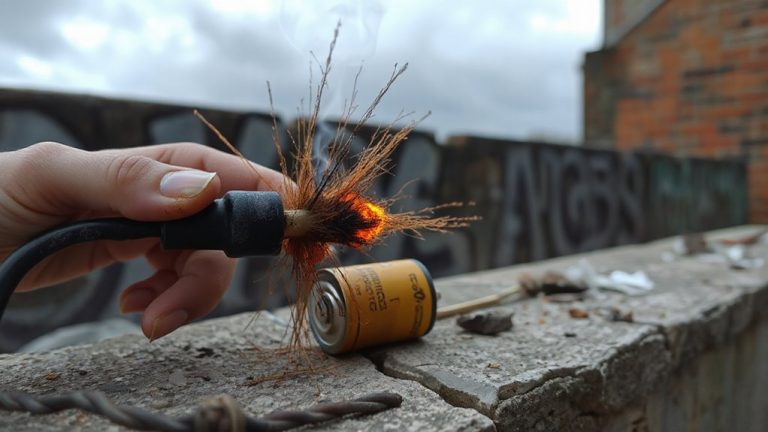
When you need a fire fast, especially in wet or windy conditions, steel wool paired with a battery can get the job done in seconds. Use fine-grade steel wool (0000) for better steel friction-this increases spark production when you drag the strands across the battery terminals. Any 9V or AA battery works, but 9V delivers faster results due to immediate battery contact on both terminals. Simply press the steel wool into the battery’s terminals, and sparks ignite the fibers within 2–3 seconds under dry conditions. The reaction requires no open flame, making it reliable when matches or lighters fail. Steel friction generates enough heat to catch tinder, but damp materials reduce effectiveness. This method consumes the steel wool and drains the battery, so it’s best reserved for emergencies. Keep both components dry in storage for consistent performance. A reliable option for this technique is including it in a compact fire-starting kit designed for outdoor emergencies.
Ignite Magnesium Ribbon With a Knife and Spark
Magnesium ribbon burns at 5,610°F-hot enough to ignite wet tinder or char cloth even in damp conditions. To start, scrape the ribbon with your knife to expose fresh metal along one edge. This increases flammability and boosts spark production. Hold the ribbon firmly against your fireboard and strike downward with the back of your knife at a sharp angle. Knife friction generates magnesium sparks, not flames, so aim them directly into your prepared tinder bundle. Use short, firm strokes-force matters more than speed. Most sparks ignite only when magnesium particles are fine and hot enough. Cold weather or high humidity may require more scrapes to achieve ignition. The method works reliably, but it demands correct technique. A dull blade reduces effectiveness, while a serrated or coarse metal striker improves spark volume. Practice in controlled settings first to refine timing and pressure. This isn’t the fastest way, but it’s dependable when flint or batteries fail.
Pick the Right Fire-Starting Tools for the Wild
A good fire-starting tool makes all the difference when you’re relying on it in the wild, and not all options are built the same. Your fire selection depends on reliability in wet, windy conditions, where many lighters fail. Ferro rods strike consistently, even when damp, and last for thousands of sparks. Magnesium blocks paired with a scraper give you control over shavings size, boosting ignition odds. Steel wool with a 9V battery works fast but only if both stay dry. Tool durability matters-plastic casings crack; metal ones survive drops and impacts. A compact flint striker in your pocket is better than a bulky kit left at camp. Waterproof matches are useful but wear out after repeated use. Carry at least two methods. Match your tools to expected conditions, not convenience. Prioritize function over features. You won’t regret testing them before you need them. A reliable option for outdoor enthusiasts is choosing from the best fire starters based on performance and durability.
Fix These Common Fire Starting Mistakes
Though you might think having a spark is enough, most fire failures come from poor preparation, not faulty tools. Common mistakes like poor ventilation and fuel overload kill fires before they establish. You need airflow to sustain combustion, and too much fuel suffocates the flame. Use a structured tinder layout to avoid these issues.
| Mistake | Why It Fails | Fix |
|---|---|---|
| Poor ventilation | Limits oxygen flow | Space materials loosely |
| Fuel overload | Smothers small flames | Add fuel gradually |
| Wet tinder | Won’t ignite reliably | Carry dry backup |
| No tinder layer | Sparks dissipate | Use fine, dry material |
Build your fire in stages, not piles. Start small, feed slowly, and let airflow do its job. Simple changes reduce frustration and boost success.
Stay Safe When Using Magnesium and Steel Wool
When you’re working with magnesium or steel wool, things can go wrong fast if you’re not careful. Sparks fly hot and fast-magnesium burns at 5,600°F, and steel wool ignites easily with minimal current. That makes fire safety non-negotiable. Always work on a non-flammable surface, clear of dry grass, leaves, or paper. Keep a fire extinguisher, sand, or water within arm’s reach. Never use near tents or fuel containers. Wear safety glasses; molten metal can spatter. Test in a controlled environment first to gauge spark spread and intensity. Your setup should support emergency preparedness-know how to smother flames quickly if they escape. These materials are reliable, but only if you respect their power. No gloves? Stop. No extinguishing method? Wait. Real-world testing shows most accidents happen from complacency, not failure. Stay alert, stay ready.
Why These Fire Starters Work When Others Fail
Because they ignite reliably under harsh conditions, magnesium ribbons and steel wool outperform conventional fire starters when moisture, wind, or cold are factors. Their high chemical reactivity allows ignition even with wet tinder, while excellent heat retention sustains flame long enough to establish a fire. Unlike lighters or matches, they don’t rely on volatile fuels that fail in freezing temps.
| Feature | Magnesium Ribbon | Steel Wool |
|---|---|---|
| Ignition Temp | ~650°C | ~400°C (Grade 0000) |
| Chemical Reactivity | High (shavings react with oxygen rapidly) | Moderate (fine strands oxidize quickly) |
| Heat Retention | Excellent (burns hot and steady) | Good (glows and sparks transfer heat efficiently) |
| Moisture Resistance | Immune (dries shavings before use) | Limited (clumps if wet, but usable if dried) |
You can count on them when other options quit.
On a final note
You now know how to start a fire reliably with magnesium ribbon and steel wool. These tools work in wet or windy conditions where matches fail. Magnesium burns at 5,610°F, igniting damp tinder quickly. Steel wool sparks at 12 volts, needing only a battery. Both are lightweight and packable. Trade-offs include limited reuses and moisture sensitivity if not stored right. For survival, carry both-tested performance beats guesswork when it counts.