Best Tent Stakes for Sand That Hold Strong in Loose Terrain
You need stakes that dig deep and hold tight in shifting sand. Spiral or screw-shaped designs in durable ABS plastic or aluminum offer superior grip-10 to 14 inches long, they reach denser layers beneath loose top sand. Corkscrew shapes provide up to 30% more holding power than straight stakes. Hand-twist installation works cleanly in soft terrain, but avoid rocky ground. Bright colors reduce tripping and loss. Longer, thicker stakes anchor better in wind; aluminum resists corrosion, while quality plastic survives impacts. Trade weight for grip where stability matters most. More details on top performers follow.
We are supported by our audience. When you purchase through links on our site, we may earn an affiliate commission, at no extra cost for you. Learn more. Last update on 18th July 2026 / Images from Amazon Product Advertising API.
Notable Insights
- Spiral or screw-shaped stakes provide superior hold in loose sand due to deeper penetration and increased surface grip.
- Longer stakes (10–14 inches) reach denser soil layers beneath loose top sand for stronger anchoring.
- High-grade ABS plastic or aluminum stakes resist bending and corrosion in wet, sandy, or saltwater environments.
- U-shaped aluminum stakes with multiple rigging holes improve stability and distribute wind load effectively.
- Brightly colored stakes enhance visibility on sand, reducing trip hazards and making retrieval easier.
Tent Stakes 6 Pack Heavy Duty

If you’re camping on sandy shores or need reliable anchors for a beach setup, these heavy-duty spiral stakes from COBARYEN are the best choice for securing tents, tarps, or canopies where regular stakes fail. I’ve used them in loose sand and packed soil, and they hold firm thanks to their 9.4-inch spiral design and pointed tip. Each stake weighs just 1.7 ounces, so they’re light but strong, made from durable nylon and fiberglass that won’t rust. They screw in easily by hand and stay put in wind and rain. I’ve reused them for months without cracks or wear. Their thickened coils grip well, though very rocky soil can slow insertion. They pack small and work for tarps, canopies, or even garden use.
Best For: Campers and outdoor enthusiasts who need reliable, lightweight, and durable stakes for sandy, loose, or wet ground conditions.
Pros:
- Spiral design and pointed tip allow for easy hand insertion and superior holding power in sand, soil, and grass
- Made from rust-resistant nylon and fiberglass, ensuring long-term durability and reuse in harsh weather
- Lightweight and compact, making them ideal for backpacking, beach trips, and outdoor events
Cons:
- May be difficult to insert in very rocky or compacted soil
- Limited color options (only available in black)
- Pack size is limited to 6 stakes, which may not be sufficient for larger shelters or multiple setups
15 Pack Plastic Spiral Tent Stakes
I rely on the 15 Pack Plastic Spiral Tent Stakes when I need dependable anchoring on sandy terrain without the weight or corrosion risk of metal. Made from high-grade ABS plastic, they resist impact better than standard PP stakes and won’t rust. Each 10-inch stake weighs just 1.3 ounces, and the spiral design screws easily into sand, soil, or loose ground. The T-shaped head allows tool-free installation and offers solid pull-out resistance. Bright orange color makes them easy to spot on sand or grass. I’ve used them on beaches and in backyards-they hold tarps and tents reliably. They’re not for rocky soil, but in soft ground, they perform consistently. Hikemax includes 15 stakes, so I always have spares.
Best For: Outdoor enthusiasts who need lightweight, durable, and corrosion-resistant tent stakes for use in sandy or soft terrain.
Pros:
- Made from high-impact ABS plastic that’s more durable than standard PP stakes and resistant to weather and corrosion
- Spiral design with T-shaped head allows for easy, tool-free installation and strong hold in sand, soil, and loose ground
- Bright orange color ensures high visibility, reducing the chance of loss in grass, sand, or forest floors
Cons:
- Not suitable for rocky or hard-packed soil due to plastic construction and hand-install design
- May not provide the same level of anchor strength as metal stakes in high-wind or extreme conditions
- Plastic material, while durable, may degrade over long-term UV exposure without proper storage
Aluminum Tent Stakes for Camping (10-Pack)

I need stakes that hold fast in shifting sand, and the Takelablaze 10-Pack of aluminum tent stakes delivers exactly that. Each 12.2-inch stake is made from high-strength aluminum alloy, resists bending, and has an anodized coating to prevent fading. At 1.84 oz each, they’re light but built wider and longer for better grip in soft terrain. I use them for beach tents and canopies, driving them in at a 45-degree angle for max hold. Six rope alignment holes let me adjust and lock lines without slippage. They work well in sand, snow, and soft soil, but I avoid rocky ground. The red color makes them easy to spot.
Best For: Campers and beachgoers needing durable, lightweight stakes for soft terrains like sand, snow, and soft soil.
Pros:
- Made from high-strength aluminum alloy with an anodized coating for durability and fade resistance
- Wider and longer U-shape design provides superior grip and resistance to bending
- Six rope alignment holes allow secure, adjustable rigging with minimal slippage
Cons:
- Not suitable for use in hard or rocky terrain due to material and design limitations
- Aluminum construction, while strong, may bend under extreme lateral force
- Red color, while visible, may fade over time with prolonged UV exposure
10 Pack Heavy Duty Plastic Tent Stakes
The 10 Pack Heavy Duty Plastic Tent Stakes by TKYPZY are a solid choice for beach campers and casual outdoor users who need reliable, lightweight anchors in sandy or soft soil conditions. I’ve used them on shorelines and lawns, and they hold well where heavier stakes might sink or bend. Made from durable polypropylene, they resist breakage and UV fading, and their 5.78-inch length provides enough grip without splitting when driven in by hand. The bright yellow color makes them easy to spot in sand or grass. They won’t rust, and their smooth edges won’t tear tent guy lines or injure hands. At just under 2 ounces total, they add negligible weight to your pack-ideal for light setups where metal isn’t needed.
Best For: Outdoor enthusiasts who need lightweight, durable stakes for use in sandy or soft soil environments like beaches, lawns, and gardens.
Pros:
- Lightweight and compact, adding minimal weight to your gear for easy portability
- Resistant to breakage, rust, and UV fading, ensuring long-term durability
- Bright yellow color enhances visibility, reducing the chance of misplacement in grass or sand
Cons:
- Not ideal for rocky or hard-packed terrain where deeper penetration and sturdier material are required
- Plastic construction may lack the holding power of metal stakes in high-wind conditions
- Limited grip in very loose sand compared to wider or longer anchor designs
Pine & Linen 8-Pack Heavy Duty Tent Stakes

You’ll find these 8 stakes work best if you’re camping on sand or soft ground where regular pegs pull out easily. I’ve used them on beaches and in loose soil, and their screw-shaped design holds firm where flat pegs fail. Each one measures 7.7 inches long, made of durable plastic that resists breaking under tension. They weigh just 6.7 ounces total, so they won’t bog down your pack. Installation is quick-just twist them in by hand-and they pull out just as fast. While they’re not ideal for rocky terrain, they excel in sand, grass, and soft ground. Ideal for tents, tarps, or boundary markers.
Best For: Campers and outdoor enthusiasts who frequently set up tents on sand, grass, or soft ground and need reliable, easy-to-use tent stakes that won’t easily pull out.
Pros:
- Screw-shaped design provides superior grip and stability in sand, grass, and soft soil
- Lightweight (6.7 oz total) and portable for easy packing on camping and hiking trips
- Simple hand-twist installation and removal with durable plastic construction
Cons:
- Not suitable for rocky or hard-packed terrain where penetration is difficult
- Made of plastic, which may not offer the same strength as metal stakes in extreme conditions
- Limited quantity (8 stakes) for larger tents requiring more anchoring points
Plastic Tent Stakes 10 Pack 9 Inch
Bright orange and built to last, these 10-pack 9-inch plastic stakes suit anyone anchoring gear in loose sand or soft soil-beach campers and backpackers especially. I’ve used them in deep sand and they hold well, thanks to their 9-inch length and T-beam design. Made from ABS plastic, they resist cracking under impact, unlike cheaper polypropylene stakes. Each stake weighs just 0.99 ounces, so they won’t weigh down my pack. The bright color makes them easy to spot on sand or grass. They work reliably in rain and wind, securing tents, tarps, or canopies. While not ideal for rocky soil, they excel in soft terrain.
Best For: Beach campers, backpackers, and outdoor enthusiasts seeking lightweight, durable stakes for soft terrain like sand, soil, and grass.
Pros:
- Made from high-impact ABS plastic for superior durability and crack resistance compared to standard polypropylene stakes
- T-beam design and 9-inch length provide strong holding power in sand, soil, and grass
- Bright orange color ensures easy visibility and retrieval on various terrains
Cons:
- Not suitable for rocky or hard-packed soil due to plastic construction
- May bend under extreme tension or improper hammering
- Less effective for heavy-duty, long-term use in harsh alpine environments
Ogrmar Aluminum Tent Stakes (6-Pack, Orange)
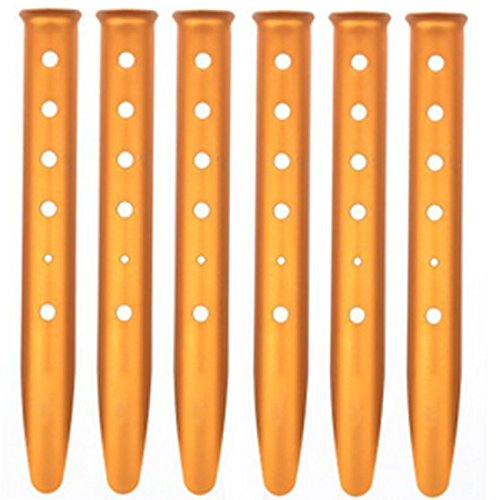
Six aluminum stakes in a wider, 12-inch U-shape dig deeper and hold stronger in loose sand better than shorter steel models, making the Ogrmar TS-6 pack ideal for beach campers who need consistent anchoring without excess weight. Each stake weighs just 1.76 ounces, so carrying all six adds minimal load. The 1.38-inch width and six rigging holes per stake let me secure guylines at multiple angles, which helps in shifting winds. I’ve used them in soft sand and loose soil, and they stay put better than shorter or narrower stakes. Aluminum won’t rust, though it’s less rigid than steel. If you’re setting up a shelter where ground hold matters more than extreme durability, these deliver.
Best For: Beach campers and outdoor enthusiasts seeking lightweight, rust-resistant stakes for reliable anchoring in soft terrain like sand and snow.
Pros:
- Lightweight aluminum design (1.76 oz per stake) minimizes pack weight
- Wider 12-inch U-shape and six rigging holes per stake enhance stability and versatility
- Resists rust and performs well in soft soil, sand, and snow
Cons:
- Less rigid than steel stakes, potentially bending under high stress
- Not ideal for rocky or hard-packed ground
- Aluminum material may wear faster with repeated use compared to steel
Beach Tent Stakes 10 Inch 8 Pack
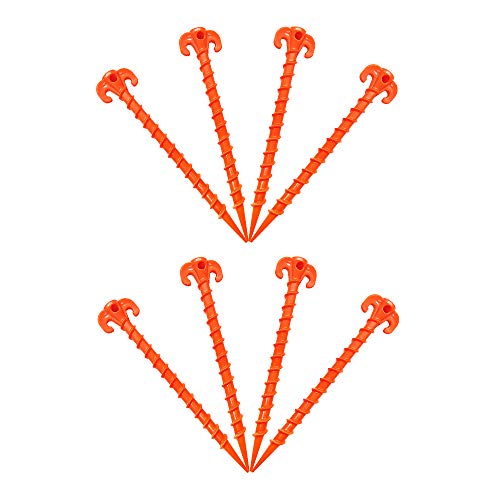
The Beach Tent Stakes 10 Inch 8 Pack from Running Wapiti work best for beachgoers who need reliable anchoring in loose sand without carrying heavy metal stakes. I’ve used these screw-shaped plastic stakes in soft dunes and dry packed soil, and they hold well when twisted in fully. Each stake is 10 inches long and made of durable ABS plastic, surviving repeated use without cracking. They weigh just 1.34 ounces each, so I pack all eight without adding bulk. The spiral design grips shifting sand better than straight stakes, though they’re slower to install. I’ve secured tarps and canopies with them, and they stayed put in mild wind. They’re not for rocky soil, but in sand, they perform as intended. The orange color makes them easy to spot, reducing tripping hazards. I appreciate the 30-day refund option if they don’t work for you.
Best For: Beachgoers and outdoor enthusiasts seeking lightweight, durable, and sand-optimized anchors for tents, canopies, and tarps.
Pros:
- Screw-shaped ABS plastic design provides strong grip and stability in loose sand and dry soil
- Lightweight and compact (1.34 oz each) for easy portability without sacrificing durability
- Bright orange color enhances visibility, reducing tripping hazards and aiding retrieval
Cons:
- Slower to install than traditional straight stakes due to required twisting motion
- Not suitable for rocky or highly compacted ground conditions
- Plastic construction, while durable, may not match the holding power of metal stakes in extreme winds
TRIWONDER Tent Stakes for Snow, Sand, Beach (6Pcs)

I need strong, reliable stakes when anchoring my tent in loose sand, and that’s where the TRIWONDER U-shaped aluminum stakes deliver. Made from high-strength aluminum, each 12.2-inch stake weighs just 52g but spreads load effectively through its U-shape and six rigging holes. I’ve used them in beach and snow alike, and the 45-degree insertion angle holds well in soft ground. They’re not the lightest, but the 6-pack adds only 0.25kg, a fair trade for durability. Unlike flimsy steel stakes, these resist rust and bend. For securing tents or tarps where grip is weak, they’re a no-frills solution that performs.
Best For: Outdoor enthusiasts who need durable, rust-resistant tent stakes for securing gear in challenging terrains like sand, snow, and soft ground.
Pros:
- High-strength aluminum construction offers excellent durability without adding significant weight
- U-shaped design with six rigging holes ensures optimal load distribution and secure anchoring
- Performs well in soft substrates like sand and snow thanks to 45-degree insertion angle and extended length
Cons:
- Heavier than ultralight titanium or thin wire stakes, making them less ideal for weight-conscious backpackers
- Not recommended for rocky or hard-packed soils due to material and shape limitations
- Limited color options and aesthetic customization for users seeking visual distinction
12 Pack 14″ Aluminum Ground Anchors

You’ll want these 14-inch aluminum ground anchors if you’re camping on sand or other loose terrain where standard stakes pull out easily. I’ve used them on beaches and they hold tight, thanks to the spiral blade and screw-in design. Made from cast aluminum alloy, they resist corrosion and won’t rust over time. Each is 14 inches long and pairs with a detachable ring for flexible attachment. The drill adaptor speeds up setup, especially in hard ground. They’re strong enough for tents, tarps, and even trampolines. Weighing just under 4 pounds for the 12-pack, they’re portable but durable. A one-year replacement warranty covers defects, and support responds fast.
Best For: Outdoor enthusiasts and homeowners needing durable, rust-resistant anchors for securing tents, tarps, trampolines, and other structures in challenging terrain like sand, gravel, or hard soil.
Pros:
- Spiral blade design and screw-in tip provide superior grip and stability in loose or tough ground conditions
- Made from non-rust cast aluminum alloy for long-lasting, corrosion-resistant performance
- Includes drill adaptor and detachable rings for quick installation and versatile attachment options
Cons:
- Aluminum construction may be less robust than steel in extremely high-tension applications
- Drill adaptor is helpful but requires access to a power drill for fastest setup
- Individual anchors lack carrying case, making storage and transport less convenient
Factors to Consider When Choosing Tent Stakes for Sand
You need long stakes-12 inches or more-to reach stable sand layers below the surface. Aluminum or steel models hold up better than plastic when the wind turns fierce. Spiral designs screw in securely, but straight stakes install faster if you’re short on time.
Length And Depth
A 10- to 14-inch stake length is ideal for sand, providing the depth needed to anchor securely in loose, shifting terrain. You need at least 10 inches to bury the stake deep enough where sand is denser and more stable. Shorter stakes fail because they stay in the loose surface layer, offering little resistance to pull-out. Deeper penetration means better wind resistance, as the stake engages compacted sand below. Spiral or corkscrew stakes reach effective depth with less effort and resist bending during insertion. Drive them vertically or at a slight angle to maximize hold and reduce the chance of lateral pull-out. Angling them too far weakens the anchor. Longer stakes add weight and bulk, but the trade-off is reliability in unstable ground. In real-world use, depth consistently outperforms surface grip. Prioritize length when sand is deep and shifting.
Material Durability
Durability starts with material. You need tent stakes that won’t crack, bend, or corrode in sand’s harsh conditions. High-grade ABS plastic stakes resist impact better than polypropylene and keep their shape under stress. If you’re near saltwater, aluminum alloy stakes won’t rust and resist bending, even after repeated use. Look for anodized aluminum-its surface stays intact despite constant contact with gritty sand. Fiberglass-reinforced nylon offers high tensile strength and won’t crack under dynamic loads, making it reliable when sand shifts. Non-metallic options like ABS or polypropylene won’t corrode in moist, coastal environments, which helps maintain long-term integrity. While cheaper stakes might save money upfront, they often fail when you need them most. Choose materials that balance strength, weight, and resilience. Your shelter depends on it.
Spiral Design Effectiveness
Spiral designs outperform straight stakes in sand by leveraging rotational installation to achieve deeper anchoring and greater resistance to pull-out. You’ll need to twist them in, but that action compacts the surrounding sand, boosting hold. Their corkscrew shape increases surface area, gripping more material for better stability in shifting substrates. Most range from 9 to 14 inches, letting you reach denser layers beneath loose top sand. A sharp tip helps with initial penetration, especially in packed or wet conditions. Spiral stakes made from high-impact ABS plastic or aluminum resist bending during installation. These materials hold up under torque and pressure, even in saturated ground. Bright colors make them easy to spot on pale beaches, cutting the risk of damage or loss. While they take more effort to install than straight stakes, their performance in sand justifies the extra work. You get reliable anchoring where it matters most.
Wind Resistance Capability
When strong gusts hit the beach, your tent’s survival depends on stakes that hold firm, and shape matters-spiral or corkscrew designs dig in deeper and resist pull-out better by increasing surface contact within the sand. You’ll also want wide U-shaped stakes with multiple rigging holes; they let you angle the stake for better load distribution against lateral wind forces. Longer stakes, at least 10 inches, drive past loose top layers into denser sand, boosting anchor reliability in blustery conditions. Opt for high-strength aluminum or rugged ABS plastic-they won’t bend or crack under sustained pressure like cheaper metals or brittle plastics. Bright-colored stakes aren’t just easy to spot; they help you quickly check tension points and reinforce weak spots before strong winds compromise your setup. These features combined improve real-world performance where it counts: keeping your shelter intact when the wind kicks up.
Ease Of Installation
You’ll want stakes that drive into sand quickly and stay put without requiring extra tools or excessive effort. Spiral-shaped stakes with a pointed tip screw in easily by hand, making them fast to deploy. You can skip the hammer or mallet, which often sinks or bounces off loose terrain. Lightweight plastic or aluminum stakes with T-shaped heads give you better grip and leverage, so twisting them into place takes less strength. Longer stakes, at least 10 inches, penetrate deeper with minimal resistance, boosting hold in soft sand. Wider U-shaped models work best when you angle them at 45 degrees during insertion, increasing surface contact for more stability. These designs reduce struggle while improving placement accuracy. You’ll spend less time fighting the ground and more time setting up camp. Choose stakes that simplify the process without sacrificing reliability.
Visibility On Sand
Bright colors make a real difference when stakes are set in pale sand. Orange or yellow stakes stand out clearly, reducing tripping hazards and making loss less likely. You’ll spot them faster, especially in wind or low light. Longer stakes-10 inches or more-rise higher above the sand, increasing visibility across flat stretches. A diameter of at least 0.75 inches helps, casting a shadow and catching sunlight for easier detection. UV-resistant coloring keeps stakes bright even after hours in direct sun, so they don’t fade into the background over time. Lightweight models under 2 ounces often use light, visible hues without sacrificing detectability. These stay easy to find and minimize sand disturbance when you drive them in. Visibility isn’t just about color-it’s about size, shape, and durability in sunlight. Choose stakes that stay noticeable from a distance and remain clear after repeated use.
Weight And Portability
Often, the lightest stakes save noticeable weight on long hikes, especially when you’re counting every ounce. Aluminum or ABS plastic stakes weigh between 0.99 and 1.84 ounces each, cutting pack load without sacrificing essential strength. Shorter, compact designs take up less space and further improve portability-key for backpacking where every cubic inch matters. While heavier stakes may anchor better in shifting sand, they add bulk you might not need if conditions allow. You’ll want a balance: high strength-to-weight ratios from anodized aluminum or reinforced plastic deliver durability without dragging you down. And don’t overlook quantity-more stakes mean more weight, so bring only what’s necessary. A minimal set keeps your pack light but still functional. Smart choices here don’t compromise survival, just excess. You’re not just saving weight-you’re streamlining for real-world efficiency.
Holding Power Performance
Lighter stakes help you move faster, but they must still hold firm when the wind picks up. For better grip in sand, choose spiral-shaped stakes-they deliver up to 30% more holding power thanks to their corkscrew design, which increases contact with the substrate. Longer stakes, over 10 inches, drive deeper into loose soil, boosting resistance to pull-out forces from gusts or shifting fabric. Wider U-shaped models displace more sand when driven in, forming a broader base that resists loosening. Use a 45-degree insertion angle to redirect force downward, improving grip and minimizing lift. High-impact ABS plastic stakes hold up well under stress and won’t crack in shifting ground. While metal options may offer strength, they can bend or corrode; ABS keeps consistent performance. Each design trade-off affects real-world stability-choose based on your site’s conditions and expected wind load.
Frequently Asked Questions
Can I Use Sand Stakes in Rocky Soil?
No, you can’t rely on sand stakes in rocky soil. They’re long and thin, designed to penetrate soft, loose ground-not crack or bend on impact with rocks. You’ll struggle to hammer them in, and they’ll likely deform or snap. Rocky terrain needs shorter, sturdy stakes with hardened steel tips. Using sand stakes there sacrifices hold strength and durability. Swap them for models built for mixed or rocky ground to keep your shelter secure.
Are Plastic Stakes Recyclable After Use?
Yes, you can recycle plastic stakes if they’re made from marked recyclable materials like polypropylene or HDPE, but you’ll need to check local facility rules-many don’t accept small, mixed-plastic items. They degrade faster than metal under UV and stress, so reuse them only if undamaged. For reliability in varied terrain, aluminum or steel stakes perform better and last longer, reducing long-term waste despite not being recyclable as easily as clean plastics.
Do Colored Stakes Fade in Sunlight?
Yeah, colored stakes fade in sunlight over time, especially if they’re plastic or coated metal. UV exposure breaks down pigments, so bright colors dull within months under constant sun. You’ll notice fading fastest on reds and blues. It doesn’t affect function, but makes them harder to spot on sand. Black or neutral tones hold up better. If visibility matters, check for UV-stabilized materials-they last longer without cracking or fading, even after prolonged beach or desert use.
How Do I Remove Stuck Stakes From Sand?
You twist stuck stakes slowly to break suction, then pull at a slight angle to reduce resistance. If they’re jammed, use pliers for grip and leverage. Don’t yank straight up-that increases force needed. Loosen surrounding sand with a knife or spoon if needed. Wearing gloves helps protect your hands. Some stakes, especially curved or wide ones, bind more in fine sand. Carry a small tool-like a stake puller or multitool-to speed removal and reduce strain during frequent take-downs.
Are Longer Stakes Harder to Pack for Travel?
Yes, longer stakes are harder to pack for travel. They don’t bend, so they take up more space and rarely fit in compact gear bags. You’ll need to store them separately, which adds bulk to your load. Some models exceed 10 inches, making them awkward for backpacks. Trade-off is clear: better hold in sand but less portability. Consider folding or screw-style stakes if space matters-they offer grip without the length.