Best Survival Paracord: TITAN 620lb vs TECEUM 750lb vs PSKOOK
You need a paracord that’s strong, reliable, and multi-functional. TITAN and TECEUM meet military specs, with 620+ lb strength and 32-strand sheaths that resist abrasion and UV. TITAN’s paraffin-infused jute lights when wet and includes utility wire, while TECEUM offers 45+ colors and a 750 lb rating. PSKOOK and WILDAIR integrate fishing line and waterproof tinder but use mixed materials that may wear faster. Pure nylon like GEAR AID resists fraying but lacks survival-specific cores. Your best pick balances strength, weight, and built-in tools for real emergencies-and what suits you depends on your environment and needs. Knowing the trade-offs helps you stay ready for anything.
We are supported by our audience. When you purchase through links on our site, we may earn an affiliate commission, at no extra cost for you. Learn more. Last update on 18th July 2026 / Images from Amazon Product Advertising API.
Notable Insights
- Choose paracord with a minimum 550-lb tensile strength and 100% nylon construction for durability in extreme conditions.
- Opt for cords with integrated survival features like fishing line, fire tinder, and utility wire in the inner strands.
- Select models with waterproof cores and UV-resistant sheaths to maintain performance in wet or sunny environments.
- Prioritize versatile diameter (4–5 mm) for balance between strength, knotting ease, and portability in survival kits.
- Pick paracord in high-visibility or camo colors depending on need, with options like reflective or multi-color for signaling or concealment.
PSKOOK Paracord Survival Rope 7-Strand

If you need a paracord that packs extra utility into its core, the PSKOOK 7-Strand Survival Rope stands out because it includes dedicated materials for fire, fishing, and stitching-features that make it a solid pick for campers or preppers focused on real-world preparedness. I’ve used the 100-foot length, and it holds up well under tension, rated at 550 pounds. The built-in fishing line, fire cord, and cotton thread are accessible and functional when separated. Its nylon-polyester sheath resists fraying, and the texture stays flexible for knotting. It’s not for climbing, but that’s expected at this weight. Packaging varies, but the cord itself stays consistent. I rely on it for traps, gear repair, and fire starting-even in wet conditions. It’s practical, no-nonsense gear.
Best For: Outdoor enthusiasts, campers, and preppers seeking a multi-functional survival cord with integrated fire, fishing, and sewing components.
Pros:
- Includes dedicated 40lb fishing line, waterproof fire tinder cord, and cotton thread for added survival utility
- Durable 550-pound tensile strength with a fray-resistant nylon-polyester braided sheath
- Flexible texture ideal for knot-tying, DIY projects, and emergency applications like traps or gear repair
Cons:
- Not suitable for climbing or load-bearing activities requiring safety-rated ropes
- Packaging may vary and sometimes lacks securing straps
- Limited color options available within the 7-strand survival series
TITAN Survival Paracord 550 – 25ft to 500ft

I rely on TITAN Survival Paracord 550 when I need proven, combat-informed durability in a survival cord-especially if I’m packing for extreme conditions or remote trips. It exceeds MIL-SPEC with 620-pound tensile strength and uses a 5mm nylon sheath built to last. Inside, you’ll find three functional strands: 25-pound fishing line, 30 AWG utility wire, and paraffin-infused jute that lights fast, even when wet. I’ve used it for shelter building, securing gear, and fire starting-with reliable results. Available from 25ft to 500ft, it’s practical for kits or extended use. It’s veteran-made, and part of every sale supports Veteran Charities.
Best For: Outdoor enthusiasts, survivalists, and military personnel seeking a durable, multi-functional paracord tested in extreme and combat conditions.
Pros:
- Exceeds MIL-SPEC standards with 620-pound tensile strength for superior durability
- Contains three实用 internal strands including fire-starting jute, fishing line, and utility wire
- Veteran-made with a portion of each sale supporting Veteran Charities
Cons:
- Higher price point compared to standard paracord due to specialized features
- 5mm diameter may be slightly bulky for fine knot work or lightweight applications
- Fire-starting jute core may degrade over time if exposed to moisture without proper storage
TITAN Survival Paracord 550 – 25ft to 500ft

I trust the TITAN Survival Paracord 550 when the situation demands reliability, because it’s built for users who need one dependable tool that pulls double-or triple-duty in emergencies. It’s 5mm nylon with a 620-pound tensile strength, exceeds MIL-SPEC standards, and is protected by a U.S. patent developed with Special Forces. Each 100-foot spool weighs 12.6 ounces and holds three internal strands: 25-lb fishing line, utility wire, and a paraffin-impregnated jute fiber for starting fires, even when wet. I’ve used it in rain and cold without failure. Veteran-owned, made in the U.S., and still in production since 2016, it’s practical, field-tested, and consistent across uses.
Best For: Outdoor enthusiasts, military personnel, and survivalists who need a durable, multi-functional paracord for extreme conditions and emergency situations.
Pros:
- Exceeds MIL-SPEC standards with a 620-pound tensile strength, ensuring reliability in high-stress applications
- Features three integrated survival components: fishing line, utility wire, and paraffin-imbued jute for fire-starting in wet conditions
- Veteran-owned, U.S.-made, and field-tested in extreme weather, demonstrating consistent performance and durability
Cons:
- Slightly heavier than basic paracords at 12.6 ounces per 100 feet, which may matter for ultralight packers
- Limited color options, with only Olive Drab widely available in some listings
- Higher price point compared to generic paracords due to patented design and premium features
PSKOOK 7-Strand Paracord Survival Rope

The PSKOOK 7-Strand Paracord Survival Rope is a solid pick for hikers, campers, and survivalists who need a multi-use cord without paying for overbuilt specs. It’s 100 feet long, 5/32 inch thick, and rated at 550 pounds tensile strength. Inside, it holds a 40-pound PE fishing line, waterproof flax tinder, and cotton thread-useful for fishing, fire-starting, or suturing. I’ve used the tinder in rain; it lit reliably with a flint. The strands are soft, flexible, and easy to knot, making it practical for traps, repairs, or survival bracelets. It’s not for climbing, but for everyday emergencies, it delivers.
Best For: Outdoor enthusiasts, survivalists, and campers seeking a reliable, multi-functional paracord for emergency uses and DIY projects.
Pros:
- Contains integrated survival elements: 40lb fishing line, waterproof fire tinder, and cotton thread
- Flexible, soft, and easy to knot for use in traps, repairs, or paracord crafts
- Reliable performance in wet conditions, with tinder igniting even after submersion
Cons:
- Not suitable for climbing or-load critical applications
- Packaging may vary between batches, with occasional lack of securing strap
- Mixed material composition may affect durability compared to pure nylon cords
TITAN Survival Paracord 550 – 25ft to 500ft
Built for those who demand reliability in extreme conditions, this paracord stands out for users prioritizing functional versatility and combat-proven design. I rely on TITAN Survival Paracord 550 because it exceeds MIL-SPEC standards, supports 620 pounds, and resists abrasion thanks to its nylon construction. At 5mm thick and just 3.52 ounces, it’s compact but tough. The inner strands include 25-lb fishing line, utility wire, and a paraffin-infused jute for fire-starting-each one practical in survival scenarios. Available in 25ft to 500ft lengths, it’s ideal for gear repair, shelter building, or emergency fixes. Veteran-designed and tested in Afghanistan, it performs where it matters.
Best For: Outdoor enthusiasts, military personnel, and survivalists who need a durable, multi-functional paracord for extreme conditions and emergency situations.
Pros:
- Exceeds MIL-SPEC standards with a 620-pound tensile strength for reliable performance in harsh environments
- Includes three integrated survival strands: fishing line, utility wire, and paraffin-imbued jute for fire-starting
- Lightweight, compact design with veteran-developed combat-proven reliability
Cons:
- Limited color options may not suit all personal preferences or camouflage needs
- Shorter 25ft length may not be sufficient for extensive survival projects
- Higher price point compared to standard paracord without survival strands
Gear AID 550 Paracord with Carabiner

Gear AID’s 550 Paracord with Carabiner stands out when you need a reliable, multipurpose cord for routine outdoor tasks and basic survival needs. It’s 4 mm thick, made of 100% nylon with seven internal strands, and holds up to 550 pounds. I’ve used the 30 ft and 100 ft versions for tent lines, gear loops, and hanging bear bags-100 ft works better for suspension. The included carabiner adds quick attachment value. It’s not for climbing, but it’s dependable for utility roles. I’ve split the strands for fishing line and fire tinder. Options in camo, orange, and reflective black-orange boost visibility or concealment as needed.
Best For: Outdoor enthusiasts and survivalists needing a durable, versatile utility cord for camping, backpacking, and emergency preparedness.
Pros:
- High tensile strength (550 lbs) and 7-strand nylon construction ensure durability and reliability in rugged conditions
- Includes a carabiner for quick attachment and is available in high-visibility and camo color options for functional versatility
- Can be unraveled for secondary uses like fishing line, fire tinder, or sewing thread, enhancing its utility in survival situations
Cons:
- Not suitable for climbing or any life-support applications due to safety limitations
- 30 ft length may be insufficient for certain tasks like bear bag hangs, requiring the longer 100 ft version
- Reflective and bright color options, while useful for visibility, may not appeal to users preferring low-profile gear
WILDAIR Paracord Survival Rope 4-in-1

If you’re prepping for rugged outdoor missions or tactical scenarios where every ounce matters, WILDAIR Paracord Survival Rope 4-in-1 gives you more than just cordage-it’s a compact survival toolkit in a 25-foot strand. At 5/32 inch thick and just 0.08 kg, it’s lightweight but built tough with military-grade Type III specs, exceeding 550 lb tensile strength. Inside, seven nylon cores hide functional extras: 40 lb test fishing line, waxed flax tinder, and cotton thread. I’ve used the tinder for fire-starting and the thread for gear repairs-it works. The soft, non-stiff feel makes it easy to handle, and I’ve tied it for lanyards, axe wraps, and shelter lines without fraying.
Best For: Outdoor enthusiasts, survivalists, and tactical professionals seeking a lightweight, multifunctional paracord with built-in emergency utilities.
Pros:
- Contains integrated survival elements: fishing line, fire tinder, and sewing thread for versatile field use
- Exceeds 550 paracord strength with enhanced softness and durability for reliable performance
- Lightweight and compact design ideal for packing in survival kits or on tactical gear
Cons:
- Higher price point compared to standard paracord due to added functionalities
- Limited color options may not suit all aesthetic or camouflage preferences
- Thin diameter may require double-stranding for heavy load-bearing applications
PSKOOK 7-Strand Paracord Survival Rope

I’d pick the PSKOOK 7-Strand Paracord when I need one rope that pulls double duty as both a structural cord and a concealed survival kit. It’s 5/32 inch thick, rated at 550 pounds, and made of nylon, cotton, polyester, and polypropylene. Inside, seven strands include 40-pound test fishing line, waterproof flax tinder, and cotton thread-each useful for fishing, fire starting, or stitching wounds. The army green camo blends in and hides debris. I’ve used it in rain with no core saturation. It’s flexible, easy to knot, and breaks down cleanly. At 100 feet, it’s enough for shelters or traps. Packaging varies, but the cord stays consistent.
Best For: Outdoor enthusiasts, preppers, and survivalists who need a durable, multi-functional paracord with integrated emergency resources.
Pros:
- Contains seven internal survival components including 40lb test fishing line, waterproof fire tinder, and sewing thread
- 550-pound tensile strength with a flexible, knot-friendly design suitable for shelters, traps, or gear repair
- Waterproof core maintains functionality in wet conditions and retains usability after submersion
Cons:
- Packaging may vary and sometimes lacks securing strap, increasing risk of unraveling during shipping
- Mixed material composition may lead to inconsistent abrasion resistance over prolonged use
- Camo coloring, while discreet, may not be highly visible for rescue signaling in certain environments
GEAR AID 50ft Paracord with Carabiner
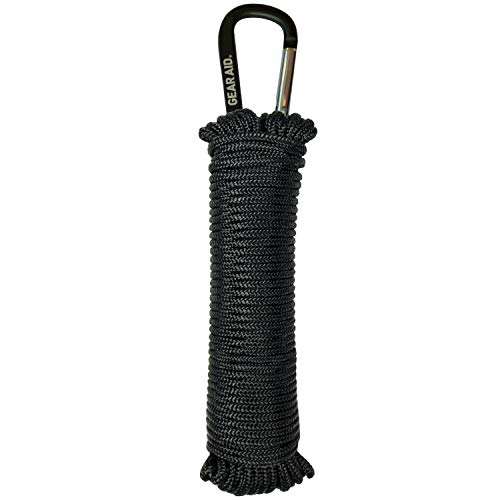
This 50-foot paracord works best for hikers and campers who need a compact, dependable cord that won’t add bulk but still delivers 550-pound tensile strength. I’ve used the GEAR AID 325 paracord on trails and in camp, and it holds up well under stress without fraying. Made from 100% nylon, it’s lightweight at just 2.72 ounces and packs into a 1.2-inch cube, so it’s easy to carry. The included carabiner is small but functional for clipping gear. At 3mm thick, it’s manageable for tying knots, though not ideal for fine work. I’ve used it for tent lines, food hangs, and boot repairs-always reliable. It comes with a 2-year warranty and isn’t discontinued, so replacement is simple if needed.
Best For: Hikers, campers, and outdoor enthusiasts seeking a lightweight, durable 550-pound strength paracord for versatile field use.
Pros:
- High 550-pound tensile strength with a lightweight 2.72-ounce design for easy carrying
- Made of 100% nylon for durability and resistance to fraying in rugged conditions
- Includes a functional carabiner and works across multiple applications like tent lines, gear ties, and emergency repairs
Cons:
- 3mm thickness may be too bulky for fine knotting or detailed survival tasks
- Carabiner is small and may not support heavy or critical loads
- Limited color option (black only) for users wanting visibility or customization
TECEUM 5/32″ Paracord Rope 45+ Colors

The TECEUM 5/32″ Paracord Rope stands out for outdoor enthusiasts and DIY crafters who need a reliable, durable cord rated at 750 lb break strength. It meets MIL-SPEC standards and features a 32-strand nylon sheath with 11 inner yarns for consistent performance. I’ve used it for tent lines, gear lashing, and crafting bracelets, and it holds up in rain, sun, and snow. The 45+ color options let me match or customize projects without sacrificing strength. It resists abrasion, dries fast, and doesn’t rot. I keep 100 ft in my pack for emergencies. Lengths from 50 to 1000 ft suit most needs, and the included QR code gives quick access to a free e-book with practical knots and ideas.
Best For: Outdoor enthusiasts, DIY crafters, and emergency preparedness individuals seeking a high-strength, versatile, and color-diverse paracord for reliable performance in extreme conditions.
Pros:
- Meets MIL-SPEC standards with a 750 lb break strength and durable 32-strand nylon construction
- Highly resistant to UV, weather, and abrasion, making it ideal for long-term outdoor use
- Comes in 45+ colors and includes a QR code for a free paracord e-book with knot-tying and project ideas
Cons:
- Slight color variance may occur due to differences in screen displays
- Limited availability in physical retail stores, primarily online
- Higher price point compared to non-MIL-SPEC paracord alternatives
Factors to Consider When Choosing a Survival Paracord
You need a paracord that matches your survival needs, so check the tensile strength-most hold 550 lbs, but some go higher. Go for a 5/32” diameter since it’s strong enough for tasks like shelter building but still easy to knot. Look at the material, usually nylon, and make sure the inner strands are separate and usable for finer jobs like fishing line or stitching.
Tensile Strength Rating
When you’re out in the wild, the last thing you want is your paracord snapping under load, so checking the tensile strength rating is a must. Most survival paracord holds between 550 and 750 pounds, with 550 being standard for Type III-enough for securing gear, building shelters, or setting traps. If you need extra toughness, Type IV handles up to 750 pounds and works better for heavy-duty tasks. Remember, those numbers come from lab tests under ideal conditions. In reality, knots, dirt, UV exposure, and abrasion reduce strength over time. Look for MIL-SPEC certification to guarantee the cord meets military-grade strength standards and has been tested for reliability under stress. A higher rating gives you a safety margin when conditions aren’t perfect. Pick the strength that matches your intended use, but don’t assume more is always better-just more weight and cost.
Diameter And Thickness
About 4 to 5 millimeters covers the typical diameter range for survival paracord, and your choice affects both strength and usability. You’ll find 4mm (about 5/32 inch) paracord, like standard Type III, strikes a balance between strength and flexibility, making it easy to knot and handle. If you need more durability, 5mm cord offers higher tensile strength-often over 600 pounds-and resists wear better, but it’s stiffer and takes up more space. Thinner options, around 3mm, are lightweight and compact, yet typically max out at about 550 pounds of strength, limiting heavy-duty use. Diameter also influences how smoothly you can splice or unravel the inner strands. For most survival tasks, medium thickness gives you the best mix of strength, ease of handling, and versatility without wasting space or weight in your kit.
Material Composition
Strength and function start with material composition. You need a braided nylon outer sheath-it gives high tensile strength, resists abrasion, and holds up in harsh conditions. Nylon also adds slight elasticity, helping absorb shock under load. Inside, materials vary for specific tasks. Some cores use polypropylene, which floats and works well for fishing. Others include cotton or jute, ideal for tinder since they catch flame easily. If you want reliable fire starting in damp weather, pick paracord with paraffin-impregnated jute in the core-it ignites even when wet. Multi-strand designs might contain braided polyethylene fishing line rated up to 40 pounds, useful for catching food in emergencies. Cotton or polyester strands add utility for sewing or medical splinting. Each material brings trade-offs: nylon lasts longest, cotton burns easier, and polyethylene offers discreet strength. Choose based on your needs, not hype.
Inner Strand Features
Core functionality defines a survival paracord’s real-world value. You need inner strands that perform when it matters. Some cores include 25–40 lb test fishing line, letting you catch food without carrying extra gear. Waterproof fire-starting tinder, like paraffin-soaked jute, ignites even after submersion-useful when conditions turn wet. Integrated 30 AWG metallic alloy wire helps with snare building, gear repairs, or basic electrical tasks. Cotton or synthetic threads inside can stitch torn clothing, patch equipment, or serve as emergency sutures in dire situations. Most paracords contain three to seven inner components, each with a dedicated function. You access them by unraveling the outer sheath, so consider how easy that is in cold or stressful conditions. Not all cores offer these features, so check before buying. More strands mean more versatility, but also more complexity. Choose based on what survival tasks you expect to face.
Color And Visibility
Why blend in when you need to be seen-or stay hidden when detection saves your life? Choose bright orange or reflective paracord if visibility matters most-these colors stand out in low light or thick woods, making it easier to signal rescuers or mark your path. But if you’re hunting or avoiding wildlife, go for camouflage or dark shades like olive green or black; they blend into natural settings and reduce detection. Just remember, darker cords absorb more heat in sunlight, which might affect performance in prolonged exposure. Always check for colorfastness and UV resistance-cheap dyes fade fast, and faded cord loses signaling power and organizational value. Some paracords use color-coded inner strands, letting you identify strength or purpose at a glance. Match the color to your environment and use case. Visibility can save you-or compromise you-so pick wisely.
Length Options
A 100-foot length gives you enough paracord for shelter building, tool crafting, and gear repair without weighing you down-this amount handles most survival scenarios while staying packable. If you’re tight on space, go with 25 to 50 feet; it’s light and fits easily in a pocket or emergency kit, though it limits what you can do. You’ll have enough for basic fixes or lashing but not large projects. For long-term or group use, a 500-foot spool makes sense-it covers big jobs like building shelters or securing gear, but it’s bulky and overkill for everyday carry. Balance matters: too little cord and you’re restricted, too much and you’re hauling dead weight. Match the length to your needs-personal kits favor shorter lengths, while base camps or extensive prep justify larger spools. There’s no universal best size-your use case decides it.
Weather Resistance
Choosing paracord that holds up in harsh weather means focusing on materials and construction that fight moisture, sun damage, and decay. You should pick nylon or polyester cords because they resist degradation from rain, snow, and humidity. UV-resistant paracord keeps its strength under prolonged sun exposure, so it won’t weaken prematurely. Look for cords with waterproofed inner strands-wax or paraffin-treated fibers stay functional when wet and can still be used for fire-starting or sewing. A tightly braided sheath blocks water absorption and protects inner fibers in damp or submerged conditions. Paracord that dries quickly lowers the risk of mold, mildew, and long-term deterioration in wet environments. These features work together to guarantee reliability when you’re facing extreme conditions. You’re not just buying cord-you’re investing in performance where failure isn’t an option.
Specialized Functionality
Beyond weather resistance, what sets certain survival paracords apart is what’s hidden inside. You’ll find 40-pound test braided fishing line woven into some cords, ready to catch food when needed. Others include waxed tinder or paraffin-imbued jute fibers that ignite quickly, even in damp conditions-cutting the need to pack extra fire-starters. Look for multi-strand designs with 30 AWG metallic alloy wire; it’s useful for gear repairs, setting snares, or emergency electrical fixes. Internal cotton or synthetic threads can double as sewing material for patching clothes or gear, and in a crisis, may serve as sutures. Sheaths are built tough, with UV and abrasion resistance, and some hold up to 750 pounds of break strength. These features add function without bulk, but expect slightly stiffer handling. Choose based on what emergencies you anticipate.
Frequently Asked Questions
Can Paracord Be Used for Climbing or Rappelling Safely?
No, you can’t rely on paracord for safe climbing or rappelling. It typically rates around 550 lbs tensile strength, but dynamic loads and friction heat weaken it fast. Real climbing ropes handle 5,000+ lbs and resist abrasion far better. Paracord stretches unpredictably and lacks sheath protection. Use it in emergencies only when no proper gear’s available, and even then, double or triple it. For safety, stick to rated climbing ropes-paracord just isn’t built for that stress.
How Do I Store Paracord to Prevent Tangling?
You coil paracord tightly and secure it with rubber bands or zip ties to prevent tangling. Wrap it in a figure-eight pattern around your hand, then slide it off and fasten both ends. Store it in a dry, cool bag or container away from UV light. Loose storage causes knots; tight winding keeps it ready. You’ll save time and frustration when you need it fast.
Is Paracord Waterproof or Resistant to Rot?
Paracord isn’t fully waterproof, but it’s water-resistant and resists rot well. You’ll notice the nylon exterior sheds water briefly, but prolonged exposure lets moisture seep in. Still, it won’t rot like natural fibers. Mildew can develop if stored damp, so you should dry it completely after wet use. UV exposure weakens it over time, so long-term outdoor use requires inspection. Real-world testing shows military-grade 550 paracord maintains strength after months outside, but eventual degradation happens. Store it dry and away from sunlight for best results.
Can Paracord Withstand Extreme Temperatures?
Yes, paracord can handle extreme temperatures. It typically works from -40°F to 175°F without weakening or becoming brittle. You’ll find it stays flexible in freezing cold and resists melting in high heat, but prolonged UV exposure reduces strength over time. Nylon degrades slower than other materials, so it’s reliable in harsh climates. Avoid open flames-it’ll melt. For survival use, it’s tough but not indestructible. Check for brittleness after long-term storage.
What’s the Best Way to Cut Paracord Without Fraying?
You should cut paracord with a sharp, hot knife or soldering iron to melt the cut end slightly-this seals the nylon fibers and prevents fraying. A clean pair of utility scissors or a box cutter works in a pinch, but you must immediately torch the end with a lighter. Avoid dull blades; they crush the strands and increase unraveling. Melting the cut takes seconds and guarantees durability under tension.