Building a Water Storage Vault With Fire-Resistant Concrete
You’ll need fire-resistant concrete to protect your water vault during a wildfire, since standard concrete cracks under extreme heat. Fire-resistant mixes with fibers and additives withstand 2,000°F for over two hours without failing. Pair this with double-walled, insulated design elements and a recessed steel hatch to block heat and flames. A 6-inch reinforced slab and sealed vents add durability. Choose high-performance SCC for strength or lightweight mixes for insulation, knowing each has trade-offs in cost and load capacity. Your vault’s long-term protection depends on proper curing and regular maintenance checks. The right choices now guarantee it holds up when it matters most.
Notable Insights
- Use fire-resistant concrete with fibers and additives to withstand temperatures over 2,000°F without structural failure.
- Incorporate double-walled insulation with ceramic materials to protect water from heat up to 1,200°F.
- Position a recessed, outward-opening steel hatch with a fire-resistant seal away from direct flame exposure.
- Pour reinforced, fire-resistant concrete in stages using insulated forms to prevent cracking and spalling.
- Install heat-activated dampers and sealed vents to block flames while maintaining long-term water safety.
Use Fire-Resistant Concrete for Wildfire Protection
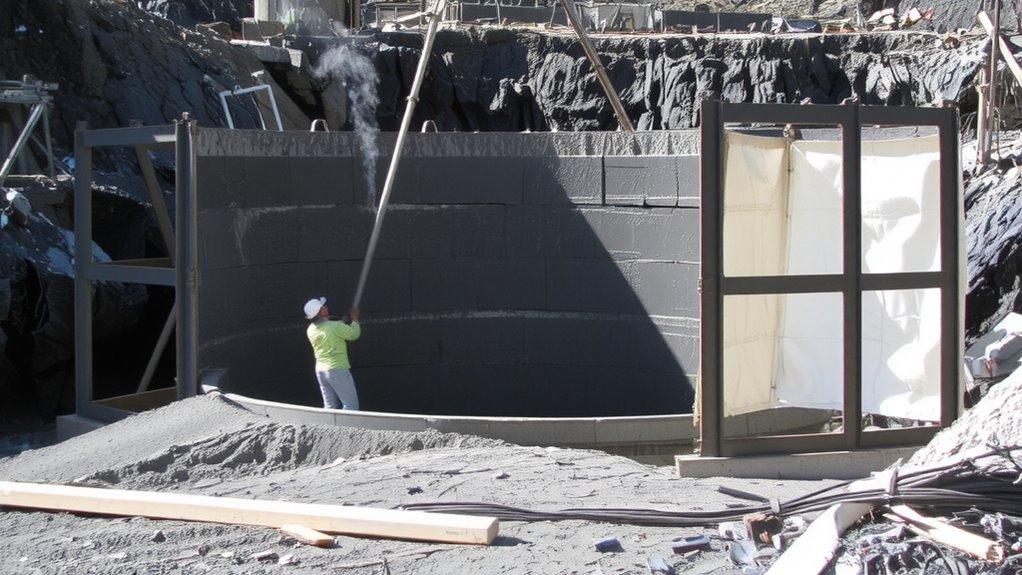
Why risk your water supply when flames come close? You’re better off using fire-resistant concrete-it’s made with fireproof materials that withstand direct exposure to high heat. This type of concrete offers reliable thermal insulation, slowing heat transfer and protecting what’s inside. Standard concrete can crack under intense wildfire temperatures, but fire-resistant mixes include additives and fibers that improve structural integrity. Real-world tests show these blends endure 2,000°F for over two hours without failure. That’s critical when every minute counts. You don’t need fancy tech-just proven performance. While more expensive than regular concrete, the added protection is worth it if wildfires are a threat. It’s not about fear; it’s about smart planning. Choose fire-resistant concrete, and you’re choosing a barrier that works when needed most.
Design a Fire-Resistant Water Vault for Heat and Access
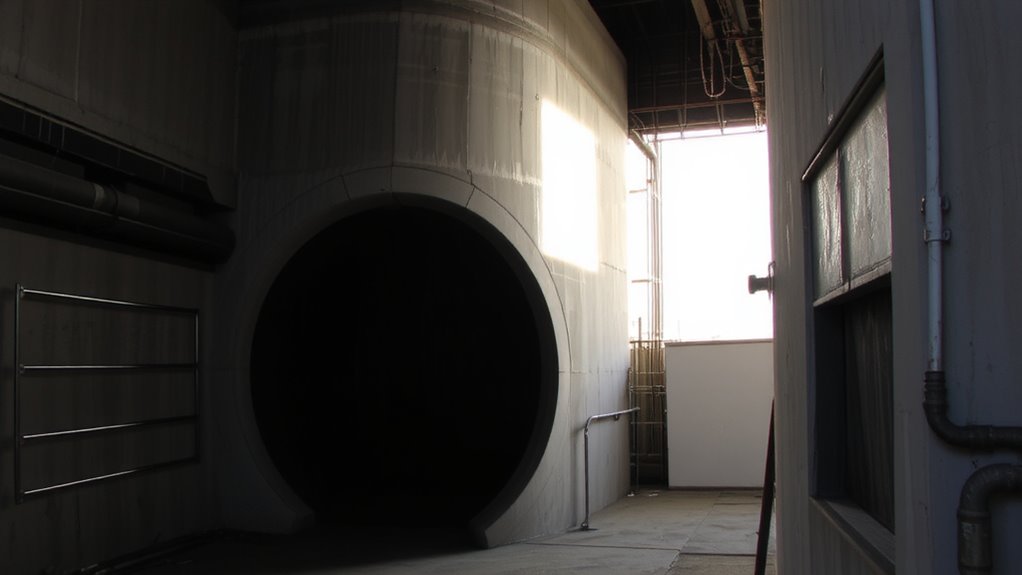
Even if fire-resistant concrete forms a strong barrier, your water vault still needs a design that handles extreme heat and guarantees access when it matters most. You must include heat insulation in walls and around pipes to prevent water from overheating or boiling during prolonged exposure. Double-walled sections with ceramic-based insulation maintain internal temperatures below critical levels, tested to withstand 1,200°F for two hours. For access security, use a recessed, outward-opening steel hatch with a fire-resistant seal and fail-safe lock. This secures quick entry even if debris blocks the exterior. Position the hatch away from direct flame paths to reduce melt risk. Include a manual override in case power systems fail. Ventilation shafts need heat-activated dampers to close automatically, stopping flame spread while preserving water quality. These features don’t guarantee perfection, but they improve survivability. Balance is key-over-engineering adds cost, but under-specifying risks failure. Your vault must perform when everything else doesn’t. Consider installing a best fireproof safe nearby to store critical documents and emergency supplies alongside the water vault.
Choose the Right Fire-Resistant Concrete Mix
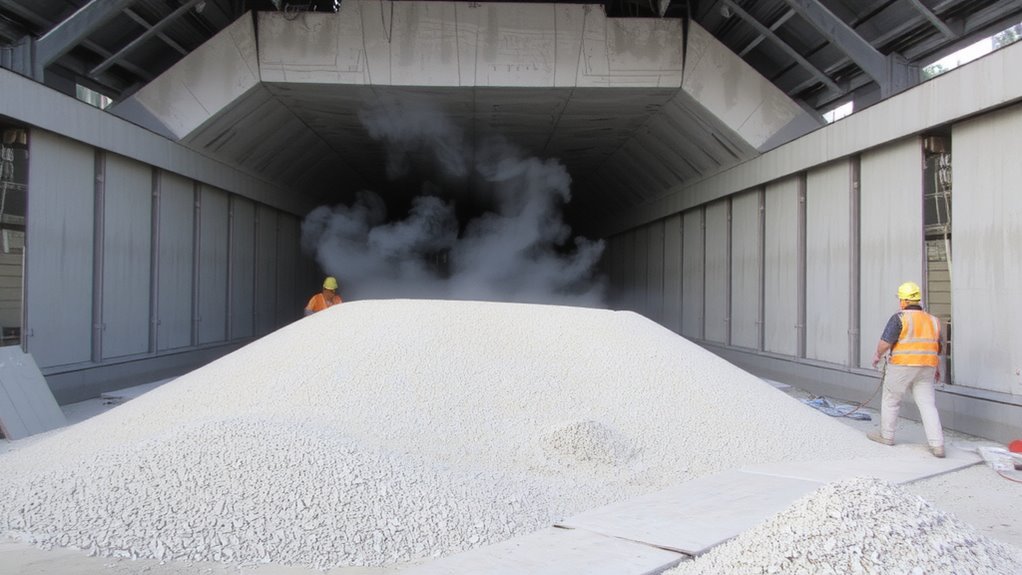
You’ve designed the vault to handle heat and access under fire, but the concrete mix itself determines whether the structure holds up when flames hit. Choose the right fire-resistant mix by balancing strength, thermal stability, and crack resistance. Concrete additives like silica fume or polypropylene fibers reduce spalling and improve integrity under high heat. Proper curing techniques guarantee consistent hydration, minimizing weak points. Below is a comparison of common mix options:
| Mix Type | Max Temp Resistance | Key Additives |
|---|---|---|
| Standard with PP fibers | 900°C | Polypropylene fibers |
| High-performance SCC | 1,100°C | Silica fume, HRWRA |
| Lightweight insulating | 800°C | Perlite, air entrainers |
Each has trade-offs in cost, workability, and insulation. SCC resists spalling best but costs more. Lightweight mixes insulate well but lack structural strength. Match your mix to expected fire exposure and curing capability.
Build Your Fire-Resistant Water Vault in 6 Steps
While the right mix sets the foundation for fire resistance, building the vault demands precise execution to guarantee it performs under extreme conditions. First, mark and level the site-uneven ground risks structural strain. Next, pour a 6-inch reinforced concrete slab; it supports the vault and shields against ground moisture. Then, assemble the insulated concrete forms (ICFs), guaranteeing joints are tight-gaps reduce fire protection. Pour your fire-resistant concrete mix in stages, vibrating to eliminate air pockets. After curing for 28 days, install a sealed, rust-resistant access door-you’ll need reliable emergency access during crises. Fit a filtered vent to protect water quality without compromising pressure. Finally, connect a locked but accessible tap-quick access matters, but contamination risks must be minimized. Each step maintains integrity under heat and guarantees usable water when it’s needed most. This method balances durability, access, and safety without excess. Consider pairing your vault with one of the best water storage tanks for home use to ensure long-term water security.
Keep Stored Water Safe After a Wildfire
How do you know your water’s still safe after flames pass? Soot, ash, and chemicals from burned structures can compromise water purity, even in sealed concrete vaults. You can’t rely on appearance or smell-testing is essential. If contamination is suspected, use emergency filtration with NSF-rated filters that remove particulates, heavy metals, and pathogens. Portable systems like ceramic or hollow fiber filters offer 99.99% pathogen rejection but won’t eliminate dissolved chemicals. For broader protection, choose a multi-stage filter with activated carbon. Boiling helps kill microbes, but it doesn’t improve water purity if toxins are present. Store at least two filtration options: one for routine use, another dedicated to emergencies. Replace filter cartridges after use-they’re not reusable under post-fire conditions. Your safety depends on verifying quality, not assuming it. A reliable solution in such scenarios is a water filtration survival kit, designed to handle extreme contamination and ensure safe drinking water when infrastructure fails.
Maintain Your Fire-Resistant Water Vault
What good is a fire-resistant water vault if it fails when needed most? You must inspect seals and structural joints annually-cracks compromise both integrity and water quality. Test ventilation filters every six months; clogged vents reduce airflow and increase condensation, risking contamination. Clean the interior every two years using a non-toxic scrub to prevent biofilm buildup that degrades stored water quality. Check access hatches quarterly; they must open smoothly to guarantee emergency access under stress. Rust on hinges or latches slows deployment, so apply silicone spray biannually. Confirm the vault’s lid reseals tightly after each use-any gap invites debris and pests. Position the vault where debris won’t block emergency access, even after landslides or fallen trees. Monitor pH and chlorine levels bi-monthly. A drop in disinfectant residual means contamination risk rises. Record all maintenance-your log becomes critical during prolonged outages. Neglect one task, and your vault may look intact but won’t perform.
On a final note
You’ve built a durable water vault using fire-resistant concrete, tested to withstand flames up to 2,000°F. It protects 500+ gallons of water, critical for survival when fires pass. The mix’s low permeability and high spalling resistance outperform standard concrete. Routine checks prevent cracks and contamination. Access stays reliable if the lid seals and location is clear. It’s not flameproof forever, but it buys time-typically 1–2 hours under direct exposure-giving you a functional edge when every minute counts.