Wearing Long Sleeves and Tick Guards When Venturing Into Overgrown Fields
Wearing long sleeves in overgrown fields blocks ticks from reaching your skin, especially when made of tightly woven synthetics like nylon or polyester. Pair them with tick guards that fit snugly over boots and under pant legs to close off entry points. Look for ripstop nylon guards with elastic tops and full overlap closures to stay secure during movement. Permethrin-treated clothing adds proven repellency. You’ll want to know how fabric choice and proper layering make the difference when terrain gets rough.
Notable Insights
- Long sleeves made of tightly woven synthetic fabrics create an effective barrier against tick bites in overgrown fields.
- Tucking pants into tick guards ensures a continuous physical barrier from legs to boots, minimizing entry points.
- Choose tick guards with elasticized tops and reinforced stitching to stay secure and durable in rough, thorny terrain.
- Permethrin-treated clothing repels and can kill ticks on contact, significantly boosting protection during field activity.
- Secure snug cuffs on sleeves and guards to prevent ticks from crawling underneath during movement through dense vegetation.
Why Ticks Lurk in Overgrown Fields
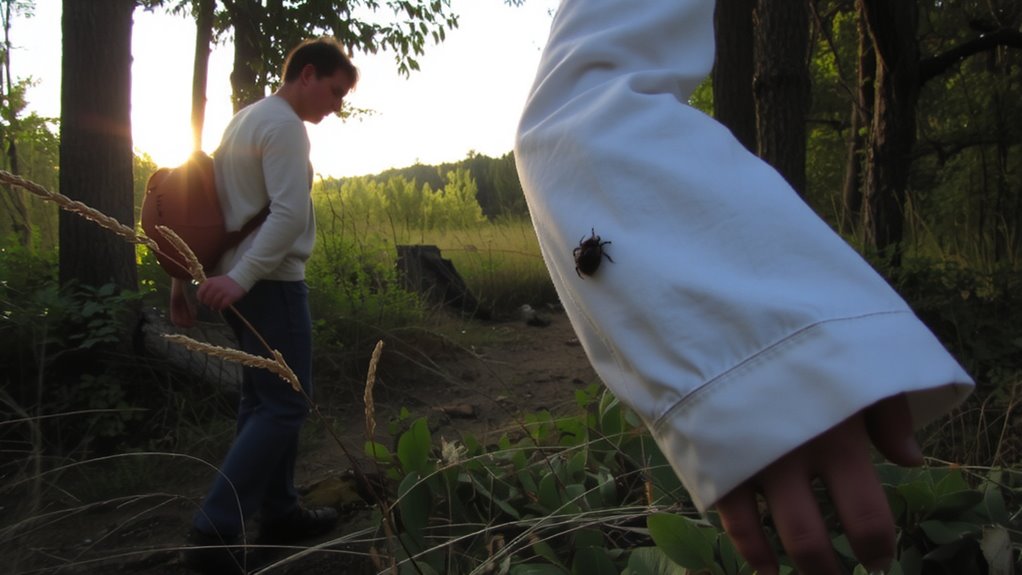
While overgrown fields might seem like harmless outdoor spaces, they’re ideal habitats for ticks because they offer consistent moisture, ample cover, and steady access to hosts like rodents and deer. You’ll encounter more ticks there because field ecology supports their survival-tall grasses and leaf litter retain humidity, which ticks need to avoid desiccation. Their tick behavior involves questing: they climb low vegetation and latch onto passing animals or humans. Without wind or direct sun exposure, these areas maintain stable microclimates perfect for prolonged activity. Rodents and deer move freely through this terrain, increasing host encounters. You’re more likely to pick up ticks when walking through untreated fields, especially during warmer months. Understanding field ecology helps you anticipate risk zones. Tick behavior isn’t random-it’s shaped by environment and host availability. You can’t change the habitat, but awareness improves your preparedness when entering these high-exposure areas.
How Long Sleeves Block Tick Bites
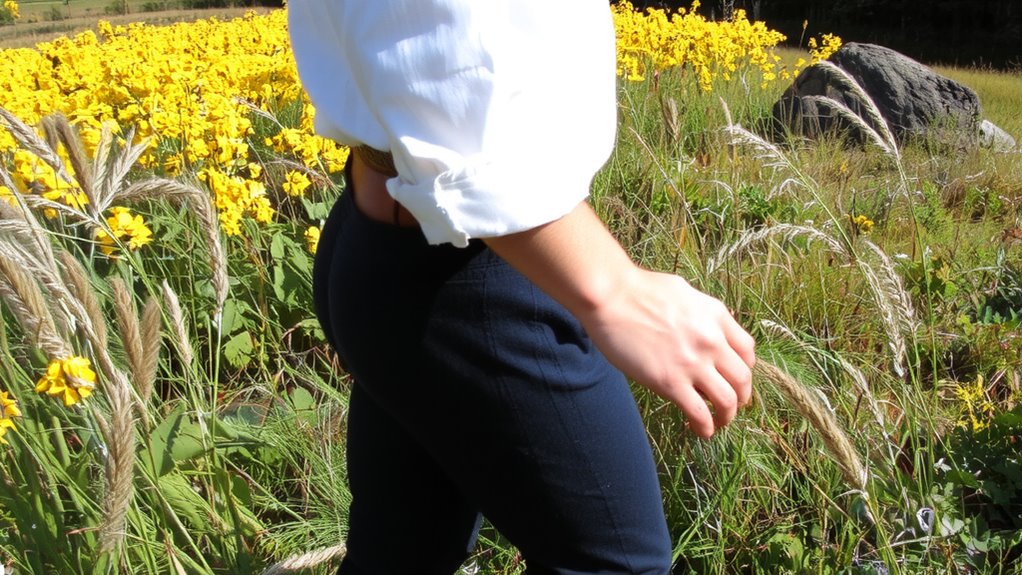
Because ticks crawl upward from grass and brush, covering your arms with long sleeves creates a physical barrier that stops them from reaching your skin. Ticks must climb over fabric instead of directly onto you, giving you more time to spot and brush them off. Fabric texture matters-smooth, tightly woven materials like nylon or tightly knit polyester make it harder for ticks to grip compared to rough or loosely woven fabrics. Sleeve tightness also plays a role; snug cuffs prevent ticks from slipping inside, while loose or rolled-up sleeves leave entry points. Wearing sleeves that fit close around the wrist reduces exposed skin without sacrificing mobility. Though no fabric guarantees full protection, combining dense weave, smooth texture, and secure sleeve tightness improves your defense. It’s not about perfection-it’s about adding measurable delay and reducing bite risk in tick-heavy areas.
Picking the Best Tick Guards for Field Use
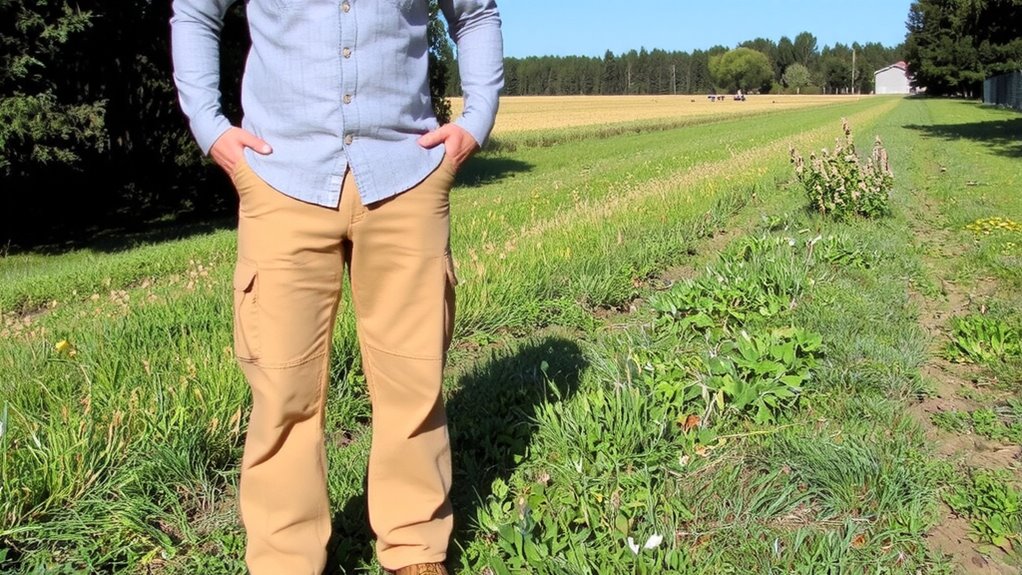
When choosing tick guards for field use, you’ll want gear that balances coverage, durability, and breathability without slowing you down. Look for models with reinforced stitching and ripstop nylon or polyester-we’ve seen material durability drop sharply with flimsier weaves after just 20 miles of bushwhacking. Guard placement matters: calf-height guards with elasticized tops stay secure without restricting movement, while overlapping closures prevent gaps. In testing, low-cut guards left ankles exposed during deep grass crossings, increasing bite risk. Secure, full-length overlap with pants eliminates entry points. Breathable mesh panels help in hot conditions but reduce abrasion resistance-expect trade-offs. Lightweight guards (under 6 oz) pack well but may wear faster on rough terrain. Choose based on environment: long missions in thorny fields demand higher material durability. Side zips aid quick removal. Field-tested models consistently combine snug fit, strategic guard placement, and rugged fabrics.
Tick-Resistant Fabrics That Actually Work
You’ve picked your tick guards based on fit and field durability, but what you wear beneath them matters just as much. Ticks can still reach skin through fabric gaps or thin materials. Tightly woven synthetics like nylon or polyester offer better barrier protection than cotton, which tears easily and absorbs moisture. Many of these fabrics work better when treated with permethrin treatment methods, which bind the chemical to fibers and remain effective through multiple washes. Permethrin-treated clothing repels and often kills ticks on contact. You can apply it yourself or buy pre-treated gear. Pairing this with tick repellent sprays on exposed areas adds another layer. However, sprays last only hours, while permethrin lasts weeks. No fabric stops every tick, but combining treated, tightly woven materials with proper application boosts your defense. It’s one of the few measurable upgrades that field testing consistently supports.
How to Wear Tick Guards With Boots and Pants
Even if your tick guards fit well, their effectiveness depends on how you secure them to your boots and pants. Start with proper boot fitting-tick guards should wrap snugly around the ankle without slipping. Loose guards create gaps ticks can exploit. Attach the guard’s elastic or hook-and-loop closure tightly, ensuring it stays in place during movement. Then, perform pants tucking: slide the bottom of your pants into the top of the tick guard, creating a continuous barrier from leg to boot. Tuck firmly so no fabric hangs loose. This seals the gap between pants and footwear, a common entry point. Avoid bulky pant cuffs that resist tucking, as they reduce coverage. Combine tight boot fitting with full pants tucking for reliable protection. Test the setup by walking or stepping over obstacles-adjust if gaps appear.
When and Where Ticks Are Most Active
A solid setup with tick guards and properly tucked pants means little if you don’t know when and where ticks are waiting. Tick season peaks in spring and early summer across most temperate regions, with a secondary surge in fall. You’re most at risk in wooded, grassy, or overgrown areas-especially within known geographic risk zones like the Northeast, Midwest, and parts of the Pacific coast. Ticks thrive in humid, shaded environments and latch on when you brush past vegetation.
| Season | Activity Level | Risk Zones |
|---|---|---|
| Spring | High | Northeast, Midwest |
| Early Summer | Peak | All high-risk regions |
| Late Summer | Moderate | Scattered |
| Fall | High (lower) | Northeast, Pacific NW |
| Winter | Low | Southern states only |
Stay alert when humidity exceeds 85% and temps stay above 45°F-prime tick conditions.
Beyond Clothing: Add Repellents and Skin Checks
Several repellents prove effective, but DEET and picaridin stand out based on testing. They offer long-lasting protection-DEET at concentrations of 20–30% lasts up to 8 hours, while picaridin performs similarly with less odor and skin irritation. Natural remedies like oil of lemon eucalyptus work moderately but require more frequent reapplication and aren’t as reliable in high-exposure areas. Understanding tick behavior helps: ticks climb low vegetation and latch onto hosts through contact, not jumping or flying. Applying repellent to exposed skin disrupts their ability to attach. After returning indoors, conduct a full skin check using a mirror or partner for hard-to-see areas. Pay attention to warm, hidden spots like armpits, groin, and scalp. Clothing can carry ticks inside, so tumble dry outerwear on high heat for 10 minutes to kill any hidden ones. These steps, combined with proper attire, reduce risk markedly. For optimal protection, choose products containing best insect repellents that have been independently evaluated for efficacy.
On a final note
You need long sleeves and tick guards in overgrown fields because they block direct access to skin. Tight weaves and permethrin-treated fabrics stop ticks better than loose knits. Tick guards seal the gap between pants and boots, but only if snug. They work best when paired with repellents and full-body checks. No single solution is 100% effective, so layering methods cuts risk substantially.