Understanding the Risk of Chimney Fires During Winter
You’re at risk of a chimney fire each time you burn wood in winter, especially if creosote buildup exceeds 1/8 inch or your flue is cracked or blocked. These fires burn over 2,000°F and can ignite surrounding structures fast. Burning seasoned hardwood and cleaning your chimney at least once a year cuts creosote by nearly half. Annual inspections catch hidden damage early. Skipping maintenance increases danger considerably-knowing these risks changes how you’ll manage your fireplace all winter.
Notable Insights
- Creosote buildup from burning wood ignites easily and is a leading cause of chimney fires in winter.
- Using unseasoned wood increases creosote formation due to rapid smoke cooling in the flue.
- Blockages like bird nests or damaged liners reduce draft, worsening creosote accumulation and fire risk.
- Signs like loud cracking noises, black smoke, or soot over 1/8 inch signal high fire danger.
- Annual chimney cleaning and inspection, especially with frequent winter use, significantly reduce fire hazards.
What Causes Chimney Fires?
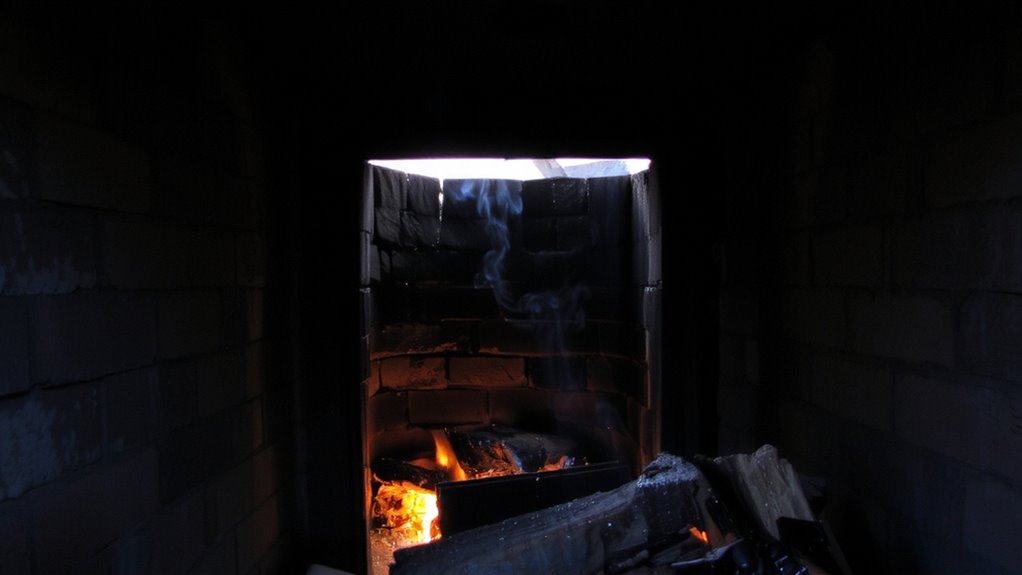
A chimney fire usually starts when creosote, a flammable byproduct of burning wood, builds up on the inside of your flue. You get creosote buildup when smoke cools too quickly, often due to burning unseasoned wood or restricting airflow. Over time, this sticky residue thickens and becomes highly combustible. If ignited by a hot fire or stray spark, it can burn at over 2,000°F. Flue blockage worsens the risk. Obstructions like bird nests or collapsed liners trap smoke, accelerating creosote accumulation. A blocked flue also reduces draft, causing more smoke to condense inside. Both conditions create a dangerous feedback loop. Even well-built fires can trigger a flare-up under these circumstances. Regular cleaning removes creosote buildup. Annual inspections identify flue blockage early. These steps aren’t optional-they’re baseline maintenance. You wouldn’t skip oil changes in a car; treat your chimney the same. Prevention is measurable, not situational.
5 Signs Your Chimney Could Catch Fire
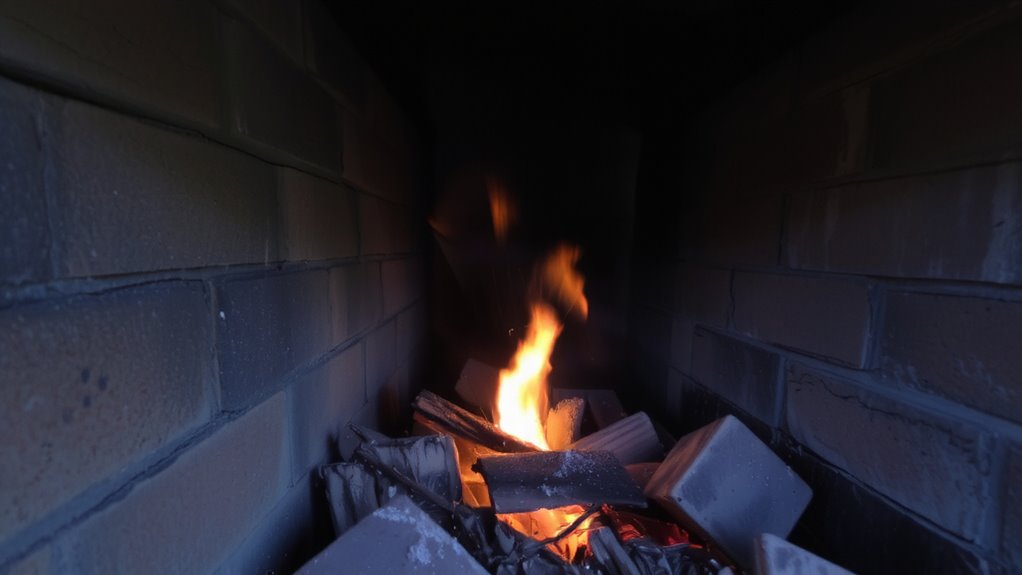
What should you do if your chimney’s acting up? Look for signs your chimney could catch fire. If you notice thick, black smoke or a strong, burnt odor from the fireplace, you might have creosote buildup. That sticky, tar-like substance ignites easily when heated. Soot that’s over 1/8 inch thick is a red flag. Flue damage is another warning-if the liner is cracked or warped, gases can escape and overheat surrounding materials. You might also hear popping or rumbling noises during use, a clue that combustion is out of control. Reduced draft or smoky rooms mean the system isn’t venting properly, often due to blockages or flue damage. These aren’t minor glitches. They’re measurable risks. Ignoring them raises fire probability. Check your chimney regularly for these issues. Spotting them early gives you time to act before flames spread.
How Often to Clean Your Chimney (And Why It Prevents Fires)
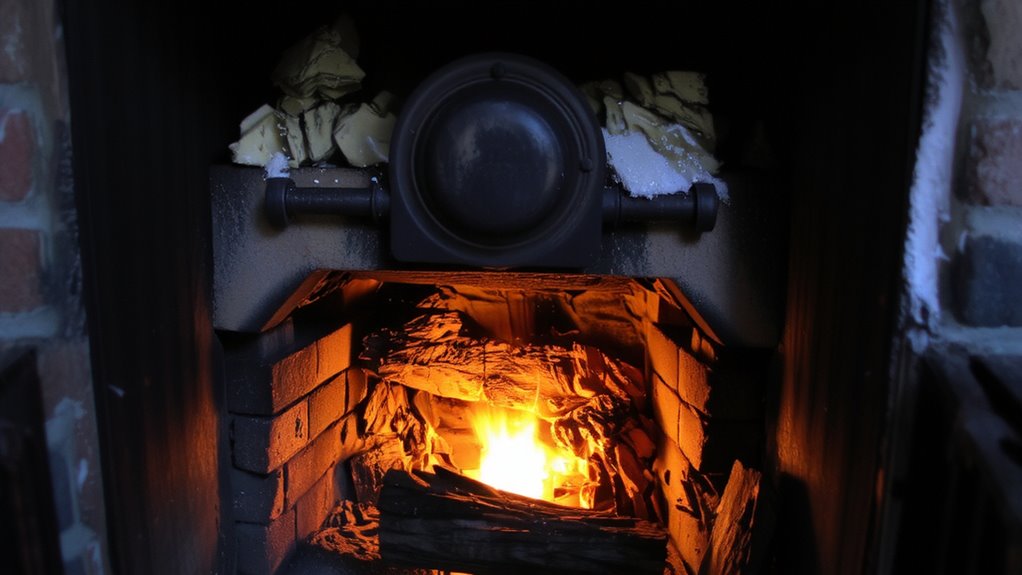
You’ll usually need to clean your chimney at least once a year, but if you use the fireplace weekly during winter, plan on twice-yearly maintenance to cut fire risk. Creosote builds up fast, and that’s what ignites during most chimney fires. Routine cleaning removes this flammable residue before it becomes dangerous. Pair each cleaning with professional chimney inspections to spot hidden damage or blockages. These inspections guarantee your system meets current safety standards and operates efficiently. NFPA recommends annual evaluations, even if you don’t use the chimney often. Ignoring this increases fire risk without warning. You’re not just cleaning-you’re verifying structural integrity and airflow performance. It’s not hype; it’s measurable prevention. Sticking to this schedule means fewer surprises, lower hazard potential, and peace of mind when you light that fire. Safety standards exist for a reason-follow them.
7 Proven Ways to Prevent Chimney Fires
It’s on you to keep creosote in check-burning seasoned hardwood instead of softwood or unseasoned timber cuts buildup by nearly half, and that directly lowers ignition risk. You also need consistent chimney cap maintenance to block debris and animals, which can obstruct airflow and increase fire hazards. Check your flue inspection frequency: the National Fire Protection Association recommends annual evaluations, more often with heavy use. Here’s what matters most:
| Factor | Recommendation |
|---|---|
| Wood type | Seasoned hardwood only |
| Flue inspection frequency | Annually, or twice yearly with frequent use |
| Creosote thickness | Clean if >1/8 inch |
| Chimney cap maintenance | Inspect twice a year, replace if damaged |
Using proper technique and timing beats relying on emergency fixes. Stay ahead with routine checks and the right fuel-prevention is measurable, not magical.
What to Do During a Chimney Fire
When flames roar from your chimney or you hear a loud cracking noise, isn’t the time to wonder what comes next-your response needs to be immediate and precise. First, shut off any air supply to the fire, including dampers and fireplace doors, to limit oxygen flow. Evacuate everyone from the house and call 911-this is non-negotiable for effective emergency response. Don’t try to extinguish the fire with water; it can worsen structural damage. Instead, use a chimney fire extinguisher if you have one nearby and know how to deploy it safely. Focus on containment: close interior doors to slow smoke spread while awaiting firefighters. Fire containment isn’t just about protecting your home’s structure-it prevents lethal carbon monoxide leaks. Even if flames appear out, have the chimney inspected before reuse; unseen creosote or cracks increase reflash risk. Preparedness reduces hazard severity.
On a final note
You’re safest when your chimney gets cleaned yearly and inspected twice. Creosote buildup causes fires, but regular sweeping reduces that risk considerably. Use dry, seasoned wood-it burns hotter and creates less residue. Avoid overloading the fireplace or burning trash. Install a chimney cap and spark arrestor. If flames appear in the chimney, get everyone out, call 911, and keep the door closed to limit oxygen. Preparedness cuts danger.