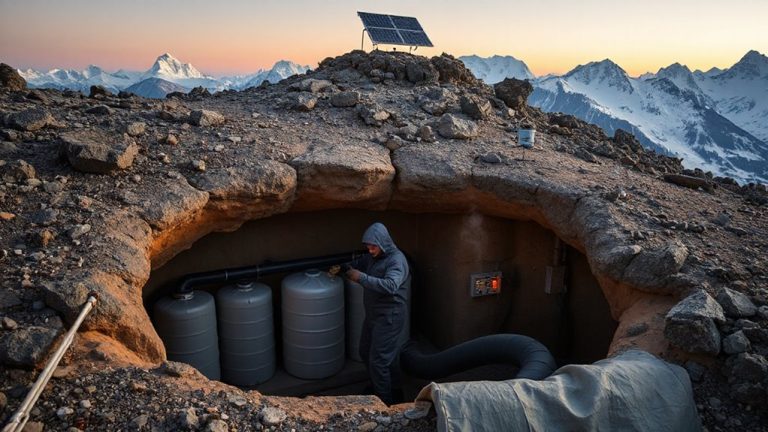
Understanding the Risk of Septic System Failure After Flooding
After flooding, your septic system can fail because saturated soil won’t absorb wastewater, leading to backups and pooling sewage. Don’t use water indoors or pump the tank until the ground dries. Avoid the drain field to prevent compaction, and watch for gurgling drains or surfacing effluent-signs of trouble. A flooded system risks contamination and structural damage. Call a pro if problems persist, since hidden issues like cracked tanks or clogged pipes need expert assessment. You’ll want to know the next steps to protect your home and health.
Notable Insights
- Flooding saturates soil, preventing drain fields from absorbing effluent and causing backups.
- Standing water near the tank or drain field signals system failure after floodwaters recede.
- Saturated ground can lift or shift empty septic tanks, causing structural damage.
- Avoid using water indoors during floods to prevent system overload and sewage backup.
- Schedule a professional inspection after flooding to detect hidden damage and ensure safe operation.
What to Do Right After Your Septic System Floods
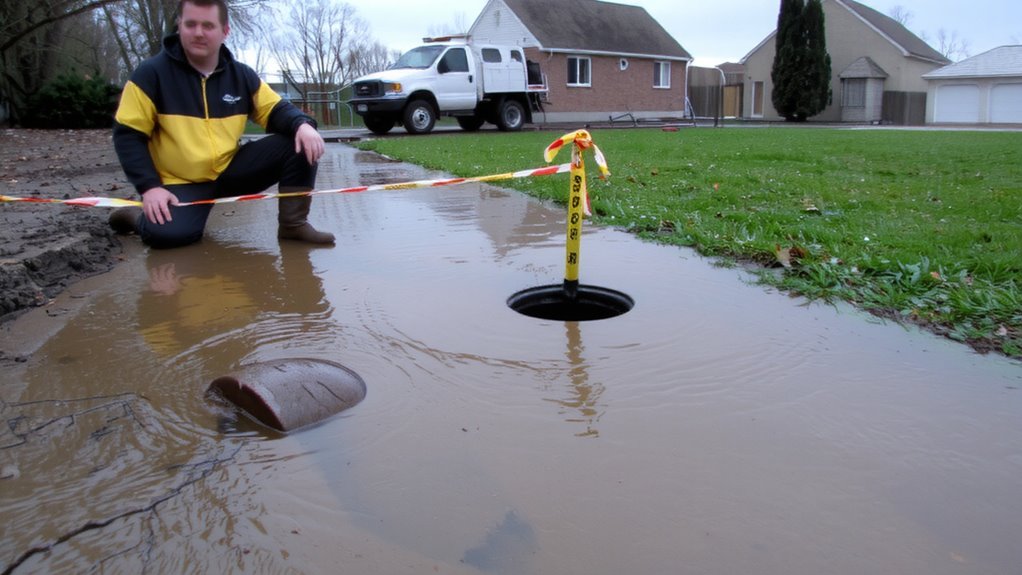
If your septic system floods, the first thing you should do is stop using water indoors as quickly as possible-flushing toilets, running taps, or doing laundry will only push more water into an already overwhelmed system, increasing the risk of sewage backing up into your home. This immediate action supports water conservation and reduces strain until the system recovers. Avoid driving or walking over the drain field, as compacted soil slows drainage. Keep stormwater away from the area-divert downspouts and surface runoff. Emergency preparedness means knowing your septic layout and having a licensed professional on call. Don’t pump the tank during flooding; doing so can damage the system when the groundwater is high. Wait for the floodwaters to recede. Actions like using minimal water and preparing for outages are practical steps that align with long-term system resilience.
7 Signs Your Septic System Failed During the Flood
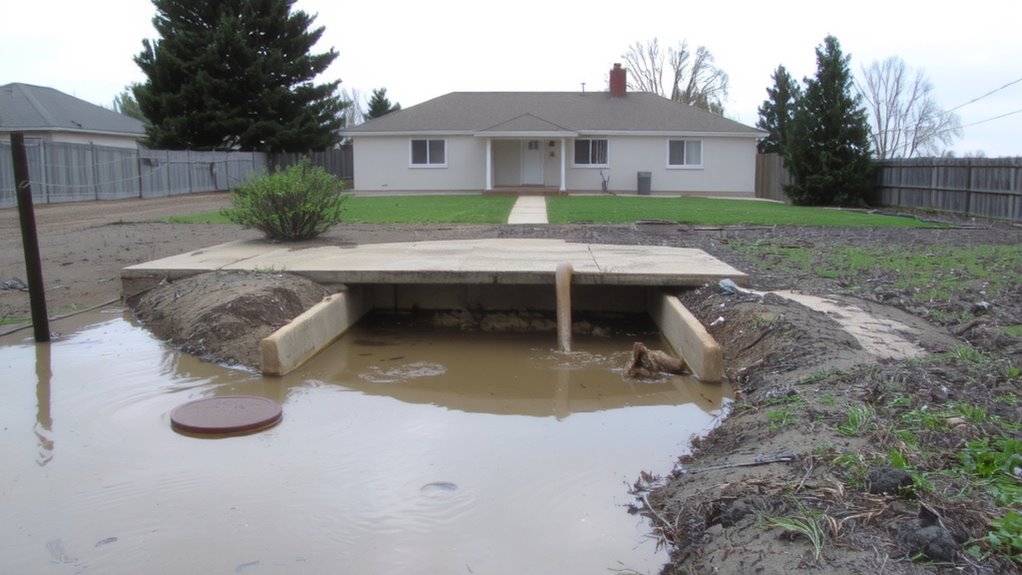
How do you know your septic system didn’t just get wet but actually failed during a flood? Look for clear signs. If you’ve got sewage backing up into sinks or toilets, that’s a system backup-and it means your tank can’t process waste. You might also notice pooling water or soggy ground near the tank or drain field, even after floodwaters recede. Gurgling pipes are another red flag. Tank floatation happens when groundwater lifts the tank out of position, especially if it was empty. That can crack pipes or the tank itself, leading to leaks or total failure. Once the water goes down, inspect the tank’s position-if it shifted, floatation likely occurred. These signs mean more than just a soaked system. They point to structural or functional damage that needs immediate professional evaluation before further use. Don’t wait. Acting fast prevents health risks and costly repairs down the line.
Why Wet Soil Stops Your Drain Field From Working
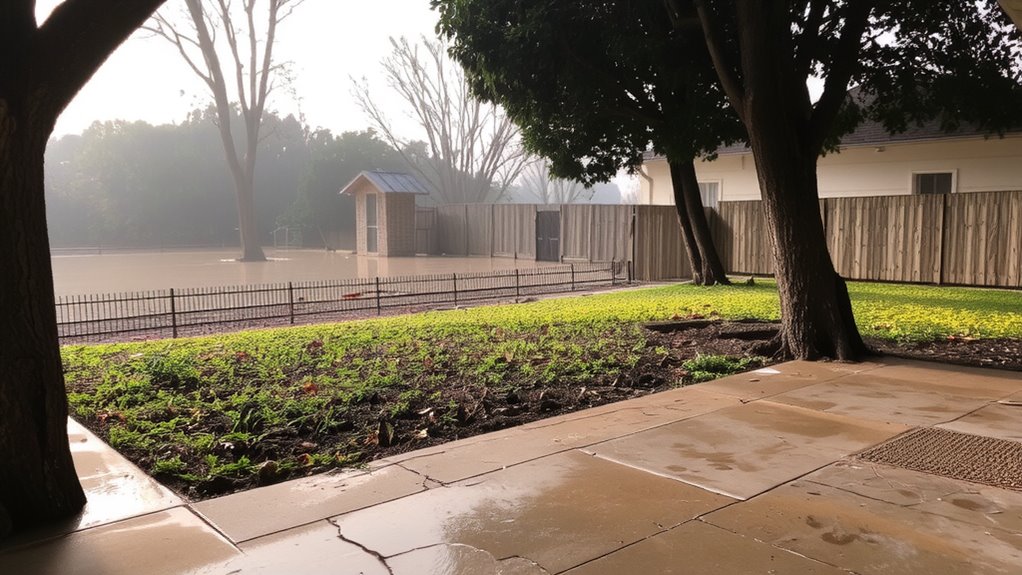
When the ground’s already saturated from flooding, your drain field can’t do its job because there’s nowhere for the wastewater to go. Soil saturation means the pores between soil particles are filled with water, leaving no room to absorb effluent from your septic tank. This condition causes drainage inhibition, where wastewater can’t percolate through the soil as designed. Instead, it pools near the surface or backs up into your plumbing. The drain field relies on unsaturated soil to filter and treat effluent, so when absorption stops, the system fails. You can’t force drainage if the ground won’t accept more water. Recovery depends on natural drying and evaporation, not quick fixes. Until soil moisture drops, expect slow drains or pooling-signs the environment, not your system, is the problem.
When to Call a Pro to Inspect Your Septic System?
Floodwaters recede, but problems can linger long after the standing water is gone. If your septic system was submerged or soaked, don’t wait for obvious signs of failure. Standing water, slow drains, or pooling effluent mean it’s time for a professional evaluation. Even if things seem normal, flooding can displace tanks, clog pipes, or saturate the drain field, compromising function. Only a licensed pro can conduct a full system assessment, checking tank integrity, baffles, and absorption capacity. They’ll verify whether sediment, debris, or structural damage exist beneath the surface. Skip DIY fixes-hidden damage risks costly repairs or contamination. A professional evaluation gives you accurate, actionable insight, not guesses. It’s the most reliable way to confirm your system is safe and functional. Schedule one sooner rather than later. Timing matters for long-term performance and preventing back-ups.
How to Avoid Sewage Exposure After Flooding
Why risk contamination when clean-up begins? Flooding can push sewage into your yard or home, so avoid contact with standing water near your septic system. Assume it’s contaminated until proven otherwise. Wear waterproof gloves and boots, and don’t go barefoot. Wash hands immediately after any exposure, even if you think you stayed clean. Use clean water for washing skin, utensils, and surfaces-don’t rely on tap water until authorities confirm it’s safe. If clean water isn’t available, use soap and at least 1 gallon per person per day for hygiene. Keep kids and pets away from affected areas. Don’t launder flood-soiled clothes with other items. Dry cleaning or boiling may be needed for heavily contaminated fabrics. Practice strict personal hygiene to reduce illness risk. Simple precautions lower exposure more effectively than any gear.
How to Prevent Long-Term Damage After a Flood
Though the water may have receded, your septic system could still be at risk if silt, debris, or excess moisture remain in the drainfield or tank. You should avoid using the system until the ground dries to prevent hydraulic overload. Check for soil erosion around the tank and drainfield-visible slope changes or exposed pipes signal instability. Soil erosion can undermine system support and lead to pipe displacement, which disrupts flow and causes backups. Don’t operate heavy equipment near the area, as it can worsen both erosion and pipe issues. Have a professional inspect the tank and drainfield for structural integrity. They can confirm if silt clogged the trenches or if lines shifted. Preventative maintenance now reduces repair costs later. Simple vigilance helps avoid long-term failure without guesswork or unnecessary upgrades.
How Floods Wreck Your Septic System (And How to Fix It)
When floodwaters rise, they don’t just overwhelm your yard-they push silt and debris into your septic tank and clog the drainfield’s trenches, reducing its ability to disperse wastewater. Saturated soil prevents proper drainage, forcing untreated effluent to back up into your home or pool on the surface. Even after water recedes, damage remains hidden. Your pump may still run, but without proper pump calibration, it can’t handle the load, leading to premature failure. Compacted soil or shifting can dislodge tanks, making tank anchoring essential to prevent floating or cracking. Inspect for cracks, check pump operation, and confirm floats are functioning. A professional should recalibrate the pump and assess the drainfield. If anchoring wasn’t in place before, install it now. Systems in flood-prone areas need these fixes to survive future events. Prevention isn’t optional-it’s routine maintenance.
On a final note
You’ll need to wait for floodwaters to recede before evaluating damage. Don’t pump the tank while the ground’s wet-this can crush the system. Watch for slow drains, sewage smells, or pooling water; these mean failure. Once dry, get a pro inspection to check for silt, floatation, or pipe damage. Simple fixes may work, but hidden issues like displaced tanks need expert repair. Acting early cuts long-term costs and health risks.