How to Use a Portable Weather Station for Real-Time Threat Monitoring
Place your portable weather station in an open area, calibrate it, and monitor for a 0.06+ inHg pressure drop in 10 minutes or a 15 mph wind surge in 5-real signs of danger. Use models like AcuRite or WeatherFlow for updates every 2–3 seconds and lightning detection up to 25 miles. Pair with a solar-charged power bank and satellite-linked app to get alerts off-grid. Cheaper units often deliver false alarms or poor strike tracking. Reliable warnings depend on accurate, timely data, not forecasts. There’s more to optimizing your setup for immediate storm response.
Notable Insights
- Place the station in an open area to ensure unobstructed detection of lightning, wind, and pressure changes.
- Enable real-time alerts via app or satellite to receive instant notifications when danger thresholds are breached.
- Monitor rapid barometric drops of 0.06+ inHg within 10 minutes as a key sign of approaching severe storms.
- Use lightning detection with precise strike location and 25-mile range to track approaching electrical storms.
- Maintain continuous operation with solar charging and spare power sources for reliable off-grid monitoring.
Understand Why Real-Time Weather Alerts Save Lives
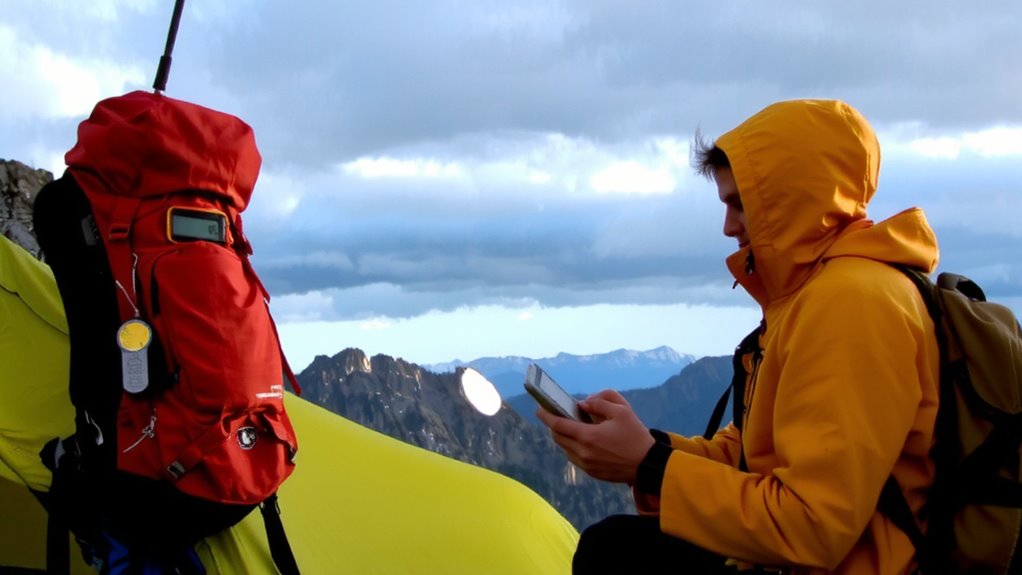
How many lives could you save with a five-minute warning? You’d be surprised how much you can do with just five minutes when flash floods or extreme heat hit. Real-time alerts give you time to move to higher ground before floodwaters rise or to seek shade and hydration before heat exhaustion sets in. Flash floods can arrive with little visible warning, especially in dry regions after sudden storms. Extreme heat creeps in silently, increasing risk for vulnerable individuals within hours. A system that detects rapid changes in temperature, humidity, and pressure helps you act before conditions become dangerous. These alerts aren’t just data-they’re actionable warnings based on measurable thresholds. You don’t need hype, just accurate, timely info. When seconds count, a reliable alert can mean the difference between a close call and a tragedy.
Pick a Portable Weather Station That Warns of Storms
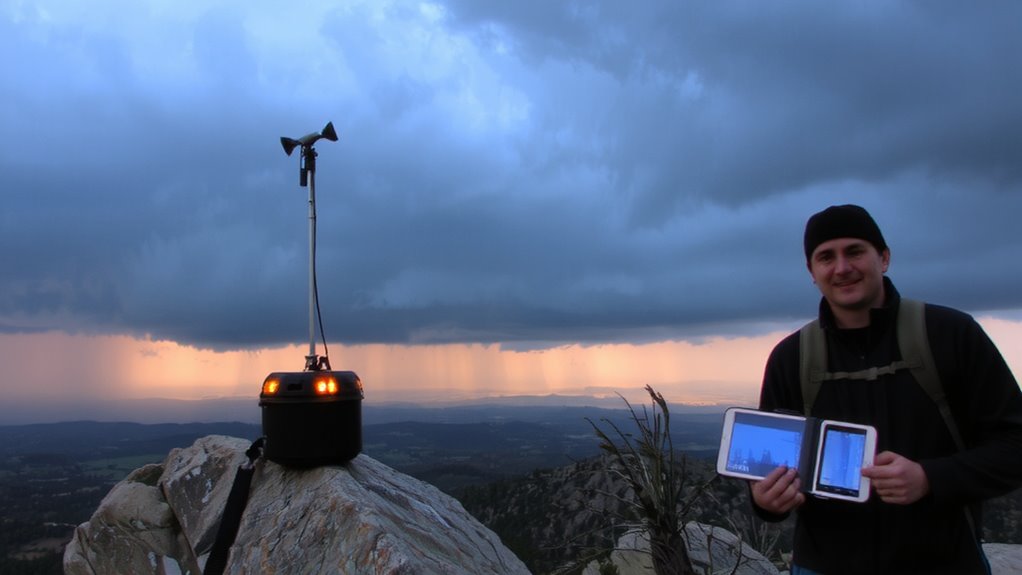
When every minute matters in storm detection, can you rely on your gear to deliver essential data before conditions turn dangerous? Choose a portable weather station with built-in lightning detection to alert you to nearby strikes, typically within a 25-mile range. Models with real-time rainfall intensity tracking help you assess storm severity by measuring precipitation rate in inches per hour. Units like the AcuRite or WeatherFlow offer verified detection accuracy and fast update cycles-every 2-3 seconds-so you’re not reacting to outdated info. Some devices pair with apps that map lightning trends and rainfall intensity over time, improving situational awareness. Cheaper models often lack precise strike location or over-report false positives. For outdoor safety, prioritize sensors with proven response times and calibration. Don’t assume all stations handle severe weather equally-check field tests and sensor specs. A reliable alert can give you 10–15 minutes to seek shelter, which might be enough.
Set Up Your Device for Instant Storm Detection
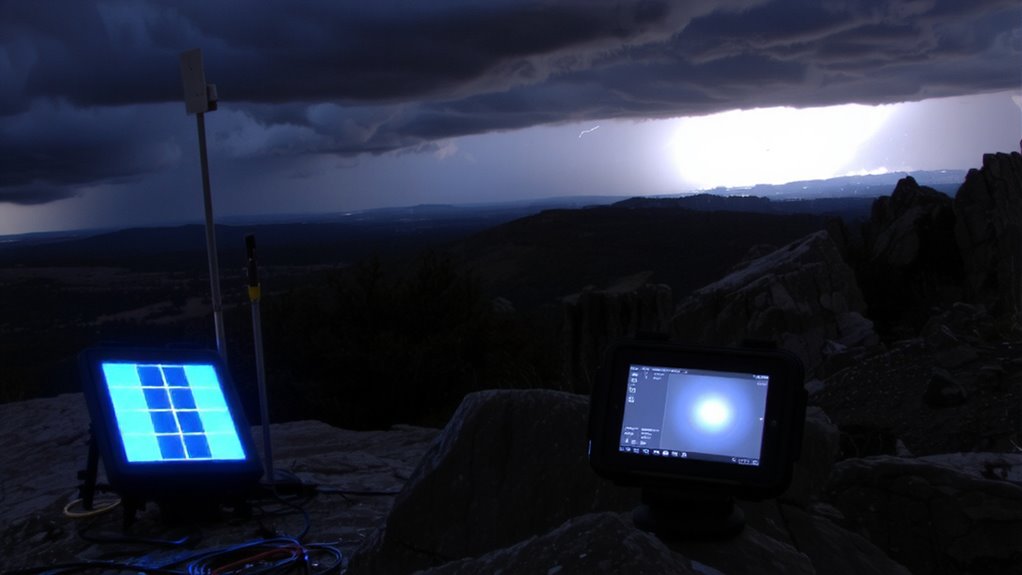
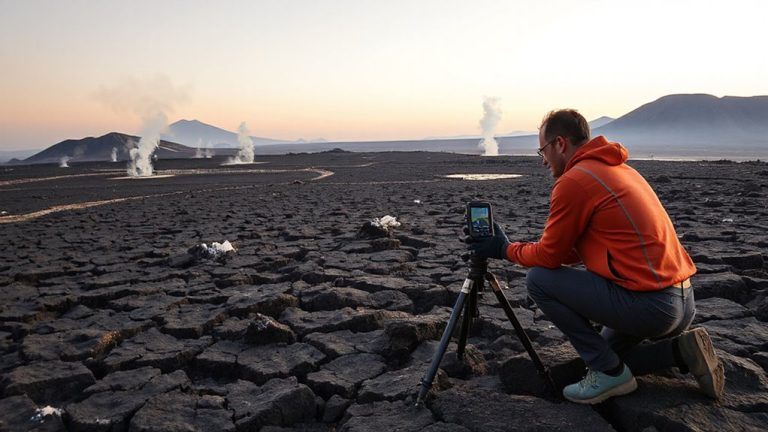
Though setup only takes a few minutes, getting it right guarantees your portable weather station delivers timely storm alerts when seconds count. Start by placing the device in an open area, away from buildings or trees that block wind and rain readings-accuracy depends on proper exposure. Perform device calibration according to the manufacturer’s instructions; this secures sensors measure temperature, humidity, and barometric pressure correctly. Misaligned sensors can delay storm detection by minutes, which matters in fast-moving weather. Enable power management features to extend battery life without sacrificing sensor responsiveness. Some models let you reduce display brightness or increase sleep mode duration-use these if you’re monitoring for hours. Keep spare batteries or a charged power bank on hand. A dead device won’t alert you, no matter how precise its sensors. Setup isn’t just about turning it on-it’s about securing reliability from the first alert to the last.
Watch for Sudden Pressure Drops and Wind Spikes
If you’re relying on your portable weather station to warn you of incoming threats, start paying close attention to rapid changes in barometric pressure and wind speed-these are the first reliable signs of severe weather. Sudden drops in pressure often precede thunderstorms or squalls, while unexpected wind spikes can signal gust fronts or downbursts. Monitoring barometric trends helps you anticipate storm arrival within 1–2 hours. Wind velocity spikes of 15+ mph in under 10 minutes demand immediate attention.
| Change Type | Threshold for Concern |
|---|---|
| Barometric drop | 0.06+ inHg in 10 minutes |
| Wind velocity rise | 15+ mph increase in 5 min |
| Sustained wind | Over 30 mph with gusts |
| Pressure trend | Consistent 30-min decline |
Act early-don’t wait for rain. These thresholds reflect real-world conditions where failure to respond increases risk.
Get Alerts on Your Phone: Even Off-Grid
You’ve set your thresholds for pressure drops and wind spikes-now make sure you’re alerted the moment those conditions hit, even when you’re beyond cell service. Most portable weather stations rely on Bluetooth or Wi-Fi, but those fail off-grid. Choose a model with built-in satellite connectivity to send alerts directly to your phone, no matter your location. These systems typically pair with a companion app that delivers real-time notifications when thresholds are breached. Satellite links require more power, so pair the setup with solar charging to maintain uptime during extended deployments. A 5W to 10W solar panel usually keeps the station running indefinitely in sunny conditions. Keep in mind: satellite data transmission adds cost and slight delays-typically under two minutes. Not all weather stations support this feature, so verify compatibility before heading into remote terrain. Test the alert response before relying on it in critical scenarios.
Read Your Weather Station to Spot Storms Before They Hit
How quickly can you spot a storm on the horizon when the sky still looks clear? You can catch it early if you’re reading your portable weather station right. Watch for sudden shifts in temperature, pressure drops, and wind direction-these signal changing weather patterns. A 3–5 hPa drop in barometric pressure over an hour often means a storm is forming nearby. Pair that with visual cues: darkening skies, towering cumulonimbus cloud formations, or a defined shelf cloud. Your station gives hard data, but combining it with what you see improves accuracy. Don’t wait for rain. If pressure keeps falling and winds shift abruptly, the storm is closer than it looks. Real-time readings beat forecasts when you’re off-grid. You’re not guessing-you’re tracking measurable changes. That’s how you stay ahead.
Turn Alerts Into Action Fast
A sudden pressure drop on your portable weather station means nothing if you don’t act on it within minutes. You need clear emergency protocols in place before threats hit-knowing when to evacuate, shelter, or power down equipment can save lives. Your station’s alerts are only useful with a rapid response plan tailored to your environment, whether you’re in the field, on a job site, or at a remote camp. Test your communication systems regularly so warnings reach everyone. Assign roles ahead of time so decisions aren’t delayed. A 10-second delay in reacting to a wind speed spike over 60 mph can mean the difference between safety and disaster. Pair your station’s real-time data with practiced routines. Don’t just monitor-integrate alerts into actionable steps. Speed matters, but only when matched with disciplined execution.
On a final note
You rely on real-time data when seconds matter. A portable weather station with accurate pressure and wind sensors detects storms hours before they hit. GPS and satellite messaging let you get alerts off-grid. Battery life lasts 24–48 hours, enough for most emergencies. It won’t replace forecasts, but it gives you local precision. Test it monthly; calibration drifts. Not flashy, but it works when cell service fails.