Evaluating the Risk of Roof Leak Development During Storms
Your roof’s at greater risk during storms if shingles are lifted or worn, letting water in. Wind uplift and debris impact can expose underlayment or puncture surfaces, especially on older roofs. Check for ceiling stains, bubbles, or musty smells-early signs of leaks. Weak spots around vents, skylights, and flashing often fail first. Clogged or misaligned gutters increase overflow and seepage. Even impact-resistant materials have limits under sustained stress. You’ll find which specific points fail most and how to prioritize them next.
Notable Insights
- Wind uplift during storms can loosen shingles, exposing underlayment and increasing water intrusion risks.
- Older or poorly maintained roofs are more vulnerable to storm-induced leaks due to existing degradation.
- Failed roof components like vents, skylights, or flashing create direct pathways for water during heavy weather.
- Storm debris can puncture roofing materials, compromising integrity even in impact-resistant systems.
- Post-storm indicators like ceiling stains, odors, or peeling paint signal active leaks needing immediate inspection.
What Causes Roof Leaks During Storms?
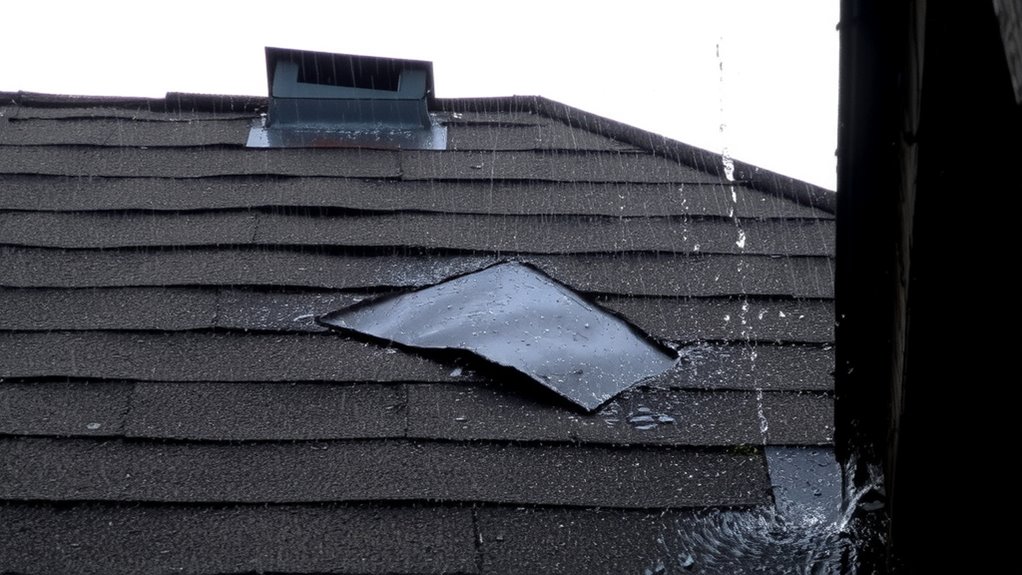
Why do roof leaks happen when storms hit? Because storms bring wind damage and accelerate shingle erosion, both of which compromise your roof’s integrity. Strong gusts lift shingles, exposing underlayment to rain. Once lifted, shingles don’t always seal back down, leaving gaps for water intrusion. Over time, constant exposure erodes shingle granules, reducing their ability to deflect water. Older roofs suffer worse from this wear, especially if maintenance was delayed. Wind damage isn’t always visible from the ground, but it weakens key joints and edges. Shingle erosion progresses gradually, but storms exploit it instantly. You might not see a hole, but water follows the easiest path inside. These issues combine during storms because rain hits harder and longer, testing weak points. Without sound shingles and secure fastening, your roof can’t perform. Prevention means checking for uplift and wear before storm season hits.
Spot the Early Signs of a Storm-Related Leak
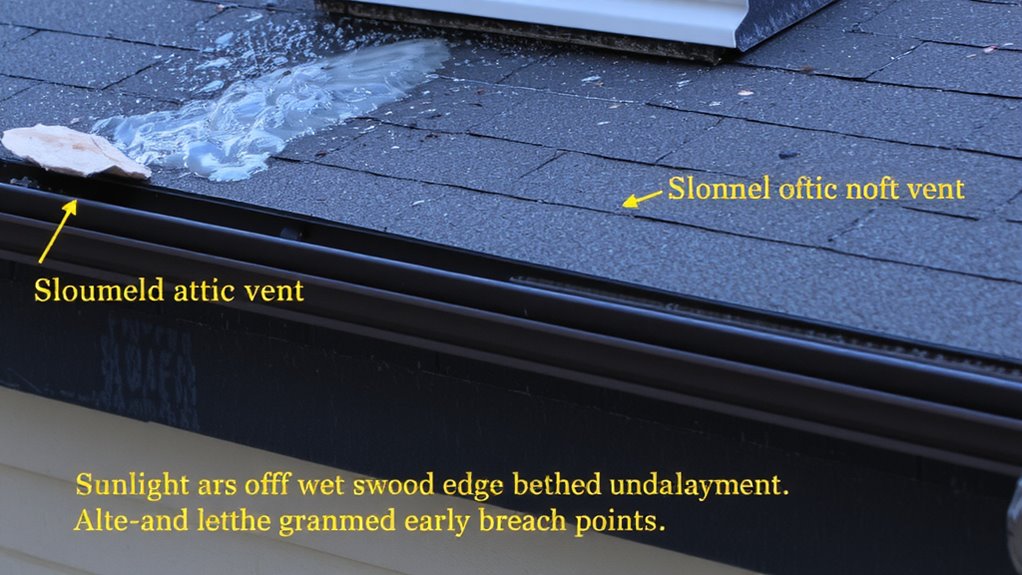
Where do you start when trying to catch a leak before it worsens? You inspect for visible interior signs right after a storm. Water stains on ceilings or walls often appear first-look for yellowish or brownish discolorations. They may start small but grow if unchecked. Ceiling bubbles are another red flag; damp drywall swells and pulls away from framing. Don’t ignore them. Even minor ones suggest water intrusion has already begun.
| Sign | What It Means |
|---|---|
| Water stains | Active moisture, potential mold |
| Ceiling bubbles | Structural weakening, repair soon |
| Musty odors | Likely hidden mold growth |
| Peeling paint | Moisture damage behind surfaces |
Act early. Delay raises repair costs and risk. These signs don’t resolve on their own. Check upper floors and attic if possible. Spot the issue now-avoid collapse later.
How Storm Strength Increases Roof Leak Risk
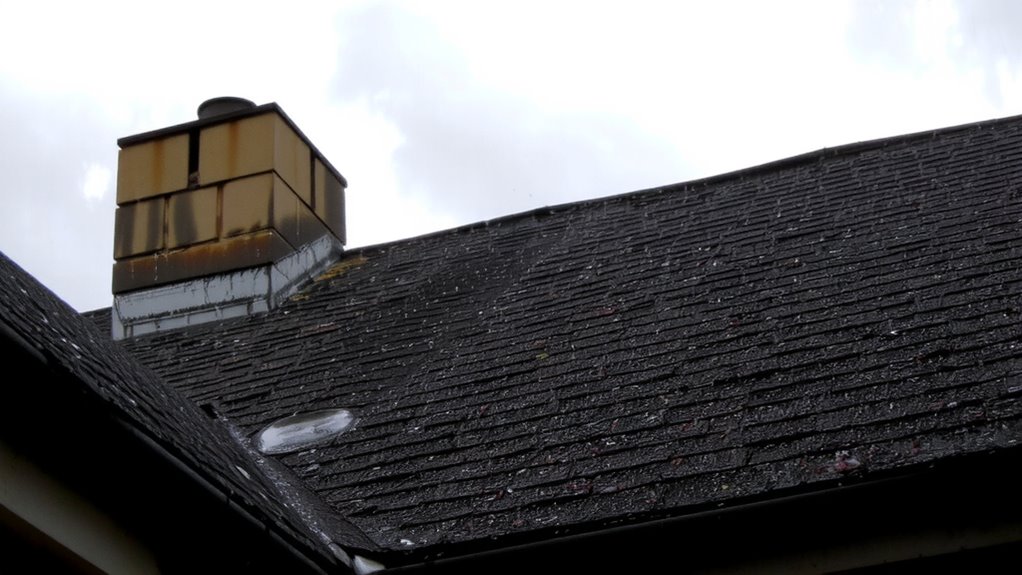
You’ve checked the interior signs-stains, bubbles, odors-and now it’s time to examine what drove the damage in the first place: storm intensity. Stronger storms increase roof leak risk because higher wind speeds create greater wind upliftwind uplift which can pry shingles loose or lift flashing, exposing underlayment. Once that protection fails, water enters easily during heavy rain. You’re also facing debris impactdebris impactbranches, siding, or roof materials from nearby structures-that strikes with more force in high winds, puncturing or crackingpuncturing or crackingroofing materials. Even durable materials like Class 4 impact-resistant shinglesClass 4 impact-resistant shingleshave limits; sustained exposuresustained exposureexceeds their design thresholds. The combination of prolonged wind uplift and fast-moving debris multiplies vulnerability. Older roofs or those with poor installation degrade faster under these stresses. Storm strength isn’t just about rainfall-it’s mechanical force stressing weak points. Evaluating this risk means recognizing that intensity directly affects structural performancestructural performance not just surface wear.
5 Roof Parts to Check Before the Next Storm
What’s holding back water when the wind hits 60 mph? Your roof’s weakest points often give way first. Check roof vents-they’re sealed, but storm-force wind can lift loose collars or crack deteriorated rubber boots. A failed vent boot lets water enter directly into your attic. Inspect skylight seals too; UV exposure and temperature swings make them brittle over time. If the sealant’s cracked or pulling away, driven rain will get through. You don’t need storm damage to see leaks-just one compromised seal. Look for discoloration, warping, or visible gaps around these components. Don’t assume newer means better; some plastic roof vents degrade faster than metal in high UV areas. Replace seals proactively. These parts aren’t backup systems-they’re front-line defenses. Missing issues here means risking interior water entry long before rain overwhelms shingles.
Fix Gutters and Flashing to Prevent Leaks
Even if your roof surface looks solid, failing to maintain gutters and flashing can still lead to leaks during heavy storms. Poor gutter alignment means water won’t flow cleanly away from your roof edge, increasing overflow risk during downpours. Misaligned sections often pull away from the fascia, creating gaps where runoff can seep behind and into the home. Regular inspection guarantees hangers stay tight and slopes remain consistent-ideally 1/4 inch per 10 feet of length. Flashing integrity is just as critical, especially around chimneys, vents, and valleys. Damaged, corroded, or loose flashing fails to seal joints properly, allowing water intrusion even with moderate rainfall. Small gaps or shifted pieces compromise the entire system. Re-securing or replacing worn metal flashing takes minimal time but prevents major interior damage. Proper installation and annual checks help maintain both gutter alignment and flashing integrity, reducing storm-related leak risks effectively.
When to Call a Roofer for Leak Inspection
How soon should you call a roofer after spotting signs of a leak? Immediately. Delaying increases the risk of interior damage and costly repairs. Stains on ceilings, peeling paint, or damp attic insulation signal water intrusion that won’t fix itself. If you notice these during or after a storm, assume active leakage. Some issues require emergency repairs, especially if water is actively dripping or structural materials show prolonged saturation. A roofer can confirm the source, assess severity, and stop further intrusion. Waiting may seem cost-effective, but it often leads to mold, damaged sheathing, or compromised insulation-problems far more expensive than a timely inspection. Don’t rely on visual fixes alone; trained professionals detect hidden breaches. Early intervention limits interior damage and prevents escalation. Schedule an inspection at the first sign of trouble to maintain roof integrity and avoid larger repair bills down the line.
On a final note
You can’t stop storms, but you can reduce leak risk by checking weak spots. Flashing, gutters, shingles, vents, and seals all fail under high wind or heavy rain. Inspect them before storm season. Small gaps or rust lead to big water damage. Fix issues early-it’s cheaper than repairs later. A pro inspection catches what you miss. Prevention isn’t perfect, but it’s your best defense. Time and weather test every fix.