How to Plan for Evacuation When You Have a Medical Condition Requiring Refrigeration
Keep your insulin and other temperature-sensitive meds cold during evacuation using a pre-chilled cooler with phase-change gel packs, which maintain 36–46°F for up to 60 hours-12 hours longer than standard packs. Use a digital backup of your medication list, including storage needs, stored securely and shared with a trusted contact. Confirm shelter rules in advance; some allow personal cooling units, others provide monitored refrigeration. Test your setup beforehand to guarantee real-world reliability, and know the limits of your equipment under stress.
Notable Insights
- Use a medication cooler with phase-change gel packs to maintain 36–46°F for at least 48 hours during evacuation.
- Pre-chill both the cooler and gel packs for 12 hours before packing to maximize cooling efficiency.
- Digitally store medication details, including refrigeration needs, in encrypted cloud storage accessible to trusted contacts.
- Confirm shelter policies in advance to ensure personal cooling devices or refrigerated storage are permitted.
- Carry battery-powered coolers with extended life or solar charging capability for longer evacuations without power.
Identify Critical Meds That Require Cold Storage
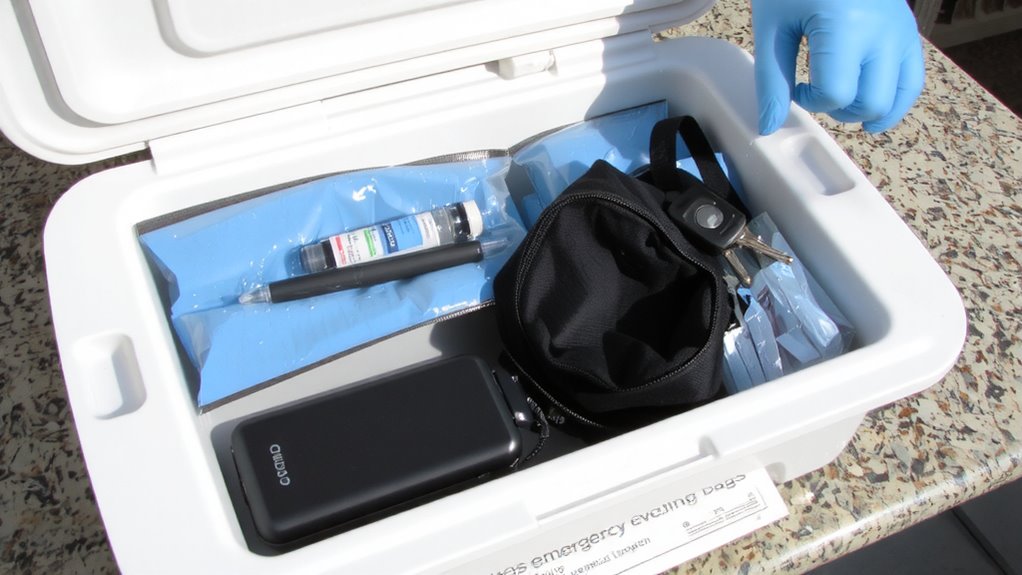
If you’re managing a medical condition that depends on refrigerated medications, the first step in evacuation planning is knowing exactly which drugs can’t survive prolonged exposure to heat. You must review each medication’s temperature sensitivity-some, like insulin or certain biologics, degrade quickly above 46°F (8°C). Check the manufacturer’s specifications for acceptable storage duration outside refrigeration; for example, some insulins last only 28 days at room temperature. Others may tolerate brief warm exposure but lose potency over time. Document these limits clearly. Don’t assume all injectables or liquids need constant cooling-verify. Label each medication with its max allowable temperature and time out of refrigeration. This data helps you prioritize during evacuation. Knowing how long each drug remains stable without cooling reduces risk. Accuracy here determines safety. Overestimating storage duration leads to ineffective treatment.
Pack a Medication Cooler That Works Without Power
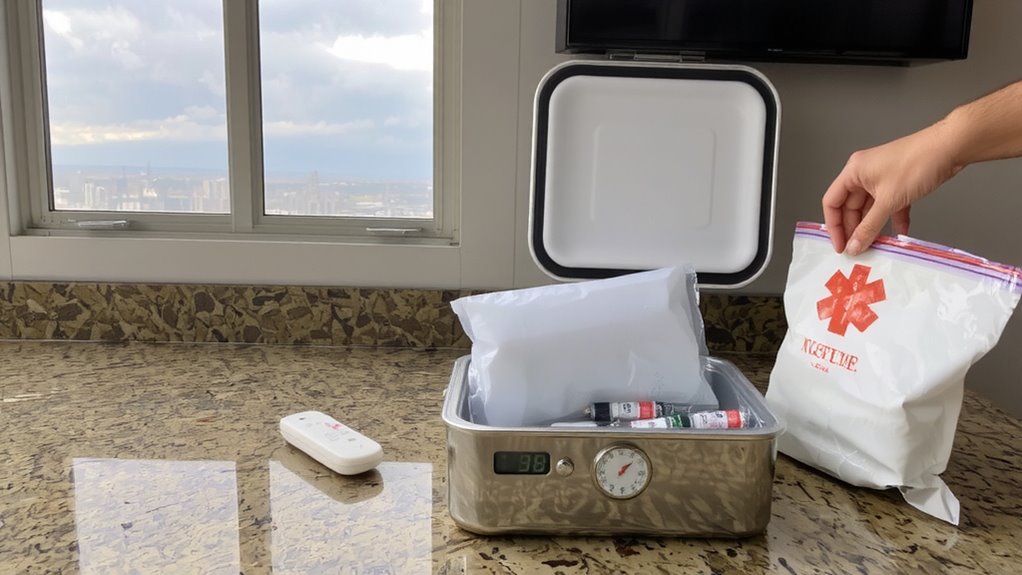
When choosing a medication cooler that works without power, focus on models proven to maintain a 36–46°F (2–8°C) range for at least 48 hours using no electricity, since most refrigerated meds start degrading outside this window. Look for coolers with tested performance using frozen gel packs-these hold temperature longer than ice and reduce excess moisture. High-quality insulated liners are essential; they minimize heat transfer and maintain stability during temperature shifts outside. Avoid thin, flimsy materials-opt for coolers with thick liners and secure seals. Pre-chill both gel packs and the cooler for at least 12 hours before packing. Don’t open it unnecessarily; each opening drops internal consistency. Some models include built-in pouches for gel pack placement-these improve circulation. Real-world testing shows phase-change gel packs outperform standard versions by up to 12 hours. Choose coolers with third-party validation data over marketing claims. Your meds depend on reliable, consistent storage you can count on.
Store Emergency Access Copies of Your Medication History
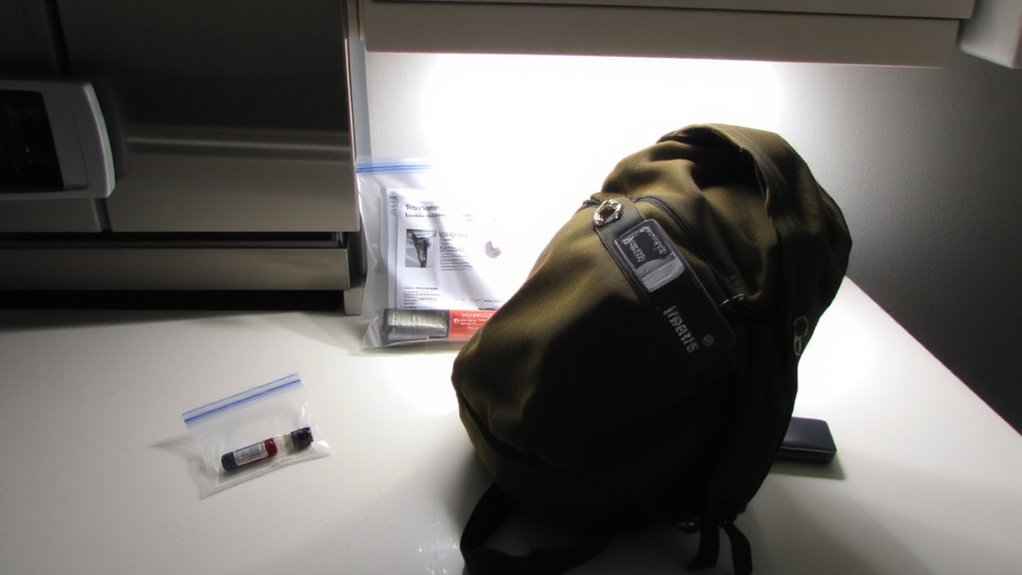
You’ve secured your medications in a reliable cooler that maintains safe temperatures without power, but what happens if you’re separated from your supply or need urgent care? You need emergency access to your medication history. Relying on memory or paper records isn’t enough. Create digital backups stored in secure cloud storage so you can access them from any device, anywhere. These backups should include drug names, dosages, prescribing doctors, and refrigeration requirements. Use encrypted services to protect privacy. Share access with a trusted contact. Below is what to include:
| Item | Format |
|---|---|
| Medication List | PDF with dosage and timing |
| Prescriber Info | Name, phone, clinic |
| Storage Requirements | Temperature range, duration limits |
Cloud storage guarantees you’re never without critical data when seconds count.
Use Battery-Powered Coolers When Grid Power Fails
Though standard coolers keep contents cold for a short time, they can’t maintain precise temperatures for temperature-sensitive medications once the grid fails. Battery-powered coolers offer a reliable alternative, using thermoelectric or compressor-based systems to hold stable internal conditions. You’ll need to check battery life carefully-some models last 8–12 hours on a single charge, while others exceed 24 with larger external batteries. For longer outages, opt for a model that supports continuous AC/DC input or solar charging. Cooler maintenance matters: clean seals and vents prevent inefficiency and temperature spikes. Test your unit ahead of time, running it under real-world conditions to confirm it holds within your medication’s required range. Don’t assume portability means reliability-verify performance metrics from independent sources. A well-maintained unit with proven battery life reduces risk when the power stays off.
Confirm Shelter Rules for Refrigerated Medications Now
What good is a perfectly chilled medication if the shelter won’t let you bring the cooler inside? You need to confirm shelter rules for refrigerated medications now, not during an emergency. Call ahead and ask if they allow personal cooling devices and what their policy is for storing temperature-sensitive items. Many shelters require clear medication labeling so staff can verify contents and avoid security issues. They might also check storage expiration dates to guarantee safety and compliance. Some facilities provide refrigeration, but it’s often shared and monitored. Know the limits-will they accept insulin vials but not a portable fridge? Rules vary by location and funding. Don’t assume space or power will be available. Get answers in writing if possible. Planning ahead means you won’t lose access to critical treatments when you need them most.
On a final note
You need reliable cooling and quick access to medical info during evacuations. Insulated coolers with ice packs last 6–12 hours; vacuum-sealed versions extend that. Battery-powered coolers run 8–24 hours on a charge but drain quickly off-grid. Always carry printed medication records. Shelters may not refrigerate your supplies, so plan to manage temperature independently. Test your gear ahead of time-it might fail under stress.