Understanding the Risk of Water Pressure Loss During Emergencies
You lose water pressure during emergencies when power fails, pumps stop, or pipes break from disasters or age. Without electricity, electric pumps and boosters can’t maintain flow, especially in taller buildings. Damaged or corroded pipes rupture under stress, and low pressure below 20 psi lets contaminants seep into the system. Even one failure can trigger wider outages. Cities with outdated infrastructure face higher risks and longer recovery. You’re better prepared if you understand how quickly supply can fail and what weak points exist in your local system.
Notable Insights
- Power outages disable electric water pumps, causing immediate pressure loss, especially in buildings relying on electric boosters.
- Water main ruptures from disasters or wear can rapidly deplete system pressure and take days to repair.
- Natural disasters like earthquakes and hurricanes cause multiple simultaneous failures in water infrastructure.
- Aging pipes degrade over time, increasing the risk of unexpected ruptures during pressure fluctuations.
- Low pressure below 20 psi can draw contaminants into the system through backflow or cross connections.
What Causes Water Pressure Loss in Emergencies?
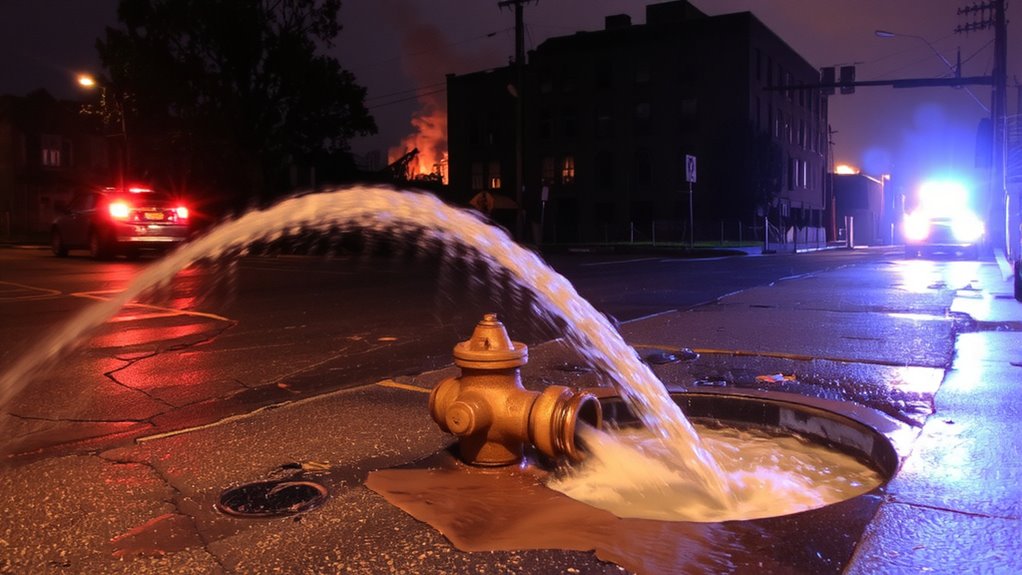
When the power goes out during a storm or an earthquake hits, you might notice your water pressure drops-or stops altogether-because municipal systems rely on electric pumps to maintain flow, and without power, those pumps can’t function. A water main rupture can worsen this, breaking pipelines and losing large volumes fast. You won’t get reliable pressure until repairs finish-sometimes taking hours or days. Supply chain disruption limits access to replacement parts or tools needed for fixes, delaying recovery. These cascading failures mean even if your local system isn’t damaged, upstream issues may still cut your supply. You can’t control infrastructure, but you can prepare. Storing water isn’t just backup-it’s essential. Consider a 55-gallon drum for short-term use or stacked 6-gallon jugs for easier rotation. Pressure loss isn’t rare; it’s expected in emergencies. Planning matters.
Why Power Outages Cause Water Pressure Loss
Power outages shut down electric pumps that keep water moving through municipal systems, and without those pumps, pressure drops fast. When a power failure hits, pump shutdown cuts the energy supply needed to push water uphill and maintain steady flow. You’ll notice weak pressure or no water at the tap, especially in multi-story buildings relying on electric boosters. Most municipal systems depend on continuous electricity; even brief interruptions can disrupt service within minutes. Backup generators help, but not all facilities have them or maintain fuel supplies. During extended outages, stored water in towers or tanks runs out quickly, worsening the drop. A pump shutdown doesn’t just reduce convenience-it limits access to clean water for drinking, sanitation, and firefighting. You can’t treat this like a minor glitch. Plan for it by storing water or considering manual pressure solutions. Know your area’s vulnerability to power failure and how long systems can operate without grid support.
How Natural Disasters Trigger Water Pressure Loss
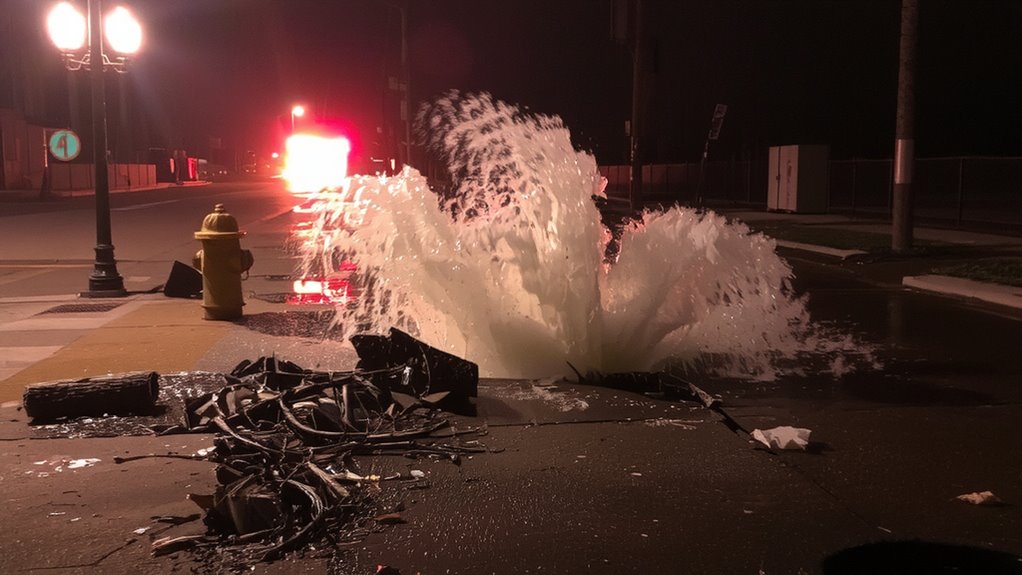
Though natural disasters vary in form, they share a common impact on water systems-sudden and often severe pressure loss due to physical damage and power disruption. You can expect service failure when seismic activity cracks pipelines or when flood impact overwhelms pump stations. These events compromise structural integrity and disable critical components, leaving systems unable to maintain flow. Here’s how two major disasters affect pressure:
| Disaster Type | Effect on Water Pressure |
|---|---|
| Seismic activity | Breaks pipes, joints, valves |
| Flood impact | Submerges pumps, contaminates supply |
| Hurricane | Combines wind, flood, and power loss |
You’re not dealing with just one failure mode-multiple systems fail at once. Recovery takes time, especially if access is blocked or damage is widespread. Your best bet is preparation: know your risk and have alternate water sources ready.
When Old Pipes Can’t Handle the Pressure
Aging infrastructure is just as likely to fail under stress as a system hit by disaster, and your water supply can collapse even without an earthquake or flood. You rely on pipes that may have been installed decades ago, and over time, they degrade. Pipe corrosion eats away at the interior walls, reducing flow and weakening structural integrity. Combined with material fatigue from constant pressure cycles, these old lines become liability risks during high-demand situations. You might not see the damage, but microscopic cracks grow until failure occurs. Cast iron and galvanized steel are especially prone to these issues. When pressure spikes happen-say, during firefighting or a pump surge-your system could rupture where it’s weakest. There’s no warning, just a sudden drop in supply. Replacing aging pipes is costly, but patching won’t stop eventual breakdowns. You need proactive upgrades to maintain reliable service when it matters most.
How Low Pressure Lets Contamination In
When water pressure drops below 20 psi, your system becomes vulnerable to contamination because negative pressure can pull in pollutants from surrounding soil or nearby sewer lines. You’re at risk of backflow incidents, where stagnant water or sewage reverses direction and enters your clean supply. This often happens near cross connection hazards-like garden hoses submerged in pools or irrigation systems tied to chemical feeders-because low pressure creates suction. Without adequate pressure to resist it, contaminants get drawn into your plumbing. Backflow incidents aren’t rare during emergencies, especially in older systems with outdated or missing prevention devices. You can’t rely on water quality if your system lacks check valves or if existing ones fail. Cross connection hazards multiply the danger, turning small pressure drops into potential health threats. Test your system’s backflow prevention annually and guarantee it meets local code specs.
Simple Steps Homeowners Can Take Before a Water Emergency
Preparation starts with your main water valve-it’s the one control point you must know. Locate it now, test it monthly, and guarantee it’s operable during a crisis. A quick water shut off can prevent flooding and contamination when pressure drops. Store emergency kits with at least one gallon per person per day for three days. Include portable filters and hygiene supplies. Label all valves clearly. Consider an automatic shut-off device if you travel often or live in a high-risk area. Choose durable water storage containers that are BPA-free and designed for long-term use to ensure water quality during emergencies.
| Scenario | Without Prep | With Prep |
|---|---|---|
| Pipe bursts | Flooded basement, high repair cost | Controlled shut off, minimal damage |
| Pressure loss | Contaminated water enters home | Safe stored water, filter use |
| Evacuation | No water access, panic | Emergency kits available |
| Earthquake | Broken lines, leaks | Valve off, system secure |
| Winter freeze | Burst pipes, no heat | Drained lines, quick response |
How Cities Can Strengthen Water Systems Against Disasters
You can only do so much at the household level before the bigger system around you becomes the limiting factor. Cities must invest in water storage and system redundancy to keep pressure during disasters. Elevated tanks and underground reservoirs provide backup supply when power fails or pipes break. Redundant pumping stations and looped distribution lines prevent single points of failure. Older cities often rely on aging infrastructure with minimal backups, increasing outage risks. Upgrading doesn’t always mean replacement-adding isolation valves and pressure zones improves control. Real-world tests show systems with multiple water storage points recover 40% faster post-event. While cost is a barrier, phased upgrades offer measurable gains. You’re safer when your city plans for failure. Prioritizing redundancy isn’t overkill-it’s basic reliability. Infrastructure that can bypass damage keeps water flowing, even if parts fail.
On a final note
You can’t control disasters, but you can prepare for pressure loss. Keep a pressurized water tank rated for 60 psi and install a hand pump. Store at least one gallon per person per day in sealed, UV-resistant containers. Older pipes increase risk, so consider upgrading to PEX. Municipal systems fail under stress, so test your water pressure monthly and know your home’s cutoff valve. Preparation reduces dependency when systems drop below 20 psi.