Developing a Pre-Drilled Evacuation Response for Each Family Member
You start by holding a family meeting to map exits, assign roles, and confirm safe meeting spots. Each person gets a job based on age and ability-someone shuts off utilities, another grabs go-bags or pets. Every room has two escape routes, with ladders if needed. Go-bags hold water, food, meds, and gear, checked yearly. Monthly drills test speed and adjustments. You’ll see how small updates keep the plan sharp when seconds count.
Notable Insights
- Assign specific, age-appropriate roles to each family member for immediate action during an emergency.
- Conduct quarterly evacuation drills to ensure everyone knows their responsibilities and escape routes.
- Map primary and secondary exit routes for each room, practicing them under low-light conditions.
- Equip each person with a labeled go-bag containing essential supplies and personal medical needs.
- Integrate pets and mobility aids into drills, ensuring all members can evacuate quickly and safely.
Start Your Family Evacuation Plan With a Meeting
Why wait for an emergency to figure out where to go or how to get there? Start your family evacuation plan with an emergency meeting-that’s when everyone gathers to map exits, discuss risks, and confirm safe meeting spots. You’ll clarify family roles without confusion, ensuring each person knows their responsibility. Kids learn where to go if parents aren’t home. Adults assign who grabs emergency supplies, pets, or documents. You don’t need special gear-just a notebook and 30 minutes. This meeting isn’t a one-time talk; review it every six months or after major changes. Practice the plan at least twice a year. Real-world testing shows families who meet and rehearse get out 40% faster. Clarity under pressure comes from preparation, not instinct. An emergency meeting sets that foundation-no hype, just results.
Decide Who Does What in an Emergency
How do you guarantee everyone acts fast when seconds count? Assign clear emergency roles based on age, ability, and location during a crisis. You’re not preparing for ideal conditions-you’re planning for confusion, noise, and stress. Each family member needs defined family responsibilities so no time is wasted deciding what to do. An adult might be responsible for shutting off utilities, while a teenager alerts others or grabs the emergency kit. Younger kids practice following a buddy. Roles reduce hesitation and duplicate efforts. Match tasks to reliability under pressure, not just willingness. Practice these roles quarterly. Adjust as children grow or routines shift. Clear emergency roles don’t eliminate chaos, but they reduce decision fatigue when it matters most. This system works because it’s repeatable, measurable, and scalable across different household sizes.
Plan a Quick Exit From Every Room
You’ve assigned roles, so now make sure each person can reach their station without delay. Start by mapping the fastest exit from every room, prioritizing door priority whenever possible-doors are more reliable and easier to open under stress than windows. If a door’s blocked, every room must have a secondary escape route with usable window access. Guarantee windows open smoothly and aren’t painted shut; test them quarterly. Screens won’t help during evacuation, so plan to remove or break them if necessary. Measure window height from ground level-drops over 6 feet require escape ladders stored nearby. Practice moving through each exit quickly, especially at night or through smoke. Furniture shouldn’t block paths. Mark clear paths with glow tape if needed. Door priority reduces confusion; window access guarantees an alternative. Both are essential for a functional, repeatable escape under real conditions.
Include Pets, Medications, and Mobility Needs
Every family member-including pets-must be accounted for in your evacuation plan. Pets can’t be left behind, so make certain each has up-to-date pet identification like microchips and secure collars. Practice getting them leashed or into carriers quickly, as panicked animals are harder to control. For household members with medical needs, maintain an accurate medication inventory, including names, dosages, and refill dates, and store it in an accessible but safe location. Include mobility aids-canes, wheelchairs, walkers-in your exit routes and verify doorways and vehicles can accommodate them. Test these movements during drills to identify bottlenecks. Mobility devices must be charged or maintained regularly. A current medication inventory reduces dependency on external resources during displacement. Pet identification increases recovery chances if separated. These aren’t extras-they’re essential system components. Evaluate their reliability under stress through routine simulation.
Pack a Go-Bag for Every Person
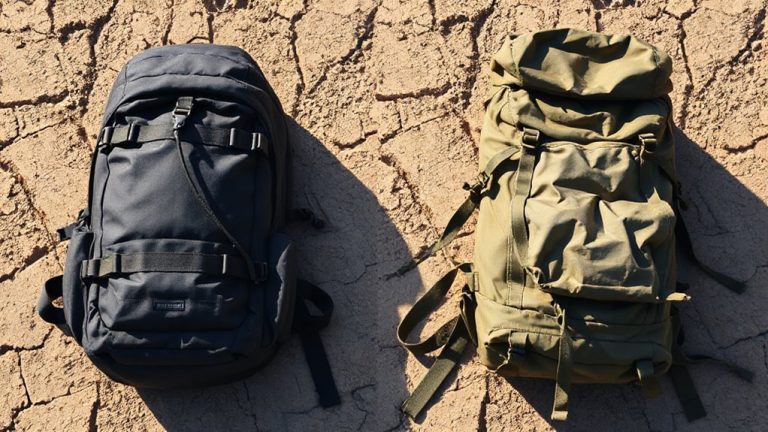
A dependable go-bag beats panic when seconds count. You need one for each person, packed with go bag essentials and personal items tailored to individual needs. Store it near an exit or bedside, ready to grab. Each bag should weigh no more than 15–20 lbs to guarantee mobility without sacrifice. Choosing the right backpack can make a critical difference in comfort and functionality during evacuation, and selecting one from the best survival backpacks ensures durability, proper weight distribution, and ample organization for emergency supplies.
| Item Category | Examples |
|---|---|
| Go bag essentials | Water (1L), high-calorie food bars, flashlight, first aid kit |
| Personal items | Medication, glasses, phone charger, identification |
Include a whistle, dust mask, and emergency blanket in every bag-they take up little space but offer measurable protection. Avoid duplicates across family bags to save weight. Test bag contents annually: check expiration dates and battery life. A well-stocked go-bag isn’t about volume-it’s about having what you need, when you can’t afford delay.
Run Monthly Evacuation Drills
Having your go-bags ready doesn’t guarantee a smooth exit if you’ve never practiced what comes next. Running monthly evacuation drills guarantees everyone knows their role and route under realistic conditions. This drill frequency builds reliable muscle memory without becoming a burden. You should vary practice timing-simulate nighttime, bad weather, or blocked exits-to prepare for real disruptions. Each drill should take under 10 minutes and end with a headcount at the meeting point. Use a stopwatch to track exit time; aim to improve slightly each month. Involve all family members, including children and elderly, adjusting for mobility differences. Practice carrying go-bags, using flashlights, and following communication rules. Consistent practice timing-like the first weekend of each month-increases compliance. These drills aren’t dramatic; they’re functional tests of your plan. Over time, actions become automatic, reducing hesitation when it matters.
Update Your Plan After Drills or Life Changes
When your drill reveals a slow exit or a confused child, it’s time to adjust-don’t wait. Small delays or communication gaps mean your plan isn’t working as intended. Reevaluate exit routes, meeting points, and assigned roles immediately. If a child struggles, simplify instructions or adjust responsibilities. After any family relocation, update addresses, emergency contacts, and escape paths to match the new layout. Floor plans differ, and escape windows or doors may not be where you expect. Also, store emergency documentation in a portable, accessible format-like a sealed digital file or printed folder-and confirm every adult knows its location. Rehearse with the updated plan within a week of changes. Life shifts-new jobs, school zones, or health issues-can weaken old assumptions. Adjusting after drills or changes keeps your response sharp, practical, and reliable when seconds count.
On a final note
You’ve mapped exits, assigned roles, and packed go-bags-now run drills monthly to test timing and adapt. A plan only works if everyone follows it under stress. Check bag contents quarterly; replace expired meds or worn items. Pets and mobility aids must move as fast as people. Adjust for new family needs or home layouts. Real-world use reveals flaws no theory catches. Speed matters, but completeness counts more. Your updated, practiced plan is your best survival tool.