How to Identify and Avoid Poisonous Death Camas in Meadow Foraging
Crush a leaf or stem first-if there’s no onion or garlic smell, it’s death camas, and you should leave it alone. Real alliums have a sharp scent; death camas has none. Check for white, star-shaped flower clusters and solid, grass-like leaves without the hollow stems of onions. The bulbs look similar but lack odor and stay toxic even when cooked. When identification isn’t 100% clear, skip it. Mistaking it could be fatal. You’ll see how each feature rules out danger.
Notable Insights
- Crush a leaf or stem to check for onion or garlic scent-absence indicates poisonous death camas.
- Avoid plants with pure white, six-petaled flower clusters that lack onion-like aroma.
- Look for grass-like, solid leaves growing in dense basal clusters without hollow stems.
- Examine bulbs in place-death camas bulbs resemble onions but lack any pungent odor.
- When uncertain, do not consume; misidentification can be fatal despite visual similarities.
Smell It First: No Onion Scent, No Go
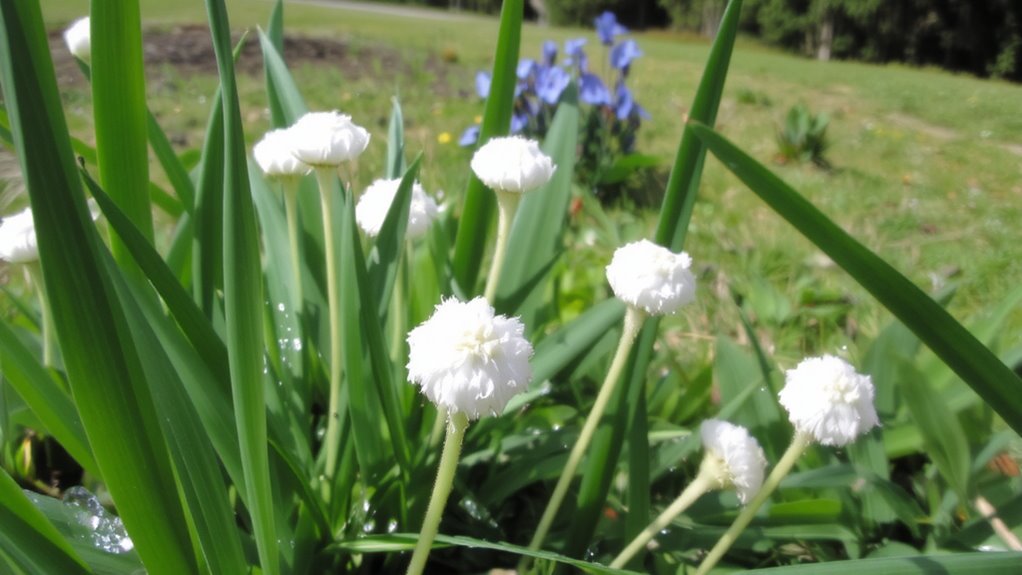
Why risk it? If you’re foraging in meadows and spot a plant you think might be wild onion or garlic, stop-smell it first. Genuine edible plants release a distinct onion scent or garlic aroma when you crush a leaf or stem. Poisonous death camas looks similar but lacks that telltale smell entirely. No onion scent, no go-that simple rule prevents dangerous mistakes. You don’t need expert training to perform this test. Just break the foliage and inhale. If it smells like nothing or has a faint, unappealing earthiness, discard it. Real alliums have a sharp, unmistakable odor detectable even in small amounts. Relying on sight alone is risky, since visual traits can vary. But odor is a consistent indicator. This step takes seconds but could save your life. Always prioritize smell over appearance when safety’s on the line.
Check the Flowers: White Clusters Mean Danger
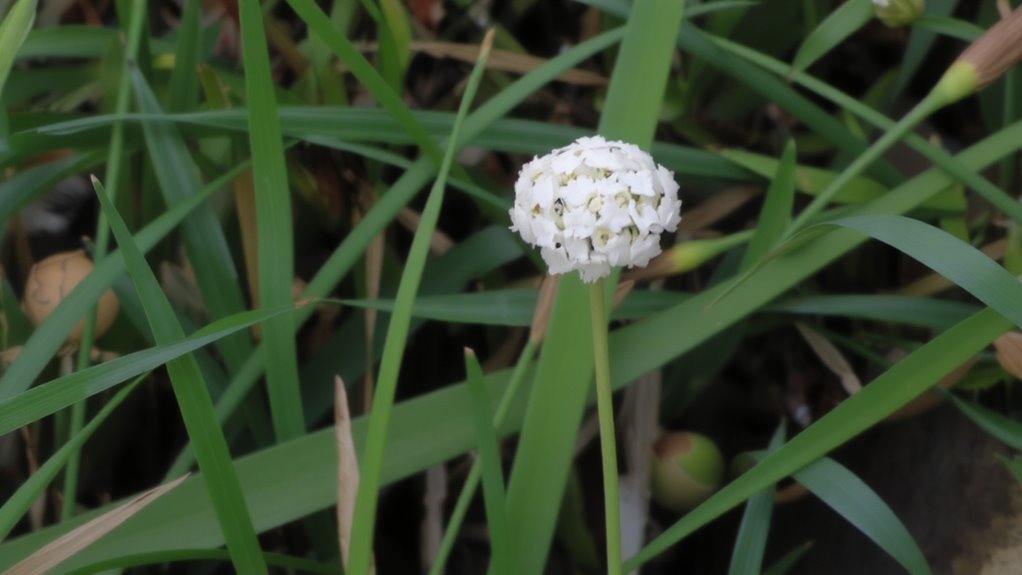
You’ve already learned to trust your nose-no onion scent means you’re not dealing with an allium. Now, look at the flowers. Death camas often blooms in early spring, and its flower color is a dead giveaway: pure white. That’s not rare among wildflowers, but combined with its cluster shape, it’s a warning sign. The blossoms form loose, star-shaped flowers packed into a rounded or elongated cluster shape, not tight like an onion’s puffball. Each tiny flower has six petals, all white, with yellow or greenish centers. There’s no variation in flower color-no purple, no pink, just white. If you see this combination in moist meadows or grassy slopes, especially where onions aren’t blooming, assume it’s death camas. This isn’t about guesswork. Misidentifying means risk. White flowers in a distinct cluster shape aren’t worth the chance.
Spot Death Camas by Its Growth Pattern
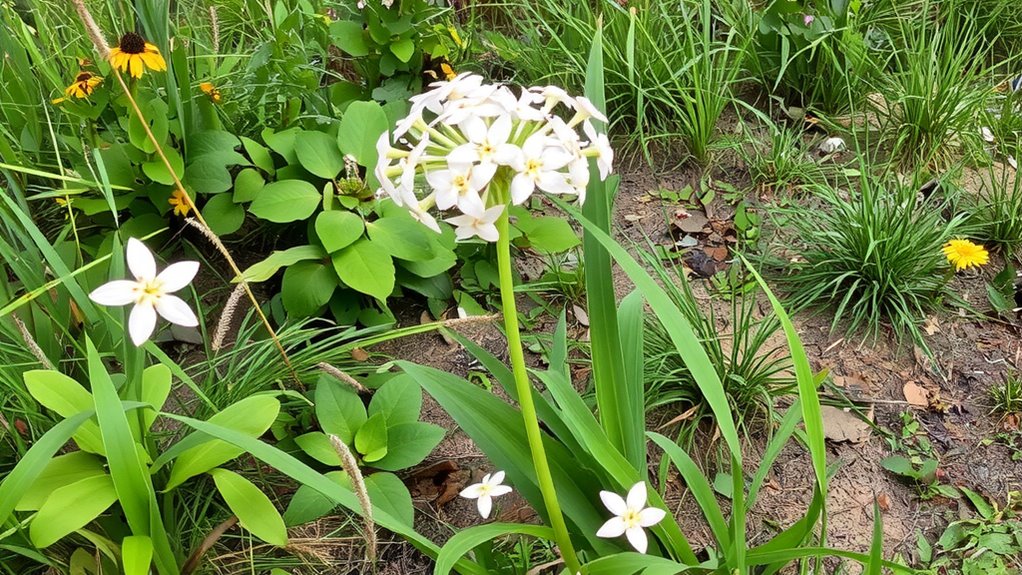
While the flowers give the first warning, the plant’s growth pattern confirms the danger. You’ll notice the leaf arrangement starts at the base, with long, grass-like leaves emerging in a clustered, narrow pattern. These leaves are solid and lack the hollow structure seen in edible look-alikes like wild onion. As your eyes move up, check the stem texture-death camas has a smooth, waxy feel, unlike the ribbed or ridged stems of safer species. The plant grows in tight colonies, often spreading through meadows in dense patches. Each stem stands erect, reaching 12 to 30 inches, supporting the flower cluster at the top. This uniform growth makes it stand out if you’re comparing across plant groups. Recognizing this pattern helps you rule out similar species quickly. Trust these structural clues-they’re more reliable than color alone.
Check the Bulb: It’s Not Edible
The bulb is where confusion ends and certainty begins. Death camas bulbs look similar to edible roots like wild onions, but they lack the distinct onion smell. If you’re digging and the bulb doesn’t reek of garlic or onion, don’t eat it. False garlic has clustered bulbs with a strong odor; death camas does not. Mistaking them can be deadly. The bulbs of death camas contain potent toxins-no cooking method neutralizes them. Edible roots such as camas or onion species have clear aromatic signatures. Death camas never smells right, even when young. You can’t rely on color or shape alone, but the scent test is reliable. Always expose the bulb underground without uprooting entirely. Smell it in place. If in doubt, don’t dig further. Trust your nose over visual cues. That simple check prevents serious risk. The bulb doesn’t lie.
When in Doubt, Leave It Out
Someone once made a mistake that cost them everything-misidentifying a plant because they assumed too much. You won’t always have perfect conditions or full visibility, and that’s when edibility confusion becomes dangerous. Death camas has seasonal lookalikes, like wild onion or camas, that seem similar in spring growth but carry deadly consequences if mistaken. You can’t rely solely on smell, color, or partial features. Even experienced foragers get it wrong under pressure or poor light. If the bulb isn’t clearly distinguishable or the flowering stalk doesn’t match known safe specimens, the risk outweighs any reward. There’s no field test precise enough to guarantee safety when uncertainty remains. When in doubt, leave it out-no meal is worth hospitalization. Your caution is the most reliable tool you carry. Stick to 100% positive ID. Otherwise, walk away.
On a final note
You can avoid death camas by trusting your nose-no onion smell means danger. Its white flower clusters and grass-like leaves resemble camas, but the bulb lacks edibility and could kill. It grows in similar meadows, often alongside edible plants, increasing risk. When identification isn’t 100% certain, skip it. Mistaking it for wild onion or camas isn’t worth the risk. Your survival depends on caution, not curiosity. Leave it out.