Mylar Bags & Oxygen Absorbers: Seed Storage Guide (5-10 Yrs)
You’ll keep seeds viable for 5–10 years by sealing them in Mylar with oxygen absorbers. The bags block light, moisture, and oxygen, while absorbers drop O2 levels below 0.01%, slowing aging. Dry seeds to under 8% moisture first-beans need 7–10 days, tomatoes up to 14. Seal with a heat sealer for airtight closure, label with type and date, then store in a cool, dark spot like a basement or fridge. Stability matters most. You’re cutting degradation factors most storage misses.
Notable Insights
- Mylar bags combined with oxygen absorbers block light, moisture, and oxygen to significantly extend seed viability.
- Oxygen absorbers reduce internal oxygen levels below 0.01%, slowing seed aging and preserving germination rates.
- Seeds must be thoroughly dried to under 8% moisture content before sealing to prevent mold and spoilage.
- Use a heat sealer to create airtight, durable seals; avoid tape or twist ties that degrade over time.
- Store sealed bags in a cool, dark, stable location like a basement or refrigerator to maximize longevity.
Why Mylar and Oxygen Absorbers Preserve Seeds
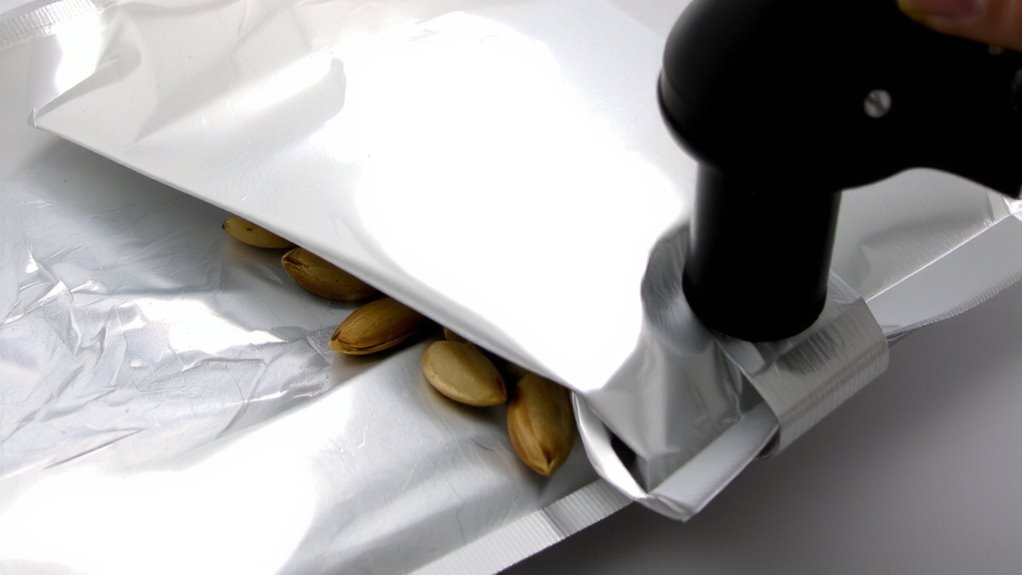
While vacuum sealing gets attention, Mylar bags with oxygen absorbers actually provide a more reliable barrier for long-term seed storage because they block light, moisture, and oxygen-three factors that degrade seed viability. You’ll need both components: the Mylar bag for moisture control and the oxygen absorber to remove residual air. Without light exposure, seeds won’t degrade prematurely, and with minimal internal humidity, mold and rot stay unlikely. Oxygen absorbers reduce the internal O2 level to below 0.01%, slowing metabolic activity that leads to aging. Unlike plastic containers or zip-locks, Mylar resists punctures and vapor transmission better than most affordable alternatives. For best results, combine airtight sealing with a stable storage temperature. You’re not eliminating aging entirely, but you’re slowing it markedly. Properly stored seeds maintain germination rates far longer, directly supporting seed viability over time.
How Long Different Seeds Last in Storage
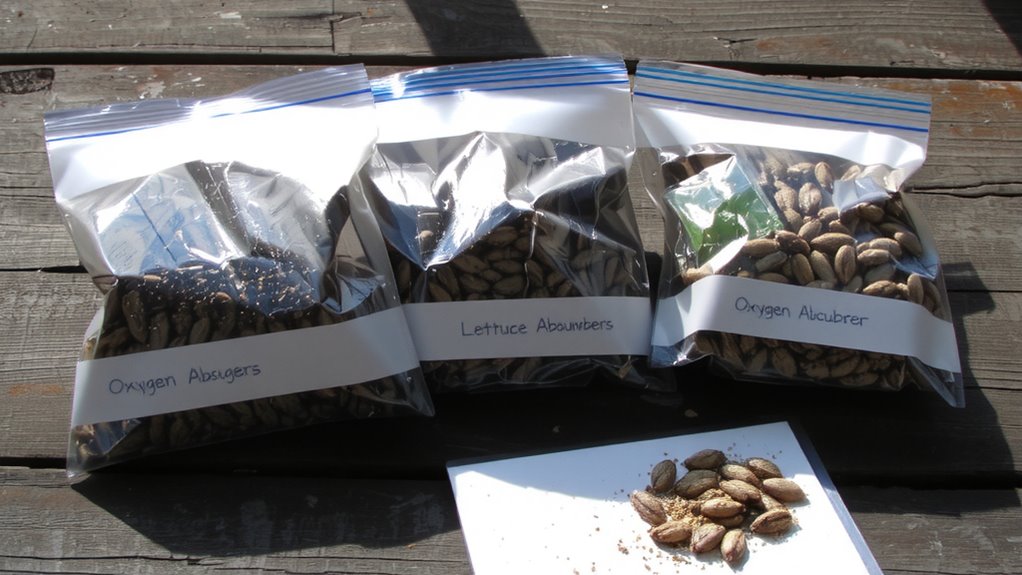
You’ve sealed your seeds in Mylar with oxygen absorbers, blocked light, and cut oxygen to nearly zero-now it’s time to contemplate how long those seeds will remain viable. Most vegetables last 5–10 years under these conditions, but seed viability varies. Beans, peas, and tomatoes often keep 8–10 years with minimal drop in germination rates. Carrots and onions are less durable, usually lasting 3–5 years even when perfectly stored. Herbs and corn drop off faster, with germination rates declining noticeably after 4 years. Properly stored wheat and other grains can exceed 10 years. Temperature stability matters-fluctuations reduce lifespan. You won’t know exact germination rates until you test, but Mylar storage gives the best odds. Real-world results show most seeds remain usable past 5 years if handled correctly. Check every few years, especially for shorter-lived varieties. Using top Mylar bags can further enhance protection and longevity.
How to Dry and Prepare Seeds for Mylar Bags
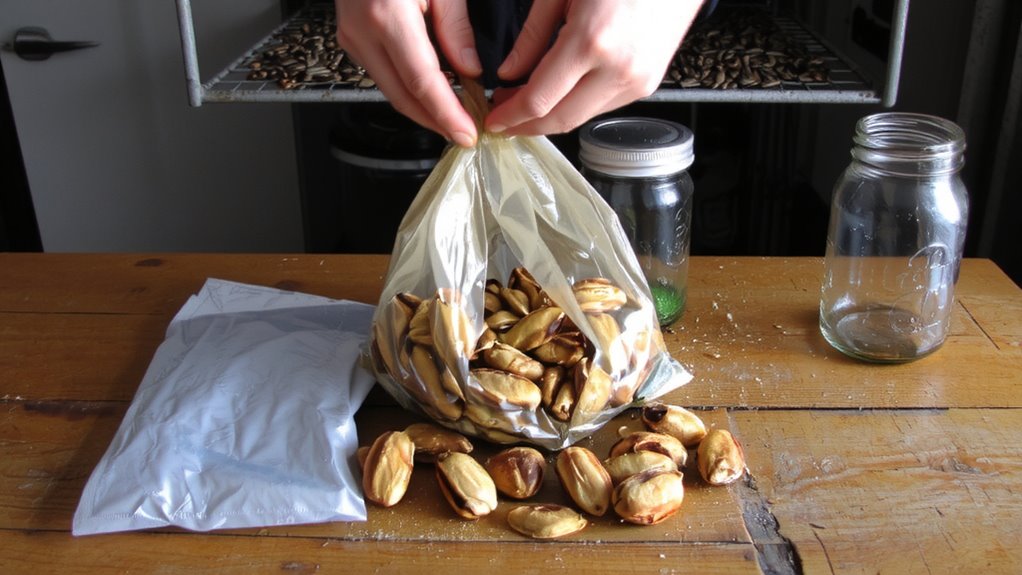
Most home seed savers need fully dry seeds before packing them into Mylar bags-any moisture left can cause mold or kill viability during long-term storage. Start with thorough seed cleaning to remove plant debris, which can trap humidity. Spread cleaned seeds in a single layer on a tray in a warm, dry, well-ventilated space for 1–2 weeks. Once dried, perform moisture testing to confirm readiness. A simple test: press a seed with your fingernail; if it dents, it’s still too moist. Ideal moisture content is below 8%. A properly sealed Mylar bag ensures protection against moisture and oxygen, preserving seed viability for years.
| Seed Type | Drying Time (Days) |
|---|---|
| Beans | 7–10 |
| Tomatoes | 10–14 |
| Lettuce | 5–7 |
| Peppers | 10–14 |
Moisture testing guarantees longevity. Skip this step, and your storage effort fails.
Label and Seal Mylar Bags the Right Way
How do you guarantee your hard work pays off when sealing Mylar bags? You guarantee label clarity and seal integrity. Use a permanent marker or waterproof label to clearly mark the seed type and date-fading or smudged writing leads to confusion later. Place the label on the top or side, not near the seal, so it doesn’t interfere. When sealing, use a heat sealer, not a twist tie or tape-those fail over time. Run the sealer slowly across the opening to fuse the Mylar layers completely. A weak or bubbled seal compromises oxygen protection. Test seal integrity by gently squeezing the bag; no air should escape. Poor sealing risks moisture and pests, defeating the purpose. Proper labeling and airtight sealing are non-negotiable for long-term viability. Skip shortcuts-your seeds depend on these details. For best results, choose high-quality Mylar bags for freeze-drying that provide maximum moisture and oxygen barrier protection.
Store Seed Bags in the Ideal Location
While temperature and light exposure don’t show immediate effects, they steadily degrade seed viability over time, so storing your sealed Mylar bags in a cool, dark, and stable environment is essential. Temperature control matters because fluctuations cause condensation, which risks mold and premature germination. Keep bags where temps stay between 32°F and 41°F-like a basement or refrigerator. Avoid garages or sheds, where seasonal swings are common. Light exposure triggers metabolic activity in seeds, reducing lifespan. Opaque Mylar helps, but placing bags inside a closet or cupboard adds protection. Don’t stack bags directly on concrete floors; use a shelf to limit moisture transfer. Airtight is not enough-long-term success depends on consistent storage conditions. Your seeds won’t tell you they’re degrading, but poor germination later will. Stability beats convenience. Plan accordingly.
On a final note
You’ll keep seeds viable for 10–30 years using mylar bags and oxygen absorbers, if seeds are dry before sealing. Moisture ruins more batches than time. Label each bag clearly-mistakes cost germination. Store in a cool, dark, stable place; heat and light cut lifespan. It’s not magic, just basic science done right. No fancy gear needed, just attention to detail. This method works, consistently, when you follow the steps.