Purifying Water With a Hollow Fiber Straw Filter in Fast-Moving Streams
You can safely drink from fast-moving streams using a hollow fiber straw filter-it removes bacteria and protozoa with 0.1-micron pores, tested to eliminate 99.99% of contaminants. Flowing water reduces clogging, maintaining a steady 500–1,000 mL/min flow. It’s lightweight, needs no power, and works by suction. But it won’t stop viruses, chemicals, or heavy metals. Backflush regularly and avoid silty intakes. There’s more to using it right where conditions get tough.
Notable Insights
- Hollow fiber straw filters effectively remove bacteria and protozoa from fast-moving streams using 0.1-micron pores.
- Flowing water sources reduce sediment intake, minimizing clogging and maintaining consistent filter performance.
- Submerge the inlet below the surface in moving water to avoid floating debris and silt during filtration.
- Pre-filter murky water with a cloth to protect the membrane when sediment load is unexpectedly high.
- Backflush immediately after use to prolong filter life, especially critical when filtering in silty or turbulent streams.
How Hollow Fiber Straw Filters Work
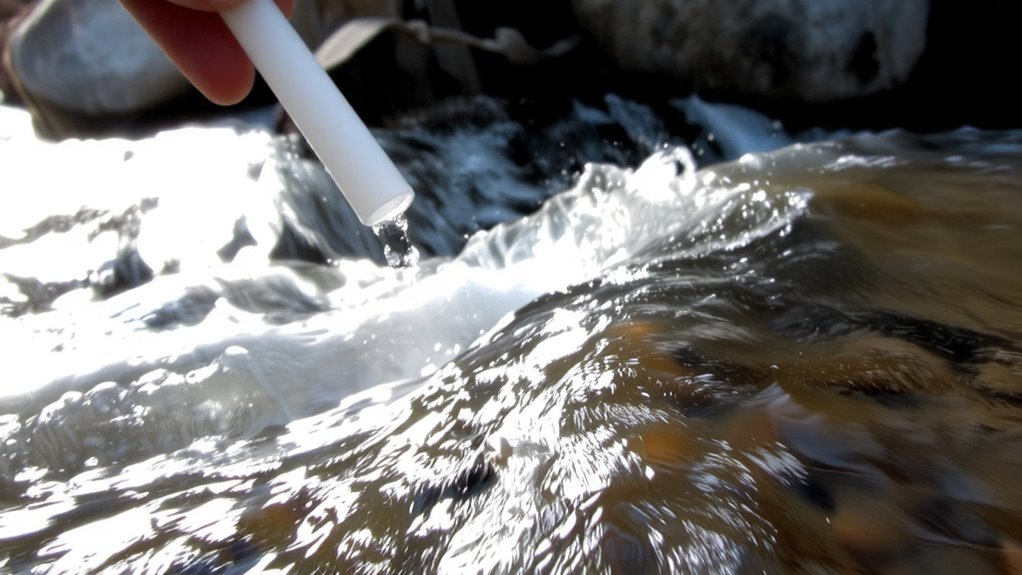
While you’re sipping water from a stream, the hollow fiber membrane inside the straw is filtering out harmful microbes. This membrane technology relies on ultra-fine fibers with a pore size around 0.1 microns, small enough to block bacteria and protozoa like E. coli and Giardia. Your pull creates suction, forcing water through the fibers while trapping contaminants inside. You don’t need batteries or chemicals-just physical pressure from your mouth. The straw’s efficiency depends on consistent pore size across the membrane; irregularities could let pathogens through. Most models undergo third-party testing to verify removal rates, often exceeding 99.99% for bacteria. Weight is minimal, averaging 2 ounces, and flow rates range from 500 to 1,000 mL per minute, depending on how hard you suck. Clogging can happen with muddy water, but backflushing usually restores function. It’s a simple, field-tested method that turns questionable sources into drinkable water.
Why Flowing Water Is Best for Straw Filters
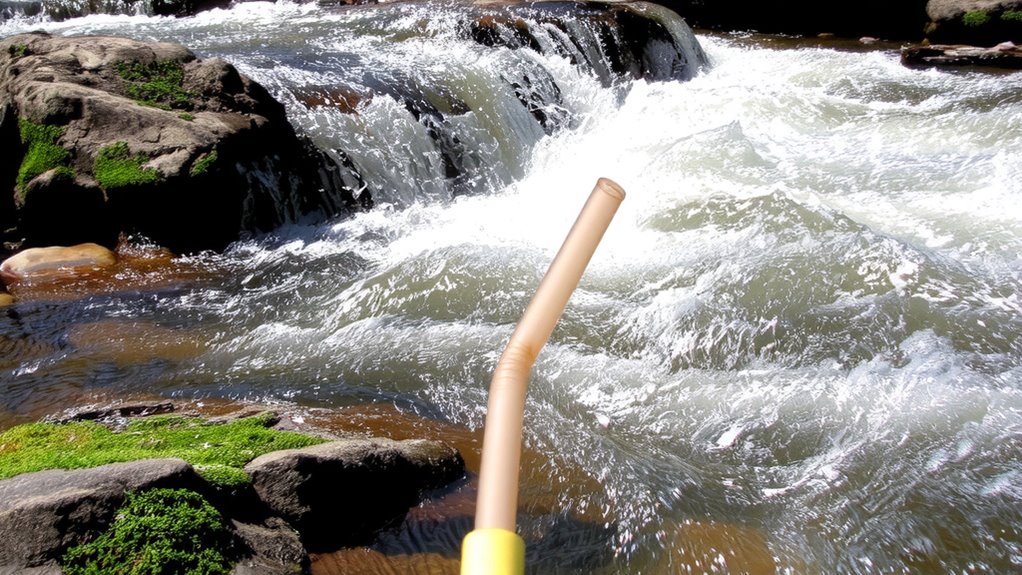
You get better results using a hollow fiber straw filter in moving water because flow helps prevent clogging. Moving water typically has lower sediment load than stagnant sources, reducing the chance of particles blocking the filter’s tiny pores. This means you’ll suck less hard and maintain better water pressure over time. Fast-moving streams also introduce natural turbulence, which keeps particles suspended and away from the filter tip. In contrast, still water lets sediment settle, increasing the risk of immediate pore blockage. Lower sediment load directly translates to longer filter life and fewer required cleanings. You’ll notice smoother suction and more consistent flow rates when drawing from rivers or streams versus ponds or puddles. While the filter can handle some debris, relying on flowing water improves efficiency and reliability in real-world conditions. It’s a practical edge when you need clean water fast, with minimal effort.
How to Filter Water in the Wild Step by Step
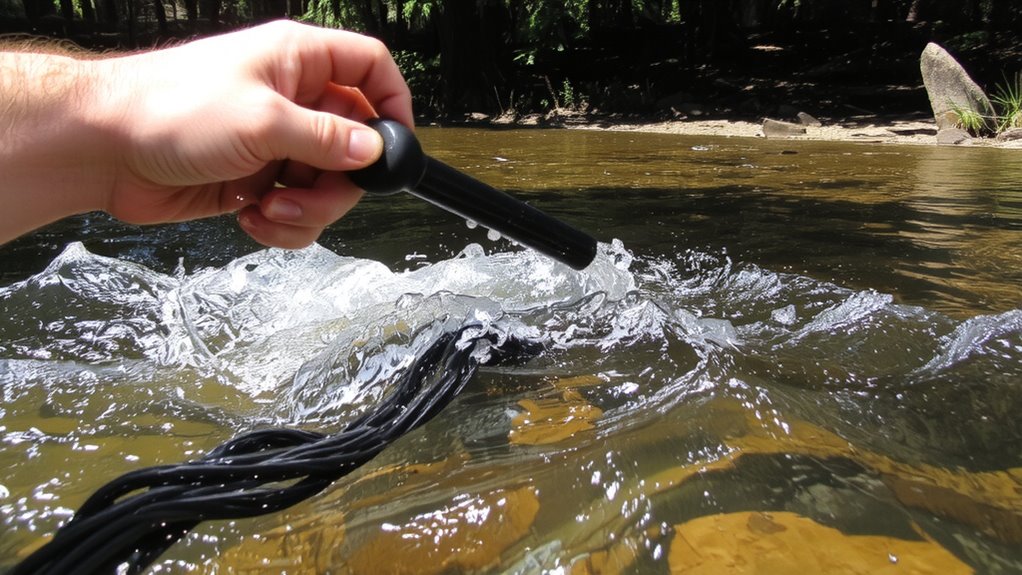
Start clean, every time. Choose a flowing water source, not stagnant. Submerge the straw’s inlet below the surface, avoiding silt and floating debris. Suck gently to draw water through the hollow fibers. Maintain steady pressure-too hard causes premature debris buildup. Filter slowly; rushing reduces efficiency and strains the membrane. If flow drops, backflush immediately using the plunger or by blowing air through the mouthpiece. This clears clogs and restores performance. Replace filters after 1,000 liters or when flow won’t return. Carry a backup in case of damage. Avoid water with visible muck or heavy sediment-these accelerate debris buildup and shorten filter life. In fast-moving streams, position yourself upstream to prevent disturbing the bed. Always check the inlet screen before use. Pre-filtering through a cloth helps when the water source is murky. Keep the straw capped when not in use.
What Straw Filters Remove (And What They Don’t)
Hollow fiber straw filters handle a lot in the field, but they aren’t universal solutions. You can rely on them to remove bacteria and protozoa-like E. coli and giardia-thanks to their 0.1 or 0.2-micron pores, which physically block these pathogens. Most models also provide effective virus removal when paired with additional technologies, such as iodine or carbon, though not all do. Standard hollow fiber membranes alone don’t filter viruses reliably due to their smaller size. You won’t get protection from chemical contaminants, heavy metals, or pesticides with basic straw filters, as they lack activated carbon or other media needed for that job. They won’t improve taste or remove dissolved solids either. If your water source is downstream from agricultural or industrial runoff, these filters won’t make it safe. Know their limits: they’re great for microbial threats in clear stream water, but not for complex contamination.
How to Extend Your Straw Filter’s Life
Regularly backflushing your straw filter right after use typically doubles or even triples its lifespan, especially in silty or debris-heavy water. Your backwash frequency directly affects performance-daily use demands immediate冲洗; neglect leads to clogging. Pair proper backwashing with good storage conditions: always dry the straw fully before storing to prevent mold and bacterial growth. Avoid leaving it in hot cars or damp pack pockets.
| Backwash Frequency | Storage Conditions | Filter Lifespan (approx.) |
|---|---|---|
| After every use | Dry, cool place | 3,000+ liters |
| Every 3 uses | Dry, cool place | 2,000 liters |
| After every use | Damp, warm | 1,800 liters |
| Rarely | Dry, cool place | 1,000 liters |
| Rarely | Damp, warm | Under 500 liters |
Consistency in care beats filter specs every time.
Mistakes Hikers Make With Straw Filters
Why do some hikers get far fewer liters from their straw filter than advertised? You’re likely making preventable mistakes. Improper storage is a top culprit-leaving the filter wet in a sealed bag promotes mold and bacterial growth, degrading the hollow fibers. Always dry it partially and store with the ends open. Another issue is premature disposal. You might toss it too soon, assuming clogs mean failure. But many straws can be flushed or backflushed to restore flow. Tapping the filter or soaking it in clean water often revives performance. Pushing it too hard in silty water without pre-filtering also shortens life. Use a bandana or let sediment settle first. These habits save weight and cost. You don’t need replacement if the filter still draws water, even slowly. Track actual output-most straws hit 1,000+ liters with proper care.
Straw Filters vs. Other Hiking Water Filters
How do straw filters stack up against pump, gravity, and UV systems when you’re miles from the trailhead? They win on weight comparison-most weigh under 2 ounces, far lighter than pumps or gravity setups. But they don’t offer taste improvement since they lack activated carbon. Pumps and gravity filters often include carbon, reducing chemical taste and odor. UV purifiers kill viruses but need batteries and don’t filter debris. Straws work instantly in fast-moving streams, no setup needed. Yet they only purify what you drink immediately-no storing clean water. Pumps and gravity systems fill bottles or bladders, better for groups. UV is reliable but fails if water’s murky. For solo hikers wanting minimal gear, the straw’s light weight and simplicity make sense. Just know you’re trading convenience, taste improvement, and volume capacity for portability. Each system has trade-offs. Choose based on your trip’s length, group size, and water sources.
On a final note
You get clean water fast when you use a hollow fiber straw in moving streams-it handles high flow and reduces clogging. It removes bacteria and protozoa, but not viruses or chemicals. It’s light and simple, but you must backflush it regularly and avoid sucking in debris. Compared to pump or gravity filters, it’s less versatile but lighter. Your choice depends on weight limits and water sources.