Creating Portable Preservation Tools for Immediate Wild Food Processing
You need a fixed-blade knife with a 4-inch steel blade, a 1-liter pot with lid, a foldable mesh drying rack, and sealable silicone containers-each tested to survive rock drops and keep total weight under 2 pounds. This setup handles cutting, boiling, solar drying, and moisture-safe storage without fuel. Tools are chosen for repeat performance, not hype. Systems that prove reliable in drops, seals, and field use always outlast gear built for looks. You’ll see how each piece fits into a full workflow.
Notable Insights
- Use a fixed-blade knife with a 4-inch stainless or high-carbon steel blade for durable, multi-use wild food processing.
- Select a lightweight 1-liter pot with lid to boil food and reduce gear by doubling as a cooking and eating vessel.
- Employ foldable mesh racks with transparent covers to enable fuel-free solar drying of herbs, berries, and thin food slices.
- Store preserved foods in rugged, sealable silicone bags or vacuum containers with O-rings to block moisture and environmental damage.
- Test all tools for drop resistance and watertight seals to ensure durability and functionality under 2 pounds total weight.
Choose the Best Portable Tools for Wild Food
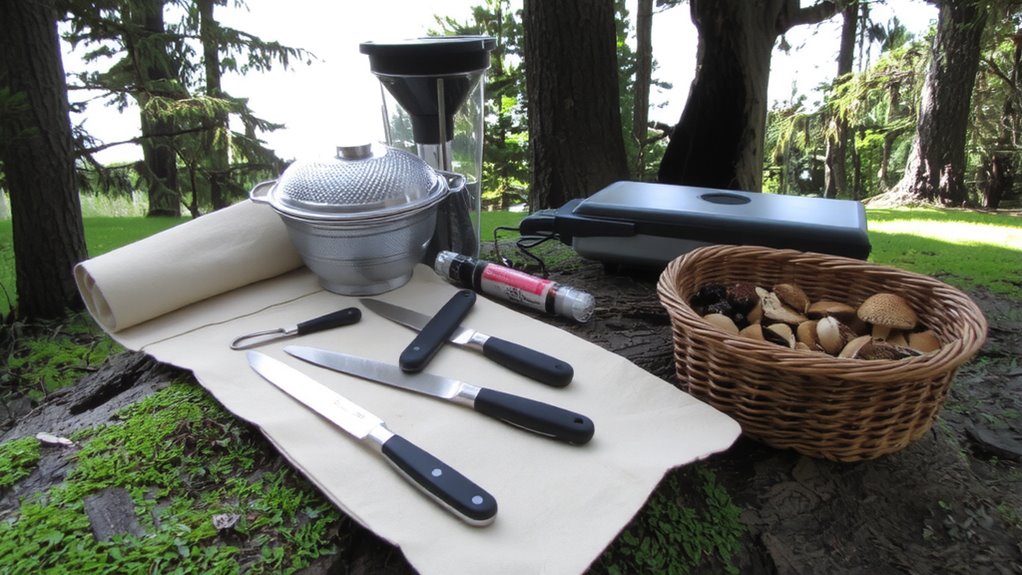
While some might assume any knife or pot will do, choosing the right portable tools for wild food matters when efficiency and durability are on the line. You need a fixed-blade knife with at least a 4-inch stainless or high-carbon steel blade-it holds an edge longer and withstands heavy use. A compact, lightweight pot with a lid works best for boiling and initial prep; 1-liter capacity balances portability and function. For solar drying, a foldable mesh rack with a transparent cover maximizes heat retention and airflow, speeding dehydration without fuel. Rugged, sealable silicone bags or vacuum containers improve container packing by reducing volume and protecting against moisture. Tools should weigh under 2 pounds total and survive repeated drops on rock. Lightweight doesn’t mean flimsy-test hinges, seams, and closures. Prioritize multi-use gear: a pot that doubles as a bowl, a knife that scrapes bark. These choices save time and energy in critical conditions.
Dehydrate Foraged Foods Without Electricity
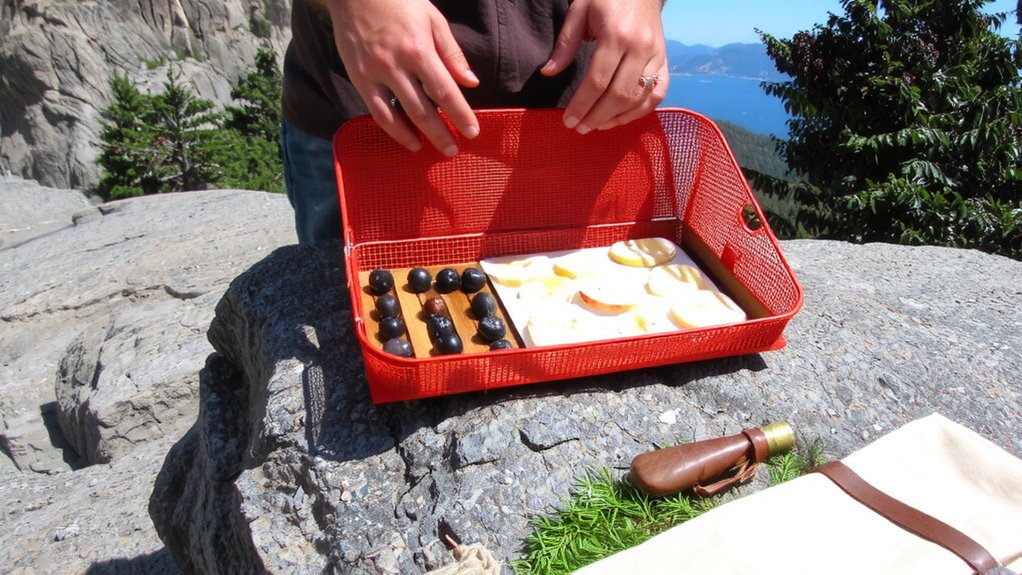
You’ve picked the right knife, pot, and containers-now it’s time to preserve what you’ve gathered. Dehydrating foraged foods without electricity relies on sun drying and air drying, both effective when done correctly. Sun drying works fastest in dry, hot climates with low humidity, but it’s risky in damp or buggy areas. Air drying is slower but more reliable in shaded, ventilated spots. Both methods prevent spoilage by reducing moisture content below microbial growth levels. For those seeking more consistent results, especially in variable weather, investing in a commercial food dehydrator can offer a reliable alternative when electricity is available.
| Method | Time Required | Best For |
|---|---|---|
| Sun drying | 1–3 days | Herbs, berries, thin slices |
| Air drying | 3–7 days | Mushrooms, greens, strips |
| Sun drying | 2–4 days | Banana, apple slices |
| Air drying | 4–6 days | Nettles, flowers |
| Sun drying | 1–2 days | Seaweed, citrus peels |
Smoke and Cure Wild Meat Safely Off-Grid
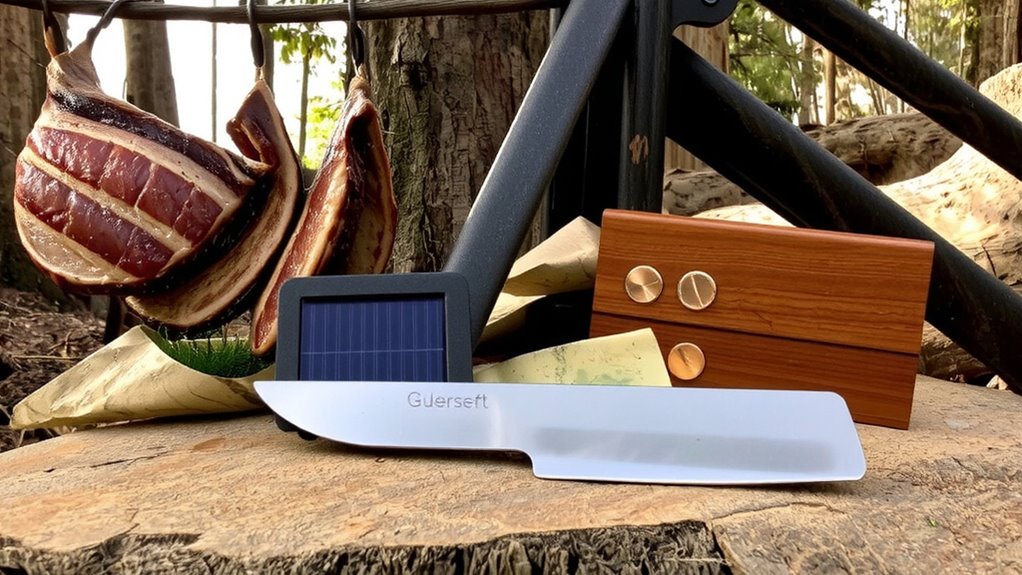
How do you keep wild meat safe to eat when you’re miles from the nearest power source? You rely on smoking and curing, but only if you maintain strict food safety and smoke control. Start by trimming meat and applying a salt-sugar-spice rub-salt inhibits bacterial growth, critical in warm conditions. Let it cure in a breathable, insect-proof container for at least 12 hours. When smoking, use a portable metal smokehouse or DIY barrel setup. Maintain a steady temperature between 160°F and 200°F for at least 6 hours. Thin, blue smoke indicates proper combustion; thick smoke adds bitterness and uneven preservation. Avoid humidity spikes by covering the unit during rain. Charcoal or wood pellets offer more consistent heat than raw wood. Smoke control directly affects pathogen reduction and shelf life. Test doneness with a meat thermometer-internal temperature must hit 155°F. No guesswork. Safety depends on process, not luck.
Store and Transport Preserved Food in the Wild
Airtightness determines whether your preserved wild meat stays safe or spoils in the backcountry. You need waterproof containers that seal completely-look for ones with O-ring gaskets and pressure vents. These keep moisture out and prevent contamination, especially in damp environments. Vacuum-sealed bags work but puncture easily; combining them with hard-shell waterproof containers adds reliability. For transport, secure packing means immobilizing containers in your pack to prevent shifting. Use compression sacks or padded dividers to minimize movement. Transparent containers let you inspect contents without opening, reducing exposure. Weight and volume matter-choose lightweight designs that don’t sacrifice durability. Polycarbonate models withstand drops better than aluminum, though they’re slightly heavier. Test seals before leaving camp by submerging them briefly. If bubbles form, the seal fails. Properly stored and packed food lasts longer and stays safe during transit. Your success hinges on consistent, simple systems-not gear hype.
Why Portable Preservation Keeps You Safe Outdoors
Most foodborne illnesses in the wild stem from preventable spoilage, and portable preservation cuts that risk by controlling temperature, moisture, and exposure. You depend on reliable hygiene practices and consistent temperature control to keep food safe. Without them, bacteria multiply quickly, especially in warm or humid environments. Portable tools let you act immediately after harvest, reducing contamination windows. They’re lightweight and designed for field conditions, so you’re not relying on guesswork.
| Factor | Risk Without Tool | Improvement With Tool |
|---|---|---|
| Temperature Control | Food enters danger zone (40°F–140°F) within 1 hour | Maintains under 40°F for 6+ hours |
| Moisture | Promotes mold and bacterial growth | Reduces humidity exposure by 70% |
| Hygiene Practices | Cross-contamination likely | Isolates food, limits handling |
These tools don’t eliminate risk, but they offer measurable, practical safety in remote settings.
On a final note
You need tools that work when you’re off-grid and reliability matters most. A hand-crank dehydrator preserves berries in 6–8 hours without power. Portable solar smokers cure fish safely in 4–5 hours. Vacuum-sealed rolls with oxygen absorbers keep meat edible for weeks. Lightweight, tested gear saves time and cuts spoilage risk. Simplicity beats features-fewer parts mean fewer failures. These methods balance speed, weight, and output for real survival use.