Understanding the Risk of Structural Fire From Extension Cords
You overload extension cords, plugging in too many devices and generating heat that degrades insulation over time. Running them under rugs traps heat and accelerates damage, raising fire risk. Indoor cords used outdoors fail in wet or UV-exposed conditions, increasing short-circuit chances. Frayed wires, warm plugs, or discolored outlets signal danger. These misuses compromise safety, especially with lightweight cords not built for continuous load. Fix these habits to reduce structural fire risk-your next move could prevent a catastrophe.
Notable Insights
- Overloaded extension cords generate heat, increasing fire risk, especially when used beyond capacity or with multiple high-wattage devices.
- Damaged or frayed insulation exposes live wires, raising the risk of sparks, shorts, and ignition of nearby flammable materials.
- Using indoor extension cords outdoors exposes them to moisture and UV damage, increasing chances of short circuits and fire.
- Coiled or covered cords retain heat, accelerating insulation degradation and creating hot spots that can ignite surrounding materials.
- Warm plugs, discoloration, or burning smells signal dangerous overheating and require immediate cord replacement to prevent fire.
Why Extension Cords Cause Fires
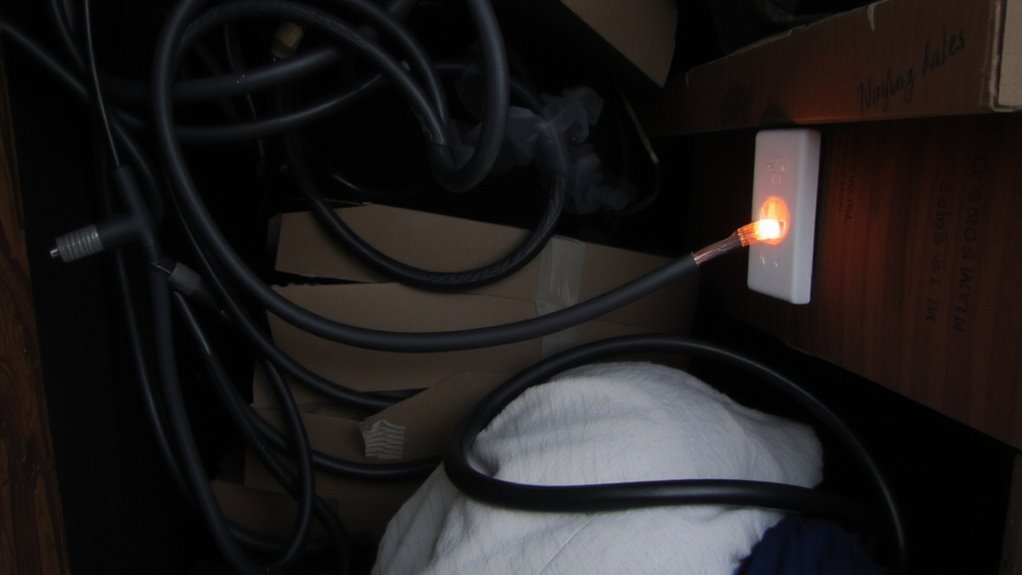
Fire risk from extension cords often comes down to one thing: misuse. You plug in too many devices, and suddenly you’re dealing with overloaded circuits. That generates heat, and heat weakens wires over time. If the cord’s insulation is already worn or cracked-what we call damaged insulation-exposed conductors can spark or short. These sparks ignite nearby flammable materials, especially in dry environments like attics or walls. Extension cords aren’t built for constant load; they’re temporary. Yet you use them long-term, often in place of permanent wiring. That increases stress. Even cords rated for heavy loads fail when stretched, pinched, or run under carpets. Heat builds faster than you notice. Manufacturers test cords under ideal conditions, but your real-world use differs. No warning signs appear until it’s too late. You need to inspect cords regularly, avoid daisy-chaining, and never bypass built-in safety limits.
Common Mistakes That Create Fire Hazards
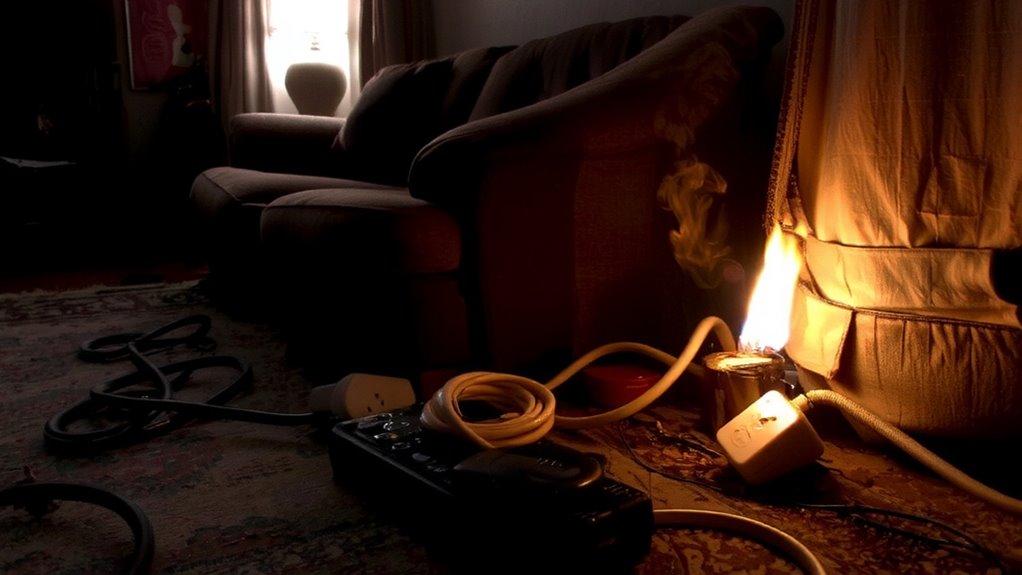
While you might think plugging in a few extra devices is no big deal, overloading extension cords is one of the most common missteps that leads to dangerous heat buildup. Overloaded circuits draw more current than cords can safely handle, increasing fire risk, especially with older or lightweight models. You often stretch cords across rooms or under rugs, trapping heat and accelerating wear. That’s made worse by improper storage-tightly coiled cords retain heat during use and degrade insulation over time. Using indoor cords outdoors exposes them to moisture and damage, while daisy-chaining multiple cords amplifies resistance and failure points. Most standard 16-gauge cords are only rated for 10–13 amps; exceeding that without a heavy-duty upgrade is a known hazard. You’re better off plugging high-wattage appliances directly into wall outlets. These mistakes aren’t rare-they’re predictable, preventable, and directly tied to how extension cords fail in real-world conditions.
Warning Signs of an Extension Cord Fire Risk
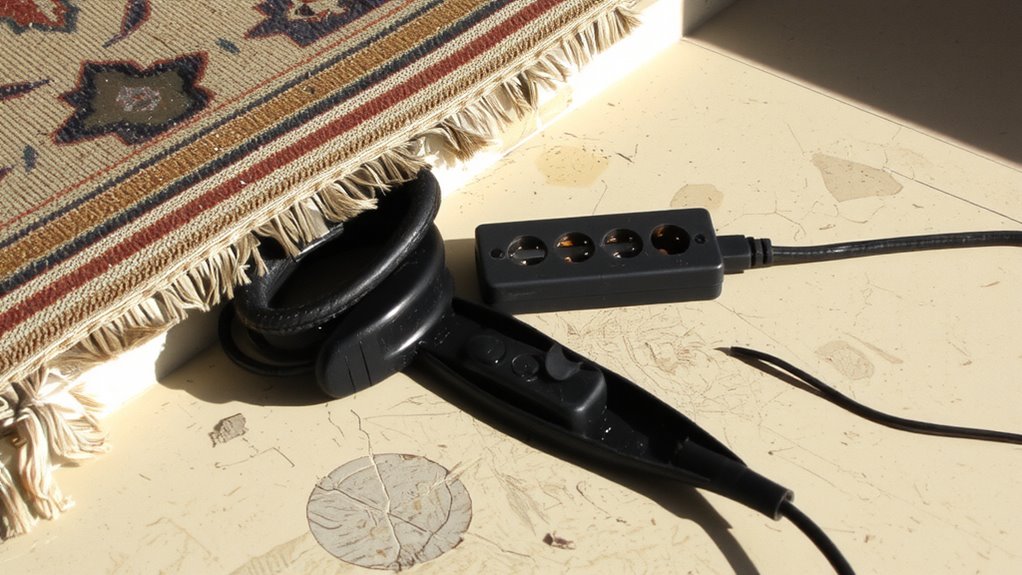
Heat’s the giveaway-and if you’re feeling warmth along the cord or plug, that’s not normal operation, it’s a red flag. That heat means resistance, and resistance increases fire risk. Check for frayed insulation; exposed wires can spark or short, especially under stress or load. You’re not just risking shock-you’re inviting fire. If lights dim when devices power on, you’re likely dealing with overloaded circuits. That strain stresses both the cord and outlet, accelerating wear. Discoloration on plugs or outlets signals past overheating-don’t ignore it. A buzzing sound or burning smell means immediate disconnection is necessary. These aren’t quirks-they’re warnings. Extension cords shouldn’t run under rugs or furniture, where heat accumulates. If a cord feels stiff or cracked, discard it. Regular inspection catches frayed insulation early. Avoid daisy-chaining or using multiple high-wattage appliances. Pay attention: prevention starts when you act on these signs.
Indoor vs. Outdoor Extension Cords: Fire Risks
If you’re using an indoor extension cord outside, you’re setting up a failure waiting to happen. Indoor cords lack weather resistance and degrade quickly when exposed to moisture, UV light, and temperature swings. That weakens cord durability and increases fire risk. Outdoor cords are built differently-thicker insulation, sealed connectors, and materials rated for wet conditions. They handle environmental stress better, which reduces short-circuit potential. Using the wrong cord isn’t just ineffective; it’s dangerous. Moisture penetrating an indoor cord can cause arcing or ground faults, especially under load. Outdoor-rated cords meet safety standards for outdoor use, including resistance to cracking and abrasion. They’re heavier and less flexible, but that trade-off improves longevity and safety. Check the jacket label: look for “W” ratings or “For Outdoor Use.” Don’t gamble with indoor cords outside-they simply can’t withstand the conditions.
How to Safely Power Devices
A single extension cord can handle multiple devices, but only if you don’t exceed its capacity. Proper wattage matching guarantees the cord won’t overheat. Check device labels and add up total wattage-stay under the cord’s rated limit. Use cords with thick gauge wires for high-wattage appliances. Secure cord placement keeps cords out of foot traffic and away from heat sources. Never run them under rugs or furniture where heat builds up. Keep connections dry and off the ground in damp areas.
| Device Type | Max Wattage | Cord Gauge |
|---|---|---|
| Lamp | 100W | 16 AWG |
| Space Heater | 1500W | 14 AWG |
| TV | 200W | 16 AWG |
Avoid daisy-chaining. Replace frayed or warm cords immediately.
Power Strip or Extension Cord: Which Is Safer?
When should you reach for a power strip instead of an extension cord? Use a power strip for stationary devices like computers or entertainment systems, where surge protection and multiple outlets are needed. Extension cords are meant for temporary use with tools or appliances away from permanent outlets. Power strips reduce the risk of electrical overload because they often include circuit breakers and are designed for continuous operation. Extension cords, especially when hidden under rugs or in high-traffic areas, face faster cord deterioration, increasing fire risk. Overloading an extension cord with high-wattage devices can lead to overheating. A power strip mounted safely on a wall or desk avoids wear and tear. Both can fail if misused, but power strips are generally safer for long-term setups. Choose the right tool for the job, and inspect both regularly for signs of damage.
Daily Fire Prevention Habits
You’ve checked your power strips and made sure extension cords aren’t buried under rugs-good. Now, build daily habits that prevent fire risks. Unplug devices when not in use; it reduces strain on outlets and lowers the chance of overloaded circuits. Check cords each day for heat or fraying-warmth indicates excessive load or poor connections. Store cords loosely coiled, never tightly bound or under furniture, to avoid improper storage that degrades insulation over time. Avoid daisy-chaining multiple extensions, as this increases fire risk and often exceeds circuit capacity. Use cords rated for their environment-indoor cords outside fail faster. Replace any cord showing wear immediately. These steps don’t guarantee safety, but they reduce failure likelihood. Fire prevention isn’t about one big act-it’s consistent, small actions that keep electrical systems functioning safely day after day.
On a final note
You can prevent fires by using extension cords only temporarily and choosing the right gauge for the load. Overheating happens when cords are overloaded or damaged, so check for fraying or warm plugs. Indoor cords outdoors increase risk-use only weather-rated ones outside. Power strips with surge protection offer better safety than basic cords. No cord lasts forever-replace them every few years or sooner if worn. Simple habits like unplugging when not in use cut risk.