Using Saltwater to Preserve Meat: Techniques and Precautions in Survival Situations
You can preserve meat in saltwater by submerging it in a 10% brine-100g non-iodized salt per liter of water-kept below 40°F. This draws moisture from microbes, slowing spoilage but not stopping it completely. Soak for 5–10 days, stirring daily, in a non-reactive container. Thicker cuts need longer. It’s not foolproof, especially in heat. Effectiveness lasts days, not weeks. Combine with smoking or drying for better results. There’s more to get right if you want it to work.
Notable Insights
- Use a 10% brine (100g non-iodized salt per liter of water) for effective meat preservation.
- Submerge meat completely in a non-reactive container to ensure even saturation and prevent spoilage.
- Soak meat for 5–10 days, stirring daily, depending on cut thickness and salt penetration needs.
- Store brined meat at or below 40°F (4°C) with consistent ice replenishment to slow bacterial growth.
- Combine saltwater with smoking, drying, or cooling methods to extend shelf life safely in survival scenarios.
How Saltwater Buys Time in Survival
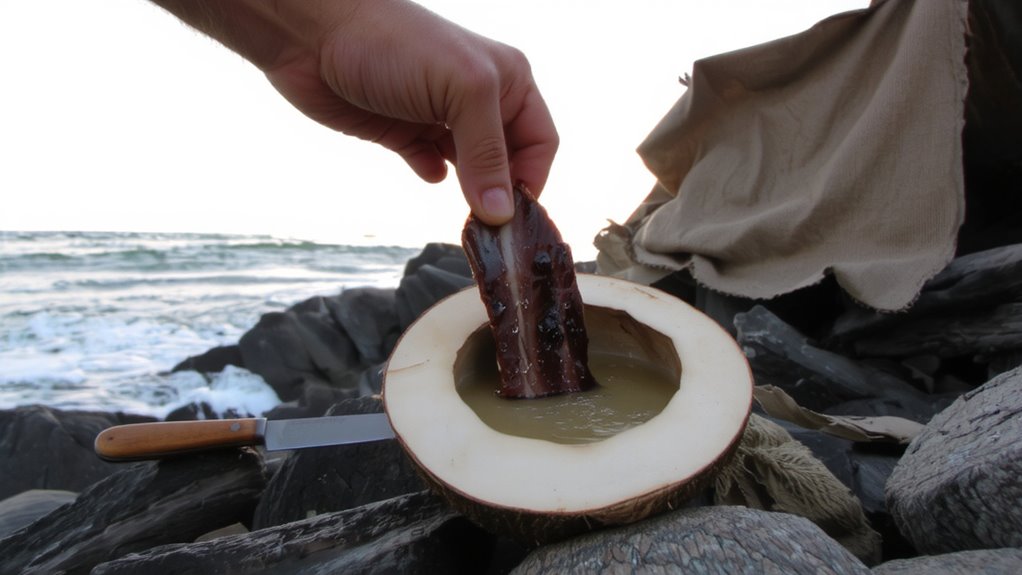
While you’re stuck in a survival situation, saltwater can slow spoilage long enough to keep meat safe for a day or two-critical when refrigeration isn’t an option. This method offers a basic but effective spoilage delay by drawing moisture from the surface of the meat, making it less hospitable to bacteria. You’re not stopping decay completely, but you’re buying time extension where every hour matters. Immersing meat in saltwater works best in cool, shaded environments, though it’s less reliable in high heat. It’s not a long-term fix, but it’s better than leaving meat exposed. The salt concentration needed is modest-about 3–5% salinity-but effectiveness depends on cut thickness and ambient temperature. You’ll still need to cook the meat thoroughly later. This approach is practical, low-effort, and uses minimal resources, making it a viable short-term field strategy when you’ve got no other means.
Why Saltwater Preservation Slows Spoilage
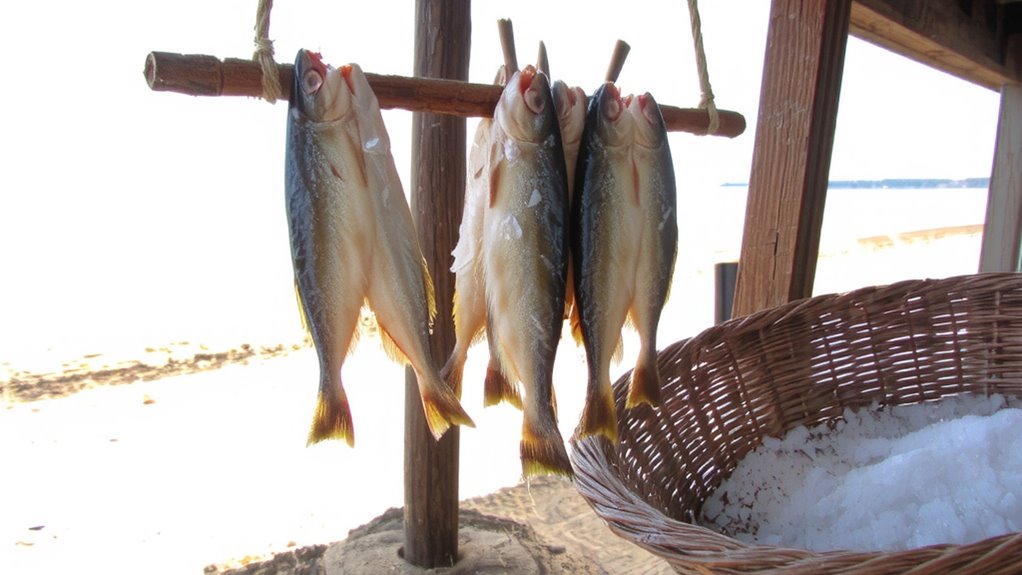
Because saltwater pulls moisture from the surface of meat, it creates an environment where bacteria can’t thrive as easily-slowing spoilage in a measurable way. You’re relying on osmotic pressure to draw water out of microbial cells, dehydrating them and limiting their ability to multiply. This process supports bacterial inhibition by reducing available moisture, which most pathogens need to survive. Saltwater doesn’t kill all bacteria, but it markedly slows their activity, buying you time in a survival scenario. The higher the salinity, the stronger the osmotic pressure, but even a moderate solution helps. You’ll notice less surface slime and delayed odor development compared to untreated meat. It’s not a long-term fix, but it’s effective for days, not weeks. You’re working with basic biology-altering conditions just enough to tilt odds in your favor without tools or power.
Use the Correct Salt-to-Water Ratio
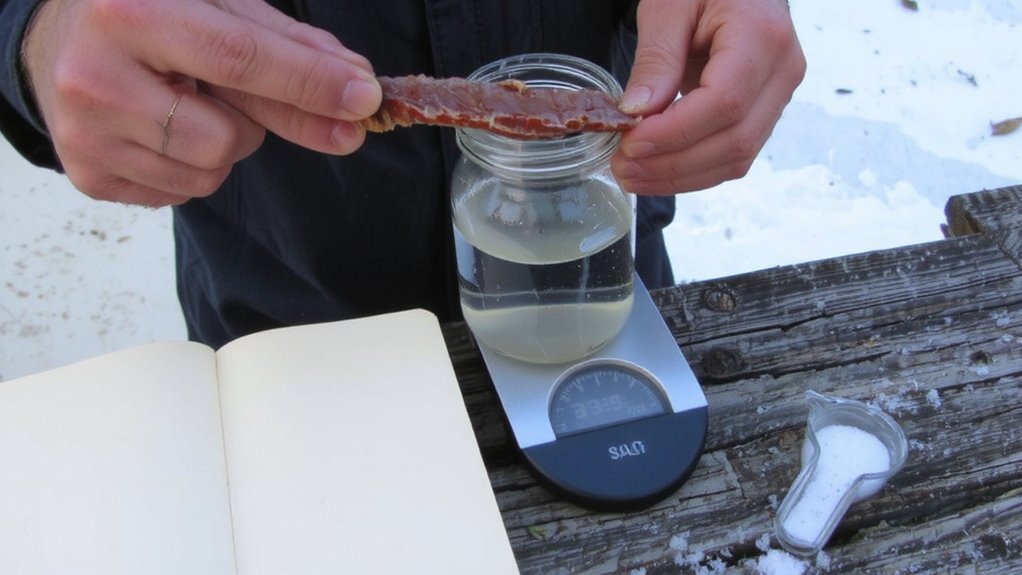
A 10% salt-to-water ratio works best for short-term meat preservation-mix 100 grams of salt per liter of water to create a brine strong enough to slow spoilage without over-salting the meat. Getting the brine concentration right is key; too little salt won’t protect meat freshness, while too much can make meat tough and overly salty. Use non-iodized salt to avoid chemical reactions that degrade meat quality. Below is a quick reference for effective ratios:
| Salt (g) | Water (L) |
|---|---|
| 80 | 1.0 |
| 100 | 1.0 |
| 120 | 1.0 |
The 100g/L ratio strikes the best balance for maintaining meat freshness with reliable brine concentration. Higher concentrations may be used in warm conditions, but monitor texture. Always dissolve salt completely before use. Accuracy guarantees consistent preservation without wasting resources.
Soak Meat in Saltwater Safely
Now that you’ve mixed the brine with the right salt-to-water ratio, it’s time to prepare the meat for soaking. Submerge the meat completely in the brine, ensuring no pieces are exposed. This protects against spoilage and promotes even preservation. You’ll notice the meat texture firm up within hours-this is salt drawing out moisture and inhibiting bacterial growth. Use a non-reactive container and keep everything refrigerated or in a consistently cool environment, ideally below 40°F. Soaking time affects storage duration: 12–24 hours works for short-term preservation (up to a week), while longer brining (up to 48 hours) extends storage duration to two weeks, though it can make the meat texture tougher. Trim excess fat beforehand, as it doesn’t absorb brine well and can go rancid. Check the meat periodically-any off smells mean it’s unsafe. Proper soaking improves shelf life without artificial additives.
Avoid Food Poisoning With Proper Technique
If you’re using saltwater to preserve meat, keeping everything at or below 40°F is non-negotiable-bacteria multiply quickly above that temperature, and no amount of salt will fully stop that risk. You must maintain strict temperature control throughout the process, from preparation to storage. Store the meat in the coldest part of your cooler or use ice consistently to sustain safe temps. Proper hygiene is just as critical: wash your hands, use clean containers, and avoid cross-contamination between raw meat and other items. Any slip in sanitation increases the chance of food poisoning. Salt helps inhibit some microbes, but it isn’t a failsafe if conditions are unsafe. You’re relying on a combination of salt concentration and cold, not salt alone. Follow both rules precisely-failure in either hygiene or temperature control compromises the entire batch. Your safety depends on consistency, not shortcuts.
How Long to Preserve Meat With Saltwater
When using saltwater to preserve meat, you’ll need to keep it submerged for at least 5 to 7 days to guarantee thorough penetration and effective microbial inhibition, though thicker cuts may require up to 10 days depending on size. This duration guarantees enough fermentation time for salt to draw out moisture and create an environment hostile to spoilage organisms. You’re not curing for flavor here-this is about microbial resistance. Smaller cuts like steaks or chicken pieces hit preservation capacity faster; large roasts or whole birds need the full 10 days. Don’t shorten the time, even if the meat looks fine-insufficient exposure risks pathogen survival. Maintain a consistent brine concentration (at least 20% salinity) throughout. Stir the container once daily to disrupt surface microbes and guarantee even saturation. The process isn’t quick, but skipping time compromises safety. Patience guarantees the meat remains edible under harsh conditions.
When Saltwater Preservation Isn’t Enough
Salt keeps meat safe by pulling out moisture and blocking most bacteria, but it won’t stop everything. When temperatures rise or humidity increases, environmental factors weaken saltwater’s effectiveness. In such cases, relying solely on brine risks spoilage or illness. You’ll need alternative methods to stay safe.
| Method | Shelf Life (Days) | Best Use Case |
|---|---|---|
| Smoking | 14–30 | Hot, humid climates |
| Drying | 10–20 | Low humidity, airflow |
| Freezing | 90+ | Stable cold conditions |
Smoking adds flavor and extends life by forming a protective layer. Drying reduces moisture further than salt alone but needs dry air. Freezing isn’t always viable in survival settings. Each method has trade-offs in time, fuel, and equipment. Combine saltwater with one of these alternatives when environmental factors threaten preservation. Planning for failure keeps you fed and safe. Don’t wait for rot to act.
On a final note
You can use saltwater to extend meat’s usability in survival scenarios, but it’s not foolproof. A 15% salt-to-water ratio slows spoilage by drawing out moisture and inhibiting bacteria. Keep meat submerged in cool, clean brine for no more than 24–48 hours. This method buys time, not long-term safety. Always cook thoroughly afterward. In warm conditions or with damaged meat, saltwater won’t prevent risk-know its limits.