How to Evaluate Circulatory Shock in Pediatric Wilderness Patients
Check your child’s behavior first-lethargy, irritability, or not responding are early red flags. Look at breathing: fast, shallow breaths or flared nostrils mean trouble. Skin that’s pale, cool, or mottled with slow capillary refill (over 2 seconds) shows poor perfusion. Warm skin with rapid pulse means early shock; low blood pressure means it’s late. If they’re not improving with fluids or seem worse, act now-help is critical. You’ll recognize the next steps when you see them.
Notable Insights
- Assess mental status changes like sudden irritability, lethargy, or lack of interaction, which signal early shock in children.
- Evaluate breathing for increased effort, including grunting, nasal flaring, or chest retractions, indicating respiratory distress.
- Check skin for pallor, coolness, mottling, or delayed capillary refill, all signs of poor perfusion in pediatric shock.
- Measure capillary refill time at the sternum or fingertip; over 2 seconds suggests decreased peripheral perfusion.
- Recognize compensated shock by tachycardia and anxiety despite normal blood pressure, requiring urgent evacuation.
Spot the Early Signs of Pediatric Shock in the Wild
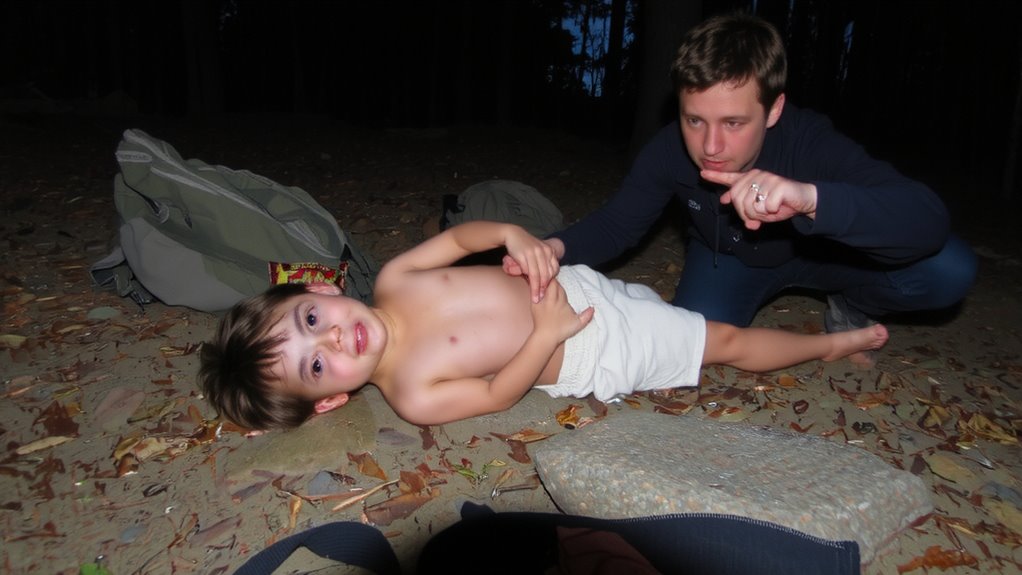
What do you look for when a child might be slipping into shock in the backcountry? You watch for behavior changes-like sudden irritability, lethargy, or confusion-because they’re often the earliest clues. A child’s mental status can shift fast, and delays in response or inability to focus suggest reduced brain perfusion. You won’t always see obvious physical signs early on, so mental status becomes a critical indicator. You should note if the child stops playing, won’t make eye contact, or can’t answer simple questions. These changes matter more than pain reports. Capillary refill longer than two seconds, pale skin, or weak pulses come later. Your assessment hinges on consistent observation. Trust subtle cues-they’re measurable through responsiveness and time. Acting on behavior changes before blood pressure drops improves outcomes. You’re not guessing; you’re detecting. Early recognition means intervention before collapse.
Check Breathing: Rate and Effort in Kids

How quickly can you tell if a child’s breathing is a sign of trouble? You need to act fast. Check breathing patterns first-normal for kids is faster than adults, but rapid, shallow breaths can signal distress. Infants should breathe 30–60 times per minute; toddlers, 24–40. Any rate outside this range raises concern. Look at respiratory effort. Use the “look, listen, feel” method. Flared nostrils, grunting, or head bobbing mean increased effort. Recessions-when the chest sinks in around the ribs or neck-are red flags. Symmetrical chest rise matters. Uneven movement suggests obstruction or injury. These signs aren’t subtle. If breathing patterns stay abnormal or respiratory effort stays high, shock may be worsening. Trust what you see. Don’t wait for every symptom. Early intervention saves lives in remote settings.
Read the Skin: Color, Temperature, and Clamminess

You’ve checked the child’s breathing-now turn your attention to the skin, a direct window into circulation and perfusion. Look for pallor, especially in the nail beds; persistent nail bed pallor suggests poor peripheral blood flow. Cool, mottled skin indicates compensatory vasoconstriction-common in early shock. If the skin feels clammy despite ambient temperature, that’s a red flag. Skin elasticity matters too: gently pinch the abdomen or forearm. If the tenting lasts over two seconds, dehydration or poor perfusion is likely. Warm, dry skin generally means adequate perfusion. But in shock, you’ll see coolness, pallor, and moisture even at rest. Don’t ignore subtle cues-altered skin signs can precede obvious essential sign changes. Combine skin color, temperature, and moisture with elasticity to build an accurate picture. Each sign alone isn’t diagnostic, but together they reveal circulatory status clearly.
Test Capillary Refill: A Critical Shock Sign
Capillary refill time is one of the most reliable indicators of circulatory compromise in a pediatric patient, especially when resources are limited. You can assess it quickly by pressing on the child’s fingertip or sternum and timing how long it takes for color to return. Normal capillary refill time is less than 2 seconds; longer times suggest poor peripheral perfusion. Cold environments may slow refill, so warm the area first if needed. This test reflects how well blood is reaching extremities and helps you judge shock severity without equipment.
| Refill Time | Interpretation | Peripheral Perfusion |
|---|---|---|
| <2 sec | Normal | Adequate |
| 2–3 sec | Mild delay | Reduced |
| >3 sec | Markedly delayed | Poor |
Stage the Shock to Guide Your Response
Though circulatory shock in children can escalate quickly, recognizing the stage helps you act with the right level of urgency. You need to assess mental status, pulse quality, capillary refill, and skin signs to differentiate between compensated and decompensated shock. In compensated shock, the body maintains blood pressure by increasing heart rate and vasoconstriction, but fluid balance remains precarious. The child may appear anxious or restless as metabolic demand outpaces delivery. By the time blood pressure drops, shock is decompensated-this is a critical phase. Early intervention supports circulation before organ perfusion fails. Watch for delayed capillary refill, cool extremities, and lethargy; these signal imbalance between oxygen delivery and metabolic demand. Your response should match the stage: minor adjustments in mild cases, aggressive support in worsening signs. Accurate staging keeps care proportional and timely.
Evacuate Now: When to Get Help in the Backcountry
When should you trigger an evacuation in the backcountry? If you spot signs of circulatory shock that don’t improve with basic care, act fast. Airway obstruction is a critical red flag-your child can’t maintain oxygenation, and delay worsens outcomes. You must secure the airway immediately and prepare for evacuation even if you’re miles from help. Also, if your child needs fluid resuscitation and shows poor response after initial fluids, that’s a strong signal the situation is beyond field management. Ongoing hypotension, lethargy, or weak pulses mean advanced care is necessary. Don’t wait for deterioration. Use available communication tools-satellite messenger, radio-to alert rescue teams early. Your decision to evacuate now can prevent cardiac arrest. Assess continuously, but don’t second-guess when physiology declines. Transport is part of treatment, not a last resort. A well-prepared backcountry ski backpack includes emergency supplies and medical gear essential for stabilizing a child in shock.
On a final note
You now know how to spot and stage pediatric shock in the wild. Check breathing, skin signs, and capillary refill-each gives clear, immediate data. Delay lowers survival odds. If signs point to decompensated shock, evacuate fast-no exceptions. Carry a stopwatch and tape measure in your kit; timing and precision matter. Trade speed for accuracy and you risk the child’s life. Real backcountry care means acting on facts, not hope.