Purifying Water With a Portable Electrolytic Purifier
You can purify water in five minutes using a portable electrolytic purifier that runs on battery power and generates hypochlorusoic acid from existing chloride ions in the water. There are no filters to replace or chemicals to store, making it ideal for extended use. Just submerge and activate-effectiveness stays consistent across temperatures, though performance drops if the battery weakens or electrodes get dirty. Proper maintenance guarantees reliable results over hundreds of cycles. You’ll also want to take into account power options and build quality for rugged environments.
Notable Insights
- Uses electric current to generate hypochlorous acid, killing pathogens in under five minutes.
- Requires no consumables-only power, making it cost-effective for long-term use.
- Works best in water with sufficient minerals; low-conductivity water may need additives.
- Electrodes must stay clean and corrosion-resistant to maintain efficient disinfection.
- Portable models should be durable, battery-efficient, and support solar or USB-C charging.
How Electrolytic Purifiers Clean Water
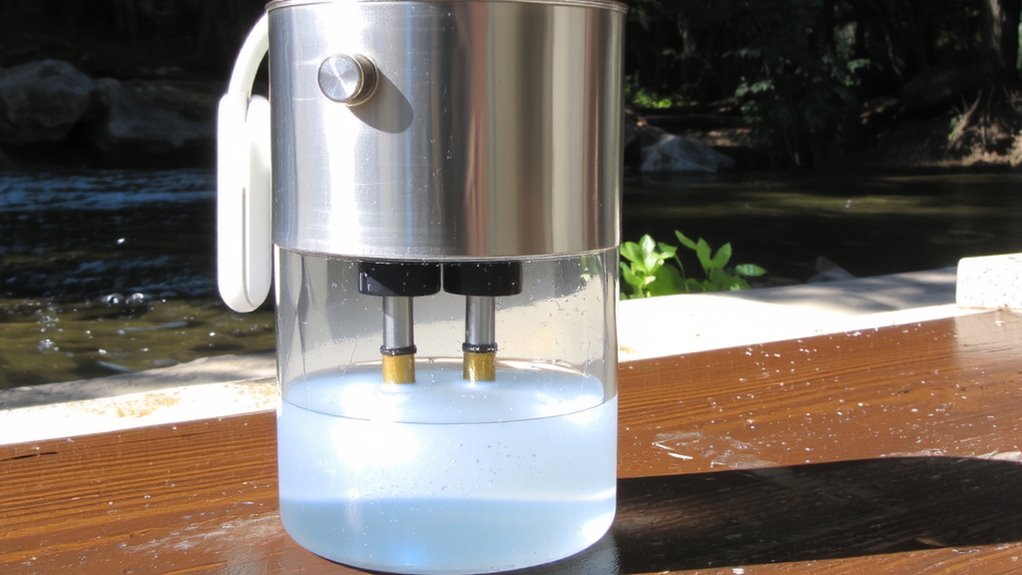
While traditional filters rely on physical barriers to trap contaminants, electrolytic purifiers take a different approach by using electric current to neutralize pathogens. You apply power, and electrode reactions begin at the metal plates inside the unit. These reactions generate oxidizing agents like hypochlorous acid from chloride ions naturally present in water. The disinfection process starts immediately, disrupting microbial cell walls and deactivating bacteria, viruses, and protozoa. Unlike filters, there’s no clogging, but water conductivity affects performance-low-mineral water may require additives. The reaction time is short, typically under five minutes for clear results. Units run on batteries or solar, making them portable, though they need regular electrode cleaning to maintain efficiency. No consumables are required beyond power, reducing long-term costs. It’s effective, but success depends on proper voltage and contact time. You get chemical-free treatment without storing or handling liquids.
Why Choose Electrolytic Over Filters or Chemicals
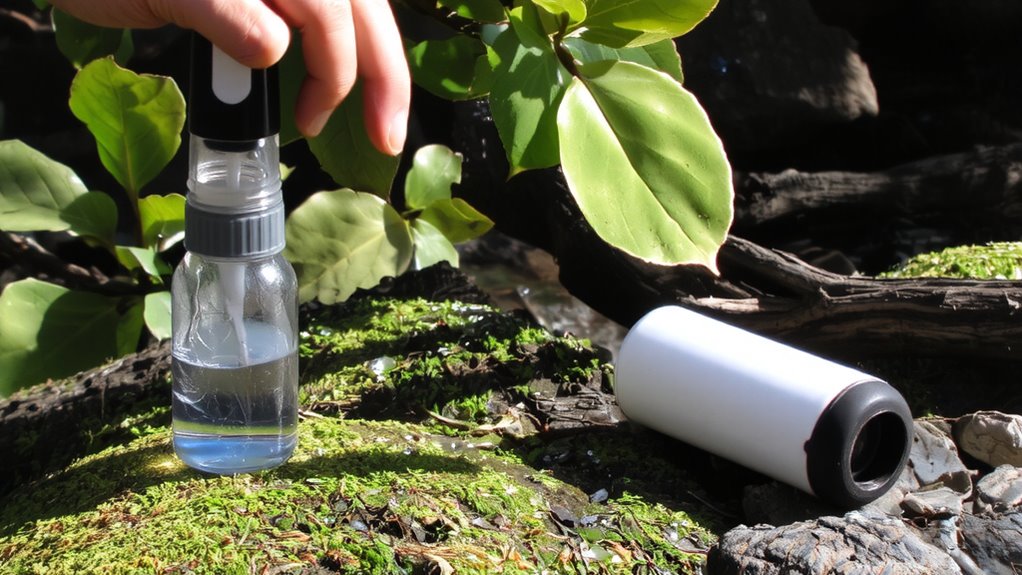
Since you’re weighing options for clean water in the field, an electrolytic purifier offers a durable edge over filters and chemical treatments. Filters clog and need replacing, while chemical drops leave aftertastes and require waiting time-both add recurring costs. With electrolysis, there’s no need for expendable parts or refills, giving you cost efficiency over time. You use a small amount of power, often from a solar source, to generate disinfectants on demand. This means fewer supplies to carry and less waste. Though the initial investment may be higher, the long term savings are clear when you skip buying replacement filters or chemicals over hundreds of uses. It works consistently across water types without maintenance between uses. Unlike chemicals, it doesn’t depend on contact time or temperature to deactivate pathogens. For sustained use in remote settings, that reliability adds up.
Must-Have Features in a Portable Electrolytic Purifier
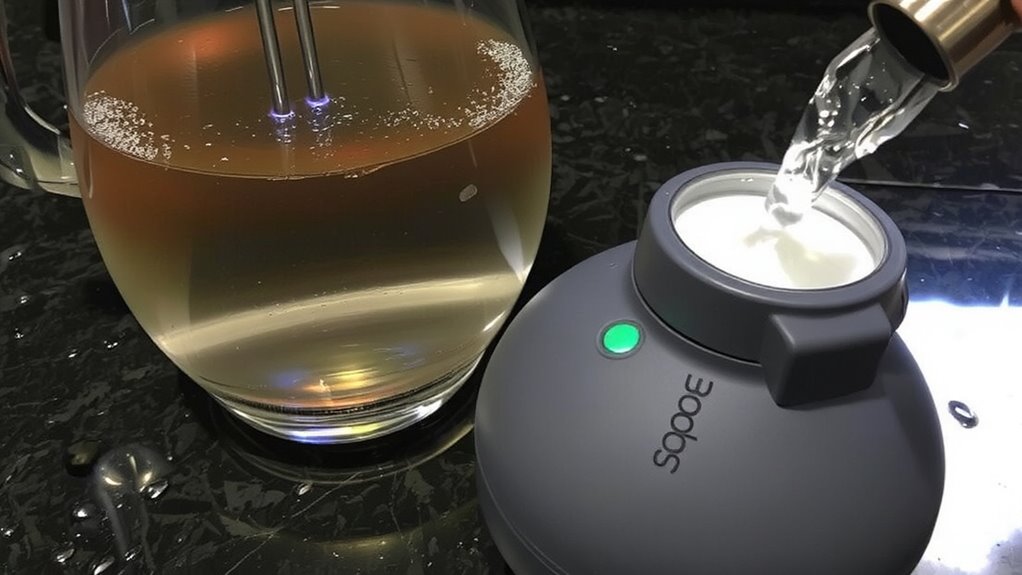
You’ve seen how electrolytic purification stacks up against filters and chemicals, offering long-term savings and reliable performance without consumables. Now, focus on features that guarantee your device works when and where you need it. Battery life determines how many uses you get per charge-look for models offering at least 20 cycles on a single charge. Device durability matters in rugged environments; a shock-resistant, waterproof housing keeps internals safe. Size and weight impact portability, but don’t sacrifice build quality. Here’s what to compare:
| Feature | Why It Matters |
|---|---|
| Battery life | Longer use between charges, critical off-grid |
| Device durability | Survives drops, moisture, temperature swings |
| Electrode material | Corrosion-resistant metals last longer |
| Charge method | USB-C or solar compatibility adds flexibility |
Choose wisely-your water depends on it.
How to Use a Portable Electrolytic Purifier in 5 Minutes
How do you get clean water fast when you’re off the grid? Start by submerging your portable electrolytic purifier into any untreated water source-stream, pond, or stored rainwater. Make sure the intake isn’t clogged and the electrodes are clean. Then initiate device activation by pressing the power button; most units start producing chlorine from salt in the water within seconds. Hold the purifier steady, allowing it to circulate water through its chamber for about four minutes. The process kills bacteria and viruses without filters. Results depend on initial water clarity-murky water may need pre-straining. After five minutes total, your water is safer to drink. No lengthy setup, no cartridges. Activation time is consistent across models, though battery-powered versions may lose efficiency below 20% charge. It’s not perfect, but it’s fast, field-tested, and effective for urgent needs.
Avoid These Common Electrolytic Purifier Mistakes
Getting clean water fast doesn’t mean you can skip the details-small mistakes with a portable electrolytic purifier can undermine its effectiveness, even if the device itself works fine. You might assume any power source will do, but weak or unstable outputs reduce ionization efficiency, leaving pathogens behind. Always use the recommended power source to guarantee full voltage delivery. Neglecting maintenance frequency is another issue-scale buildup from minerals in water blocks electrode conductivity over time, lowering performance. Clean the unit every 10 to 15 uses, or more often in hard water areas. Don’t rely on visual inspection alone; stick to a schedule. Using dirty or underpowered devices won’t kill microbes effectively. These oversights won’t break your purifier, but they compromise results. Stay consistent with power and cleaning, and the device will deliver reliable purification when you need it.
When to Use an Electrolytic Purifier: Ideal Scenarios
Where can an electrolytic purifier actually deliver reliable results? You’ll find it most useful during emergency preparedness when traditional power and filtration aren’t available. These devices run on batteries or solar power, making them light and field-ready. They work best in scenarios like remote camping, where you’re sourcing water from streams or lakes and need fast, chemical-free treatment. They’re effective against bacteria and some viruses, but won’t remove sediment or chemical contaminants. If you’re in a backcountry setting with clear, flowing water, an electrolytic purifier offers a compact, reusable option with low maintenance. However, it’s not ideal for murky water or areas with heavy pollution. You’ll need to pre-filter if the water’s cloudy. For short trips or backup use, especially where weight matters, it’s a solid choice-just know its limits and pair it with other methods when necessary.
On a final note
You get clean water fast with an electrolytic purifier, no filter clogs or chemical aftertaste. It runs on batteries or solar, works in 5 minutes, and kills 99.9% of bacteria and viruses. It won’t remove silt or heavy metals, so pair it with basic filtering if the water’s cloudy. Units under 200 grams save pack space but need steady power. For light, reliable disinfection in the wild, it’s practical - just know its limits.